Student Updates
Dr. Jonathan Woodson nominated by President Barack Obama to be assistant secretary of defense for health affairs

Jonathan Woodson has been named assistant secretary of defense for health affairs for the U.S. Department of Defense by President Obama. His nomination requires U.S. Senate confirmation.
Associate dean for diversity and multicultural affairs and associate professor of surgery at BUSM, and senior attending vascular surgeon at BMC, Woodson holds the rank of brigadier general in the U.S. Army Reserve. He is currently assigned as assistant surgeon general for reserve affairs, force structure and mobilization in the Office of the Surgeon General and serves as deputy commander of the Army Reserve Medical Command.
As assistant secretary of defense for health affairs he would be the principal adviser to the secretary of defense on health issues and oversee the entire U.S. military medical enterprise, known as the Military Health System. This includes the services’ care of war wounded and basic health care for 9.6 million active and retired service members and family members through the Tricare medical and dental care program.
He would also be responsible for setting medical health standards for enlistments and deployments, develop health and medical program policies, and oversee Uniformed Services University for Health Sciences (USUHS), the Armed Forces Institute of Pathology, and other organizations.
In a joint statement announcing the nomination, Karen Antman, provost of BU Medical Campus and Kate Walsh, president and CEO of BMC, wrote, “Dr. Woodson is an excellent choice for this important role. His clinical and administrative experience and outstanding leadership will be of great value to our nation's soldiers and veterans as he takes on this Department of Defense role. His military experience makes him the perfect candidate for this position and he is well prepared to handle the challenges of this new position.”
Woodson is a graduate of the City College of New York (Magna Cum Laude) and New York University School of Medicine (1979) six-year B.S.-M.D. program. He received his postgraduate medical education at the Massachusetts General Hospital, Harvard Medical School and completed residency training in internal medicine, general and vascular surgery. He is board certified in internal medicine, general surgery, vascular surgery and critical care (surgery). He holds a Master's Degree in Strategic Studies (concentration in strategic leadership) from the U.S. Army War College.
In 1992, he was awarded a research fellowship at the Association of American Medical Colleges Health Services Research Institute. His current research interest is in health outcomes research; particularly functional outcomes in limb salvage vascular surgery. He has authored/coauthored a number of publications and book chapters on vascular trauma and outcomes in vascular limb salvage surgery.
His prior military assignments include deployments to Saudi Arabia (Operation Desert Storm), Kosovo, Operation Enduring Freedom and Operation Iraqi Freedom. He has also served as a Senior Medical Officer with the National Disaster Management System, where he responded to the September 11th attack in New York City. Woodson’s military awards and decorations include the Legion of Merit, the Bronze Star Medal, and the Meritorious Service Medal (with oak leaf cluster).
In 2007, he was named one of the top Vascular Surgeons in Boston and in 2008 was listed as one of the Top Surgeons in the U.S. He is the recipient of the 2009 Gold Humanism in Medicine Award from the Association of American Medical Colleges.
NFL Gives $1 Million to BUSM’s CSTE to Study Long-term Impact of Brain Injuries in Football
The National Football League (NFL) will give a $1 million unrestricted gift to the Center for the Study of Traumatic Encephalopathy (CSTE) at Boston University School of Medicine to support the Center’s research.

The funds will be used to continue the Center’s ground-breaking research into the long-term effects of repetitive brain trauma in athletes, in particular football players. CSTE researchers have been the driving force in providing evidence that repetitive blows to the head in sports can cause a degenerative brain disease called Chronic Traumatic Encephalopathy, or CTE, that is associated with later life cognitive and behavioral problems, and eventually causes dementia. The Center’s research has primarily focused on the examination of brains of deceased athletes. Future research by the Center will include advancing future pathological understanding of the consequences of sports-related brain trauma. In addition, the CSTE will launch a clinical research program to develop methods of early detection and to develop ways to effectively prevent and treat this disease.
The NFL is the first sports league to financially support this research at the Center for the Study of Traumatic Encephalopathy (CSTE) at Boston University School of Medicine. The NFL, with 32 teams, is the largest major professional sports league and includes the New England Patriots in nearby Foxboro, Mass.
“We are extremely grateful to Commissioner Roger Goodell and the NFL owners for their support of this important research,” said Robert Cantu, MD, CSTE Co-Director and Clinical Professor of Neurosurgery at Boston University School of Medicine. “This gift and the significant changes made in recent months by the NFL demonstrate the League’s commitment to the health and safety of current, retired, and future players, as well as millions of youth athletes. These unrestricted funds allow us to accelerate our research with independence and scientific integrity,” said Cantu.
“We obviously are very interested in the Center’s research on the long-term effects of head trauma in athletes,” said NFL Commissioner Roger Goodell. “It is our hope this research will lead to a better understanding of these effects and also to developing ways to help detect, prevent and treat these injuries.”
CTE, also referred to as dementia pugilistica (or punch drunk syndrome), is a progressive, neurodegenerative disease caused by repetitive concussive and subconcussive brain trauma, and eventually leads to dementia. Although it is well established in boxers, in recent years, CTE has been shown to exist in other athletes, including professional and collegiate football players and a professional hockey player. CTE was first reported in the medical literature in 1928, and the terms Traumatic Encephalopathy and CTE were first used in the 1960s.
The disease is characterized by the build-up of a toxic protein called tau in the form of neurofibrillary tangles (NFTs) and neuropil threads (NTs) throughout the brain. The abnormal protein initially impairs the normal functioning of the brain and eventually kills brain cells. Early on, CTE sufferers may display clinical symptoms such as memory impairment, emotional instability, erratic behavior, depression and problems with impulse control. However, CTE eventually progresses to full-blown dementia. Although similar to Alzheimer’s disease, CTE is an entirely distinct disease.
The CSTE was created in 2008 as a collaborative venture between Boston University School of Medicine (BUSM) and the non-profit Sports Legacy Institute (SLI). The mission of the CSTE is to conduct state-of-the-art research of Chronic Traumatic Encephalopathy, including its neuropathology and pathogenesis, the clinical presentation and course, methods of diagnosis and early detection, the genetics and other risk factors for CTE, and ways of preventing and treating this cause of dementia. The CSTE is co-directed by Cantu, Ann McKee, MD, Robert Stern, PhD and Chris Nowinski. For further information, visit www.bu.edu/CSTE .
BUSM's Goldstein Wins Hartwell Award for Genetics Research
For decades, Richard Goldstein has been trying to unlock a genetic puzzle that holds the secret to a more effective vaccine for a pneumonia strain that kills more than a million children a year worldwide. For his work, the BU School of Medicine professor of pediatrics was recently awarded a three-year, $300,000 grant from the Hartwell Foundation, which funds biomedical applied research with the potential to benefit children.
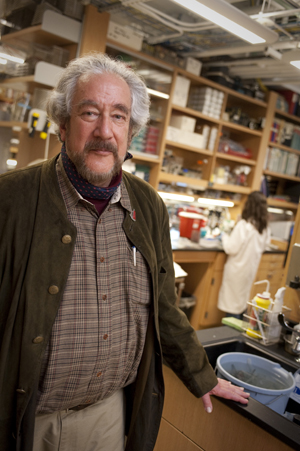
Goldstein says he draws ongoing inspiration from a long-deceased but towering figure in science: Charles Darwin.
“Everything I say comes from Darwin’s notes of 1859,” he says, crediting the architect of the theory of evolution with the groundwork for a novel, if especially painstaking, study of mutations in pneumonia-causing bacteria. “It’s an inventive, cutting-edge approach,” says Goldstein, who has amassed the world’s largest collection of streptococcus pneumonia, a bacterium that lives in the nasal passages. The microbe is the most common cause of bacterial meningitis, one of the top two bacterial culprits in ear infections. “The healthy high school football star who dies from meningitis — that’s streptococcus pneumonia,” he says.
Without Prevnar, the existing vaccine for streptococcus pneumonia, the global death toll would be far higher. But that vaccine, developed in the late 1990s, prevents infection in only about 8 percent of the known variants of the bacteria’s coating, says Goldstein. Like many vaccines for viruses as well as bacteria, Prevnar works by inducing antibodies in the immune system that are specific to a target. By taking a broader, genetics-based approach, he hopes to create a vaccine that will trigger antibodies for all strains of the streptococcus pneumonia bacteria.
This is where Goldstein gets help from his old friend Darwin. If he can isolate the bacteria’s evolutionary stable genes — those that do not mutate — he can use recombinant genetics, a molecular biologist’s tool, to trick the body into specifically defending itself against unvarying targets. It’s an out-of-the-box approach, involving testing thousands of samples of streptococcus bacteria, which Goldstein has wheedled out of labs around the world. He has already studied genetic sequences in 1,000 of the strains.
“I’m a molecular geneticist,” he says. “I think genetics.” Through his research he will be able to identify a previously untapped reservoir of genes that code for the proteins on the bacteria’s surface and function as antibody targets.
Although Goldstein’s work is immediately focused on streptococcus pneumonia, he says the implications of this novel strategy could apply to all bacterial pathogens.
In its review of Goldstein’s research, the Hartwell Foundation lauded his work as a “promising alternative that would provide universal protection against all known pneumococcal strains.”
This is the third year in a row that the Hartwell Foundation has awarded grants to BU researchers. In 2009 a $300,000, three-year grant was awarded to Joyce Wong, a College of Engineering professor of biomedical engineering, for her work creating engineered blood vessels to correct heart defects in children. The previous year a Hartwell grant went to Michael Wolfe, a School of Medicine professor of gastroenterology and medicine and a research professor of physiology and biophysics, for developing a technique to replace deficient hormones in diseases like type 1 diabetes.
This BU Today story was written by Susan Seligson. She can be reached at sueselig@bu.edu.
Pakistani Delegation Visits BUSPH to Discuss Gender-Based Violence
Despite the media hype around a proposed new law in Pakistan that would ban domestic violence, a delegation of Pakistani legal experts and women's rights activists who came to the Boston University School of Public Health April 14 to meet with Associate Professor Anita Raj said women remain undervalued and underserved in their country.
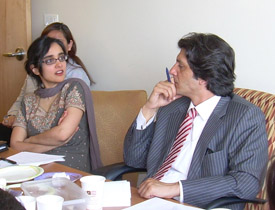
"The government has very few progressive programs" to address gender-based violence, reproductive health and adolescent marriage, said Rabbiya Iftikhar Bajwa, a lawyer and women's rights activist who was among the delegation. "These issues are very serious, and we have much work to do to address them."
Bajwa was among a seven-member Pakistani delegation spending three weeks in the U.S. on a diplomatic visit sponsored by the U.S. State Department to discuss combating gender-based violence. After visits to Washington, DC, and other cities, the group spent a morning discussing women's health issues with Raj, associate professor of community health sciences, who has conducted research into reproductive health, child marriage and gender-based violence in South Asia.
Raj said she and fellow researchers hope to collaborate with members of the delegation on future research projects. The Pakistani group included representatives of several non-profit organizations in Pakistan that work to empower women and combat discrimination.
The visit was part of the State Department's International Visitor Leadership Program, designed to build mutual understanding between the U.S. and other countries on issues of concern. Raj was among the experts asked to meet with the group to exchange views on how to prevent and prosecute gender-based violence.
Raj said gender-based discrimination has tragic consequences for women in South Asia and other parts of the world, including child marriage, forced fertility, infant and maternal mortality and sex trafficking. "Our research seeks to draw the distinctions within gender-based violence and identify some of the cultural factors," said Raj, whose research has focused on India and Afghanistan.
Members of the Pakistani delegation said they believe that expanding educational and economic opportunities are keys to improving women's standing in Pakistan, and they cited a need for more family-planning programs and education about contraceptive spacing of births.
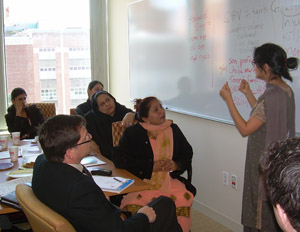
Women in rural areas need the most help, said Sabiha Shah, chairwoman of the Women Development Foundation of the Khawateen Committee Lyari Community Development Project.
"In urban areas, where women are more educated, they are making decisions" about marriage, motherhood and careers, Shah said. "It is not the same" in rural areas.
Rights advocates who are pushing the proposed law banning domestic violence are hoping it will bring Pakistan into line with a growing number of developing nations that have outlawed spousal abuse. But the law has been opposed by some Islamist lawmakers in Parliament, who claim it would undermine the family structure.
Violence against women is a widespread phenomenon in Pakistan, a Muslim-majority nation where most people are poor, only half of adults can read, and clerics exercise significant power. In 2008, there were at least 7,571 incidents of acid attacks, rapes, spousal beatings and other violence against women, according to The Aurat Foundation, a women's rights group. A 2009 State Department Human Rights Report found young Pakistani girls and women were especially vulnerable to problems related to sexual and reproductive health and rights. According to the National Committee for Maternal and Neonatal Health, only 30 percent of married women of reproductive age used any contraceptive method.
The status of women is a paradox in a country once headed by a woman prime minister, Benazir Bhutto, who was assassinated in 2007.
Raj told the delegation that legislation alone would not solve problems such as child marriage and gender-based violence, and she encouraged the group to develop programs that would educate both young women and men about family-planning and women's reproductive health. She noted that while India has a higher legal age of marriage than Pakistan -- 18, versus 16 in Pakistan -- child marriage rates actually are higher in India, especially in rural areas.
"It is not enough to just have the laws. They don't reach down into the communities," Raj said.
Delegation members agreed, with Shah saying that her country is doing more education, via advertising, on contraceptive use and women's health. She said more health education programs are needed in schools.
The group also talked about the need to train police officers to respond to cases of domestic violence with greater sensitivity. At Raj's invitation, Meena Sonea Hewett, director of a Massachusetts-based organization called Saheli that provides support for South Asian women and families, spoke to the delegation about the success of a police training program that her agency conducted.
The Pakistani visitors said they looked forward to the day when police in their own country would be specially trained to deal with domestic violence.
"Mostly you work on these problems in your own home, in your own family," said Omar Khayyam, project manager of the Female Human Rights Organization (FEHRO).
Other members of the delegation included Muhammed Nasir Habib, director of the Women's Socioeconomic Development Project of Community Support Concern; Tahira Khursheed, chairwoman of the Sahil Health and Development Organization for Women (SHADOW); Zubeda Yousef, assistant manager of the Gender and Environment Program of the Shirkat Gah Women Resource Center; and Sadia Chaudhary, a female prosecutor who works on crimes against women. The visit was overseen by the organization WorldBoston.
Raj said the delegation's focus on gender-based violence was a positive sign that Pakistan is coming to terms with the problem.
"It's just extraordinary to me that a delegation from Pakistan is here, focusing on these issues," she said. "That gives me optimism. I'm honored to be a part of it."
Submitted by Lisa Chedekel
Joseph Flaherty DMD 10 Presents Intriguing Grand Rounds
Joseph Flaherty DMD 10 presented “Restoration of Four Endodontically Treated Maxillary Incisors,” at Grand Rounds on April 14. Professor and Chair of General Dentistry Dr. Judith Jones, Professor Dr. Carl McManama, Associate Dean for Academic Affairs Dr. Cataldo Leone, and Dean Jeffrey W. Hutter hosted Grand Rounds, located in room 301 of the Dental School.

Flaherty conducted his externship at the Mid-Upper Cape Community Health Center, in Hyannis, Massachusetts. The Center is one of three community dental health centers located in Barnstable County. Flaherty’s externship preceptors were Dr. Gerry Keen and Dr. Cezar Martini. The 10-week externship began October 5 and lasted through December 11.
Flaherty’s presentation discussed the treatment plan for a 53-year-old, HIV positive, white male. The patient received trauma to his face several years ago, and as a result lost the clinical crowns on his four maxillary incisors: 7, 8, 9, and 10. Flaherty noted that while the patient has had anti retroviral treatment for his HIV condition in the past, he surprisingly had no primary caries. He regularly saw the dentist up until about 15 years ago when anxiety over the amount of potential dental work deterred him. The patient is college-educated and a member of a grant program that provides limited dental care to patients, excluding orthodontics, at a minimal cost.
The patient’s chief complaint was the aesthetic appearance of his missing front teeth. Flaherty diagnosed the patient with malocclusion, supragingival fractures on 7, 8, 9, and 10, and chronic gingivitis. He recommended a treatment plan that included the patient returning every three to four months for continuing care. The genetic malocclusion that Flaherty highlighted during the static occlusal evaluation of his presentation will play a factor in the proposed treatment plan. Unfortunately, since orthodontics is not covered by the patient’s limited dental care plan, he chose to not have orthodontic procedures included in the proposed treatment plan. The accepted treatment plan included the following areas of dental medicine: endodontics, restorative dentistry, periodontics, and oral surgery.
After Flaherty’s presentation Dr. McManama, the moderator of the event, lead an engaging discussion with faculty and students. In response to a question raised by Dr. Jones, Chair & Anthony A. Gianelly Professor in Orthodontics & Dentofacial Orthopedics and Director of the Advanced Specialty Education Program in Orthodontics & Dentofacial Orthopedics Dr. Leslie Will provided insight into the orthodontics portion of Flaherty’s proposed treatment plan.
This was the final Grand Rounds presentation for Goldman School of Dental Medicine for the 2009-2010 academic year.
Oral Infection and Heart Disease: Study Shows Different Antibodies Indicate Different Risk Profiles
Science previously suggested oral infections might trigger the immune system, causing inflammation in other parts of the body and contributing to heart disease. It was thought that all antibodies worked the same way and that antibody levels would increase the risk of heart disease if the “oral infection and heart disease” hypothesis were true.

In a new study, Research Associate Professor Dr. Sok-Ja Janket disproves this notion and shows that two salivary antibodies are associated with heart disease in different ways.
"Our results indirectly suggest that oral infection may play a role in the initiation of heart disease but we have to look at the right antibody,” Dr. Janket says. “Not all antibodies represent the same pathway."
The first antibody studied was positively associated with heart disease risk. As oral infection worsened, the antibody dubbed sIgA indicated a greater chance of heart disease.
The second antibody, IgG, which reflects systemic immunity, suggested protection from heart disease.
Still to be determined is whether there is a causal relationship between each antibody and the likelihood of developing heart disease. This study was not designed to determine cause, but Dr. Janket hopes her future studies sponsored by the American Heart Association will find the answer.
The study appears in the April 1 issue of Journal of Dental Research.
A Medical Training Model Addresses Race, Ethnicity, and Culture
Each day, across this country, thousands of medical professionals provide vital medical services to people in acute need. These patients come from all walks of life, all cultures, races, ethnicities, economic and psychosocial circumstances. Very often the medical professionals providing these crucial services come from different backgrounds entirely. Yet in order to provide the medical care so desperately needed by our country’s diverse populations, it is essential that these differences are bridged humanely, compassionately and respectfully.
In 2000, after a frustrated intern confided his negative attitude towards the patients he was treating, a medical educator assembled a diverse group of dedicated physician colleagues at the former Boston City Hospital who seemed to feel much more effective and indeed found their patients inspiring.
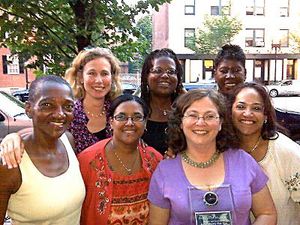
To improve medical training and reduce health care disparities, this group of clinician-educators at Boston Medical Center and Boston University School of Medicine developed the RESPECT model. The model teaches physicians to communicate more effectively—especially when there are differences of race, class or culture, and is featured in the current Special Issue on Healthcare Disparities Education in the Journal of General Internal Medicine. According to the authors this model not only provides a framework for what to do—it also shows preceptors how to teach this skill set to medical trainees. Their article describes the ways they have used the model in training various levels of learners in a number of settings and includes specific teaching tools.
RESPECT stands for specific behaviors needed for patient interactions such as:
Respect: Show respect by attentive listening, eye contact and posture. Recognize patients’ choices and accomplishments.
Explanatory model: Ask what the patient thinks caused his or her illness and what he or she believes will help treat it.
Social context: Find out how the patient’s life affects his or her illness; include stressors, supports and spirituality.
Power: Share power by listening to the patient and asking for his or her preferences in treatment.
Empathy: Show empathy by verbally and non-verbally responding to patients’ emotions and concerns and demonstrating understanding of their significance.
Concerns: Ask the patient, “What worries you the most?” or “What concerns should I know about?”
Trust/ Therapeutic alliance: Build trust and find common ground. Make sure that the patient is comfortable with the treatment plan or collaborate to find a mutually agreeable alternative.
As a relational guide applied to teaching, the RESPECT model can also build trust in the preceptor/trainee relationship. “Respectful communication across power differentials between faculty, residents and colleagues promotes positive professional communication and teamwork along with full and open disclosure of what the real challenges are,” says Carol Mostow, LICSW, Associate Director, Psychosocial Training in the department of Family Medicine at Boston Medical Center and lead author of the article. “Unfortunately, the rigorous clinical training process of medical school and residency that produces knowledgeable and medically skilled doctors has been associated nationally with an erosion of empathy and other interpersonal skills needed for effective patient care. Using RESPECT in our interactions with learners and colleagues can change that culture to restore empathy with each other and our patients, promoting a personal and systems-based examination of obstacles to optimum care and patient safety, especially important for patients at risk for poor outcomes.”
The article co-authors are:
- Julie Crosson, MD, Dorchester House, Section of General Internal Medicine, Boston Medical Center; Boston University School of Medicine
- Sandra Gordon, MD, Department of Medicine, Section of General Internal Medicine, Boston Medical Center; Boston University School of Medicine
- Sheila Chapman, MD, Department of Medicine, Section of General Internal Medicine, Boston Medical Center; Boston University School of Medicine
- Eric Hardt, MD Department of Medicine, Section of Geriatrics, Boston Medical Center; Boston University School of Medicine
- Peter Gonzalez MD, Department of Medicine, Beth Israel-Deaconess Medical Center, Harvard Medical School
- Leyda Delgado, MD, Department of Medicine, Section of General Internal Medicine; Boston Medical Center Latino Clinic; Boston University School of Medicine
- Thea James, MD, Department of Emergency Medicine, Boston Medical Center; Boston University School of Medicine
- Michele David MD, MPH, MBA Department of Medicine, Section of General Internal Medicine, Boston Medical Center; Boston University Center for Excellence in Women's Health; Haitian Health Institute at Boston Medical Center; Boston University School of Medicine.
View the complete article here
BUSPH's Practice Office Awarded $1.275 Million to Help Train Local Health Agencies
The Office of Public Health Practice at Boston University School of Public Health (BUSPH) has been awarded a $1.275 million grant over three years to help the state provide better training to public health staff members and governing officials who run local boards of health in hundreds of cities and towns around the state.
In January, the Massachusetts Department of Public Health (MDPH) selected the Practice Office to manage the Local Public Health Institute of Massachusetts (Institute), which offers courses to Massachusetts' 351 local boards of health.
"This is an exciting opportunity to link the resources of the school to the front line public health workforce," said Kathleen MacVarish, the director of practice programs in the Practice Office, who will also direct the operations of the Institute. "We’ll be able to connect our faculty, staff and students to state and local practitioners and address real world public health problems and challenges."
MDPH established the Institute in 2005 in an effort to give local public health workers easier and more ample access to relevant courses. Massachusetts is one of the few states in the country where public health and environmental services are provided by the individual city and town governments, as opposed to many states that provide them on a broader, county basis. Many local agencies, therefore, have small staffs and limited resources, making it difficult to for the staff in those offices to get or provide adequate training.
As part of the three-year grant, BUSPH will work closely with an Institute Advisory Committee on everything from identifying target audiences, to the scope of trainings offered and from curriculum development to shaping the Institute's long-term vision. The committee will be made up of representatives from local health departments and public health professional organizations,
In collaboration with local health departments and MDPH, BUSPH will use the grant to develop innovative new programs and identify where the need is greatest for more training and improvement, according to Wayne LaMorte, MD, PhD, MPH, who will be the principal investigator. One challenge, he said, is how to effectively reach all members of various local health departments who are spread across the state.
"BUSPH has been using technology more and more to enhance the quality of education for our students," said LaMorte, who is assistant dean for education and professor of epidemiology. "This will be an opportunity to apply what we have learned to provide high quality training throughout Massachusetts."
Besides LaMorte and MacVarish, who is a clinical assistant professor in environmental health, other BUSPH faculty on the Institute's leadership team include Harold Cox, the associate dean for Public Health Practice; Anne Fidler, ScD., assistant dean for Public Health Practice and an associate professor of environmental health; Robert Schadt, EdD, director of Office for Teaching, Learning and Technology; Jennifer Tsoi, MPH, and Hope Worden, MSW, PhD.
BUSPH has been actively involved in ensuring that the Massachusetts health workforce receives adequate training. Since 2000, the Practice Office has managed the Health Resources Services Administration (HRSA) funded Public Health Training Center which has educated thousands of state and local public health workers across New England.
In 2006, the Institute implemented a new program for Massachusetts local health workers, "Foundations for Local Public Health Practice: Tools Needed to Get the Job Done," that was developed at BUSPH with support from local health directors. Cox and MacVarish have also been part of a working group examining how different city and town health departments could regionalize to provide more equitable service to residents.
Submitted by Elana Zak
GSDM Science Day Highlights Stem Cells and Wide Range of Student Research
Science Day 2010 featured poster and oral presentations by predoctoral and postdoctoral students as well as postdoctoral fellows. The depth and breadth of research at this year's event was truly remarkable. Vendors also descended on the Dental School cafeteria to showcase the latest dental products available for dental practitioners.

After lunch, Chair and the Herbert Schilder Professor in Endodontics and Director of the Advanced Specialty Education Program in Endodontics Dr. George Huang presented the keynote research presentation to a packed auditorium. His lecture, "It was the stem cell all along," highlighted the power of stem cells. Clinical trials are currently underway to use stem cells to repair critical organs and tissues such as heart and nerve tissues. Stem cell-mediated regeneration could become more prevalent for restoring all kinds of tissues—and teeth—in the next 20 years.
“I am thrilled at the prospect of turning stem cells into specialized tooth making cells and nerve cells,” says Dr. Huang. “We can even reprogram human dental stem cells into human embryonic-like cells called induced pluripotent stem (iPS) cells, which may be an unlimited source of cells for tissue regeneration.”
Leyla Sahabi DMD 12 and Sahar Abtahi DMD 12 were the respective winners of the poster and oral presentations in the predoctoral category. Sahabi's poster was titled, "Vessel Wall Structural Changes in Diabetic Microvasculature," and she completed her research under the guidance of Corneliu Sima, Dr. Robert Gyurko, and Dr. Thomas Van Dyke. Abtahi's presentation was titled, "Resolvin E1 Enhances P. Gingivalis Phagocytosis by PMN." Abtahi worked on this research with the help of Yael Houri-Haddad, Dr. Taisuke Ohira, Dr. Alpdogan Kantarci, and Dr. Van Dyke.
Kimberly Chan DMD 12 was the winner of this year's ADA/Dentsply Award for her research titled, ”Embryonic Stem Cell Gene Expression Detected in OFCD-iPS Cells.” She completed this research under the guidance of Xing Yan, James Liao, and Dr. George Huang.
Maha Bahammam PERIO 11 and Siddika Selva Sume ORAL BIO 10 were the respective winners of the poster and oral presentations in the postdoctoral category. Bahammam's research was titled, "“GSK3β: A Novel Regulator of CCN2/CTGF Expression Human Gingival Fibroblasts," and was completed under the guidance of Dr. Philip Trackman. Sume's research was titled, "Epithelial to Mesenchymal Transition in Gingival Overgrowth,” and was completed with the help of Dr. Kantarci, Alan Lee, Dr. Hatice Hasturk, and Dr. Trackman.
Oral & Maxillofacial Surgery Postdoctoral Fellow Prashath Ravi was the winner of the postdoctoral fellow category for a poster presentation titled, "Ameloblastoma of the Jaws: Is Recurrence Likely?” which was completed with the help of Brandon Meier OMFS 11, Dr. Pushkar Mehra, Dr. Ishwar Bhatia, and Dr. Sadru Kabani.
Winners will be honored at the Science Day Awards Luncheon held on April 6 at the School of Medicine’s Hiebert Lounge.
"I'd like to thank Dr. Maria Kukuruzinska for once again putting together such a comprehensive and excellent event," said Dean Jeffrey W. Hutter. "Research is a major part of what we do here at the Henry M. Goldman School of Dental Medicine and it is extremely important to come together as a community each year to recognize the efforts of our researchers at every level. I'm also very pleased to see our students completing research on such a wide variety of topics related to oral health."
April 14 Public Health Forum: Supporting Health Systems in Northern Haiti
Join Nathan Nickerson, RN, DrPH, as he presents the talk "Outside the Epicenter: Supporting Health Systems in Northern Haiti" at the BUSPH Public Health Forum on April 14 at noon in L-112.

Nickerson is executive director of Konbit Sante Cap-Haitien Health Partnership, a Maine-based volunteer partnership that aims to save lives and improve health care in northern Haiti. Rather than developing a second, parallel health system, Konbit Sante works with the Haitian Ministry of Health and with Haitian colleagues to build capacity within the public system for Haitians to care for Haitians.
Nickerson's talk will cover Konbit Sante's historical capacity-building partnership with the public health care system in the Northern Department of Haiti. He will also focus on the importance of their partnership as Konbit Sante assists in responding to the many challenges confronting the country after January's earthquake, covering the NGO's immediate response to the earthquake and its short- and long-term goals.

"While there were close to 3 million people in the area affected by the earthquake, there are 7 million people in the remainder of the country who rely on fragile systems of care that need to continue," Nickerson said. "There are also displaced people, including large numbers who are seriously injured, moving within the country in search of support."
Konbit Sante has a small staff in the United States and supports 28 Haitian doctors, nurses, health workers, and administrators to support its work in Haiti. A group of highly skilled volunteers work in the US and Haiti to develop programs, teach, collect and deliver equipment and supplies, and make infrastructure improvements.
Nickerson was previously director of public health for the city of Portland, Maine, where he oversaw services related to infectious diseases, health care for the poor and homeless, health care for children and families, and health promotion services. He has bachelor of science degrees from Tufts and University of Southern Maine as well as a master's degree in nursing from Simmons College. In 2007, he received his doctorate in international public heath from BUSPH. Nickerson is a founding director of Konbit Sante and has special interests in infectious diseases, public health, and community outreach
The BUSPH Public Health Forum is a regular series presented by the School of Public Health. It is free and open to the public.
BUSPH Public Health Forum
"Outside the Epicenter: Supporting Health Systems in Northern Haiti"
Presented by Nathan Nickerson, RN, DrPH, executive director of Konbit Sante
Date: April 14, 2010
Time: 12 – 1 p.m.
Location: BUSM Instructional Building, Room L-112
Contact: Kasey Oliver, kloliver@bu.edu