Student Updates
Quiet Donors of MED’s Largest-Ever Gift Step Forward: $10.5M for the Dahod Breast Cancer Research Center
In August 2008, a Boston University School of Medicine alumna pledged $10.5 million to her school — the largest gift in its history. But she chose to remain anonymous.
Now, more than a year and a half later, University Overseer Shamim Dahod (CGS’76, CAS’78, MED’87) and her husband, Ashraf, are putting a face — or more accurately, two faces — on their contribution, which will establish the Shamim and Ashraf Dahod Breast Cancer Research Center at the School of Medicine. The gift will also endow assistant professor and international scholar positions at the center and support MED’s new residence hall.
When they made the pledge, announcing their names “didn’t seem appropriate,” Shamim says. The global economy was in a tailspin, and Ashraf’s mobile wireless infrastructure company, Starent Networks, had been publicly held only for about a year. It was later acquired by Cisco Systems for $2.9 billion, in December 2009. But this spring, with encouragement from the School of Medicine, the Dahods decided the time was right.
“The Dahods are modest and generous individuals who haven’t sought the spotlight,” says Karen Antman, dean of MED and provost of the Medical Campus. “But having their names tied to this important work lends both prestige and momentum to our breast cancer initiative. We at the School of Medicine are grateful that they have agreed to step forward and be associated with the Dahod Breast Cancer Research Center.”
High school sweethearts and practicing Muslims from Mumbai, India, the Dahods moved to the United States in the early 1970s to pursue married life and their educations. They are closely connected with Boston University: Shamim, now a primary care physician in Chelmsford, Mass., earned a bachelor’s degree in biology from the College of Arts & Sciences in 1978, worked as researcher in a MED lab for five years, and graduated with a BU medical degree in 1987. Ashraf, a computer engineer turned entrepreneur, whose initial start-up, Applitek, developed the first cable modem, holds degrees from the University of Mumbai, the University of Michigan, Stanford University, Northeastern, and Harvard Business School, and he has several relatives who attended BU.
So, although Shamim, a two-time cancer survivor, had been treated for breast and thyroid cancers at another local institution, when they decided to support breast cancer research, she says, BU was “the logical place.”
“Our connection with BU was factor number one,” Ashraf confirms. “And number two is the patients that are served at Boston Medical Center. If you look at Boston, you find that care and treatment can be very different depending on your social status. We could have made this gift elsewhere, but no other place in this city serves the same population that BMC does.”
“I got the best of treatment. But everybody’s not that fortunate,” Shamim says. As a medical trainee at Boston City Hospital, now Boston Medical Center, New England’s largest safety-net hospital, she saw the plight of underserved patients firsthand — lack of knowledge, lack of facilities, lack of insurance. “There was no prevention for them, just emergency or catastrophic care. They were really sick, and they came, and they got sicker, and that was it. So when I went through breast cancer, I said, ‘I would like to do something to take care of that population.’”
The $10.5 million pledge is not the first contribution the Dahods have made to help overcome health disparities. As members of the Dawoodi Bohra, an international Muslim community based in Mumbai, they are charged to “uplift” the needy — in their case, by improving health and education in Yemen, parts of India, and Myanmar.
They were involved, for example, in the construction of Saifee Hospital, a 280-bed general hospital in Mumbai that offers paid care — in rooms like posh hotel suites, for luxury-minded patients — as well as discounted and free care subsidized by a philanthropic trust. They also helped open a medical clinic in Yemen, where U.S. physicians provide pro bono specialty services on a two-week rotating basis. The whole Dahod family is involved in their philanthropy: their older daughter, Tasneem, went to Myanmar in 2006 to explore potential new projects there, and their younger daughter, Nisreen, made a volunteer trip to Yemen alone at age 14.
“As you can imagine, I was biting my nails off,” Shamim says. “But I wanted her to be exposed to what other people don’t have, so she could better appreciate what she has. It put a lot of things in perspective for her.”
Although serving the underserved was the original inspiration behind the Dahod Breast Cancer Research Center, Shamim says her fight against the disease is more personal today. “My brother was recently diagnosed with breast cancer,” she explains. “He’s in the midst of getting his treatment. I also have a niece who was treated for breast cancer. Now I feel compelled to do something about breast cancer, because it’s going to affect my children.”
She hopes that the assistant professorship included in their pledge will help up-and-coming breast cancer researchers keep that from happening. “Professors with tenure already have ample opportunities,” she says. “This is an opportunity for the young ones — those who are on the bottom rung and trying to climb. This gives them a chance to show their capacity, and bring out an idea that nobody has thought of about how to take care of this disease.”
The Dahods have also helped fund the construction of two mosques — one in Billerica, Mass., and another in New Jersey. They have encountered no hostility as active Muslim philanthropists in post-9/11 America. In fact, Ashraf says, the opposite is true: “When we built our mosque here in Billerica, our first hearing in the town was September 12, 2001, the day after the terrorist attacks. From that first hearing forward, the Town of Billerica has been fabulous. The truth is, it was easier for us to build a mosque in the United States than it would have been in many Muslim countries.”
Asked what an entrepreneur and a primary care physician discuss over the dinner table, they respond after a moment’s thought. “My work,” says Shamim. “I have no business experience, so we discuss the business aspects of my work. He’s very analytical, and I go by my intuition. So the two of us meet in the middle.”
“I don’t make a single key business decision without getting her opinion,” Ashraf says. “I seldom hire an executive reporting to me whom she has not met, and given me her opinion about the person. And obviously, we talk about our grandkids.”
With grandchildren already on the scene, do they think about retirement? “No,” says Ashraf. “Actually, the spiritual leader of the Dawoodi Bohras doesn’t let anybody retire. He’s 99, and he’s still working.”
“We’re still a way from 99,” adds Shamim, “so we have some years ahead of us!”
This BUToday story was written by By Andrea Baird (COM’05).
Karen Antman (left), MED dean and Medical Campus provost, and President Robert A. Brown (right) with University Overseer Shamim Dahod (CGS’76, CAS’78, MED’87) and her husband, Ashraf, who have pledged $10.5 million to the School of Medicine — the largest gift in its history. Photo by Linda Haas.
GSDM Volunteers Reach Out to Local Haitians
On April 10, Clinical Instructor Dr. Oscar Ortiz-Urrego led a team of student volunteers to the 4th Annual Inite Pou La Sante United for Health Fair. The fair was held at the Voice of the Gospel Tabernacle in Mattapan.

Fair services included health and nutrition counseling, cancer education, blood pressure checks, diabetes screening, eye exams, and dental screenings provided by Boston University Henry M. Goldman School of Dental Medicine (GSDM). GSDM volunteers were asked to attend this Haitian health fair after providing similar outreach at a health fair organized by the same group in March.
Dr. Ortiz-Urrego has participated with Division of Community Health Programs (CHP) Oral Health Promotion Director Kathy Lituri in past outreach events, but decided to get more involved in this event by taking on a leadership role. He added, "The reason I decided to lead this event was to encourage oral health in the Haitian community, and to be able to explain how healthy teeth are related to a healthy body."
Student volunteers for this event included Susan Snyder DMD 11, Ke Wang DMD 11, Anuja Aryal DMD 11, Derek Song DMD 12, Trevor Neal DMD 11, Muneet Nanda DMD 11, Parneet Khokhan DMD 11, and Shikha Chopra DMD 11.
Osamu Shimomura to Be Honored at Commencement Nobel-winning chemist will receive Doctor of Science
Osamu Shimomura, a Nobel Prize–winning chemist and a School of Medicine professor emeritus of physiology, will be awarded an honorary Doctor of Science at the Boston University’s 137th Commencement ceremonies on Sunday, May 16, 2010.
Shimomura, a former senior scientist at the Marine Biological Laboratory in Woods Hole, Mass., was one of three winners of the prize in 2008 for his discovery of green fluorescent protein in the jellyfish Aequorea victoria. He shared the $1.4 million award with Martin Chalfie of Columbia University and Roger Y. Tsien of the University of California, San Diego, two researchers who pioneered cellular research techniques using the proteins Shimomura identified.
Shimomura found the GFP in the jellyfish, located off the west coast of North America, in 1962. James Head, a MED professor of physiology and biophysics, recalls Shimomura’s stories of collecting the jellyfish — Shimomura began his research with 10,000 specimens — in Washington state.

“He and his wife used to spend summers at Friday Harbor and catch bucket after bucket of jellyfish,” says Head, who collaborated with Shimomura on research into the behaviors and uses of aequorin, another fluorescent protein. “In those early days, he would purify the protein directly from the jellyfish, getting small amounts of protein from bucketfuls.”
But although Shimomura pursued his studies of GFP for years, he didn’t realize the potential applications of his work until 1994, when Chalfie’s research emerged. In an organism, GFP can be fused to proteins of interest to scientists, with minor effects on the organism’s behavior. Researchers can then observe the locations and movements of the studied proteins by monitoring the GFP, which remains fluorescent.
“This protein has become one of the most important tools used in contemporary bioscience,” according to the announcement of the Nobel Prize by the Royal Swedish Academy of Sciences. “With the aid of GFP, researchers have developed ways to watch processes that were previously invisible, such as the development of nerve cells in the brain or how cancer cells spread.”
“These discoveries were seminal and decades ahead of their time,” says Gary Borisy, director and CEO of the Marine Biological Laboratory. “They really have ushered in a revolution in cell biology.”
Shimomura, who earned a Ph.D. in organic chemistry at Nagoya University in 1960 and began studying bioluminescence there before coming to America and joining a research team at Princeton University, says he never expected his work to change the world of cell biology.
Shimomura is one of five honorary degree recipients at this year’s Commencement. Playwright Edward Albee will be awarded a Doctor of Letters. Attorney William T. Coleman, Jr., a champion of civil rights, will receive a Doctor of Laws. Wafaa El-Sadr, a pioneering AIDS researcher, will be presented with a Doctor of Science. Commencement speaker Eric H. Holder, Jr., attorney general of the United States, will receive a Doctor of Laws.
Being Obese Can Attract Bullies, New Study Says
Obese children are more likely to be bullied regardless of gender, race, socioeconomic status, social skills or academic achievement, according to a new study led by a University of Michigan researcher and co-authored by Danielle Appugliese, research manager of BUSPH's Data Coordinating Center.
The study, published online in the journal Pediatrics, concludes that being obese, by itself, increases the likelihood of being a victim of bullying for children in grades three through six. Researchers studied 821 children participating in the Eunice Kennedy Shriver National Institute of Child Health and Human Development Study of Early Child Care and Youth Development. The children were recruited at birth in 10 study sites around the country.
The researchers evaluated the relationship between the child's weight status and the odds of being bullied as reported by the child, mother and teacher. The study accounted for grade level in school, gender, race, family income-to-needs ratio, racial and socioeconomic composition of the school, and child social skills and academic achievement as reported by mothers and teachers.
Researchers found that obese children had higher odds of being bullied no matter their gender, race, family socioeconomic status, school demographic profile, social skills or academic achievement.
"Physicians who care for obese children should consider the role that being bullied is playing in the child's well-being," said lead author Julie C. Lumeng, M.D., assistant professor in the Department of Pediatrics and Communicable Diseases at the University of Michigan's C.S. Mott Children's Hospital. "Because perceptions of children are connected to broader societal perceptions about body type, it is important to fashion messages aimed at reducing the premium placed on thinness and the negative stereotypes that are associated with being obese or overweight."
Childhood obesity and bullying are pervasive public health problems. Obesity among children in the U.S. has risen to epidemic proportions, with 17 percent of 6 to 11-year olds estimated to be obese between 2003 and 2006. In addition, parents of obese children rate bullying as their top health concern, and past studies have shown that obese children who are bullied experience more depression and anxiety.
Besides Lumeng and Appugliese, additional authors include: Patrick Forrest of the University of Michigan; Niko Kaciroti of the University of Michigan; Robert Corwyn of the University of Arkansas in Little Rock; and Robert Bradley of the Arizona State University.
Submitted by Lisa Chedekel
Mey Al-Habib DScD 12, ENDO 14 Receives AAE Foundation Research Grant
Mey Al-Habib DScD 12, ENDO 14 was recently awarded an American Association of Endodontists (AAE) Foundation research grant in the amount of $32,250. The grant supports her research proposal titled, "Characterization of Subpopulations of Dental Pulp Stem Cells."

Dr. Al-Habib is working on this research with her research advisor and mentor Herbert Schilder Professor in Endodontics and Director of the Advanced Specialty Education Program in Endodontics Dr. George Huang.
"The goal of this research is to thoroughly understand and profile different subpopulations of human dental pulp stem cells (hDPSCs),” said Dr. Al-Habib. “Up until this point there has been a lack of studies on the specific subpopulations of hDPSCs and by defining the characteristics of each subpopulation, we hope to identify the different uses of each group in dentin and pulp tissue regeneration.”
Upon completion of the research Dr. Al-Habib will submit her findings for publication in the Journal of Endodontics and for presentation at the AAE Annual Session.
This is Dr. Al-Habib's first experience conducting stem cell research and she is the first DScD student to join Dr. Huang's lab. Both came to Boston University Henry M. Goldman School of Dental Medicine (GSDM) in September of 2009. Dr. Huang has completed extensive research in this field and thought Dr. Al-Habib would be an excellent student to tackle this aspect of stem cell research.
He added, "Mey's credentials show that she is a very outstanding student. She excelled academically at the undergraduate level and she has experience teaching."
Dr. Al-Habib is currently an endodontic faculty member of the faculty of Dentistry of King Abdulaziz University, located in Jeddah, Saudi Arabia. Upon completion of her DScD degree and CAGS in Endodontics at GSDM she will return to the University in the role of Assistant Professor.
MacArthur Fellow Wafaa El-Sadr to Deliver 2010 BUSPH Commencement Address
Wafaa El-Sadr, MD, MPH, director of the International Center for AIDS Care and Treatment Programs (ICAP) and director of the Global Health Initiative at Columbia University's Mailman School of Public Health, will address graduates and their families May 16 at the Boston University School of Public Health 2010 commencement ceremony.

For two decades, Dr. El-Sadr served as chief of the Division of Infectious Diseases at Harlem Hospital Center in New York City. In this role, she was instrumental in the development of a comprehensive HIV/AIDS and tuberculosis program focused on service, training, and research. This unique program applies a family-focused approach, uses multidisciplinary teams, and engages community members.
ICAP, the Center she founded and currently directs, works in 14 countries in sub-Saharan Africa in partnership with governmental and non-governmental organizations building in-country capacity for HIV prevention, care and treatment. More than 750,000 people living with HIV have gained access to HIV care services and to life-saving antiretroviral therapy through these programs. ICAP champions a family-focused approach consistent with the one pioneered at Harlem Hospital.
Dr. El-Sadr is also recognized for her research work. She led the design and implementation of numerous studies that have furthered the understanding of the prevention and treatment of HIV/AIDS, tuberculosis, and other infectious diseases. Her work has also advanced the concepts of health systems strengthening globally for the purpose of confronting major health threats faced by communities around the world.
In 2008, Dr. El-Sadr was named a John D. and Catherine T. MacArthur Foundation Fellow in recognition of her creativity, originality, and potential to make important contributions for the future. In addition, in 2009, she was named one of "100 People Who Are Changing America" by Rolling Stone Magazine and listed among the "Guiding 10 Honor Roll" by Scientific American.
Dr. El-Sadr earned a doctorate in medicine from Cairo University in Egypt, a master's degree in public health in epidemiology from the Mailman School of Public Health at Columbia University, and a master's degree in public administration from the Kennedy School for Government at Harvard University. She is currently a professor of medicine and epidemiology at Columbia University.
Dr. El-Sadr will also serve as the Baccalaureate speaker at the Boston University commencement ceremony where she will receive an honorary Doctor of Science.
The BUSPH commencement ceremony will be held May 16, beginning at 4:30 p.m., at the Boston Convention Center, 415 Summer Street.
Learn About In Vivo Imaging With Fluorescent and Bioluminescent Light Using IVIS
Join Anna Studwell, IVIS Core Technician/Manager on Monday, May 24, as she presents an introduction to In Vivo Imaging. This presentation covers the basic science behind bioluminescent and fluorescent imaging, a description of the imaging hardware, and an overview of analysis techniques using Living Image software. Researchers interested in tracking cancer cell metastasis and tumor growth, stem cell migration, and other research allowing fluorescent or bioluminescent labeling may find this system a useful tool for developing figures worthy of publication. A limited number of participants may sign up at the presentation for a demonstration of the instrument's capabilities later that afternoon from 1:30-2:30 pm.
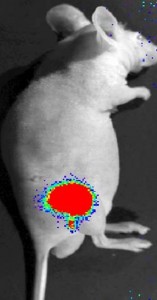
Some uses of this system include:
• Tracking of bioluminescent or fluorescently tagged cancer cells to monitor growth and metastasis;
• Monitoring all forms of cell transplant experiments to quantify engraftment, cell growth or cell differentiation. This includes studies of stem cell transplants, reconstitution of hematological and immune systems after irradiation.
• Monitoring the in vivo gene activity in transgenic animals carrying appropriately tagged promoter indicator trangenes.
Monitoring in vivo gene activities in cells that have been reconstituted to carry a bioluminescent or fluorescently tagged expressed gene.
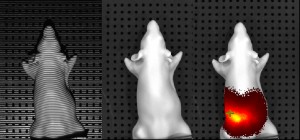
• Reconstrucing bioluminescent or fluorescent signal to a rough in vivo location in three dimensions
The presentation will take place on Monday, May 24, 2010 from 12:00 -1:00 PM, in the Wilkins Board Room, Room E120. This event is free, no registration is required. Feel free to bring your lunch.
Click here for additional information.
BUSM Researchers Seek to Understand Racial Disparities in Treatment Intensification for Hypertension Management
Are disparities in blood pressure a function of differences in treatment intensification (TI)? Treatment intensification is when providers initiate and intensify therapy for patients with elevated blood pressure. It is complex and includes discussions between patients and providers. BUSM researchers, Meredith Manze, MPH, Adam Rose, MD, MSc, Michelle B. Orner, MPH, Dan Berlowitz, MD, MPH, and Nancy Kressin PhD, have found that Black patients received lower TI compared to Whites, which was partly explained by patient concerns about medications and more provider counseling. These disparities in TI were responsible, in part, for racial disparities in blood pressure control.
This study, which appears online in the April 13 issue of the Journal of General Internal Medicine, explored the effects of patient race, sociodemographic and clinical characteristics, beliefs about medications, perceptions of provider/discrimination, sodium intake, medication adherence, and provider counseling on treatment intensification with 819 black and white patients presenting with hypertension from an urban, safety-net hospital.
"This study offers insight to potential targets for interventions. Improved patient-provider communication and patient health education may have the potential to reduce racial disparities in TI and ultimately, BP control," according to Meredith Manze, MPH.
Proposed State Budget Cuts Could Impact Patient Care and Clinical Education at GSDM
On April 14, the Massachusetts Senate Committee on Ways & Means released a fiscal year 2011 budget which calls for cuts to MassHealth adult dental benefits. These cuts would eliminate restorative services for the 700,000 adults on MassHealth and leave extractions as the only course of treatment for those in need of dental care. Although preventative services are protected, denying these benefits will cause pain and suffering and force many to use emergency services, which will only serve to diminish the savings created by the proposed cuts.

As of April 22, 31 state representatives had signed on to Amendment 547, filed by State Representative John W. Scibak, which opposes the cuts. Dean Jeffrey W. Hutter along with the deans of Harvard School of Dental Medicine and Tufts University School of Dental Medicine, and the President of Forsyth Institute have all come together to sign a letter voicing their support of Amendment 547 to be sent to the appropriate legislature.
“The elimination of restorative services for adults on MassHealth will dramatically impact the flow and variety of patients available to our students, reducing the quality of clinical education here at GSDM,” said Associate Dean for Clinical Services Dr. Stephen DuLong. “I strongly encourage every member of the GSDM community to take action against the proposed budget cuts. Faculty and staff who reside in Massachusetts should contact their representative in the State House and everyone—including students—should try to attend Beacon Hill Day on May 5.”
Beacon Hill Day will take place on Wednesday, May 5. The event is complimentary for all students but registration is required. More information—including event details, legislative priorities, and the registration form—is available online.
SPH Epidemiology Student Wins Dean's Award at BU Science and Engineering Day
Krista Huybrechts, a doctoral candidate in epidemiology, has been honored with the School of Public Health Dean's Award for research she is conducting on the safety of psychotropic medications used in older residents living in nursing homes.
The award was presented at the 2010 BU Science and Engineering Day. Huybrechts was one of a dozen BU graduate students to win an award at the March 30 university-wide event. BUSPH Dean Robert Meenan presented Huybrechts with the award and a prize of $500 at an April 21 luncheon.

"It is very encouraging and rewarding to have your work be recognized," Huybrechts said.
For her study, Huybrechts examined the effect of antipsychotic medication use on mortality in older nursing home residents, using different approaches to account for variables that might distort the association estimated in non-randomized studies. Excess use of such drugs in nursing homes has been a concern for decades, said her thesis advisor, Kenneth Rothman.
"Krista's thesis addresses important substantive and methodologic issues," said Rothman, a professor of epidemiology who has been working with Huybrechts since 2007. "With an aging population and a growing segment institutionalized in nursing homes, the use of psychotropic drugs in such settings is an important public health concern."
The annual science and engineering symposium is designed to highlight graduate students' scientific research on both the Charles River and Medical Center campuses.
Submitted by Elana Zak