Student Updates
Researchers Investigate Differences in Quality of Primary Care Delivered by US Resident and Staff Physicians
Research on the quality of US resident physician performance levels has often been limited by lack of a comparison group or strict focus on specific diseases and geographical areas. In order to gain insight on differences in quality of care provided by resident physicians and staff physicians, Boston Medical Center (BMC) researchers investigated performance of physicians in 33,900 hospital-based outpatient visits throughout the US.
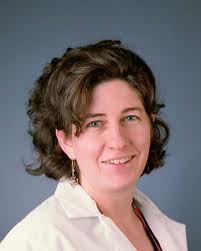
“This study highlights the significant opportunity that remains to improve quality of outpatient care in the United States,” said author Karen E. Lasser, MD, MPH, an associate professor of medicine at BUSM and staff physician at Boston Medical Center. “Quality improvement interventions that address specific barriers at the system, provider, and patient level are necessary in order to reduce the discrepancy between clinical practice and best evidence.” These findings appear in the Journal of General Internal Medicine online.
The researchers collected data from the 1997-2004 National Hospital Ambulatory Medical Care Survey and separated patient visits to resident and staff physicians. To monitor performance in multiple areas of common primary care they created 19 quality indicators that fell into five categories: medical management of chronic diseases; appropriate antibiotic use; preventative counseling; screening tests; and inappropriate prescribing in elderly patients. Performance quality was calculated as the percentage of eligible visits that received recommended care as defined in practice guidelines and consensus expert statements. Statistical analyses were performed after the mean performance rates of staff and residents were calculated for each quality indicator.
Results indicate that resident physicians were more likely to care for younger, non-white, female and urban patients, as well as patients with Medicaid. They also indicate that residents outperformed staff physicians on four measures of quality: ACE inhibitor use for congestive heart failure (57.0 vs. 27.6%); diuretic use for hypertension (57.8% vs. 44.0%); statin use for hyperlipidemia (56.3% vs. 40.4%); and routine blood pressure screenings (85.3% vs. 79.6%). All physicians performed at similar levels on the remaining 15 performance indicators.
Cheese! Second Year Dental Medicine Students Enjoy End of Year Pizza Party
Boston University Henry M. Goldman School of Dental Medicine (GSDM) DMD students enjoyed a pizza luncheon on the last day of their second year. This annual event, sponsored by the Alumni Association, was held immediately following the students' last exam, Oral Biology II. The party also celebrated the students' entrance into third year where they will spend the majority of their time working in the predoctoral patient treatment center. The party was filled with laughs and high-fives as the students celebrated the end of exams.
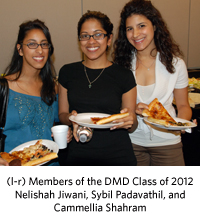
Host of the event and Alumni Board President Elect Tina Valades DMD 84 said a few words, "Congratulations on completing your second year of Dental School. The Alumni Association wants you to know that we are behind you 100%. We look forward to seeing you in the treatment centers this summer.”
Students were also presented with GSDM glasses as celebratory gifts at the party
Campus Researchers Provide Update in Pain Medicine
More than 75 million Americans suffer with chronic pain. Pain accounts for 20 percent of all outpatient visits, over $100 billion dollars per year in direct and indirect costs while analgesics account for 12 percent of all prescriptions.
In an effort to provide generalist physicians with the most current literature and data on chronic pain management for their patients, researchers from BUSM and BMC performed a review of peer-reviewed pain literature from January 1, 2008 through December 31, 2009 and selected, reviewed and summarized the ten pain-related articles during this time period which they felt would have the greatest impact on generalist's care of patients suffering from chronic pain. These findings currently appear on-line in the Journal of General Internal Medicine.
The researchers divided their review into seven major sections: Assessment, Collaborative Care, Chronic Pain and Depression, Opioids and Chronic Pain, Cannabis and Chronic Pain, Complementary and Alternative Treatments and Treatment for Specific Types of Chronic Pain. Each article summary was followed by a paragraph entitled "implications for practice" which described how the study's findings could change generalist practice.
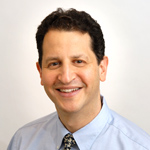
According to the researchers their aim for this article, which was presented earlier this year at the annual meeting of the Society of General Internal Medicine, was to review recent pain medicine studies and their key findings, and to discuss the implications of these findings for generalist in clinical practice. “As generalists we often care for patients with chronic pain but are poorly trained in chronic pain management and are unfamiliar with the current literature as it is often published in specialty journals,” said lead author Daniel Alford, MD, MPH, an associate professor of medicine at BUSM. “It is our hope and belief that this review of pain literature will prove invaluable to generalist physicians and more importantly to their patients,” he added.
BUSPH Study Links Cleaning Products to Breast Cancer
Women who report greater use of cleaning products may be at higher breast cancer risk than those who say they use them sparingly, according to a study co-authored by Boston University Professor and Associate Chair of Epidemiology Ann Aschengrau.
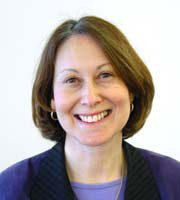
Aschengrau and colleagues from the Silent Spring Institute in Newton, Mass., carried out telephone interviews with 787 women diagnosed with breast cancer and 721 comparison women.
"Women who reported the highest combined cleaning product use had a doubled risk of breast cancer compared to those with the lowest reported use," said Julia Brody, executive director of Silent Spring Institute. "Use of air fresheners and products for mold and mildew control were associated with increased risk. To our knowledge, this is the first published report on cleaning product use and risk of breast cancer."
The researchers questioned women on product use, beliefs about breast cancer causes, and established and suspected risk factors. They found that cleaning products, air fresheners, and insect repellents were associated with breast cancer, but little association was observed with overall pesticide use. Women with breast cancer who believed that chemicals and pollutants contribute 'a lot' to the risk of developing the condition were more likely to report high product usage.
To read the full report, click here.
Submitted by Elana Zak
World AIDS Conference Hits Hopeful Note: BUSM’s Samet points to strides in treatment access, prevention
The news from Vienna is not all gloom and doom. As 25,000 representatives from the fields of health care, research, business, government, and human rights converged on the Austrian capital for the 18th International AIDS Conference this week, there has been much to celebrate, despite a worldwide increase of nearly 3 million HIV-infected people each year.
The conference, dubbed “Rights Here, Rights Now,” opened with the encouraging news that use of an antibacterial vaginal gel laced with the retrovirus-fighting drug tenofovir reduced HIV transmission in a large group of South African women by nearly 40 percent. And though there is no vaccine or cure for the AIDS-causing HIV virus 30 years into the global epidemic, drug treatments are allowing patients to live extended and in many cases normal lives, in a growing portion of the developing as well as the western world.
With participants from more than 100 nations, the biannual conference attracted luminaries including former President Bill Clinton and philanthropist Bill Gates. “It’s just enormous,” says Jeffrey Samet, a School of Medicine professor of internal medicine and an AIDS prevention researcher, who was in Vienna last week dashing from presentations to keynote addresses to meetings with email collaborators he’d never met face to face. BU Today caught up with Samet Tuesday evening to speak with him about the mood of this year’s conference and the knowledge and inspiration he’ll be bringing home to BU.
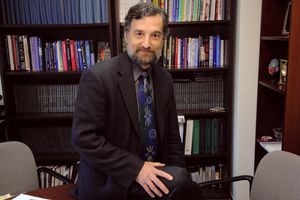
BU Today: This is a huge event. Can you describe the scope of the conference?
Samet: It’s really something akin to a water hose in your mouth. It’s the whole range of HIV issues coming at you; it’s just enormous. The meeting covers everything—I attended a session on innate immunity and there were 1500 people there. A lot of basic science happens here, and so does clinical science, a lot of drug trials, and [discussion of] the economics of the epidemic.
What’s the big news coming out of the conference?
The vaginal microbicide gel that significantly reduces the rate of HIV transmission versus placebo. This is a major success in a prevention trial of something researchers have been hoping to achieve for 25 years. The announcement preceded the presentation of the data, and it was really exciting. I wasn’t at that session, but I was told that people stood up and applauded like they were at a concert, something that just doesn’t happen at scientific conferences.
Tell me about the so-called Vienna Declaration and how it relates to AIDS policy in the United States.
The Vienna Declaration is a pretty big deal here. I was asked to sign it a few months ago. [More than 12,000 health practitioners have signed.] It seems straightforward. It says that public policy should be based on scientific evidence. But that said, needle exchange for IV drug users in the United States was just endorsed for the first time, by the Obama administration. Our public policy didn’t include it because it seemed too politically toxic. In some countries, like Russia and Ukraine, where police often harass drug users, addicts use dirty needles to avoid calling attention to themselves. So some people are calling for an end to police harassment, and that gets controversial.
Where are conference-goers predicting the next surge in AIDS cases will occur?
Eastern Europe, especially Ukraine, is a site that has taken off. Russia, where I do my prevention research, has gone from thousands of cases a year to millions; since 2001, HIV prevalence in Russia, Eastern Europe, and Central Asia has nearly doubled. People are keeping an eye on India, China, and southeast Asia. No place in the world has escaped, but the reasons for the increase are different. In Eastern Europe and Vietnam, transmission is mainly through drug use; in India it’s prostitution.
What recent findings will you present in your poster session this week?
I’ve spent the last 10 years doing work in Russia, looking at HIV-infected alcohol users. We did a prior prevention study to assess risk of sexual transmission. We’d looked at so-called narcology hospitals—the Russian equivalent of rehab—and now we’re looking at infectious disease hospitals. We’re trying to reduce the sexual spread of the disease. What we’re presenting here is a study of 700 people with HIV who also have been treated for sexually transmitted diseases such as gonorrhea, syphilis, and chlamydia. By using the recurrence of these as a marker in HIV-infected subjects, we can measure how many are practicing safer sex.
What are some promising advances in HIV prevention?
From the prevention research perspective, I get moved about pragmatic structural, as well as behavioral, interventions. Prevention isn’t going to be a matter of one microbicide gel—it’s going to require strong structural intervention, which means we have to change the way normal activities are done so they’ll be less risky. For example, if you have men going into a bar that’s close to where they get paid on Fridays, with a hotel next door that rents rooms by the hour, and there are sex workers at the bar, drinking will easily flow into high risk sex. You can’t interrupt this flow, but you can add a piece to it, by handing out a condom with every drink at the bar. There are all sorts of levels and varieties of structural intervention.
What will you take away from this year’s conference?
It’s a good time for people to be reminded that there are still 40 million people with HIV out there, and more than a million are infected every year. Yet it’s remarkable that people get treatment and live long lives. That’s not happening everywhere, but it’s happening more and more places—in Nepal, in Peru, in Rwanda, in Korea. This is the best thing that came out of the [George W.] Bush administration, that HIV treatment should be seriously funded worldwide.
Any other high points in addition to the announcement of the South Africa prevention study?
When Bill Clinton gave his keynote speech about the need to use AIDS funding more wisely, someone I know who has been to nearly all of these conferences came out crying. He’s just such an amazing speaker.
Will you be at the 2012 World AIDS Conference in Washington, D.C.?
Yes, and I want to pass along that it’s a fascinating volunteer opportunity for clever students. Any BU students who want to be involved in HIV work on any level can learn a lot just by helping out at the conference.
This BU Today story was written by Susan Seligson. She can be reached at sueselig@bu.edu.
Study Shows EMT Could Contribute to Harmful Gum Overgrowth
When gum tissue grows over the teeth, it’s called gingival overgrowth, and it puts people at risk for gum disease and oral infections, interferes with chewing, and is painful.
While it happens for different reasons, drug-induced gingival overgrowth is a well-known side effect of medications including the anti-seizure drug phenytoin, the immunosuppressant cyclosporin A, and calcium channel blockers (to treat high blood pressure) such as nifedipine.
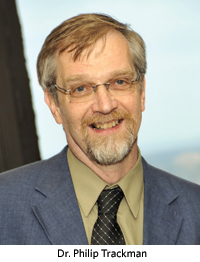
In a new study, Boston University Henry M. Goldman School of Dental Medicine (GSDM) Professor of Periodontology and Oral Biology Dr. Philip Trackman and colleagues show a cellular process called epithelial to mesenchymal transition (EMT) could contribute to gingival overgrowth.
“EMT is a normal part of embryonic development, but in adults occurs only in disease, specifically cancer and fibrosis,” Dr. Trackman says. “EMT was never considered to contribute to gingival overgrowth before, although features of the histopathology were a strong clue for this biological process occurring in all forms of human gingival overgrowth.”
Dr. Trackman looked for loss of epithelial cell markers and gain of fibroblastic markers in the epithelium, and gain of markers of fibrosis in the connective tissue stroma in human tissue samples in vivo.
He also looked at the ability of TGF-β1, a factor that drives gingival overgrowth, to stimulate EMT in primary human gingival epithelial cells in vitro.
“Taken together, the data support our hypothesis that EMT contributes to the pathology of gingival overgrowth,” Dr. Trackman says.
In the future, Dr. Trackman hopes to interfere with EMT in mice to determine if overgrowth decreases.
The research was carried out by Dr. Siddika Selva Sume, a DSc candidate in Oral Biology and Dr. Alan Lee, a 2008 graduate of the MSD/CAGS program, with help from Associate Professors of Periodontology & Oral Biology Drs. Alpdogan Kantarci and Hatice Hasturk.
Larger Head Size May Protect Against Alzheimer's Symptoms
A new study co-authored by Boston University School of Public Health researchers shows that people with Alzheimer's disease who have large heads have better memory and thinking skills than those with the disease who have smaller heads, even when they have the same amount of brain cell death due to the disease.
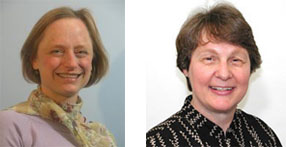
Professors of Biostatistics Adrienne Cuppels, PhD, MA, and Kathryn Lunetta, PhD, MS, co-authored the paper, which is published in the July 13, 2010, issue of Neurology, the medical journal of the American Academy of Neurology.
Head size is one way to measure brain reserve and brain growth. Lead author Robert Perneczky, MD, of the Technical University of Munich in Germany Perneczky said that while brain growth is determined in part by genetics, it is also influenced by nutrition, infections and inflammations of the central nervous system, and brain injuries.
For the study, 270 people with Alzheimer's disease took tests of their memory and cognitive skills and had MRI scans of their brains to measure the amount of brain cell death. Head size was determined by the circumference measurement.
The study showed that larger head size was associated with a greater performance on memory and thinking tests, even when there was an equivalent degree of brain cell death. Specifically, for every one percent of brain cell death, an additional centimeter of head size was associated with a six percent greater performance on the memory tests.
The study was supported by the National Institute on Aging.
Submitted by Elana Zak
The New Breed of Doctor Is In: BMC hospitalists preview medicine’s future
The half dozen white coats sweep briskly down stairs and through halls at Boston Medical Center. The leader, Muhammad Syed, is very familiar with this tiled, fluorescent-lit honeycomb: he’s a “hospitalist,” medicine’s newest specialty, a doctor who treats patients only here, not in an office. After leading his team on rounds, Syed peels away for some one-on-one with the sick, including a woman just admitted with cold-like symptoms.
The woman is elderly and on dialysis, and Syed wants to rule out the possibility of a more serious blood infection. Such medical detective work is part of a doctor’s job, but especially so in hospitals, which in this era of burgeoning outpatient treatment usually bed the sickest patients with the most complex problems. Syed probes for clues: “Your pressure was really high, and you had fever? So tell me when all this started.” “So did you get your dialysis?” “What about the runs? How many times do you think you’ve been to the bathroom?” “Do you know anybody else who’s sick?”
“So far, we’re still collecting information,” he tells her. “We don’t know too much yet.” He’ll wait for tests to come back later that day, he says.
Don’t be embarrassed if you haven’t heard of hospitalists. Nila Radhakrishnan directs BMC’s, and she had never heard the word until she became a resident. It was coined in a 1996 New England Journal of Medicine article. Back then, BMC had a lone hospitalist. Now, Radhakrishnan oversees 15 hospitalists, one of whom, School of Medicine Assistant Professor James Meisel, is a former primary care physician (PCP), the Norman Rockwell-esque family doctor who once roamed hospitals visiting patients, but increasingly is handing off that job to hospitalists.
Meisel explains why: “One of the hardest things about my job as a PCP would be having one or two or three or four hospitalized patients. I’d come in at 5 o’clock in the morning, round on those patients, talk to the residents, write the orders, go see my office patients, answer a couple of calls during the day, and probably go back at the end of the day, at 6, 7, 8 o’clock, to see the hospital patients.” That backbreaking schedule becomes more manageable when hospitalists take over the hospital work, he says.
The trend toward hospitalists has also been goosed by shortages of primary care doctors, who are paid less than specialists and have less predictable hours. “There’s a catastrophe in progress here,” says Meisel. “I don’t know who’s going to take care of me when I’m old.” Then there’s the new health reform law, which will boost the number of insured Americans, and almost certainly, the number getting hospital care.
The New York Times cites studies attributing shorter and cheaper hospital stays to efficiencies gained from hospitalists, who, the paper reports, tend to be younger, more tech-savvy, and more conversant with modern medicine’s efficiency drive than PCPs.
“Primary care and hospital medicine are very different sets and depths of knowledge and expertise,” Meisel says. “We know how to take care of critically ill people better. We know how to use the hospital systems to the best advantage.”
Midmorning, Syed squeezes into a room stuffed with nurses, care managers, and social workers, sharing information to coordinate patients’ stays and discharges. He discusses the woman with the cold symptoms, mulling over how long she might stay and her posthospital needs with a nurse case manager. He chats with a social worker about another patient with cancer.
“He actually looked very calm,” she says. “Yeah, he teaches English,” says Syed. “You know he’s a street musician?”
N. Stephen Ober (CAS’82, MED’86), codirector of BU’s joint MD/MBA program, thinks programs like his will be a hearty incubator of hospitalists, once more students are familiar with the specialty. The joint program is conducted by MED and the Graduate School of Management.
“It’s not like you wake up in the morning and say, ‘Gee, I think I’ll grow up and be a hospitalist,’” Ober says. But that career would land doctors with an MBA “in a very large, complicated organization where they can absolutely leverage their business skills.”
Hospitalists also work closely with a patient’s family physician. “My biggest partner as a hospitalist is the primary care doctor,” says Radhakrishnan.
To improve communication among PCPs, hospitalists, and hospitals, Radhakrishnan helped devise an electronic system, implemented at BMC in April, that sends patients’ discharge information to their primary care doctors. The Philadelphia-based Society of Hospital Medicine has launched a pilot program to improve discharges. Working with 65 hospitals (BMC is not involved), the initiative tags patients at risk for readmission and provides staff with discharge forms specifying hospital phone numbers, follow-up medical appointments, and health warning signs for the patient. The system will be reviewed in a year or two, according to the New York Times.
Give such efforts 10 years to iron out the kinks, Meisel advises. “This is in its infancy, or adolescence. When a jet flies from Chicago to New York and one tower hands off to the other, they do it with a lot more standardization than we do.”
Sometimes, hospitalists must reconcile conflicting goals between patients and their families. The same day Syed hunts for his patient’s mystery illness, BMC hospitalist Jennifer Hughes, a MED assistant professor, who works on palliative (pain and other symptom relief) care, takes a pharmacist and a nurse practitioner to the bedside of a man with lung cancer. He only wants to go home, but he’s resisting hospice care, which would give him the in-home services he needs. He thinks it would preclude his right to call 911 in an emergency.
“Hospice becomes your 911, so there’s a nurse you can call 24/7,” Hughes patiently explains. “You always have the option of calling 911 if you have to.” The man’s adamant: “I don’t think so, right now.”
“That’s a very different approach than the traditional doctor would take,” Hughes says later. “We always say the same line: When you think about the future — knowing you have cancer — what’s important to you? And that question brings out so much. He told me, ‘I just want to go home.’ Then we do the translating — ‘From what your goals are, this is what we recommend as the best option.’ Once he sits down with his wife and talks about maybe the best way to keep him at home is with hospice, usually it’s an easy conversation. You have to start with what they want.”
Radhakrishan believes that doctors who go into medicine to save lives and prefer to leave the systems-management stuff to others would benefit if they embraced the evolving medical model. “Everybody needs to get an aspirin if they had a heart attack,” she says. “But that doesn’t matter if they don’t actually get the aspirin. When I take care of patients one-on-one, I enjoy it. But when I work on systems of care, I know that what input I’ve had is going to affect many patients.”
This BU Today story was written by Rich Barlow.
Pain Control "a Fun Experience for All"
On July 8, DMD students entering the third year completed what has become a rite of passage: Pain Control. Clinical Associate Professor and Assistant Dean for Predoctoral Clinical Education Dr. John Guarente praised students for their professionalism and called the day "a fun experience for all".
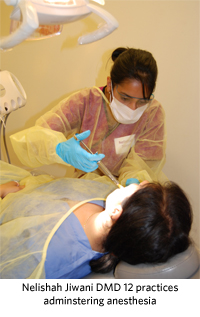
The exercise, part of clinical orientation, asks students to play the roles of patient and dentist, as they administer local anesthesia to each other. Under the supervision of Clinical Associate Professor and Director of the Predoctoral Oral Surgery Clinic Dr. Richard D'Innocenzo and other faculty, students work on their skills so they will feel comfortable and confident when treating patients.
“Once again there was tremendous excitement from the students and faculty at the pain control exercise," said Dr. Guarente. "This is a session that every dentist will remember for the rest of his or her life." He added, "I cannot thank the faculty enough, Dr. D’Innocenzo in particular, for their knowledge, skill, and enthusiasm during the session."
By lunchtime, students' said their mouths were numb, but they were in good spirits.
"Since giving local anesthesia to patients will be a routine part of our treatment plan, I felt this was a great exercise to learn from," said Nelishah Jiwani DMD 12. "It will also be nice for patients because we can tell them that we truly do know what it is like to be on the receiving end!"
In the afternoon, they toured the fifth floor for an operational orientation.
Boston Honors BUSPH Students, Practice Office for H1N1 Prevention Efforts
The Public Health Practice Office and students of Boston University School of Public Health recently got a special nod for their help in Boston's 2009-2010 H1N1 flu prevention and vaccination campaign.
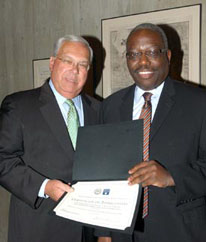
At a special event held June 30 at City Hall, Boston Mayor Thomas M. Menino and Commissioner of the Boston Public Health Commission Barbara Ferrer presented Harold Cox, associate dean for public health practice and associate professor of community health sciences at BUSPH, with a certificate of appreciation for the School's contributions to the local H1N1 response efforts.
At the height of the H1N1 outbreak, Cox put out a call to students via video message encouraging them to put their public health skills to work and support the local flu prevention campaign.
A number of BUSPH students responded and signed on as volunteers with the Boston Public Health Commission. Working in the Infectious Disease Bureau, they reviewed H1N1 records, provided data analysis and conducted case follow-ups, interviewing city residents who were affected by the H1N1 flu.
"In particular, the students were instrumental in helping us very quickly identify challenges that residents in certain areas of the city were having in obtaining liquid Tamiflu," said Maia BrodyField, BPHC chief of staff. "We were then able to work with the state to make those resources more available."
Honorees at the event included key players in Boston's response to the H1N1 outbreak, including representatives from community health centers, hospitals, businesses, the Boston Medical Reserve Corps and other agencies. Cox said it was great for the work of BUSPH students to be acknowledged alongside them all.
"Our students did a great job working on an important health issue for the city. It was very nice for them to be recognized," he said.
"They did a wonderful job and I'm very proud of them."
Submitted by Michelle Salzman, msalzman@bu.edu