Student Updates
GSDM Spreading Smiles Across the Atlantic
Volunteers from GSDM attended the 2011 World Summer Games in Athens, Greece June 25 -July 4. The group volunteered as part of Healthy Athletes® Special Smiles® initiative to provide oral health screenings, flouride treatment, mouth guards, oral hygeine instruction, and referrals to the athletes. Led by Senior Global Clinical Advisor of the Special Smiles® and GSDM Clinical Professor Dr. Steve Perlman, GSDM volunteers included Associate Professor Dr. Paul Farsai, Clinical Professor and Director of Predoctoral Removable Prosthodontics Dr. Ronni Schnell, and alum and Schnell’s husband Richard Short DMD 82. Khurrum Sheikh DMD 07 was also there, along with Ghassan Khoury DMD 96, AEGD 97, MPH 99 and his wife Thenia Kazou AEGD 07.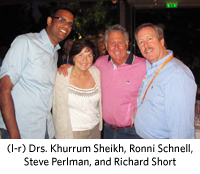
Said Dr. Schnell, “It was such an honor and wonderful opportunity for me and my husband to be a part of Healthy Athletes at the World Games. The most memorable aspect was working with and managing to communicate with the international athletes and their family members or coaches. Additionally, meeting and working with healthcare professionals from all around the globe made the world seem that much smaller with our common language.”
The team screened 3,081 athletes, which was 47.3% of the athletes in attendance—the most out of any of the Healthy Athletes disciplines. The work of the volunteers was significant, as it was found that 46.5% of the athletes in attendance had untreated tooth decay, and 61.1% had diseases of the gums. In addition, 15% of the athletes were in urgent need of treatment and will now have better access to care as a result of the referrals made by the screeners.
“The games were very successful in that even with the enormous financial crisis in Greece, the volunteers and families and, more importantly, the 7,000 athletes with intellectual disabilities, were welcomed with open arms amidst the crises in Athens and all the events were coordinated and organized without any problems,” said Dr. Farsai. This was Dr. Farsai’s third time volunteering internationally for Special Smiles. He also volunteered at the World Winter Games in Nagano, Japan in 2005 and the Middle East North Africa Games (MENA) in 2007 in Abu Dhabi.
BUSM/BMC Researchers Awarded $3.5 Million Grant from the National Institute on Drug Abuse
Researchers from the Boston University School of Medicine (BUSM) and Boston Medical Center (BMC) were recently awarded a $3.5 million grant from the National Institute on Drug Abuse (NIDA), to improve upon the “seek, test, treat, and retain” paradigm in Eastern Europe among HIV-infected Russian and Eastern European injection drug users (IDUs) in narcology (addiction) care. The project will be known as LINC, Linking Infectious and Narcology Care.
Russia and Eastern Europe have one of the fastest growing HIV epidemics in the world, with transmission risk primarily from injection drug use. Russia, Ukraine and other countries in the region have implemented routine HIV testing within established addiction treatment systems (narcology hospitals). The narcology system of care, however, works largely independent of other medical care systems and hence has not adopted strategies to link HIV-infected patients to HIV care.
The research will be conducted under the direction of Jeffrey H. Samet, MD, a professor of medicine and community health sciences at BUSM and BU School of Public Health and chief of the Section of General Internal Medicine at BMC. Samet was recently selected as a NIDA International Program 2011 Awards of Excellence winner.
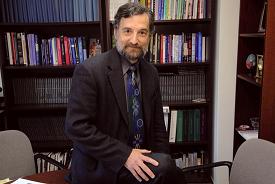
According to the researchers, the narcology system of care works largely independent of other medical care systems and hence has not adopted strategies to link HIV-infected patients to HIV care. As in the United States in the 1990s, delayed or non-receipt of HIV medical care, particularly among IDUs, is common in Russia. According to Samet, the principal investigator of the study, this is a missed opportunity since up to 45 percent of Russian IDUs in narcology treatment are HIV infected, yet as few as 20 percent of those infected are in care.
“The objective of this study is to implement and assess a behavioral and structural intervention in Russia designed to support and motivate HIV-infected heroin dependent narcology patients to engage in HIV medical care and ultimately improve their HIV outcomes,” said Samet.
LINC is a clinical model designed to coordinate narcology and HIV systems of care using an intervention inclusive of staff from both systems and composed of elements shown to facilitate engagement in medical care: HIV case management and nurse home visits. The central hypothesis is that an intervention that involves coordination between the narcology and HIV systems will lead to increased engagement in HIV medical care. “Coordination will involve HIV case management delivered by a peer to help motivate and reduce barriers to HIV care engagement and enhanced outpatient narcology treatment delivered by an addiction nurse with communication between these providers,” added Samet.
The project will be undertaken by an international research team experienced in addressing HIV, substance use, and clinical interventions in Russia.
BUSM's Spira Named BU Innovator of the Year
BUSM Associate Professor Avrum Spira has won the university’s 2011 Innovator of the Year award which recognizes a BU faculty member whose cutting-edge research and ideas lead to the formation of companies that benefit society at large.
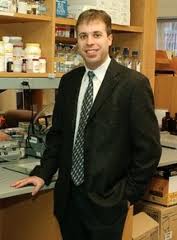
Spira’s research on lung cancer, Chronic Obstructive Lung Disease (COPD), and the effects of smoking on airway epithelial cell-gene expression sparked development of a technology that allows for a non-invasive method for the early detection of lung-cancer. With this technology, Spira and BU colleague Dr. Jerome Brody founded Allegro Diagnostics of Maynard, Mass.
BU Provost and Chief Academic Officer Jean Morrison presented this year’s Innovator of the Year award at Tech, Drugs and Rock & Roll -- BU’s annual networking event for individuals involved in Technology Transfer in the Boston area.
“Professor Spira is an entrepreneurial scientist, whose practical approach to science has led to the formation of Allegro Diagnostics, a startup company intent on producing beneficial molecular diagnostics for detecting lung cancer,” said Morrison. “His accomplishments in the past year include 14 peer-reviewed papers published, one invention disclosure, two patent filings, over $3.5 million in NIH funding and $8.9 million invested in Allegro Diagnostics.”
In addition to being an Associate Professor of Medicine, Pathology and Laboratory Medicine, Spira attends in the Boston University Medical Center’s Medical Intensive Care Unit and he is Chief of the Division of Computational Biomedicine. He also directs the Translational Bioinformatics core within BU’s Clinical and Translational Science Institute.
A native of Montreal, Spira earned his medical degree from McGill University and did his internship and residency in Internal Medicine at the University of Toronto. He completed a pulmonary and critical care medicine fellowship and received a master's degree in bioinformatics from the BU College of Engineering.
The Boston University Innovator of the Year award highlights translational research at BU by recognizing an entrepreneurial faculty member and the potential for commercialization and/or wider adoption of their inventions. It also encourages faculty to become entrepreneurial while promoting role models who can inspire graduate students to pursue entrepreneurial careers.
“It was a difficult decision to choose Avi as the Innovator of Year as it was strong year for successful BU faculty spinoffs,” said BU Office of Technology Development Managing Director Vinit Nijhawan.
GSDM News: Ceremony Celebrates First Graduates of BUIDRE
There was an atmosphere of celebration and accomplishment for the 12 graduates and their families at the first graduation ceremony of the Boston University Institute for Dental Research and Education Dubai (BUIDRE), held on July 9, 2011. Graduates from the postdoctoral programs in endodontics, orthodontics, pediatric dentistry, periodontology, and prosthodontics wore traditional academic robes with hoods bearing the lilac color of dentistry and the red and white colors of Boston University (BU). The ceremony was held under the patronage of HRH Princess Haya Bint Al Hussein, wife of HH Sheikh Mohammed Bin Rashid Al Maktoum, Vice President and Prime Minister of the UAE and Ruler of Dubai.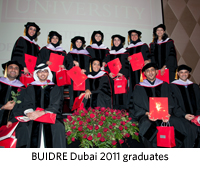
The ceremony began with a reading from the Quran by graduating endodontic resident Dr. Mohamed Jamal Ahmed. Chief Academic Officer of BUIDRE Dr. Steven Morgano and 2011 BUIDRE Pediatric Dentistry graduate Sheikha Maryam Abdulla Hamad Al Sharqi served as Masters of Ceremony for the event.
Dr. Morgano said, “Our Institute has been successful in developing outstanding educational programs in five dental specialties, with our first class graduating today. We are all full of pride to see what we have accomplished in three short years.” He continued, “We are small—like a family, and our residents received very close attention from our outstanding faculty. They have worked very hard to be where they are today, and all should be congratulated for their accomplishments. These graduates are the future of dental specialty clinical practice and education for the region. They will become leaders in dental research. Sixty percent of our total student body are Emiratis, and they will remain within the country, bringing to the local society the profound benefits of their knowledge and skills in their specialties, and in so doing, provide the finest oral healthcare to the patients whom they treat in the UAE.”
Joining Dr. Morgano in the platform party were Boston University Henry M. Goldman School of Dental Medicine (GSDM) Dean Jeffrey W. Hutter, Vice President and Associate Provost for Global Programs at BU Mr. Willis Wang, and GSDM Associate Dean for Advanced Education and International Programs Dr. Thomas Kilgore.
Opening remarks were also given by Dr. Muhadditha Al Hashimi, CEO of Mohammed Bin Rashid Al Maktoum Academic Medical Center. Additional ceremony speakers included H.E. Qadhi Saeed Al Murooshid, Director General Dubai Health Authority, on behalf of HRH Princess Haya Bint Al Hussein, Wife of HH Sheikh Mohammed Bin Rashid Al Maktoum, Vice President and Prime Minister of the UAE and Ruler of Dubai; and Mr. Khalid Lootah on behalf of H.E. Dr. Hanif Hassan Ali, The UAE Minister of Health.
Valedictorians were Dr. Fatema Abdulrahman Amir Rad and Dr. Fatma Darwish Al Emadi. Both thanked Dean Hutter, Dr. Morgano, the faculty, and their classmates for the support they had provided during their journey through postdoctoral education.
H.E. Qadhi Saeed Al Murooshid, Dean Hutter, Vice President Wang, Dr. Morgano, and the directors of the respective advanced specialty education programs then presented the Certificates of Graduate Study (CAGS) and MScD degrees to each of the graduates. After all of the graduates had received their CAGS and diplomas, Dr. Morgano led them through the reading of the Oath of the Class.
Dean Hutter and Vice President Wang then provided closing remarks to end the ceremony. Dean Hutter said, “You are truly a group of extraordinary students. You have worked extremely hard to reach this point in your academic careers and I commend you on your dedication and tireless efforts. The excellent didactic and clinical education you have received here has prepared you for your successful careers ahead and I wish you all the best.” He continued, “Today also marks a special moment in the history of this Institute as you are the first graduating class. I congratulate you on the fine choice you made to attend BUIDRE and I thank you for being the pioneers that helped us shape BUIDRE into the excellent Institute that it is today.”
Dean Hutter then asked the graduating residents to stand as he conferred their CAGS and masters degrees upon them. “Having now successfully completed your respective Advanced Specialty Education Programs, and with the approval of the faculty, it is truly an honor for me as the Dean of the Henry M. Goldman School of Dental Medicine and Chair of the Boston University Institute for Dental Research and Education Board to confer upon you all of the honors, rights, privileges and obligations pertaining to the Certificates of Advanced Graduate Study and Masters of Science in Dentistry degrees you have so rightly earned.”
Vice President Wang said, “I want to offer my congratulations to the Class of 2011 and to their families, and welcome you all wholeheartedly into the Boston University community of over 300,000 living alumni. We are proud of our efforts to assist the Dubai Healthcare City Authority, the Academic Medical Center, and Dubai Healthcare City in pursuing its honorable mission to create an integrated center of excellence in the region for medical and oral healthcare education and research. Each of you can take pride in being in the inaugural class of an Institute that was established to further this mission and laudable goal in this dynamic region of the world. And as graduates of the Institute, we are very proud of your accomplishments.”
Upon conclusion of the ceremony Dean Hutter, VP Wang, CAO Morgano and Associate Dean Kilgore joined the graduating residents and their families, the faculty and residents of the BUIDRE Class of 2012, and honored guests for dinner.
Graduates included:
Endodontics
- Mohamed Jamal Ahmed DDS
Orthodontics & Dentofacial Orthopedics
- Mahra Mohammed Hamdan Al Shamsi BDS
- Maryam Sayed Jaffar Al Sharaf DDS
Pediatric Dentistry
- Farhat Baalawi DDS
- Fatma Darwish Al Emadi DDS
- Rana Abdullah Saleh Al Amoudi BDS
- Shahnaz Faraz BDS
- Periodontology
- Maanas Shrungesh Shah BDS
- Sufian Omar Abusalim DDS
Prosthodontics
- Fatema Abdulrahman Amir Rad DDS
- Nael Akram Eid BDS
- Tina Rokadia Halela BDS
Photos from the ceremony are available on flickr.
BUSM’s Department of Anesthesiology Producing Educational Materials on Malignant Hyperthermia
The Malignant Hyperthermia Association of the U.S. has selected BUSM’s Department of Anesthesiology to produce digital educational materials related to the diagnosis and treatment of malignant hyperthermia (MH), a potentially fatal condition.
MH is a genetic condition that occurs when a patient is given certain types of anesthetics resulting in dangerously high body temperatures that may cause irreversible damage and death.
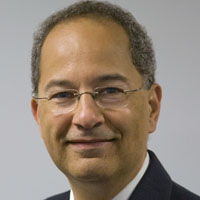
“Medical centers across the country must be prepared to manage such a crisis and operating rooms are mandated to be properly equipped and staff adequately trained,” said Rafael Ortega, MD, professor of anesthesiology and vice-chair of academic affairs in the Department of Anesthesiology.
The department’s media lab has been producing digital educational materials including all of the multimedia components for one of the leading textbooks in anesthesiology and videos in clinical medicine for The New England Journal of Medicine. Also, Ortega has been recognized by the World Health Organization (WHO) and the Anesthesia Patient Safety Foundation for a program on pulse oximetry he and his colleagues developed that the WHO is using to improve surgical safety for patients worldwide.
“Our department is a leader in producing high quality multimedia training materials,” noted Ortega. “We have developed an important expertise in medical simulation and computer-assisted instruction.”
BUSPH Researchers Link Dust on Office Surfaces with Workers' Exposure to Banned Flame Retardants
Flame retardants now banned internationally as organic pollutants are widespread in Boston offices, and the chemicals' concentrations in office dust are linked to traces found on workers' hands and in their blood, a new BU School of Public Health study has found.
The authors of the study, published online June 30 in the journal Environmental Health Perspectives, found that the amount of polybrominated diphenyl ethers (PBDEs) on workers’ hands was a good predictor of how much was measured in their blood. Further, frequent hand-washing was found to reduce exposure to certain PBDEs, flame retardants that have been widely used over the past few decades.
While PBDEs have been the subject of a number of studies, this is the first peer-reviewed research to correlate levels of the chemicals on people’s hands to concentrations in their blood, said lead author Deborah Watkins, a Ph.D. candidate in BUSPH’s Department of Environmental Health.
In the study, PBDEs were detected in all 31 Boston offices that the research team tested. Certain PBDEs have been banned by the Stockholm Convention on Persistent Organic Pollutants, but because of slow turnover of products and the long half-life of PBDEs in the environment, human exposure to the compounds will continue for many years, the authors noted.
 PBDEs were once widely used in computers and other electronics, as well as the polyurethane foam padding in office chairs, furniture and carpeting, so the chemicals are likely to be found in offices throughout the U.S. In recent years, epidemiologic studies have linked exposure to constituents of the PBDE formulation penta-BDE, which was used in polyurethane foam, with changes in people’s thyroid hormones, impaired fertility in women, lowered levels of testosterone in men, neuro-developmental deficits in children, and undescended testicles in babies.
U.S. manufacturers voluntarily discontinued production of penta-BDE and another PBDE formulation, known as octa-BDE, at the end of 2004. These formulations also are banned in the European Union. Manufacturers of a third formulation, deca-BDE, have agreed to discontinue production by the end of 2013.
Although scientists don’t know exactly how people accumulate PBDEs in their bodies, hand-to-mouth exposure is thought to play a significant role. In this study, workers who reported washing their hands with soap and water four or more times per day tended to have lower levels of penta-PBDEs on their hands than those who washed their hands less often. They also had, on average, three times lower concentrations of penta-PBDEs in their blood.
"This suggests that people’s hands play a key role in how they are exposed to PBDEs," Watkins said. "This could be through hand-to-mouth behaviors such as eating oily food without washing your hands, or because the PBDEs are absorbed into the blood from the skin."
Whatever the source, Watkins stressed that "good old-fashioned soap and water may be needed to remove the PBDEs." The authors did not study whether use of alcohol-based hand sanitizers also was linked to lower hand levels of the compounds.
The concentrations of the PBDEs in the tested office dust varied dramatically, which Watkins said is consistent with other studies.
The authors did not investigate the sources of the PBDEs they detected, but Watkins noted that even offices in a new building with brand-new furniture had compounds associated with PBDEs in their dust. The 31 offices tested in the study, each housing one worker, were located in eight different buildings.
The City of Boston requires that all office furniture meet California fire safety standards, the strictest in the country. Some other cities have similar requirements, and office furniture is often manufactured to meet the California standard.
"Instead of producing two different kinds of office chairs, manufacturers often made just one chair model that met the California code," Watkins explained. New office furniture meeting the standard -- using fire retardants other than PBDEs -- has a "TB-117" label on it, but those labels also are found on older furniture made with PBDEs.
Besides Watkins, other BUSPH researchers on the study include: Professors Thomas F. Webster, Michael D. McClean and Janice Weinberg, and former doctoral student Alicia J. Fraser. The work was supported by grants from the National Institute of Environmental Health Science.
Submitted by Lisa Chedekel
Journal of Dental Research Highlights Work of GSDM Trackman Lab
The July edition of the Journal of Dental Research published research by Professor Dr. Philip Trackman titled, “Loss of Basement Membrane Integrity in Human Gingival Overgrowth.“ This study extends findings that were published earlier this year in the American Journal of Pathology which detail evidence obtained for epithelial to mesenchymal transition contributing to the pathology of drug-induced human gingival overgrowth.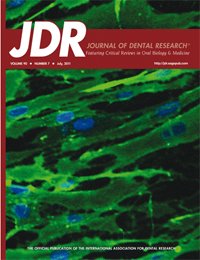
Drug-induced gingival overgrowth is a side effect caused by some anti-seizure, anti-hypertension, and immunosuppressant drugs. Gingival overgrowth is disfiguring, and impairs oral function and oral- and systemic health.
Dr. Trackman explained, “The new JDR paper presents evidence that the basement membrane, which normally acts as a barrier between the epithelium and connective tissue stroma, contains discontinuities in human gingival overgrowth tissues thereby potentially resulting in inappropriate leakage of signals between these compartments. This leakage can lead to epithelial cells becoming motile and more mesenchymal in nature, contributing to gingival overgrowth.”
He continued, “Breakdown of the basement membrane is an expected feature of EMT, but has not been previously observed to be increased in human gingival overgrowth tissues. Studies are in progress to interfere with EMT in mouse models of gingival overgrowth in order to develop potential therapeutic strategies.”
This study was supported by the NIDCR. Dr. Trackman credits Dr. Selva Sume and two Oral Biology MSD/ Periodontology CAGS candidates in his laboratory, Zeina Nseir and Yong Soo Kim, for carrying out much of the work related to this study. Additional research assistance was obtained from former GSDM Associate Professor Dr. Alpdogan Kantarci, now of the Forsyth Institute.
The abstract can be found in full online.
Yum! GSDM Indulges in Sweet Treats
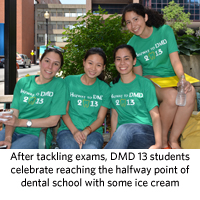
The Ice Cream Social was held on a beautiful sunny Wednesday afternoon at GSDM. Dean Jeffrey W. Hutter hosted students, staff, and faculty as they made their own sundaes and congregated in groups on the benches outside the Dental School.
“What a great day for ice cream!” said Dean Hutter. “Everyone at the School is very deserving of this tasty treat, but I’m especially proud of our students who just wrapped up a strenuous schedule of exams.”
Dean Hutter also thanks Event Planner Lindsay Corrigan for organizing such a delicious event.
BUSM's Levine Elected Chair of ABIM's Subspecialty Board on Geriatric Medicine
BUSM’s Professor Sharon Levine, who also serves as associate dean of Academic Affairs, has been named Chair of the American Board of Internal Medicine’s (ABIM) Subspecialty Board on Geriatric Medicine. She becomes the subspecialty board’s representative to ABIM’s Board of Directors. Levine has been a member of the Subspecialty Board on Geriatric Medicine since 2007. ABIM sets the standards and certifies physicians practicing in internal medicine and its subspecialties that possess the knowledge, skills and attitudes required to provide high quality care.
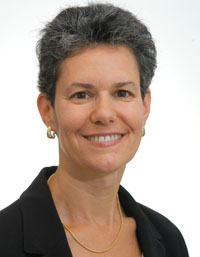
“It has been a privilege to serve on the Geriatrics Subspecialty Board and I look forward to contributing to the Board of Directors,” says Dr. Levine. “In particular, I am delighted to bring my knowledge of working as a member of an interprofessional team, something that is relevant to all internists in practice in addition to the required knowledge, attitudes and skills required for good doctoring in a diverse society and changing health care environment.”
“Sharon is one of the nation’s leading geriatrics educators. As a member of the subspecialty board she will now chair, she has continually brought her experience to bear in creating Certification and Maintenance of Certification programs in geriatric medicine that are current and relevant to what physicians are doing in practice,” said Christine K. Cassel, MD, ABIM’s President and CEO.
Levine was awarded the 2011 Dennis W. Jahnigen Memorial Award from The American Geriatrics Society for outstanding leadership in advancing geriatrics education in health professions schools. She is the recipient of the prestigious Metcalf Cup and Prize, Boston University’s highest teaching award, as well as the Department of Medicine’s Robert Dawson Evans Special Recognition Teaching Award. In 2004, she received one of three mentorship awards conferred by the Society of General Internal Medicine.
BMC Conducts High Rates of Thyroid Testing in Pregnant Women, Study Finds
A recent study completed by researchers from Boston University School of Medicine (BUSM) and Boston Medical Center (BMC) demonstrates that BMC conducts a high rate of thyroid function testing in pregnant women. The retrospective study, which is currently published online in the Journal of Clinical Endocrinology & Metabolism, showed that if BMC had not done routine thyroid testing on pregnant women, approximately 80 percent of cases of mild hypothyroidism (a condition whereby the thyroid does not produce enough thyroid hormone) would not have been detected.
It is known that the thyroid hormone is important for child development in the womb. However, while there are observational studies that show that even slight maternal hypothyroidism is associated with adverse obstetric outcomes and lower child IQ, there is currently no interventional study to show whether treatment for mild hypothyroidism will lead to better outcomes. This lack of information has caused controversy about whether universal thyroid stimulating hormone (TSH) screening is necessary in pregnancy.
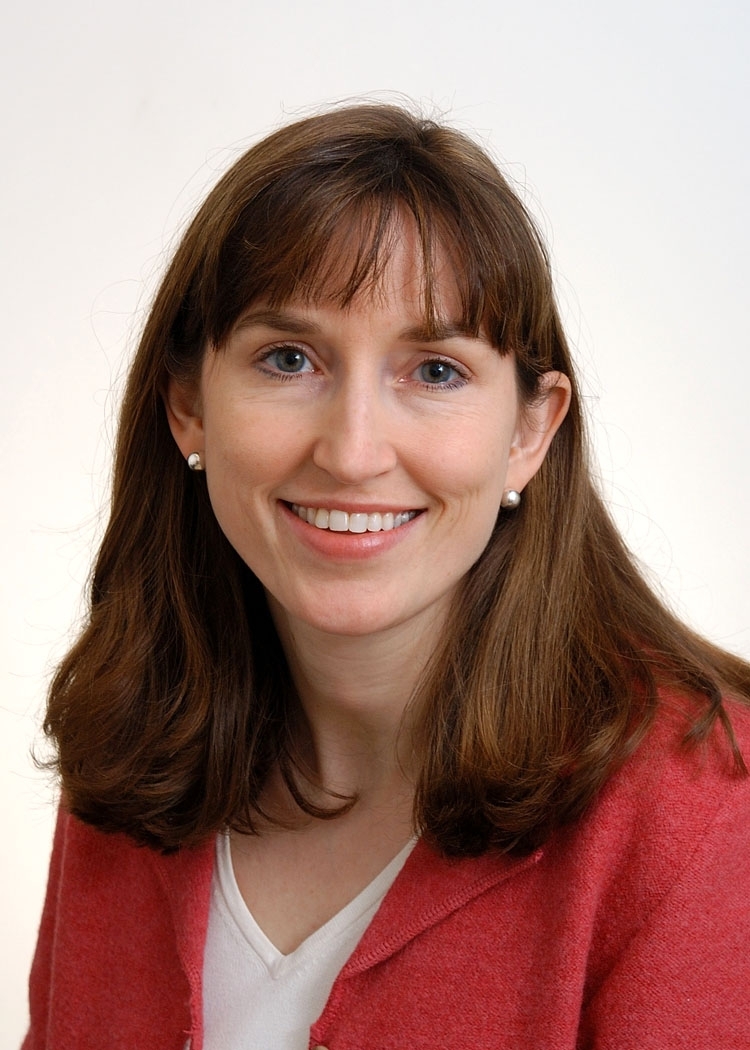
Done under the direction of Elizabeth Pearce, MD, MSc, an associate professor of medicine at BUSM, and Donny Chang, MD, PhD, an endocrine fellow at BMC, the team looked at the medical charts of 1,000 pregnant women to determine when and if they received a TSH test during their first prenatal care visit at BMC. The women involved in the study, who were between the ages of 18 and 46, went for their first prenatal visit at either BMC’s department of Obstetrics & Gynecology or Family Medicine in 2008. The women’s age, race, insurance, gestational age, medical history (thyroid or other autoimmune disorders), obstetric history and thyroid function tests were ascertained.
The results of the study showed that BMC had a higher rate of testing than previously published surveys. While BMC did not conduct universal TSH screenings, they did conduct routine tests for women with no risk factors for hypothyroidism – a group who would normally not be tested under some current guidelines.
“Due to the fact that there are conflicting guidelines, we were surprised to find a high rate of testing here at BMC,” said Pearce, from the section of Endocrinology, Diabetes & Nutrition at BMC. “Had BMC not conducted routine testing, there is the potential that many women with mild hypothyroidism would not have been identified.”
Funding for this study was provided in part by a Boston University Building Interdisciplinary Research Careers in Women’s Health (BIRCWH) grant.