Student Updates
BUSM Faculty Authors Book on Significance of Genes and Family History
BUSM Professor Aubrey Milunsky, MD, DSc, has penned a book focused on new DNA tests that have dramatically expanded the ability to avoid, prevent, diagnose, predict and treat many genetic disorders. He recounts the lessons learned from many families who benefitted from new advances in genetics, or could have, if they had only known. The book, Your Genes, Your Health: A Critical Family Guide That Could Save Your Life, provides important information about many genetic disorders, more especially since each of us unwittingly carries a significant number of harmful genes.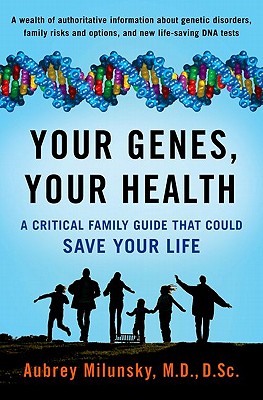
Milunsky underscores the importance of recognizing seemingly unrelated disorders in a family due to the same genetic mutation to illustrate the vital importance of understanding one’s family history and ethnic origin. He also describes the most current tests that can diagnose or predict genetic disorders or that can detect carriers of many different harmful genes.
Milunsky joined the BU community in 1982 when he was named Founding Director of the Center for Human Genetics and appointed Professor of Pediatrics and Obstetrics and Gynecology, both at BUSM. He became a Professor of Pathology in 1985, and in 1991 became the first Endowed Chair in Human Genetics at BUSM, which will be named for him upon his retirement. He has been honored by election as a Fellow of the Royal College of Physicians of England and as a member of the Society for Pediatric Research and the American Pediatrics Society. He is also a Founding Fellow of the American College of Medical Genetics.
Milunsky is the author or co-author of more than 400 scientific communications and author, editor or co-editor of 24 books.
Postdocs Can Take Advantage of OPA Services Now
The Boston University Medical Campus (BUMC) established the Office of Postdoctoral Affairs (OPA) in January 2011. OPAs main objective is to coordinate non-research related training for postdocs and to provide opportunities to develop areas of professional development. The office strives to assist postdocs in their careers and to help improve their job satisfaction.
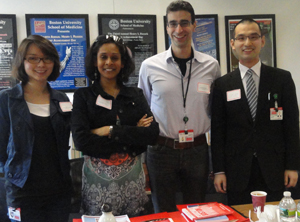
Postdocs are individuals with a PhD who are engaged in advanced temporary training – under mentors – to enhance the academic and professional skills they need to pursue their chosen career paths. The task of identifying and tracking postdocs continues to be an OPA priority; so far, OPA has identified 325 postdocs on the BUMC.
OPA complements the research mentors’ scientific training with other professional programming enabling BUMC postdocs to be nationally competitive independent researchers. OPA works closely with all of its constituencies including postdocs, their mentors, department chairs, directors of other postdoctoral offices in Boston, and national postdoctoral organizations to establish policies beneficial to the BUMC postdoctoral community. Currently OPA is working on creating a unified appointment process for all postdocs.
OPA Services Available Now
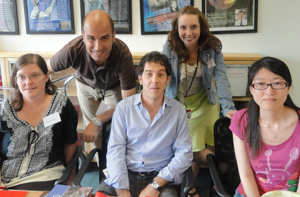
OPA offers centralized career and skill development workshops that postdocs can use to hone skills that will enable them to compete for academic or other careers at premier institutions, and to promote a positive view of the University as a great institution at which to train. Programming includes career skill workshops and a monthly speaker series where a panel of staff, faculty and professionals discusses relevant topics. Topics have included: work/family balance; teaching and mentoring; industry exploration; skills for successful networking; resume/CV and cover letter writing; and diverse careers in science. Future initiatives will include grant writing, lab management, and negotiating skills.
Currently OPA is preparing for the National Postdoc Appreciation Week, a celebration of the work of postdocs, as well as the efforts by faculty and staff who provide a positive environment for postdocs to succeed at the BUMC. As part of the celebration, OPA is planning an ice cream social on Talbot Green on Monday, Sept. 19 from 3 – 4:30 p.m. For more information about any of the services offered by the OPA, contact Yolanta Kovalko.
BUSM Professor Deborah Anderson Awarded $13.3 Million Grant to Study Potential Treatments to Prevent STDs
Deborah Anderson, PhD, professor of obstetrics and gynecology and microbiology at BUSM is co-leading a new study funded by a five-year $13.3 million grant from the National Institute of Allergy and Infectious Diseases (NIAID). Anderson will investigate the vaginal use of human monoclonal antibodies manufactured transiently in tobacco plants (called “plantibodies”) to prevent sexually transmitted infections caused by Herpes Simplex Virus (HSV) and the Human Immunodeficiency Virus (HIV).
The production of human monoclonal antibodies and other proteins in plants is intended to provide a low-cost and large-capacity manufacturing system that could ensure an affordable supply of antibodies, vaccines and other biopharmaceuticals for at-risk populations throughout the world, including developing countries.
The research team will develop ring, film and barrier formulations to deliver the antibodies and conduct preclinical testing in vitro and in vivo using animal models to evaluate safety and antimicrobial (HSV, HIV) efficacy. The plantibodies will be tested for safety and duration of activity in a human pre-phase I clinical trial as a first step towards their use as vaginal microbicides to prevent HSV and HIV infections in women.
“We hope that this research will lead to novel ways of preventing sexually transmitted diseases, which are epidemic in the US and worldwide and have far reaching health, social and economic consequences,” said Anderson. “In addition, we will be breaking ground for the potential use of plantibodies to prevent other diseases caused by pathogens that cross mucosal membranes, such as rhinoviruses (common cold) and influenza (flu), as well as dangerous emerging pathogens like the Ebola virus (hemorrhagic fever).”
The grant was awarded through the NIAID-funded Integrated Preclinical/Clinical Program for HIV Topical Microbicides. Kevin Whaley, PhD, at Mapp Biopharmaceuticals in San Diego and Thomas Moench, MD, at ReProtect Inc. in Baltimore, are the main collaborators on this research study.
The research will be conducted by a consortium of investigators at Boston University Medical Campus, University of North Carolina, Johns Hopkins University, Brown University, Emory University, Fenway Community Health, ReProtect LLC, Kentucky BioProcessing LLC, Auritec Pharmaceuticals Inc., Aridis Pharmaceuticals and Mapp Biopharmaceutical Inc.
BU Will Seek Permission for Low-Level Research in NEIDL – Risk assessment will continue
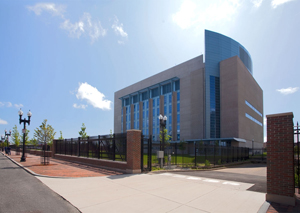
Boston University will ask the state Executive Office of Energy and Environmental Affairs later this month for permission to conduct lower-level biosafety research in its National Emerging Infectious Diseases Laboratories (NEIDL), located on the BU Medical Campus in the South End.
Construction on the $200 million facility was completed in September 2008, but controversy and litigation surrounding the proposed study of agents requiring the highest biosafety level, known as Biosafety Level 4 (BSL-4), has kept the building’s 192,000 square feet of laboratory space closed. The National Institutes of Health (NIH) is currently overseeing a supplemental environmental risk assessment study in response to concerns raised by the courts and the community.
Stephen Burgay, senior vice president for external affairs, says the University is fully supportive of the supplemental environmental risk assessment process. “We want it to be a thorough and complete examination of the legitimate questions raised about the future of BSL-4 research in urban medical centers like ours,” says Burgay. “At the same time, only 16 percent of the space in the building is designed for BSL-4 research laboratories. It makes sense to put those lower safety level laboratories to use now instead of leaving them empty.”
BU’s request, if granted, would allow the University to begin BSL-2 research later this year. Ronald Corley, Medical Campus associate provost for research, says the NEIDL’s level two research would initially involve tuberculosis. A waiver would also allow BU to apply to the Boston Public Health Commission for the appropriate permits to do BSL-3 research. Corley says that research would initially involve drug-resistant forms of TB, which require the higher biosafety features of a Level-3 lab. He says the University would not conduct BSL-3 research activities in the NEIDL until the NIH supplemental risk assessment is completed and considered.
Dozens of labs throughout the commonwealth, including several at BU, currently conduct BSL-2 and BSL-3 research. Biosafety levels are assigned based on primary risk criteria, including infectivity, severity of disease, and the nature of the work being conducted. Each level of containment describes appropriate laboratory practices, safety equipment, and policies for conducting research with a particular agent. The policies are in place to protect researchers, nonlaboratory occupants of the building, the public health, and the environment.
University officials stress that their request is limited to lower safety level research and would not permit researchers to conduct BSL-4 work. BSL-4 work could not take place until and unless the regulators and the courts review the supplemental environmental risk assessment and determine that it is permissible for BU to conduct that highest biosafety level research in the building.
“All research at any BSL level will be transparent to the public,” says Burgay. “All research proposals will be approved by the Boston University Institutional Biosafety Committee (IBC), which includes senior-level research scientists, environmental health and safety administrators, and two community representatives. The NEIDL Community Liaison Committee, which is composed of six community representatives, will review research proposals and provide input on community concerns. All minutes of the meetings of the IBC are public and available on the Boston University website.”
This BU Today story was written by Art Jahnke. He can be reached at jahnke@bu.edu.
Check Out the New Videos on the GSDM Experience!
Four new videos complete with interviews of students, faculty, staff, and researchers are available for viewing on the GSDM website. The videos were designed to give potential applicants a taste of the excellent educational experience available at GSDM, but are fun for everyone to watch. Keep an eye out for appearances by your friends, teachers, and mentors.
The GSDM Office of Communications & External Relations would like to thank everyone who participated in the filming of these videos. "We couldn't have done it without you!"
Here they are:
- Introduction to GSDM http://www.bu.edu/buniverse/view/?v=1u51QYiJ
- Experiential Learning at GSDM http://www.bu.edu/buniverse/view/?v=2FyS6LiK
- Service Learning http://www.bu.edu/buniverse/view/?v=MLDKsiL
- Research http://www.bu.edu/buniverse/view/?v=1UU3gKiM
Addiction Expert Designated White House Champion of Change. BUSM’s Daniel Alford has a question for you: How often do you drink?
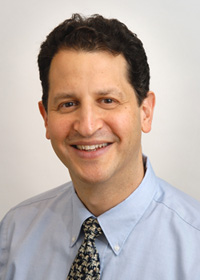
President Obama’s father was an alcoholic whose drunken driving killed a friend and put the elder Obama in the hospital with two broken legs. That unfortunate bit of history may help explain the White House’s interest in addiction, which includes honoring BU addiction expert Daniel Alford with a visit there on August 5.
Alford (SPH’86, MED’92), a School of Medicine associate professor, is the medical director of MASBIRT (Massachusetts Screening, Brief Intervention, Referral and Treatment), a federally funded program at Boston Medical Center and seven other hospitals and community health centers in the state that screens for risky alcohol, tobacco, and drug use. “When you come to see your doctor for your diabetes management or hypertension or just for your annual visit, you’ll be asked questions about unhealthy substance use,” Alford says.
Alford will be in Washington Friday, courtesy of Obama’s Champions of Change program, which hosts weekly White House visits for innovators in various fields. He’ll participate in a roundtable with federal drug policy experts, write a short blog entry about his work, and film a short biographical piece for the White House website.
Through MASBIRT, BMC and participating organizations now have trained health promotion advocates, who work throughout the institutions, from primary care offices to emergency rooms, screening people for risky substance use and assessing what the next step should be to help those with problems. The goal is to identify people at risk of addiction before the addiction consumes them, an approach that Alford says has been overlooked by the medical establishment. “If we waited for patients with kidney disease to need dialysis, that would be malpractice,” he says. “That’s kind of what we’ve done with addiction. We basically ignore unhealthy substance use until the person’s coming in with alcoholism or drug addiction.”
Alford, who joined the BU faculty in 1996, also leads BMC’s program to train medical residents in a new (for nonpsychiatric doctors) subspecialty, addiction medicine. BMC recently appointed its first addiction resident, one of only 20 such residents nationwide. BU Today spoke with Alford about his work and Friday’s event.
BU Today: My doctor asks me, “Do you smoke? Do you drink?” Is that a result of MASBIRT?
Alford: Certainly some doctors were doing it before. But there are ways of asking it, and then there are ways of asking it. You can say, “You don’t drink or use drugs, right?” as opposed to asking it with questions that have been shown to be more reliable. When you phrase a question as, “How often do you do something?” it normalizes it, and patients feel more comfortable answering.
The state would like to expand this approach. The majority of our work this past year has been, how do we sustain these efforts? Is it trying to sustain this health promotion advocate model? Nurses, medical assistants, docs could probably ask those questions. It’s probably going to be different, depending on the treatment center.
Is training in addiction medicine feasible when there are so many addictions out there? Being addicted to drugs or alcohol is different from being addicted to gambling or the Internet or sex.
There’s a lot of commonality, no matter what the substance or behavior. Addiction starts to disrupt someone’s life, despite negative consequences. It turns out that a lot of the neurobiology—what’s happening in the brain—that reinforces those unhealthy behaviors is similar as well. And they respond to a lot of treatments in a similar way.
Have there been advances in treating addiction?
The answer’s definitely yes. A perfect example is methadone maintenance http://www.ncbi.nlm.nih.gov/pubmedhealth/PMH0000591/ . Methadone was developed for pain, but was found to be effective in treating opiate addiction. There’s a lot of stigma around it and people who don’t believe in methadone for treatment, but there’s more evidence over the last 40 years showing efficacy around methadone than pretty much anything else that I do in primary care.
A lot of behavioral therapies can be effective in treating lots of addictions as well as behavioral addictions, like gambling. All of the medications work better when you include nonpharmacological therapy, like counseling. In order for treatment to work, it needs to be continued. Historically, people got treatment, they stopped using, they then got discharged, they relapsed, and we said, “Aha, the treatment doesn’t work because they relapsed,” as opposed to saying, “The treatment works; it just needs to be continued.” Some people are cured permanently and don’t require extensive treatment. But the large majority needs sustained treatment.
What got you interested in addiction?
When I finished my residency, there was an opportunity, part-time, to be the medical director of a methadone maintenance program at the Boston Public Health Commission. I loved it immediately. I realized there were a lot of success stories within that treatment model that we as physicians didn’t know about.
This BU Today story was written by Rich Barlow. He can be reached at barlowr@bu.edu.
Expanded Summer Program at BUSPH Gives Upward Bound Students Hands-On Exposure to Public Health
Data can seem distant and impersonal to students until those numbers represent African villagers killed by parasitic worms, or the levels of mercury found in fish bought at a Boston supermarket.
These actual examples helped underscore the vivid reality of public health to students participating in Boston University's Upward Bound Math Science (UBMS) program. For the third summer, BU School of Public Health faculty and students led Boston-area high-school students on an exploration of critical public health topics.

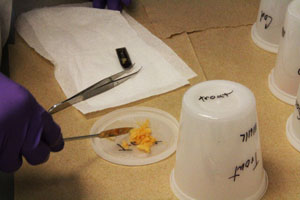
A session on environmental health included a field trip to the William X. Wall Experiment Station in Lawrence, a Massachusetts Departments of Environmental Protection facility that was founded in 1887 as one of the world's first laboratories dedicated to environmental research. Students investigated levels of mercury found in supermarket fish on the site where researchers first developed modern methods of drinking water purification and wastewater treatment.
"We try to focus it around something that they're familiar with, so they see how they can solve public health problems without necessarily being a health care professional," said Jean van Seventer, an associate professor of environmental health who helped lead the environmental health lab sessions. To prepare for their lab work, students were primed with classroom presentations on heavy metal toxicity by Roberta White, chair and professor of environmental health, and Madeleine Scammell, assistant professor of environmental health.

Some presentations demonstrated why various ailments that are little known in the developed world are all too familiar to researchers. About 20,000 people in undeveloped countries die of schistosomiasis each year, a parasitic disease second only to malaria in its chronic and cumulative destructive effects, which include anemia, fevers, malnutrition, and cognitive delays in children. "We went through a case study of schistosomiasis and looked at what factors would influence health workers when they try to investigate increases in cases," van Seventer said.
For an international health segment, Associate Professor Chris Gill gave an overview of his work on the Lufwanyama Neonatal Survival Project in Northern Zambia (LUNESP), a study designed to determine whether training traditional birth attendants could help reduce infant mortality. Monica Onyango, a clinical assistant professor of international health, prompted students to think about the status and condition of the millions of refugees around the world, while alumna Maja Niemierko recounted her experiences tracking Chagas disease in Peru.
BU has participated in Upward Bound since 1990, with about 75 students currently in the general Upward Bound program and 50 available slots in the math and science component, said Allison Cox, UBMS program manager. The math and science program at BU started in 2008 as an offshoot of the "classic" program, which was launched nationally as part of the Higher Education Act of 1965. Upward Bound is one of the last surviving education programs funded by President Lyndon Johnson's "Great Society" reforms, Cox said.
Students in the math and science program were selected from Brighton, Charlestown, and Chelsea high schools. "All of our students are low income or potentially first-generation college students," Cox said. "We expect them to stay with us until they graduate. One day a week is study hall and one day a week is the class."
The BUSPH involvement began with Saturday morning biostatistics sessions taught by graduate students and faculty, said Lisa Sullivan, associate dean for education, and professor and chair of biostatistics. This is the first year for a full public health track, with international health and environmental health added to the biostatistics component.
"They may not know what biostatistics is but they're interested in math and science and they're interested in seeing how they can work on real and important problems in public health," Sullivan said. The hands-on aspect of using fun lab exercises to yield real data is critical for engaging high-school students, Sullivan said. "It's a not a lecture-based program. It actually introduces them to the many exciting things that they could do in public health if they continue their work."
Students will outline their work on this year's lab topics -- nanotechnology, chemistry and public health – at a Wednesday, Aug 3 presentation on the Charles River Campus.
College of Arts and Sciences
685-725 Commonwealth Avenue
1 p.m. to 2 p.m.
Submitted by Mike Saunders
GSDM Externship Trio Gets the Word Out About Smoking
Three students recently went above and beyond to fulfill their externship community outreach requirement. The students—Sayed Al-Mousawi DMD 12, Amy Mann DMD 12, and Vera Chernomordik DMD 12—attended an outreach event in East Boston held in the Shaw’s parking lot. The event included volunteers from Boston University School of Medicine, The Family Van, and the Dana Farber Van, as well as the three GSDM students and their externship preceptor from the Boston Healthcare for the Homeless Program (BHCHP), Dr. Alan Filzer.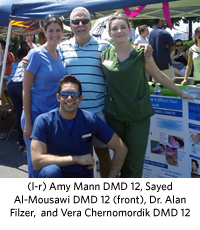
As part of the externship program, all students are asked to identify a common problem among patients at their externship site and create a community outreach project that addresses that problem. At BHCHP these three students all saw smoking as the number one problem.
Explained Al-Mousawi, “From our short experience at the externship site, at least 6 out of 7 patients a day are current smokers. This is similar to the national average for homeless people.”
To get the word out about the harmful effects of smoking, Chernomordik created an informational poster with pictures and details about what smoking does to the oral cavity, oral cancer, and periodontal disease. Al-Mousawi and Mann created a second poster with pictures and information about the effects of smoking on the entire body and how to quit. The trio also passed out informational pamphelts that were donated by CHP Oral Health Promotion Director Kathy Lituri as well as pamphlets on quitting smoking that they ordered especially for this event from the Massachusetts Health Promotion Clearing House.
Local men, women, and children of East Boston, mainly of Hispanic descent, benefitted from the outreach effort. In addition to the smoking information, the group screened for oral cancer and other oral health issues.
Summer Interns Educate Us at Symposium
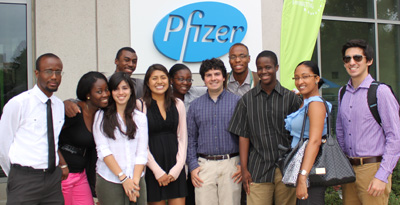
Returning from a stimulating field trip to the Pfizer’s Research Technology Center in Cambridge, there was enough time to go back to the lab to finish experiments. In five days Johanna, Samanta, Vincent, Joshua, Chino, Jessica, Rachael, Maria, Derrius, Carlos and Jordan will present the results of an independent research project to an appreciative audience.
At the Second Annual Undergraduate Research Symposium, sponsored by the Division of Graduate Medical Sciences, the cohort, a group of academically talented undergraduate interns, who are traditionally underrepresented in biomedical sciences , will test their communication skills by explaining a distinct question that they’ve researched for 10 weeks. It is not always easy to repeat experiments without success, but persistence and curiosity may yield surprising results.
The symposium audience includes faculty mentors, postdoctoral fellows, PhD students, and friends, who may initially be anxious on behalf of the group, but ultimately expect to applaud and congratulate their special accomplishment on Friday, August 5. Please stop by the symposium in the BUSM Instructional Building room L-201, 12-3 p.m.
Submitted by Linda Zimmerman.
BUSM Researcher Finds Gout Prevalence Swells in U.S. Over Last Two Decades, Increase in Obesity and Hypertension are Likely Contributors
A new study by Dr. Hyon Choi, professor of Medicine in the Section of Rheumatology and the Clinical Epidemiology Unit at BUSM, shows the prevalence of gout in the U.S. has risen over the last twenty years and now affects 8.3 million (4%) Americans. Prevalence of increased uric acid levels (hyperuricemia) also rose, affecting 43.3 million (21%) adults in the U.S. Greater frequency of obesity and hypertension may be associated with the jump in prevalence rates according to the findings now available in Arthritis & Rheumatism, a journal of the American College of Rheumatology (ACR).
Gout, an inflammatory arthritis triggered by crystallization of uric acid within the joints, causes severe pain and swelling. Medical evidence suggests that gout is strongly associated with metabolic syndrome—a group of health conditions characterized by central obesity, insulin resistance, high blood pressure and blood lipid issues—and may lead to heart attack, diabetes and premature death. Prior research found that gout incidence in the U.S. more than doubled from the 1960s to 1990s.
“Our study aim was to determine if the prevalence of gout and hyperuricemia among U.S. adults has continued to climb in the new millennium,” said Choi, senior investigator of the study.
Researchers analyzed data from the latest U.S. National Health and Nutrition Examination Survey (NHANES) which was conducted in 2007 and 2008, comparing the data with those from previous NHANES surveys (1988-1994). There were 5,707 participants who completed the most recent NHANES survey which included questions regarding history of gout diagnosed by a healthcare professional. Researchers defined hyperuricemia as serum urate level greater than 7.0 mg/dL in men and 5.7 mg/dL in women.
Results from the nationally-representative sample of adult Americans suggest gout and hyperuricemia remain prevalent in the U.S. and compared to earlier NHANES data was 1% and 3% higher, respectively. After adjusting for obesity or hypertension, the differences in prevalence rates were substantially lessened. Further analysis revealed that gout prevalence was higher in men (6%) compared to women (2%); hyperuricemia occurred in 21.2% of men and 21.6% of women.
Choi concluded, “We found that the prevalences of gout and hyperuricemia continue to be substantial in the U.S. adult population. Improvements in managing modifiable risk factors, such as obesity and hypertension, could help prevent further escalation of gout and hyperuricemia among Americans.”