Student Updates
GSDM Changing Smiles, Changing Lives
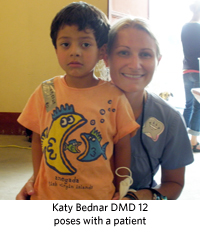 Katy Bednar DMD 12 recently returned from a mission trip with Dentistry for All (DFA) to Comitancillo, in the region of San Marcos, Guatemala. Her stay in Guatemala lasted a total of 18 days, including travel time to the remote rural area, ten hours outside of any major city. Bednar had an excellent experience on the trip, led by DFA Directors Drs. Shane Fisher and Brad Krusky DMD 97, and was really happy that she chose to participate in two weeks of this mission.
She said, “The first week there were five dentists, including me and also an oral and maxillofacialsurgeon. All of the dentists were phenomenal teachers and I saw amazing oral surgeries performed, including surgery to correct ‘tongue-tied’ conditions.” Bednar continued, “The first week I really was able to learn a lot and get my feet wet, then the second week it was just me and the two directors, so I was able to work independently.”
Bednar commented that the trip was very well organized including everything from transportation for volunteers, to triage practices, to the fact that each dentist had an assistant working with them at all times. “When you’re working out of a tackle box, having an assistant really helps you work more efficiently,” said Bednar. She also joked that now that she’s back at School she “really misses her assistant.”
Bednar performed numerous extractions and was able to gain more experience suturing. Together the group treated 433 patients over the two-week span, with an average of 3.7 procedures completed per patient.
“One of the highlights of the trip for me was treating a lot of older men and women with root tips that needed to be removed,” explained Bednar. “These people have just been living with pain I can’t imagine. Being able to remove the tips, suture them up, and know that in a few weeks they will be pain free is really rewarding.”
She also enjoyed that the dentists were able to treat entire families at once. She cited one example where a mother of eight brought in all of her children for treatment, so that at one point all of the chairs were filled with her kids and she was just walking around in a circle checking on all of them.
Bednar did have to navigate a few challenges, including treating patients that only spoke the mountain dialect of Mam. However, she said that the organization of DFA, paired with the partnerships they have with local Peace Corps workers and the nonprofit Asociacion Maya-Mam de Investigacion y Desarrollo (AMMID), makes it easy for the volunteer group to come into the community and treat patients from all of the neighboring villages.
“I would absolutely recommend this trip to other students. DFA not only brings dental care to those without access, but restores a quality of life that would otherwise be intangible. I feel very fortunate to have had the opportunity to volunteer with DFA; changing smiles, changing lives, one tooth at a time.”
In fact, Bednar enjoyed the trip so much she is hoping to volunteer again and is working on recruiting her fiancé to come along too.
Photos are available on facebook and flickr.
Two short video clips: A Little Perspective and Pep Talk from Brad are also available on GSDM’s youtube channel .
BUSM Dean Elected to Institute of Medicine, Karen Antman joins highly regarded national advisory group
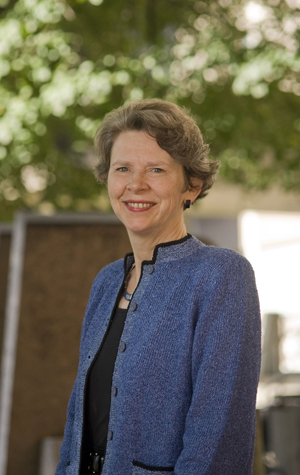
Karen Antman, provost of the Medical Campus and dean of the School of Medicine, has been elected to the Institute of Medicine of the National Academies. The institute, which advises policy makers and professionals on medical and health issues, announced yesterday that Antman is one of 65 people chosen this year for outstanding professional achievement and commitment to service. Election to the IOM is considered one of the highest honors in the fields of health and medicine.
“It’s a great honor to become a member of the Institute of Medicine,” Antman says. “I look forward to continuing to participate in IOM health and science policy discussions and recommendations.”
BU President Robert A. Brown says Antman’s election is a high honor both for the MED dean and for Boston University. “Karen’s election to the Institute of Medicine is wonderful recognition of her accomplishments as a clinician, researcher, educator, and academic leader,” says Brown. “We are very proud to have her at Boston University.”
Members of the institute, who donate their time and expertise to work for the nation’s health, are drawn primarily from the health care professions, but they also come from the natural, social, and behavioral sciences, as well as from law, administration, engineering, and the humanities. They work on projects such as a recent study of the effectiveness of various treatments for traumatic brain injury, and recommending which health insurance benefits should be included in Essential Health Benefits packages required by the Affordable Care Act. Other recent projects include studies of people’s vitamin D and calcium needs; improving the process for clearing medical devices for the market; preventing obesity among infants and toddlers; improving Americans’ access to oral health care; preparing for the future of HIV/AIDS in Africa; ensuring the health of lesbian, gay, bisexual, and transgender people; and enhancing nurses’ roles in improving health care.
Many of the studies the IOM undertakes begin as mandates from Congress; others are requested by federal agencies and independent organizations. The IOM also convenes a series of forums, roundtables, and standing committees, as well as other activities, to facilitate discussion, discovery, and critical cross-disciplinary thinking.
George Annas, a William Fairfield Warren Distinguished Professor and chair of the School of Public Health’s health law, bioethics, and human rights department, says the IOM is the country’s most prestigious and influential group of medical policy advisors. “The voice of medical school leaders is critical in charting the future of our rapidly changing and increasingly fragmented health care system,” he says. “Dean Antman’s election to membership in the IOM is a ringing endorsement of the respect her medical peers have for her leadership and influence in medical education.” Annas is also a member of the IOM.
In addition to Annas, Antman joins BU-affiliated IOM members Joel Alpert, a MED professor emeritus of pediatrics, sociomedical sciences, and community medicine and health law; Larry Culpepper, chairman of the MED department of family medicine; Richard Egdahl, a retired University Professor and founding director of the Health Policy Institute at the School of Management; Barbara Gilchrest, a MED professor of dermatology and chair emerita of the department of dermatology; and Gerald Keusch, an SPH professor and an assistant to the president.
In a press release issued by the institute yesterday, IOM President Harvey V. Fineberg welcomed the 65 new members. “Each member stands out as a professional whose research, knowledge, and skills have significantly advanced health and medicine, and their achievements are an inspiration,” Fineberg wrote. “The Institute of Medicine is greatly enriched by the addition of our newly elected colleagues.”
New members are elected by current active members through a selective process that recognizes major contributions to the advancement of the medical sciences, health care, and public health. The newly elected members raise IOM’s total active membership to 1,688 and the number of foreign associates to 102. With an additional 80 members holding emeritus status, IOM’s total membership is 1,870.
This BU Today story was written by Art Jahnke.
Experts Gather at ARC Symposium on Obesity, Inflammation and Cancer, Oct. 25, 1-5 p.m.
The Obesity, Cancer and Inflammation ARC, co-directed by Drs. Gerald Denis and Barbara Nikolajczyk, is hosting a symposium focused on the cellular, molecular and epidemiological connections between obesity and cancer, some of which are likely based on inflammatory factors. This Symposium will be held on Tuesday, Oct. 25, 1-5 p.m. at 650 Albany Street, EBRC conference room 714.
 A distinguished group of experts will lead the afternoon discussion including Drs. Christopher Still and Glenn Gerhard, from Geisinger Medical Center, who will discuss their well-characterized bariatric cohort and the metabolic improvements they observe after surgery. They will be joined in a lively debate on "Drugs vs. Surgery for Obesity" led by Dr. Caroline Apovian, director of the Human Metabolic and Genetic Core of the Boston Nutrition Obesity Research Center. Dr. Deborah Bowen of the BU School of Public Health, and an expert in breast cancer, will discuss connections between socioeconomic variables and obesity. Dr. Lynn Moore from BUSM Preventive Medicine will discuss cancer rates and obesity in Framingham Study subjects. Dr. Jennifer Snyder-Cappione, an immunologist formerly of UCSF will discuss the roles of inflammatory cells in adipose tissue. Dr. Valentina Perissi, a new member of the faculty in the Department of Biochemistry, will deliver a presentation on novel pathways that link inflammation and insulin resistance in obesity. Dr Nikolajczyk will present new data on inflammatory cell cross talk in Type 2 diabetic patients. Dr Nikolajczyk will also act as a discussant to summarize the day’s provocative themes and will bring the event to a close.
This event will be held at 650 Albany Street, EBRC conference room 714. Contact Dr. Gerald Denis for more information or with questions.
Postdocs Honored and Entertained During National Appreciation Day
On a beautiful fall day approximately 130 postdocs and those who support them wound their way around tables filled with ice cream and toppings, enjoying the jazz music provided by the band assembled by Dr. Rafael Ortega. This celebration, held on Monday, September 19 on Talbot Green, marked National Postdoc Appreciation Week.
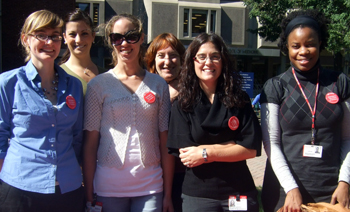
The ice cream social was the first annual event organized in honor of BUMC postdocs. In 2009, the US House of Representatives in conjunction with the National Postdoctoral Association, an advocacy group based in Washington, DC passed a resolution declaring the third week of Septemberas National Postdoc Appreciation Week. Many universities and institutions supporting postdocs across the country held events honoring their work.
Kristina Brauburger who attended the ice cream social thanked the Office of Postdoctoral Affairs by expressing her gratitude, “Thanks so much for organizing this great event today!! It was such a nice little break in the sun and we loved the ice cream and the fact that there even was live music- that was truly amazing!! The info booths were a fantastic idea as well! Thanks for the great work you are doing for us - it's highly appreciated!” Kristina is a Postdoctoral Fellow in Dr. Elke Muhlberger’s lab in the Department of the Microbiology at BUSM.
Kristina is one of 500 postdocs currently working on the Boston University Medical Campus. Postdocs are scholars with PhDs who are engaged in advanced training – under faculty mentors – to enhance the academic and professional skills they need to pursue their own career paths.
Ayele-Nati Ahyi, a postdoc in Dr. Mizgerd’s lab in the Pulmonary Center at BMC was one of the eight postdocs who helped organize the event. “It was a great occasion to meet postdocs from different departments and get useful information at the information booths on many of the benefits offered to postdocs. I really enjoyed it, thanks!”
Claudia Thalmann, who works in Dr. Katharine Bossart’s lab in the Department of Microbiology said, “The ice cream social was a fantastic event that succeeded in bringing together a diverse range of postdocs who we would not otherwise get to meet. The live music was a very special touch.”
Adrian Oblak, a postdoc in Dr. Rosene’s lab in the Department of Anatomy and Neurology noted, “This was a great event to recognize and raise awareness of the significant contributions that postdocs make to the scientific endeavor. There was a great turnout from all members of the BUMC community.”
The ice cream social, was organized by the Division of Graduate Medical Sciences Office of Postdoctoral Affairs. “Thank you to all who contributed to this event. The ice cream social was an incredible success being and was the best-attended postdoc event since the launching of the Division’s Office last July” said Yolanta Kovalko, Administrative Manager of the Office of Postdoctoral Affairs. For more information on the office contact Yolanta at yolanta@bu.edu.
Bicknell Lecture at BUSPH Oct. 28
After the criteria used to define osteoporosis were changed, seven million American women were turned into patients, virtually overnight. Diagnoses of high blood pressure, diabetes and cancer also have skyrocketed over the last few decades -- yet the number of deaths from those diseases has been largely unaffected.
While conventional wisdom holds that early diagnosis is good, Dartmouth Professor H. Gilbert Welch views it as a major problem for modern medicine, with myriad social, medical and economic implications. In his new book, "Overdiagnosed: Making People Sick in the Pursuit of Health," Welch and co-authors Lisa Schwartz and Steven Woloshin write about the hazards of looking too hard for illnesses in healthy people, including additional procedures that carry no benefit but may cause harm, higher health-care costs and psychological detriments.
Welch will elaborate on the downside of the growing enthusiasm for early diagnosis when he comes to the BU School of Public Health on Oct. 28 to deliver the 2011 William J. Bicknell Lectureship in Public Health. A professor of medicine at the Dartmouth Institute for Health Policy & Clinical Practice, he has been a practicing physician for 25 years, while at the same time asking some hard questions about his own profession.
His talk comes just weeks after a government panel recommended that healthy men should no longer receive a standard P.S.A. blood test to screen for prostate cancer, because the test does not save lives overall and often leads to treatments that needlessly cause pain, impotence and incontinence in many.
" The biggest problem is that overdiagnosis triggers overtreatment – and all of our treatments carry some harm," Welch explains.
The annual Bicknell lecture -- set for 9 a.m. at 670 Albany St. on the BU Medical Campus -- also will include a panel discussion with BU School of Public Health Professor Deborah Bowen, chair of the Department of Community Health Sciences; John Fallon, senior vice president and chief physician executive of Blue Cross Blue Shield of Massachusetts; and Kenneth W. Lin, assistant professor of Clinical Family Medicine at Georgetown University School of Medicine.
Here, Dr. Welch talks about the practices that give him pause:
Q: What is overdiagnosis?
A: Let me start by saying I'm a conventionally trained physician. I teach, do research and see patients. I believe American medicine can be very beneficial for sick patients. My concern is about what we are doing to people who are well.
Overdiagnosis occurs when we doctors make diagnoses in individuals who are not destined to ever develop symptoms -- or die -- from the condition diagnosed. It's a side effect of our relentless desire to find disease early – through annual check-ups and screening.
Q: What's the problem? Don't we want to know if there's a cancer or disease lurking in our bodies?
A: The problem is, we all harbor abnormalities, and our tests are increasing able to find them -- yet most of these abnormalities will not go on to cause disease. But because clinicians don't know which will and which will not, we tend to treat everybody. That means we are treating those who cannot benefit – because there's nothing to fix – and these people can be harmed.
Q: What's the harm?
A: Well, simply being given a needless diagnosis can adversely affect your health. The truth is that health is more than a physical state of being -- it's also a state of mind. It's hard to feel well when we doctors are constantly saying something is wrong.
But the biggest problem is that overdiagnosis triggers overtreatment – and all of our treatments carry some harm. These range from the headaches of renewing prescriptions, scheduling appointments and keeping them, to the physical harms of drug side-effects, surgical complications and even death.
Q: Can you give an example of testing that leads to overdiagnosis and overtreatment?
A: The poster child for the problem is prostate cancer screening. Twenty years ago, a "simple blood test" was introduced. Twenty years later, over one million Americans had been treated for a cancer that was never going to bother them. The test was the PSA. It's able to detect minute quantities of prostate specific antigen – minute, as in one-billionth of gram. Turned out a lot of men had "abnormal" PSAs. Many were found to have microscopic cancers -- far more than would ever suffer from prostate cancer. So they were overdiagnosed.
Does it matter? Absolutely. Most were treated with either radical surgery or radiation. Roughly a third suffered side effects of treatment – generally related to bowel, bladder or sexual function. And a few have died from it.
Q: You've talked about health conditions that are defined by numbers or benchmarks -- things like high blood pressure, high cholesterol, diabetes and osteoporosis -- numbers that distinguish between who's healthy and who's sick. Aren't those numbers based in sound science?
A: Yes – and no. Yes, in that we know these conditions can be important and that treatment can help – i.e., treating really high blood pressure is one of the most important things we doctors do. But no, in that the "rule" by which health conditions are gauged – the number which, if you are on one side of it, you are well, but if you are on the other side of it, you are sick – has been regularly changing. For example, a fasting blood sugar of 130 was not considered to be diabetes before 1997 -- but now it is. And these numbers are always changing in one direction – the direction of labeling more and more people as abnormal.
The problem is that these newly created patients stand to benefit the least from intervention. Yet they face roughly the same amount of harm from intervention. In other words, the net effect of intervention may be harm. For example, as we recently learned in diabetes, while trying to move people with mildly elevated blood sugars towards "normal," the death rate increased.
The generic problem is one of balance. Doctors tend to focus on those we might conceivably help, even if it's only 1 out of 100 (the benefit of lowering cholesterol in those with normal cholesterol but elevated C-reactive protein) or 1 out of 1,000 (the benefit of breast and prostate cancer screening).
We believe this is what our patients – and the public – care about. But it's time for everyone to start caring about what happens to the other 999.
Q: Who benefits from overdiagnosis?
A: A lot of people: Pharma, device manufacturers, imaging centers and even your local hospital. The easiest way to make money isn't to build a better drug or device -- it's to expand the market for existing drugs and devices by expanding the indication to include more patients. Similarly, for hospitals, the easiest way to make money isn't to deliver better care, it's to recruit new patients – and screening is a great way to do this.
Q: Why has there been so much emphasis on screening? Do you think it's been driven by what the public wants -- early warnings -- or what the medical profession has imposed?
A: The simplest explanation is that the medical and public health communities have systematically exaggerated the benefits of early detection and downplayed (or ignored entirely) its harms.
There is a complex web of root causes. Some of it is about money, some of it is about true belief. And my colleagues would want me to point out the legal asymmetry doctors face: while we are punished for underdiagnosis, we are never punished for overdiagnosis.
Finally, there is the particularly misleading influence of survivor stories. I hate to say this, but the truth is that most screen-detected breast and prostate cancer "survivors" are, in fact, more likely to have been overdiagnosed than truly helped by early detection. Ironically, the more overdiagnosis a screening test causes, the more people who feel they "owe their life to the test," the more likely the rest of us are to have heard their stories -- and the more popular screening becomes.
Q: What's your advice to patients who are offered testing for various conditions, based on family history or other indicators? Refuse the tests?
A: No. Instead, I want them to understand that there are real choices here. The decision about whether or not to look for something to be wrong is not a "no-brainer." They should understand the two sides to early detection: while it may help you, it may also hurt you.
Go to http://sph.bu.edu/Bicknell/2011-william-j-bicknell-lectureship-in-public-health/menu-id-617365.html for more information about the Bicknell Lecture.
Submitted by Lisa Chedekel
Attend Oct. 18 CTSI Drug & Device Development Seminar: The Excitement of Drug Development in Medicine – Barriers and Rewards
Have you wondered how to develop creative ideas into marketable products? Have you wondered whether the molecules you are working on in the lab might be turned into drugs to effectively treat disease?
The Boston University CTSI is pleased to announce the first in a series of seminars that explore Drug and Device Development. The seminars are open to BU doctoral students, post-docs and faculty. Speakers will have extensive experience in turning bench and other academic science discoveries into health care products that help people.
The first seminar in this series is Tuesday, Oct. 18
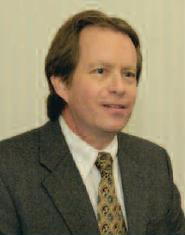
- SPEAKER: Douglas V. Faller, MD, PhD Professor of Medicine, Pediatrics, Biochemistry, Microbiology, Pathology and Laboratory Medicine; Director of the Cancer Center; Vice-Chairman, Division of Medicine
- TOPIC: The Excitement of Drug Development in Medicine. As an Academic, What Are the Barriers and Rewards?
- TIME: 12 – 1 p.m.
- LOCATION: 650 Albany Street, 7th Floor, room 714
(Lunch will be provided)
Researchers from BU School of Medicine and College of Engineering Receive Grant to Develop Improved Virus Detection System
A team of researchers from Boston University’s School of Medicine (BUSM) and College of Engineering (COE) have been awarded a five-year, $4.8 million National Institutes of Health (NIH) grant to develop a low-cost, multiplexed virus detection platform. Based on technologies developed with seed funding from Boston University’s Photonics Center, the resulting diagnostic platform should be capable of rapidly detecting - at the point of care- viral pathogens such as Ebola, Lassa Fever and Marburg.
The actual testing of the virus detections platform with “hot” virus will take place at the University of Texas Medical Branch.
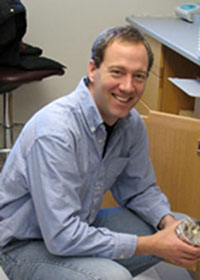
Led by principal investigator John Connor, PhD, an assistant professor of microbiology at BUSM, the research team also includes Selim Ünlü, PhD, Hatice Altug, PhD, Catherine Klapperich, PhD and Mario Cabodi, PhD, all from the COE. Together their research groups will work to apply cutting-edge developments in engineering and physics to the task of finding and identifying infectious agents
“We brought together this interdisciplinary team in order to develop a breakthrough detector system that will allow a simple test for the presence of multiple viruses,” said Connor. “To do that, we are working to negate the need for enzymes or fluorescent labels and are building nanoscale platforms that can look for multiple viruses at the same time,” he added.
The team is working on two different detection technologies. For both technologies, the complete system will consist of a small “detector” chip containing integrated microfluidics. The microfluidics will allow samples to be drawn over the active sensing chip that will capture viruses.
The chip will then be analyzed in a “reader” that is capable of rapidly reading the detector chips and providing diagnostic information. The system should be able to simultaneously assess multiple possible infectious agents. The chips are smaller than a quarter, and the readers are expected to be the size of a breadbox, making them easily portable.
Early tests of the system will be carried out in Connor’s laboratory which will use pseudo-viruses that will help with the development of the detection platforms. He will be utilizing a veterinary virus that will establish the sensitivity, reproducibility and the flexibility of the detection platforms. Following the initial development and validation of the detectors, the researchers will partner with Becton Dickinson (BD), a leading global medical technology company, to transform one of the virus diagnostic platforms into a working prototype. They will send the prototype for testing to the lab of Thomas Geisbert, PhD, from the University of Texas Medical Branch.
According to the researchers, the current limitations of conventional virus detection methods include expensive equipment, relatively long process times and require extensive training. “Under the new NIH grant, our goal is to produce a highly-sensitive, user-friendly, commercially-viable virus detection system that can be deployed at the point of care and detect viruses in about 30 minutes,” explained Ünlü.
GSDM Reps Attend ASDA Eastern Regional Meeting
Six student representatives from GSDM attended the ASDA Eastern Regional Meeting in Buffalo, New York, September 23-25. The group took part in lectures, seminars, and advocacy training alongside students from thirteen other dental schools.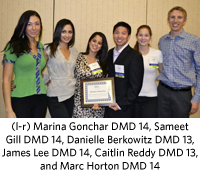
The conference focused on leadership development, advocacy training, and involvement in organized dentistry. Featured speakers included ADA President-elect Dr. William Calnon, 2008-10 ADPAC Chairman Dr. Roger Triftshauser, and ASDA President Adam Shisler. The students also participated in breakout sessions on key dental issues, training for the House of Delegates, chapter idea exchanges, and district caucuses.
“The ASDA Eastern Regional Meeting was a great opportunity to share and exchange ideas that will improve our chapter,” said James Lee DMD 14. “We look forward to implementing many of these new ideas and creating additional opportunities for BU dental students to continue developing their leadership skills.”
This year the BU ASDA Chapter, led by Dee Gulis DMD 12 and Rachel Lukas DMD 13, received the Outstanding Chapter Contribution Award. The BU ASDA chapter was recognized for its strong leadership, inter-chapter communication, and community service and advocacy efforts.
Free Flow Cytometry Core Facility Training Seminar, Oct. 19
The BUMC Flow Cytometry Core Facility is holding the annual autumn training seminar to introduce new users to flow cytometry. This seminar, “How to run flow cytometry experiments” will be held on Wednesday, Oct. 19, at the BUSM Instructional Building in room R103 from 1 – 2 p.m. It will be presented by Flow Cytometry Core Director Gerald V. Denis, PhD.
The purpose of this seminar is to introduce new users (graduate students, postdoctoral fellows and all interested others) to the available instruments and services, and to provide some training in basic techniques. All advanced technologies are intimidating to the novice. An important educational goal of the seminar is to increase the comfort level of potential users of flow and familiarize users with basic concepts.
The Flow Cytometry Core Facility operates as a fee-for-service core under the supervision of the Core Committee, at the direction of Dean Antman. Our mission is to offer state-of-the-art instrumentation, analysis and consultation for BUMC scientists who use flow cytometry in their research. As Principal Investigators ourselves, we understand the need to produce data in a timely and cost effective manner. We have assembled a team of talented individuals to help PIs reach their goals, no matter how complex.

There have been many exciting developments in the field of flow cytometry in the last couple of years and BUMC has just acquired a state-of-the-art high end FACSAria III flow cytometer/cell sorter. The seminar will touch on some of the capabilities of this advanced instrument to foster enthusiasm for its use to address scientific problems that BUMC scientists encounter. Powerful flow cytometry tools are often able to provide excellent solutions to diverse problems in immunology, oncology, and molecular and cellular biology. We encourage new users to come and learn about some of these tools that may help in their research.
For more information please contact Yan Deng, ydeng@bu.edu or call 414-5225. There is not cost to attend this seminar.
Oct. 12 Public Health Forum to Examine Inequities in Health Care Access for Immigrants
In 2006, Massachusetts enacted a pioneering health care reform law that promised universal health insurance coverage. State policymakers jettisoned a piece of this landmark commitment in 2009 when they barred more than 30,000 low-income legal immigrants from part of the health care reform program that subsidizes health insurance premiums for those with very limited means.
Health Law Advocates (HLA), a public interest non-profit law firm, challenged this state policy in a 2010 class action lawsuit contending the state's policy violates legal immigrants' right to equal protection guaranteed by the Massachusetts Constitution.
HLA's Executive Director Matt Selig will speak about this immigrants' rights case, which is set for oral argument before the Massachusetts Supreme Judicial Court on Oct. 6.
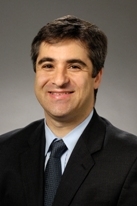
Public Health Forum
- "Fighting Discrimination: Legal Action to Gain Equal Access to Health Care of Immigrants"
- Speaker: Attorney Matt Selig, Executive Director of Health Law Advocates
- Wednesday, Oct. 12, noon – 1 p.m.
- BUSM Instructional Building, Room L - 112