Student Updates
BU School of Medicine Researchers Identify Agent Responsible for Protection Against Atherosclerosis
Researchers from Boston University School of Medicine (BUSM) have identified for the first time the A2b adenosine receptor (A2bAR) as a possible new therapeutic target against atherosclerosis resulting from a diet high in fat and cholesterol. The findings, which appear on-line in Circulation, may have significant public health implications.
Adenosine is a metabolite produced naturally by cells at low levels, and at higher levels during exercise or stress. Adenosine binds to and activates cell surface receptors, one of which is the A2bAR. Previous studies have described the A2bAR as anti-inflammatory and protective against kidney ischemia, cardiac reperfusion injury and restenosis, typically via bone marrow cell signals.
In mouse models, BUSM researchers found atherosclerosis induced by a high-fat diet was more pronounced in the absence of the A2bAR. They also found bone marrow transplantation experiments indicated that A2bAR bone marrow cell signals alone were not sufficient to elicit this effect. “A2bAR genetic ablation led to elevated levels of liver and plasma cholesterol and triglycerides, and to fatty-liver pathology typical of steatosis, assessed by enzymatic assays and analysis of liver sections,” explained senior author Katya Ravid, DSc/PhD, a professor of medicine and biochemistry at BUSM. The study was also co-authored by Milka Koupenova-Zamor (first author as part of her graduate work), PhD; Hillary Johnston-Cox (as part of her graduate work), BA; Dan Yang, MD, PhD; Alex Vezeridis, MD, PhD; H. Gavras, MD; and Vasillis Zannis, PhD; all from Boston University School of Medicine.
The researchers also identified the mechanism underlying this effect in the liver, involving the control of the transcription factor SREBP-1 and its downstream targets-regulators of lipid synthesis. They found restoration of the A2bAR in the liver of A2bAR null mice reduced the lipid profile and atherosclerosis. “Most importantly, in vivo administration of a pharmacological activator of the A2bAR in control mice on a high fat diet reduced lipid profile and atherosclerosis. Thus, this study provides the first evidence that the A2bAR regulates liver hyperlipidemia and atherosclerosis, suggesting that this receptor may be an effective therapeutic target against earlier stages of atherosclerosis,” Ravid added.
Funding for this study was provided by the National Heart, Lung and Blood Institute.
Researchers Identify Phthalates in Numerous Medicines and Supplements
Researchers from Boston University’s Slone Epidemiology Center (SEC), in collaboration with Harvard School of Public Health, have found numerous prescription and over-the-counter drugs and supplements use certain chemicals called phthalates as inactive ingredients in their products. The findings appear on-line in Environmental Health Perspective.
Phthalates such as dibutyl phthalate (DBP) and diethyl phthalate (DEP) are used as inactive ingredients in FDA-approved medications where they may serve a variety of functions. Most commonly, they are used in the coating of a drug product to target the delivery of the active ingredients to a specific area of the gastrointestinal tract, or manage their release over time. Some phthalates, including DBP have been identified as causing adverse developmental and reproductive effects in laboratory animals. Limited human studies have suggested a possible association of DBP and DEP with male reproductive health outcomes.
Using a combination of resources, the researchers were able to identify over 100 drug and dietary supplement products that indicated they contained phthalates, including 50 prescription, 40 over-the-counter (OTC) and 26 dietary supplement products with labels that listed DEP or DBP, of which nine contained DBP. In addition, a large number of product labels listed phthalate polymers that are considered to be of little or no known toxicity but which are often used in combination with other phthalates.
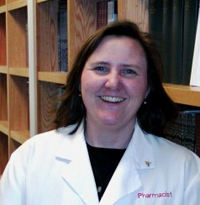
“Given the thousands of orally-ingested products on the market (prescription, OTC and dietary supplements), it is difficult to know exactly how many contain phthalates. However, it is informative and important to identify the specific drug products that have included phthalates in their formulations,” said lead author Kathy Kelley, MPH, RPh, a research pharmacist at BU’s SEC.
According to the researchers, the potential health effects of human exposure to these phthalates through medications are unknown and warrant further investigation. “The present findings should assist researchers in conducting the necessary studies of potential risk of phthalates in human populations, but such efforts are limited by the lack of centralized, comprehensive, and publically-available information on the presence of phthalates in the full range of prescription, OTC and dietary supplement products,” added Kelley.
The researchers recommend that future studies should pay particular attention to the amount of phthalate, specifically DBP, used in each dosage form so that estimates of exposure from medications and supplements can be quantified.
Funding for this study was provided by the National Institute of Health, The Eunice Kennedy Shriver National Institute of Child Health & Human Development.
GSDM’s Asian Dental Student Organization Gives Thanks with Area Youth Organization
On behalf of the Asian Dental Student Organization (ADSO), three DMD students, Tam Nguyen DMD ‘13, Andrew Pham DMD ‘15, and Jason Pan DMD ‘14, helped celebrate Thanksgiving with youth members of the Boston Chinatown Neighborhood Center (BCNC).The event, held prior to Thanksgiving Day on November 22, attracted about 35 youth members between the ages of 11 and 17, and ten other volunteers. The DMD students pitched in to help take photos for the BCNC youth group bulletin board, assist with a scavenger hunt activity, and serve Thanksgiving dinner.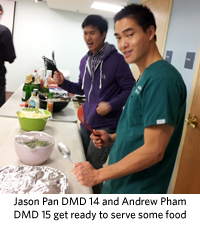
“The youth members were very enthusiastic and excited about Thanksgiving break, spending time with each other, and enjoying a traditional Thanksgiving meal,” said Nguyen, ADSO Treasurer. “Many students also gave thanks and spoke about what they were thankful for this year. We wanted to get involved with BCNC because we wanted to get involved with the Asian-American community in Boston, and thought this event would be a good way to learn more about BCNC and its events and members.”
Dean Jeffrey W. Hutter added,“It is wonderful to see the students of the ASDO serving the local community in this fashion. I am very proud of Tam, Andrew, and Jason for their volunteer efforts and desire to make Thanksgiving special for the youth members of BCNC.”
Malibu, Mount Gay, or Molson? New SPH study first comprehensive look at youth drinking preferences
Almost 15 years ago, the R. J. Reynolds Tobacco Company ended its Joe Camel advertising campaign after research suggested that the cartoon character was fueling an uptick in youth smoking.

Now, a team of researchers from the BU School of Public Health and the Johns Hopkins Bloomberg School of Public Health will examine the correlation between the drinking habits of young people and marketing campaigns, with a four-year, $2.4 million grant from the National Institute on Alcohol Abuse and Alcoholism.
The study will be the first comprehensive attempt to identify which brands of alcohol young people are consuming and to look at why some brands are more popular than others, says study coinvestigator Michael Siegel, an SPH professor of community health sciences.
“Most of the previous work has looked at things like, are young people drinking beer or wine or liquor—only to that general level,” says Siegel. “So we’ve been really limited in terms of our ability to do a lot of research into youth alcohol preferences and alcohol policy. Being able to drill down to what they’re drinking, and why, will be groundbreaking. It could be a game changer.”
Siegel and David H. Jernigan, an associate professor at the Bloomberg School, will codirect the project, which will involve surveying about 1,000 youths, ages 13 to 20, about the brands they drink, how frequently they drink, and how and where they obtain alcohol. They will be asked about binge drinking, alcohol-related problems such as accidents or fights, and the popularity of novelty items like Jello shots and alcoholic whipped cream.
At the same time, Siegel says, the research team will review brand-specific advertising data from the past several years to explore whether marketing has affected youth drinking patterns.
“The questions we’re going to look at are, what kinds of advertising have these brands done, and is the advertising working?” Siegel says. “We’re expecting to see consumption concentrated among a relatively small number of brands—and if it is, we can look at why young people are choosing those labels. Right now, we don’t know much about what they’re drinking, let alone why.”
“This is a big undertaking,” he says, noting that there are close to 900 different brands of alcohol. “But we’re hoping to inform public policy in a very systematic way.”
Youth drinking remains a significant problem nationally, with the 2010 National Survey on Drug Use and Health finding that 26 percent of youths ages 12 to 20 reported drinking alcohol in the past month and 17 percent reported binge drinking.
In 2009, the national Monitoring the Future survey reported that 37 percent of 8th graders and 72 percent of 12th graders had tried alcohol.
In recent years, a number of medical and advocacy groups have criticized the alcohol industry for ads targeting young people. Among them is the American Academy of Family Physicians, which maintains that alcohol advertisements “overwhelmingly connect consumption of alcohol with attributes particularly important to youth, such as friendship, prestige, sex appeal, and fun.” Several studies have concluded that greater exposure to alcohol advertising contributes to an increase in drinking among underage youth.
While beer companies have dominated spending on major TV networks, studies have shown that distilled liquor marketers have driven a dramatic increase in advertising on cable television in the past decade.
Figuring out the connections between advertising campaigns and youth consumption of specific brands will help groups combating underage drinking to target their efforts, Siegel says.
The new study will expand on the research published in a paper last July in the Archives of Pediatrics and Adolescent Medicine that found links between marketing expenditure and underage drinkers’ brand preferences, as well as higher rates of binge drinking among adolescents who named a favorite brand.
That study, by Dartmouth Medical School and Johns Hopkins Bloomberg researchers, found the most common favorites among the 16-to-20-year-olds surveyed were Smirnoff (for females) and Budweiser (for males). Overall, Smirnoff was the most popular brand for the adolescent drinkers surveyed, but the study did not distinguish between products within the brand, such as Smirnoff Vodka or Smirnoff Ice.
Jernigan, a coauthor of the earlier study, says that a relatively small number of brands are responsible for the bulk of youth exposure to alcohol ads. In 2003, the trade associations representing beer and distilled spirits companies joined the wine industry in committing to placing ads only where the underage audience is 30 percent or less. Some brands have done better than others at avoiding overexposure to youths, Jernigan says.
The American Academy of Pediatrics has advocated for the alcohol industry to restrict advertising in media venues whose audience is more than 10 percent underage.
Siegel has done previous research on advertising targeted to young people. In a study last year, he and other SPH researchers found that Boston’s MBTA was allowing young people to be heavily exposed to alcohol advertising. They found a total of 267 alcohol advertisements on 142 subway cars, an average of about two alcohol ads per car. Based on MBTA ridership statistics, that translates into a total of 1.2 million advertising exposures on a typical weekday, 18,000 of them to youth, the study said.
Submitted by Lisa Chedekel.
Can Whole Saliva Serve as a Diagnostic Medium for Systemic Disease? GSDM's Frank Oppenheim Investigates
In the last ten years there has been a surge of interest in using human whole saliva samples for diagnostics and disease monitoring as an alternative to blood samples. Henry M. Goldman Distinguished Scientist Dr. Frank Oppenheim can understand why there is interest, since collection of saliva can be much less invasive to the patient than collection of blood samples, however he cautions against its use until more is known about how the biomarkers necessary for diagnostics react to proteolytic activity.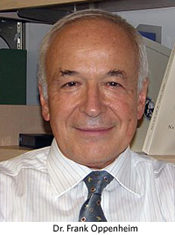
Dr. Oppenheim explains that the difference between whole saliva and blood is that blood reflects infection all over the body because it flows. Saliva does not flow; it is secreted in the mouth, where it mixes with gingival fluids and bacteria. So if the biomarkers related to infection in, for example, the heart or the finger did in fact show up in whole saliva, they may be broken down by proteolytic activity in the mouth, to a level where they would be unrecognizable.
His paper, “Whole-saliva Proteolysis and Its Impact on Salivary Diagnostics,” was published in the November 2011 issue of the Journal of Dental Research. The research detailed in the paper can be considered a first step for those interested in testing the viability of whole saliva as a diagnostic medium.
In the paper he describes how various methods of handling and storage of whole saliva samples were examined in order to find the best method, which would preserve the integrity of potential biomarkers. Some of the methods tested were use of heat, extreme PH levels, putting the samples on ice, completely freezing them, and adding proteolytic inhibitors. Of all the methods, short-term storage of freshly collected samples on ice was found to be the best. The ice reduced enzymatic activity and did not interfere with the chemistry of the proteome.
“The paper is a fundamental investigation of the characteristics of whole saliva which will need to be taken into account if valid studies using saliva as a diagnostic medium are carried out,” said Dr. Oppenheim. “If everything gets destroyed by virtue of how the samples are handled we are very likely to come to wrong conclusions.”
"Congratulations to Dr. Oppenheim for having his research selected for publication by the Journal of Dental Research,” said Dean Jeffrey W. Hutter. “This is yet another example of his innovative research and I know the findings of this paper will be used as a resource by countless others.”
The paper is available in full online.
BU Alzheimer's Research Team Receives Donation from Senior Living Residences

Senior Living Residences (SLR) Compass Memory Support team presented Robert Stern, PhD, director of the Alzheimer's Disease Clinical & Research Program and ADC Clinical Core with a check supporting BU’s clinical research.
“We are delighted that the Compass communities are continuing to fundraise on our behalf. This provides tremendous support for our research and is another demonstration of our mutually beneficial affiliation,” said Stern.
The money was donated by SLR staff who also conducted fundraisers for ongoing Alzheimer's research projects. SLR, established in 1990, provides service-enriched housing and care options for seniors in New England.
GMS Summer Interns Win Awards at ABRCMS
Two students in the Division of Graduate Medical Sciences (GMS) 2011 Summer Undergraduate Research Program have received awards at the Annual Biomedical Research Conference for Minority Students (ABRCMS). Approximately 3,000 undergraduate and graduate students, program directors and faculty from across the United States attended the national conference, which was held in St. Louis, Nov. 9-12.
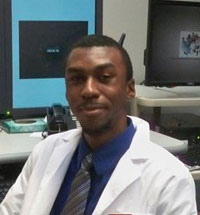
Chinaemere Igweibuke, a junior at the University of Virgin Islands, won best oral presentation in the Developmental Biology and Genetics Section. He spoke about Mitofusin-2 Protects Renal Epithelial Cells Under Stress. Chino’s summer faculty mentors were Steven Borkan, MD, associate professor of medicine, BUSM and Ramon Bonegio, MD, assistant professor medicine, BUSM. In addition, Jonathan M. Gall (Yoni), a MD-PhD student in Dr. Borkan’s renal research group, actively supported Chino’s independent summer research project.
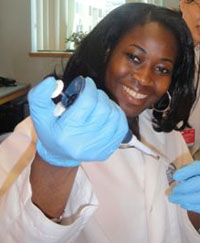
Rachael Opoku, a senior at Medgar Evers College of the City University of New York, won a certificate of achievement for her poster in the Developmental Biology and Genetics section. Her poster was titled Robo2 Pax2 play Distinct Roles in the Pathogenesis of Congenital Anomalies of the Kidney and Urinary Tract in Mice. ABRCMS was Rachel’s first professional conference and she was thrilled to be there to present her poster despite the pressure of being questioned by three judges.
Rachel’s summer faculty mentor was BUSM Department of Medicine Assistant Professor Weining Lu, MD. In addition, Hila Milo Rasouly, a PhD student in Dr. Lu’s lab served as a positive, inspiring role model for Rachel during her internship.
The ABRCMS conference is designed to encourage underrepresented minority students to pursue advanced training in the biomedical and behavioral sciences, and to provide faculty mentors and advisors with resources for facilitating student’s success.
The Division of Graduate Medical Sciences’ Summer Undergraduate Research Program provides a mentored internship for underrepresented students who are academically talented and particularly interested in pursuing graduate education in the biomedical sciences. The program was started in 2010 by, Associate Provost, Division of Graduate Medical Sciences, Linda Hyman, PhD. As part of the Program, participants present their independent research project at a summer research symposium at BUSM. Students are encouraged to go to professional conferences such as ABRCMS to continue to develop professional skills.
Sugar-Free Doesn’t Mean Worry-Free according to GSDM researcher: acids in artificial sweeteners may erode tooth enamel

The ubiquitous term “sugar-free” may trigger a false sense of security, says Sok-Ja Janket. She has long suspected that diet sodas and sugar-free candy, chewing gum, and other products, although preferable to sugar-sweetened products when it comes to preventing cavities, can also take a toll on dental health.
As lead researcher in a review study recently published in the British Dental Journal, the Goldman School of Dental Medicine research associate professor reports a link between widely used sugar substitutes and dental erosion, a gradual loss of the teeth’s hard coating. The study grew out of a thesis by third-year dental student Mohamad Nadimi (GRS’09, SDM’13)
According to Janket, sugar-free drinks and candies with acidic additives, most common in fruit-flavored products, pose a high risk for dental erosion. (Dental erosion differs from tooth decay, which is caused by bacteria.) In a comprehensive search of the dental literature, Janket and her coresearchers found a link between dental erosion and the use of sugar-free products with the acidic additives sorbitol and xylitol, and the findings indicate that the longer these acids stay on the teeth—in slow-melting candies, for example—the greater the risk of harm.
BU Today asked Janket about the implications of her findings, what kind of damage sugar-free products might be doing to our teeth, and whether some products are worse than others.
BU Today: What led you to suspect that sugar-free products might not be as beneficial to dental health as is widely assumed?
Janket: When several patients reported tooth sensitivity from unknown origin, we carefully evaluated their dental history and concluded that it might be related to sugar-free confections with acidulants, or acidic additives. It is not sugar-free polyols that cause problems, but the acids that are added.
Did the findings surprise you?
Not really. It just takes curious researchers with ability to search for the information that is necessary. We needed to find out the pH level where dental hard tissues lose minerals. The lower the pH, the higher the acidity. This information has existed, scattered throughout various research studies, since the 1970s. We found it and connected the dots.
Are dentists seeing more erosion than previously?
We knew that sugar-free products prevent cavities and also knew that the addition of acids could not be healthy. More dental erosion may have been noticed, but no one attributed this increase to acidic additives in sugar-free products.
Can you explain dental erosion in lay terms?
We have to start with dental caries first. Dental caries occur when microorganisms residing in the mouth, which are called “normal flora” and live in harmony under normal conditions, ferment carbohydrates and generate acids. These acids then leach out calcium from the tooth structure and dental caries begin.
Dental erosion is when acids from foods or industrial sources (some jobs that use acids, etc.) leach out calcium. Thus, dental erosion is a process of mineral loss by chemical action, without involving microorganisms.
Do you see the paradox here? We use sugar-free products to avoid acids made by the microorganisms, to prevent dental caries, but we add them in sugar-free products.
The potentially harmful acids are found in almost all sour-tasting products, including Sprite, 7UP, Gatorade, Mountain Dew, and Crystal Light, as well as in orange juice.
Your article refers to the public’s false sense of security. Would you advise people to avoid or cut back on artificially sweetened products?
Few would think of going to bed after drinking orange juice without brushing their teeth. With sugar-free products, however, people may think it is safe to do so. This is the false security we mentioned in our paper.
Sugar-free products (polyols) have proven dental benefits. However, like everything else, they should be used in moderation. The public should be aware of the potential problems from acidic additives as well as the gastrointestinal consequences. I use sugar-free products, but restrict them to those products without acidulants, which are listed in the ingredients.
Who is most vulnerable to dental erosion?
Acidulated sugar-free products with long exposure, such as sour-tasting lollipops, will cause the most harm. I would say children might be the most vulnerable.
Why do you think the effect of sugar-free products on dental health hasn’t been closely studied?
What we reported is not rocket science. However, this kind of research requires critical thinking and the ability to view science in a broader context. We were able to connect the dots that were scattered all over research from the past four decades.
Do you think most dentists assume these products are a healthy alternative to ones sweetened with sugar?
After our publication, they may be more aware of the hidden danger.
Do some sugar-free products have no acidic additives, and are they safer in terms of dental health?
Some sugar-free confections appear to be safe. They are nonacidic flavors such as peppermint, spearmint, butterscotch, or mint-chocolate chip. It helps to control my physiologic, not diabetes-related, hypoglycemia (low blood sugar) during long distance-driving.
What products are likely to do the most damage?
Most sour-tasting products contain acids. Consumers should check ingredients. If the product contains ascorbic, adipic, glutaric, or tartaric acid, it will cause pH levels to fall to a point where dental erosion can occur.
You mention that adding calcium and phosphate could stem adverse effects—is anyone studying this?
I hope someone will pick up the baton and do these studies. It would not be easy to study, but we can do simulated research.
Could using sugar-free products in moderation minimize the adverse effects? Are they overused because they’re perceived as harmless?
I believe the harmful effects would be minimized if one uses them in moderation. I believe the public perceives these products as safe but in reality, a subgroup may not be.
Will you pursue this research?
We plan to do more studies to confirm those flavors I tentatively suggested are indeed safe.
This BUToday story was written by Susan Seligson.
Two BUSchool of Medicine Faculty to be Named to Professorships Nov. 29
Two BU School of Medicine faculty members will be named to professorships: Barbara E. Corkey, PhD as the Zoltan Kohn Professor in Medicine and Avrum Spira, MD, MSc as the Alexander Graham Bell Professor in Health Care Entrepreneurship. The installation will be held on Tuesday, Nov. 29 at 3:30 p.m. in the 670 Albany Street, First Floor Auditorium with a reception to follow in foyer.

Dr. Corkey is being recognized for her exceptional academic accomplishments and remarkably effective institutional service. Since 2007 Dr. Corkey has served as the Department of Medicine’s Vice Chair for Research. She brings faculty together from across the medical campus and across the university in the common pursuit of discovery and training. Her accomplishments include establishing a number of Cores including Cellular Imaging, Analytical Instrumentation, Immunohistochemistry, and Animal Resources, and High Throughput Screening, and Biostatistics, and Clinical Research Resources core within the CTSI.
Together with Dr. David Coleman she conceptualized the Evans Center for Interdisciplinary Biomedical Research, which funds interdisciplinary research initiatives involving more than 100 faculty from both campuses, other academic institutions and industry. She also has supported bridge and pilot funding programs, and a junior faculty program for internal grant review. She has developed “Fair Expectations” and “Code of Conduct” for faculty and trainees.
Dr. Corkey is internationally renowned for her research work in lipid metabolism, insulin secretion and pancreatic beta cell function, all central to a critically important public health problem – obesity and diabetes. And her findings have revolutionized understanding of the mechanism of insulin secretion.
A recipient of numerous awards, Dr. Corkey has received both of the two most prestigious awards for diabetes research: the Charles Best Award from the University of Toronto and, earlier this year, the Banting Medal for Scientific Achievement from the American Diabetes Association.
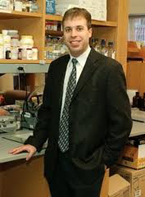
Dr. Spira is an internationally recognized leader in cancer-based genomics and in pulmonary bioinformatics. His group has characterized the genome of the airway epithelium and how gene-expression activity in these cells serves as a clinically-relevant biomarker for lung cancer and chronic obstructive pulmonary disease.
Earlier this year Dr. Spira was named BU Innovator of the Year, which recognizes a faculty member “whose cutting edge research and ideas lead to the formation of companies that benefit society at large.” He is co-inventor of five patents using airway gene-expression for early detection of lung cancer, and co-founder of Allegro Diagnostics, a molecular diagnostics company in Maynard, Mass.
Dr. Spira is the founding Chief of the Section of Computational Biomedicine in the Department of Medicine, Director of Translational Bioinformatics Program in the BU Clinical Translational Sciences Institute, member of the NIH Cancer Biomarker Study Section, Senior Editor of Cancer Prevention Research and co-chair of the lung collaborative group of the NCI’s Early Detection Research Network. He serves on NHLBI and NCI advisory committees, was elected to the American Society of Clinical Investigation, and received the Caine Halter Hope Now Award from the Uniting Against Lung Cancer foundation.
A charismatic teacher and mentor, Dr. Spira was the primary thesis advisor for 14 graduate students, 11 since 2008, who have produced 12 high-impact publications in top tier journals as part of their thesis work.
In addition to being an active and highly regarded attending physician in the Medical Intensive Care Unit, Dr. Spira developed a post-doctoral master’s program for MD’s interested in computational genomics and has mentored 10 post-doctoral clinician-scientists since 2004.
BU School of Medicine Researchers Find Increased Risk of Stroke, Death in Hospitalized Patients with Severe Sepsis and New-Onset Atrial Fibrillation
A recent study led by researchers at Boston University School of Medicine (BUSM) shows an increased risk of stroke and mortality among patients diagnosed with severe sepsis and new-onset atrial fibrillation (AF) during hospitalization.
Allan J. Walkey, MD, assistant professor of medicine at BUSM and a pulmonologist at Boston Medical Center (BMC), is the lead author of the study, which will be published in the Journal of the American Medical Association. Walkey presented the findings at the American Heart Association’s annual Scientific Sessions in Orlando, Fla., on Sunday, Nov. 13.

Severe sepsis is the 10th leading cause of death in the United States, and atrial fibrillation affects one in four people over the age of 40. While both are common illnesses, and chronic atrial fibrillation is a known risk factor for stroke and death, very little is known about new-onset atrial fibrillation during severe sepsis.
“The purpose of our retrospective study was to examine if a new-onset atrial fibrillation diagnosis in patients with severe sepsis was associated with an increased the risk of stroke and mortality in a hospital setting,” said Walkey.
The researchers examined data, provided by the Agency for Healthcare Research and Quality, from more than three million hospitalized patients. Looking at the risks of stroke and mortality, patients with new- onset atrial fibrillation during severe sepsis had three times the risk of having a stroke and a seven percent increased risk of death during hospitalization. Almost three percent of patients with new-onset atrial fibrillation during severe sepsis had a stroke during hospitalization compared to less than one percent of those not diagnosed with the condition during severe sepsis.
The data also showed that 56 percent of patients with severe sepsis and new-onset atrial fibrillation died, whereas 39 percent of patients with severe sepsis who did not develop new-onset atrial fibrillation did not. Additionally, six percent of patients with severe sepsis developed new-onset atrial fibrillation compared to less than one percent of patients who did not have severe sepsis and were hospitalized for another reason. Furthermore, among all patients with or without severe sepsis, 14 percent of all new-onset atrial fibrillation cases occurred in patients with severe sepsis.
“It is projected that one million Americans will have severe sepsis this year, and based on our data, approximately 60,000 people will develop new-onset atrial fibrillation,” said Walkey. “There are currently no guidelines on how best to care for these specific patients, but this study is a call to action that this under-recognized potential complication of severe sepsis requires further investigation on how to treat these critically ill patients.”
This research was funded by that National Institutes of Health’s National Heart Lung and Blood Institute.