Student Updates
Learn About Emerging Topics in BU VA Collaborations, March 30
Join your colleagues for a faculty development opportunity exploring “Emerging Topics in BU/VA Collaborations” on March 30. The goal of this workshop is to provide a continuous means of fostering collaborations among BU/VA faculty and to keep investigators up-to-date about the complex issues that arise between affiliated institutions. A variety of panelists from the Medical Campus and the VA will give thumbnail viewpoints with ample opportunity for Q&A. Panel moderators will summarize action points for future discussions.
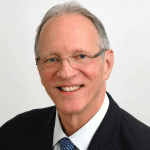
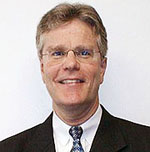
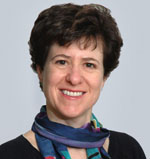
Topics to be covered include:
- “Ethical Issues in the Development of Personalized Medicine," moderated by Ronald Corley, PhD, BUMC Associate Provost for Research, with George J. Annas, Esq., BUSPH Chair of Health Law, Bioethics, and Human Rights; Mary Brophy, MD, MPH, Mass. Veterans Epidemiology Research and Information Center (MAVERIC) Operations Director; J. Michael Gaziano, MD, MPH, MAVERIC Scientific Director; and Catharine Wang, PhD, MSc, BUSPH Associate Professor of Community Health Sciences
- “Clinical, Educational, and Research Tracks of Academic Careers," moderated by Terence Keane, PhD, BUSM Assistant Dean for Research and VA Associate Chief of Staff for Research, with Karen H. Antman, MD, BUMC Provost and BUSM Dean; Michael E. Charness, MD, VA Chief of Staff; David l. Coleman, MD, BUSM Chair of Medicine; and Jennifer Vasterling, PhD, BUSM Professor of Psychiatry and VA Chief, Psychology Service
- “Women's Concerns in Research Careers," moderated by Jane Liebschutz, MD, MPH, chair, BUSM Faculty Development and Diversity Committee with Karen H. Antman; Dalia Cahana-Amitay, PhD, Research Assistant Professor of Neurology; Gabrielle Liverant, PhD, BUSM Assistant Professor of Psychiatry; and Amy E. Street, PhD, BUSM Associate Professor of Psychiatry
- "Collaborations in Data-Secure Environments," moderated by Terence Keane, with Louis Fiore, MD, MPH, MAVERIC Executive Director; Daniel Jacobson, MD, VA Chief of Medical Oncology; Quinn R. Shamblin, BU Executive Director of Information Security; and David C. Seldin, MD, PhD, BUSM Associate Director, Cancer Center
This program will take place at the main building of the VA Boston Healthcare System from 8 a.m.-12:30 p.m. Parking at the VA is limited; best option is to take the MBTA Greenline E service to the last stop. For more information and registration contact Kirsten Levy at klevy@bu.edu or 638-5431. This event is sponsored by BU Clinical and Translational Science Institute, BUSM Office of Academic Affairs, BU Sponsored Programs and VABHS Research Service.
Event Logistics
What: Emerging Topics in BU/VA Collaborations
Date: March 30
Time: 8 a.m.-12:30 p.m., (7:30 a.m. breakfast)
Location: Main Building, Basement Conference Room
VA Boston Healthcare System
150 South Huntington Ave., Boston
BUSM Class of 2012 has a 97 Percent Match Rate, Surpasses National Rate
Surpassing this year’s National Residency Matching Program rate of 95 percent, the highest in 30 years, members of the Boston University School of Medicine (BUSM) Class of 2012 had a 97 percent match rate. “These are the best results in a decade at BUSM and the Class of 2012 was accepted at many of the top programs in the country,” said Phyllis Carr, MD, associate dean for student affairs.
For the second year in a row, Match Day was held in the Hiebert Lounge amid red and white balloons. Members of the class gathered along with their family and friends to receive their letters from Dr. Carr as well as from Student Affairs Assistant Deans Daniel Chen, MD, MSc; Kenneth Grundfast, MD; Paul O’Bryan, PhD; John Polk, MD ’74; and Karen Symes, PhD. Robert Beazley, MD, professor of surgery (retired) and Samantha Kaplan, MD, MPH, assistant dean for diversity and multicultural affairs also presented letters to the students.
Forty-four members of the class are staying in Massachusetts for their residency, and 13 of that number will be on campus at Boston Medical Center. New York is claiming the next largest contingent of 23 members of the class and California will be home to 21 newly minted BUSM graduates for the next four years. Texas, Washington state, Maryland, Connecticut and Pennsylvania will also be receiving members of the Class of 2012. 
Internal medicine is the choice of 20 percent of the class, followed by family medicine with 11 percent, pediatrics at 10 percent, and emergency medicine and anesthesiology at 9 percent each.
Zi Huang ’12 from New York City was very pleased as he matched at North Shore Long Island, his number one choice. “Here at BUSM, they really train you so well and are dedicated to your learning,” said Huang. “They’re so attentive to what you think and the faculty here really want you to succeed.”
 “We have thoroughly enjoyed your class,” said Karen Antman, MD, provost of the medical campus and dean of the School of Medicine. “You were already accomplished on your arrival and you have done some pretty remarkable things here as well. In your first week on campus at the white coat ceremony, the faculty welcomed you to the study of medicine. In another two months, we will welcome you to the practice of medicine. On behalf of the deans and faculty, congratulations on your accomplishments.”
According to the Association of American Medical Colleges, the number of applicants in this year’s Main Residency Match rose by 642 for a total of 38,377 participants, an increase of more than 2,400 over the last five years. These individuals applied for 26,772 positions, an increase of 614 over 2011. This total includes 146 positions in child neurology, which joined the Match this year. Internal medicine, anesthesiology and emergency medicine saw the largest increases in 2012, and emergency medicine filled every available position. The number of family medicine positions increased only slightly (1.1 percent) following notable increases over the last two years.
GSDM Students Extend Lobbying Effort North to Maine
Marc Horton DMD 14, David Haluska DMD 12, and Erik Harriman DMD 14 traveled to Augusta, Maine on February 7, to participate in a lobbying event sponsored by the Maine Dental Association (MDA). The students met with officials from the MDA in the afternoon and in the evening they joined member dentists at the MDA’s Legislative Reception, where they spoke with Representatives from the Maine State Legislature about issues important to dental students and new graduates.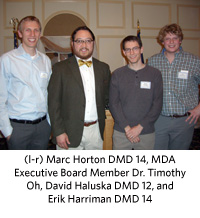
This was the first time students from GSDM have been involved in a MDA legislative event, but the students say they felt welcomed by both the MDA and the State Representatives, and they look forward to continuing this relationship. The students are members of the BU Chapter of ASDA and Horton is on the ASDA Legislative Committee. Recently the BU Chapter received funding from ASDA for lobbying trips to Maine, New Hampshire, and Vermont. Haluska and Harriman are both Maine natives.
Horton encourages students to get involved in a lobby trip. He is currently organizing a trip to Vermont to participate in Vermont Legislative Day on Thursday, April 12. If you are a student who would like to attend you should email Horton with a brief statement of your interest in the event by Friday, March 16. All student transportation and lodging expenses will be covered by ASDA. Additional lobbying opportunities will also be coming up shortly in Massachusetts and New Hampshire.
BUSM Rises in U.S. News & World Report Annual Rankings
 U.S. News & World Report ranked Boston University School of Medicine (BUSM) 31st for best research medical school in the US. Up from its rank of 34th last year, BUSM tied Dartmouth and University of Alabama Medical School and ranks ahead of USC’s Keck School of Medicine, and Brown, Tufts and Georgetown medical schools. See the research rankings here.
In addition, BUSM's ranking in Primary Care rose from 47th to 31st and the School's Drug and Alcohol Abuse specialty is ranked 10th best in the nation. Click here for primary care rankings and here for specialty rankings.
Register for World TB Symposium on Medical Campus March 22-23
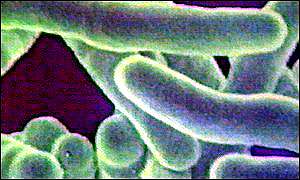
Boston University School of Medicine; Boston Medical Center, Section of Infectious Diseases; and the National Emerging Infectious Diseases Laboratories are co-sponsoring the World TB Day Symposium March 22-23 on the Boston University Medical Campus. World TB Day is officially March 24, and it celebrates the discovery of the tubercle bacillus by Robert Koch in 1882. On March 24, the World Health Organization and the Centers for Disease Control and Prevention release the latest data on global and U.S. tuberculosis epidemiology. This is the fourth year that TB investigators from the northeast have gathered for a scientific meeting to present their very latest research.
This symposium differs from all other World TB meetings being held in that all presenters are principal investigators and leaders in TB research. Previous meetings have been at the Trudeau Institute, the University of Medicine and Dentistry of New Jersey, and the Wadsworth Institute. The Potts Foundation has provided financial support to defray the costs for the participants.
This two-day Symposium is an opportunity to convene with peers and share insights and progress in the fight against Tuberculosis. The Symposium will cover advances in Global and Translational Sciences; Prevention; Diagnosis; Treatment; Host Response and Pathogen Biology. Nearly 100 participants have already registered for the conference.
Symposium committee members include: Andrea Cooper, PhD, Trudeau Institute; Jerrold Ellner, MD, Boston University School of Medicine; Marila Gennaro, MD, Public Health Research Institute; Igor Kramnik, PhD, Boston University School of Medicine; Kathleen McDonough, PhD, Wadsworth Center.
Registration is complimentary to meeting attendees. Please visit https://www.bumc.bu.edu/id/events/ to register and for more details.
GSDM Students Compete in First Annual District 1 Debate
GSDM dental debaters Mohamad Kamel DMD 13, Sameet Gill DMD 14, Marc Horton DMD 14, Darshit Shah DMD 13, Dhiren Agrawal DMD 13 and Julian Camastra DMD 15 faced off against dental students from Tufts University and Harvard University at the First Annual District 1 Debate, held at Tufts University on February 25. GSDM and Tufts have held debates against one another for the last few years, but this was the first debate with all three Boston-area dental schools.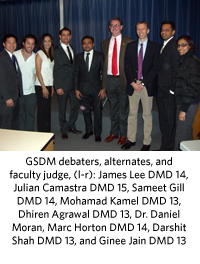
Clinical Assistant Professor Dr. Daniel Moran served as a judge from GSDM. Debate topics included:
- Mid-Level Providers: Do mid-level providers serve to increase accessibility to dental care in neglected communities or do they compromise the overall quality of care administered?
- National vs. Regional/State Licensure: Would a national license recognize that the standard of care should not be determined by state lines, or might it hinder the distribution of dentists nationwide?
- Mandatory PGY-1: Are states such as New York justified in requiring the completion of a one-year post-graduate program for dental licensure in lieu of an examination?
- Patient-Based Exam vs. Portfolio Review: In granting dental licensure, is a portfolio review a sufficient replacement for the patient-based exam which carries many widely-recognized unethical aspects?
- Dental Schools at Osteopathic/Naturopathic Colleges: Are students at dental schools associated with institutions of non-allopathic medicine receiving the same quality of education as those students at schools with a curriculum based on traditional medicine?
- Esthetic Dentistry as an ADA-Recognized Specialty: Should Esthetics be recognized as a dental specialty by the ADA or is it merely a field within the scope of general dentistry?
Tufts was the winner, defeating Harvard in the final round of the debate. Harvard defeated GSDM in the round 1 of the debate.
GSDM debate team organizer and alternate James Lee DMD 14 said, “This year’s debate was a great experience for everyone involved. Although we didn’t win, we accomplished our goal of raising awareness and furthering discussion about important issues facing dentistry today.”
Study Finds Intrauterine Exposure to Cocaine, Tobacco or Marijuana Does Not Affect Academic Achievement Test Scores
Researchers from Boston University Schools of Medicine (BUSM) and Public Health along with Boston Medical Center have found children’s academic achievement test scores not affected by intrauterine exposure to cocaine, tobacco or marijuana. However, alcohol exposure in children who had no evidence of fetal alcohol syndrome (FAS) did lead to lower scores in math reasoning and spelling even after controlling for other intrauterine substance exposures and contextual factors. These findings currently appear on-line in the journal of Vulnerable Children and Youth Studies.
There has been widespread concern that intrauterine cocaine exposure (IUCE) may have harmful effects on children’s academic performance, particularly at higher grades requiring abstract reasoning and greater attention and control. Also unresolved is whether other intrauterine exposures, such as alcohol (IUAE), tobacco, and marijuana, which often co-occur with IUCE, independently affect children’s academic abilities after controlling for other exposures.
Academic achievement scores (Wechsler Individual 15 Achievement Test-Second Edition (WIAT-II) were collected from 119, low-income, urban 11-year-olds who had been enrolled in a prospective longitudinal study of IUCE. The results indicate that neither IUCE nor intrauterine exposure to marijuana or tobacco was associated with lower WIAT-II scores.
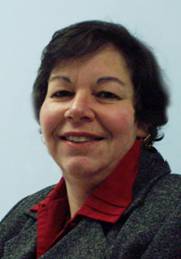
“Our results are consistent with growing evidence that IUCE exposure does not independently predict poorer achievement scores in school-age children exposed to multiple other substance exposures and psychosocial stressors,” explained lead author Ruth Rose-Jacobs, ScD, associate professor of pediatrics at BUSM and a research scientist at BMC.
However, according to Rose-Jacobs, the negative associations of IUAE on arithmetic reasoning and spelling were significant because the analyses had controlled for other substances; the children did not have FAS and had not been born preterm, all of which might negatively influenced achievement scores. The relationship between IUAE and achievement scores in this sample was partially explained on the Children’s Depression Inventory. Children’s depressive symptoms could precede or be a response to school achievement difficulties but whatever the pathway, relatively low achievement scores of children with IUAE are of potential educational importance. “Study finding suggest the children with histories of even low-level IUAE who experience school difficulties should be evaluated particularly for arithmetic skills and depressive symptoms and offered enhanced educational methods/interventions tailored to their needs,” she added.
Funding for the study was provided by the National Institute on Drug Abuse, the National Center for Research Resources and the National Institutes of Health (NIH).
Eye-Opening Journey to Haiti for GSDM Student
Fourth-year DMD student Thomas O’Connor hopes to become an oral and maxillofacial surgeon. He has had his sights set on this goal since before he entered dental school. His father, Dr. Stephen O’Connor an ER doctor in O’Connor’s hometown of Jasper, Indiana, introduced him to Drs. Matthew Monesmith and Kyley Wood, two Jasper Oral and Maxillofacial Surgeons prior to his entering dental school, and the doctors have since become O’Connor’s mentors. O’Connor has completed his APEX rotations with them and earlier this month he accompanied them on their annual mission trip to Cap Haitien and Milo, Haiti.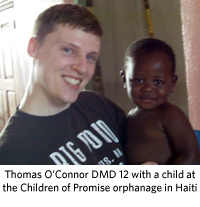
This mission trip was a bit different than many of the others that GSDM students participate in. Instead of extractions and restorations, O’Connor assisted with cleft palate repair and surgeries to remove tumors and reconstruct jaws. In addition to O’Connor, Dr. Monesmith, and Dr. Wood, the group was comprised of O’Connor’s father, an anesthesiologist, a dermatologist, and two OR and OB nurses. The group visited the Children of Promise orphanage to examine and treat the 60 child residents and worked in at the Sacre Coeur Hospital in Milo during their week in Haiti.
This is the first time that the group has taken a dental student on the trip. O’Connor jokes that he spent most of the time holding the retractors in surgery, but explains the surgeries they performed with equal parts fascination, excitement and sadness.
One of the worst cases he says they saw was a women with a large facial tumor that the team brought into surgery only to find her tumor was inoperable. They did everything they could, even giving her the $300 needed for her to travel eight hours by taxi to Port au Prince for a CT scan, and having the results sent back to Milo by plane. But the CT scan only confirmed what they already knew, and they had to sadly tell the patient that there was nothing more they could do for her.
On a more positive note, O’Connor said, “Our greatest success on the trip was a surgery that we performed on a 14-year-old boy with a bilateral jaw fracture. The fracture happened two months prior and left him only able to chew on two teeth. The doctors re-broke his jaw, got his bite back together, and plated up the bone.” O’Connor continued, “Some people say that these mission trips are only a drop in the bucket, but I think if you change even one person’s life you are making a difference. This surgery changed the life of a 14-year-old boy, who with limited access to care, may have lived many more years or even the rest of his life only being able to chew on two teeth.”
O’Connor said that he was also inspired by the follow-up cases that they saw. Many of these patients had tumors removed during the group’s 2011 mission trip and now were back for jaw reconstruction surgery. He said, “The follow up cases were great to see. These people have their lives back. They no longer have tumors and were all fully functioning.”
This was O’Connor’s third mission trip. As an undergraduate he traveled with other groups to Ecuador and Guatemala. Despite his prior experience he said, “This trip was really eye-opening. The poverty and living conditions were so much worse than I had ever seen before. And the pathologies that we saw in the hospital were like nothing that you would ever encounter in the States because they would get caught much earlier.”
However, the conditions and the up to 10 hours a day spent in the OR, didn’t deter O’Connor. He really enjoyed the overall experience and hopes to become a regular member of this mission team.
Photos are available on facebook and flickr.
The Role of Health Reform in Addressing Mental Health Disparities, March 29 Psychiatry Grand Rounds
Join David Satcher, MD, PhD, 16th U.S. Surgeon General and director of the Satcher Health Leadership Institute as he presents on "The Role of Health Reform in Addressing Mental Health Disparities" at the Psychiatry Grand Rounds on Thursday, March 29, 2-3 p.m., in Keefer Auditorium.
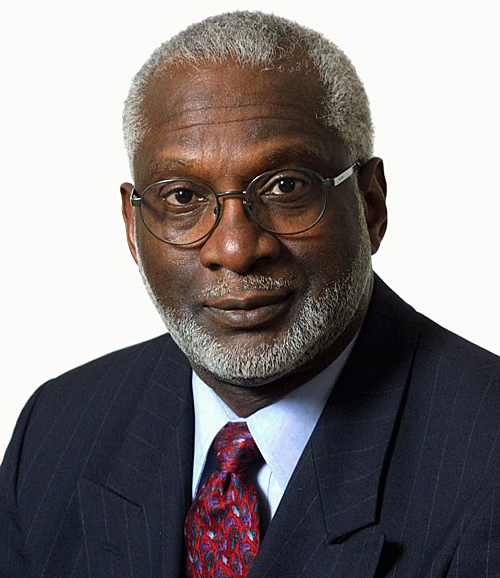
Dr. Satcher’s has deep experience in improving public health policy and is committed to eliminating health disparities for under-served groups, such as minorities and the poor and shedding light on neglected issues, such as mental and sexual health.
In 1998, Dr. Satcher was sworn in as the 16th Surgeon General of the United States and served as Assistant Secretary for Health in the Department of Health and Human Services from February 1998 to January 2001, making him only the second person in history to have held both positions simultaneously. He also served as Director of the Centers for Disease Control and Prevention (CDC) and Administrator of the Toxic Substances and Disease Registry from 1993 to 1998.
This program qualifies for continuing education credits for physicians, psychologists and social workers. For more information, please contact michelle.durham@bmc.org.
Psychiatry Grand Rounds
FSAO Provides Free, Confidential Counseling and Referrals for University Employees
The Faculty Staff Assistance Office (FSAO) is now open on the Boston University Medical Campus. FSAO provides University employees and their family members with free and confidential counseling and referrals for personal or work-related issues. Services are provided by the FSAO director, Bonnie Jean Teitleman and by Karen Brouhard, both of whom are licensed behavioral health professionals with over 20 years of experience.
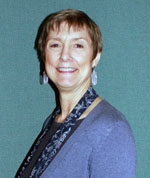
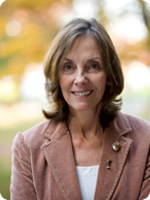
“There are many stresses that occur in people’s lives that can affect their job performance,” says Ms. Brouhard. Common issues that lead people to seek their services include anxiety and depression, concern about their own or another's use of alcohol or drugs, relationship and family issues, loss and grief, burnout and on the job difficulties with conflict, performance, change and leadership. Ms. Brouhard has considerable experience working with interpersonal violence, psychological trauma and with coping with parenting children with special needs. Ms. Teitleman has additional training and interest in organizational consultation, workplace issues, mediation, couples therapy and elder care.
Click here to visit the FSAO website and to learn more about the services they provide. The Medical Campus office is located in the Solomon Carter Fuller Mental Health Center, 85 E. Newton Street, M-809. For more information or to make an appointment call (617) 353-5381, email or complete an online form.