Student Updates
BUSM Study Shows Role of Cellular Protein in Regulation of Binge Eating

Researchers from Boston University School of Medicine (BUSM) have demonstrated in experimental models that blocking the Sigma-1 receptor, a cellular protein, reduced binge eating and caused binge eaters to eat more slowly. The research, which is published online in Neuropsychopharmacology, was led by Pietro Cottone, PhD, and Valentina Sabino, PhD, both assistant professors in the pharmacology and psychiatry departments at BUSM.
Binge eating disorder, which affects approximately 15 million Americans, is believed to be the eating disorder that most closely resembles substance dependence. In binge eating subjects, normal regulatory mechanisms that control hunger do not function properly. Binge eaters typically gorge on “junk” foods excessively and compulsively despite knowing the adverse consequences, which are physical, emotional and social in nature. In addition, binge eaters typically experience distress and withdrawal when they abstain from junk food.
The researchers developed an experimental model of compulsive binge eating by providing a sugary, chocolate diet only for one hour a day while the control group was given a standard laboratory diet. Within two weeks, the group exposed to the sugary diet exhibited binge eating behavior and ate four times as much as the controls. In addition, the experimental binge eaters exhibited compulsive behavior by putting themselves in a potentially risky situation in order to get to the sugary food while the control group avoided the risk.

The researchers then tested whether a drug that blocks the Sigma-1 receptor could reduce binge eating of the sugary diet. The experimental data showed the drug successfully reduced binge eating by 40 percent, caused the binge eaters to eat more slowly and blocked the risky behavior.
The abnormal, risky behavior exhibited by the binge eating experimental group suggested to the researchers that there could be something wrong with how decisions were made. Because evaluation of risks and decision making are functions executed in the prefronto-cortical regions of the brain, the researchers tested whether the abundance of Sigma-1 receptors in those regions was abnormal in the binge eaters. They found that Sigma-1 receptor expression was unusually high in those areas, which could explain why blocking its function could decrease both compulsive binge eating and risky behavior.
“These findings suggest that the Sigma-1 receptor may contribute to the neurobiological adaptations that cause compulsive-like eating, opening up a new potential therapeutic treatment target for binge eating disorder,” said Cottone, who also co-directs the Laboratory of Addictive Disorders at BUSM with Sabino.
This research was funded by the National Institute on Drug Abuse under award numbers 5R00DA023680-05 and 5R01DA030425-02; the National Institute of Mental Health under award numbers 1R01MH093650-01A1 and 5R01MH091945-03; the National Institute on Alcohol Abuse and Alcoholism under award number 5R00AA016731-05; and the Boston University Peter Paul Career Development Professorship and Boston University Undergraduate Research Opportunities Program. The study’s other co-authors include Xiaofan Wang, MD, PhD; Jin Won Park, MA; Marta Valenza, MS; Angelo Blasio, PhD; Jina Kwak; Malliga R. Iyer, PhD; Luca Steardo, MD; Kenner C. Rice, PhD; and Teruo Hayashi, MD, PhD.
Bradford Towne Joins GSDM
On May 21, Dr. Bradford M. Towne joined the full time faculty of the Department of Oral & Maxillofacial Surgery at Boston University Henry M. Goldman School of Dental Medicine (GSDM) and Boston Medical Center (BMC). His responsibilities will include pre-doctoral and post-doctoral education at GSDM and outpatient clinical care in the Yawkey-5 clinic at BMC. Dr. Towne brings a wealth of experience in ambulatory anesthesia, dental implants, bone grafting, and dentoalveolar surgery.

Chair of Oral & Maxillofacial Surgery and Associate Dean for Hospital Affairs Dr. Pushkar Mehra said, “We are extremely happy that Dr. Towne has joined our BU family. He brings a wealth of clinical and administrative experience from his tenure both in private practice and in the armed forces.” Mehra continued, “Dr. Towne’s close involvement with the AAOMS where he served both as a Board Trustee and Delegate for many years is an asset to the Department.”
Dr. Towne received his DMD from Tufts University School of Dental Medicine. After graduating from dental school, he served three years in the United States Army. He completed his residency training in oral and maxillofacial surgery at the Medical University of South Carolina in 1983, earning his Certificate of Advanced Graduate Study. He then practiced in Vermont until 2011. He is a Fellow of the American Association of Oral and Maxillofacial Surgeons and served on its board of trustees from 1997 through 2001. He is a Fellow of the American College of Oral and Maxillofacial Surgeons and the American Dental Society of Anesthesiology. Dr. Towne is Board Certified by the American Board of Oral and Maxillofacial Surgery and the National Dental Board of Anesthesiology. He is a member of various professional organizations and has been inducted as a Fellow of both the American College of Dentists and the International College of Dentists. Dr. Towne also holds appointments as a Clinical Assistant Professor in the Department of Surgery at the University of Vermont College of Medicine and served as Chair of the Credentials Committee there for more than 10 years.
Dr. Towne can be reached at bmtowne@bu.edu and 638-4809. He is located in the School of Dental Medicine building (G-407) at 100 East Newton St.
Submitted by Adrienne Callaghan.
BUMC Toastmasters News, New Members Welcome
This month the Boston University Medical Campus (BUMC) Toastmasters chapter achieved “distinguished” status. Toastmasters International has a list of ten benchmarks that it uses to assess clubs and those clubs that attain five of the benchmarks are considered distinguished. Some of the benchmarks achieved by this club include several members achieving “Competent Leadership” status, club membership of more than 20, and club officers that participated in the winter training session.
'Clubs that attain distinction are those with members dedicating themselves to improving their communication and leadership skills. BUMC Toastmasters is fortunate in that it has a committed group of officers and members whose search for self-improvement attracts potential members, ensuring that the club will continue to grow," explained club member and Area Governor Joshua Paulin.

“We are excited to sponsor this opportunity for the medical campus,” explained Yolanta Kovalko, administrative manager, Office of Postdoctoral Affairs, BUSM. “We welcome anyone interested in improving their public speaking and leadership skills. Toastmasters International is a non-profit educational organization that teaches public speaking and leadership skills through a worldwide network of meeting locations.
The BUMC club is proud of its diverse membership. Members hail from Uganda, South Korea, Tunisia, China, Egypt, Venezuela, Canada, Poland, Turkey, Nigeria and the U.S. The majority of members are affiliated with the BU Schools of Medicine, Public Health, and Dental Medicine, and BMC. There are also club members who are residents of the South End community.
“One of the major goals of BUMC Toastmasters is to help members to find their voices and to learn how to lead. Choosing words that clearly express ideas motivate and inspire people to exceed their expectations is another goal of our group,” explained Kovalko.
Most BUMC Toastmasters meetings are held 5-6:15 p.m. on the first and third Thursday of each month at the School of Medicine room L-109A/B. Prospective members are encouraged to “sample” a meeting without commitment. For more information, please contact Yolanta Kovalko at Yolanta@bu.edu, 638-5244.
SURP Empowers Budding Undergraduate Research Scientists
What is SURP? SURP is the Summer Undergraduate Research Program, a ten week research and mentoring experience with Division of Graduate Medical Sciences faculty. The cohort is academically talented students from underrepresented and disadvantaged backgrounds who are interested in preparing for professional roles as research scientists. SURP was launched in the summer of 2010 under the leadership of Associate Provost Linda Hyman, PhD. In addition to a mentored research experience, students attend weekly science talks, participate in a journal club, go on science-oriented field trips, and present their research in a summer research symposium. The 2012 symposium will be held on Aug. 2.

In 2012 the applicant pool for SURP tripled, due largely to visibility with offices of career services, faculty advisors, NIH funded scholar programs and word of mouth. Members of the faculty admissions committee are Carol Walsh, PhD; Lisa Ganley-Leal, PhD and William Cruikshank, PhD. Faculty mentors for the 2012 cohort include: Weining Lu, MD; Barbara Corkey, PhD; Irina Zhadanova, MD, PhD; Hui Feng, MD, PhD; Daniel Remick, MD; Barbara Smith, PhD and Andrew Taylor, PhD.
In addition to acting as mentors, other GMS faculty and advanced PhD students contribute to the program by presenting their research at weekly “science talks.” On June 6, Drs. Brady and Levy-Bell, senior faculty in the Mental Health Counseling and Behavioral Medicine Program, co-led a discussion about personality factors in career planning. During the June 13 seminar, Isabel Dominguez, PhD talked about her passion for science and long-term research in Wnt signaling. Dr. Dominguez stressed that mentors are critical for students who wish to develop robust and productive research careers.
This year a journal club was added to the SURP program. Dr. Cruikshank will facilitate the club so that students gain a better understanding of the research concepts of their labs and improve their presentation skills.
Budding research scientists, LaTayia, Aaron, Clark-Atlanta University; Juan Ballester, University of Puerto Rico; Christine Doronio, Mount St. Mary’s College; Johnny Groeling, Queens College; Lydia Ruffner, Spelman College; Taylor Harris, Winston-Salem State University and Rui Soares, Boston College will have the opportunity to continue building their professional skills by participating in upcoming national conferences such as the Annual Biomedical Conference for Minority Students (ABRCMS) and the Society for Chicanos and Native Americans in Science (SACNAS).
For more information about SURP please contact Linda Zimmerman, Program Manager at 638-5704 or lzimmerm@bu.edu.
June 19 Workshop, Working in a Multicultural Group

The Graduate Medical Sciences Office of Postdoctoral Affairs is pleased to host Anne P. Copeland, PhD, founder and cxecutive director of The Interchange Institute, a non-profit organization focused on the understanding and support of people and organizations in intercultural transition. She will conduct a workshop on Working in a Multicultural Group, Tuesday, June 19 from 3:30–5 p.m. in the Wilkins Board Room (Evans 120) where she will discuss issues related to today’s university as a mini-United Nations.
The most productive labs, departments and work groups are the ones that understand the cultural values that affect relationships, communication style and scientific reasoning, and whose members share the ability to recognize and adapt to these differences. When everyone on a team – Americans and internationals alike – shares an understanding of these cultural dimensions and a vocabulary for discussing them in a neutral, balanced way, they can proceed to their shared core work more quickly and productively.
In this workshop, she will briefly review the international research on cultural values that affect work assumptions and relationships, and differences in scientific reasoning approaches that affect collaborations in multicultural teams. We will look at core cultural values in communication style and work relationships, including relationships between lab directors and staff, decision-making, work commitment, and other topics suggested by attendees.
Through The Interchange Institute, Dr. Copland conducts research and offers publications, cross-cultural training, training of trainers, and consulting on the process of moving from one culture to another. Dr. Copeland is a licensed psychologist with expertise in cultural transition.
- Working in a Multicultural Group
- June 19, 3:30-5 p.m.
- Wilkins Board Room (Evans 120)
- Open to all postdocs, PhD students, faculty and staff
- Registration: Yolanta@bu.edu
Submitted by Yolanta Kovalko
BUMC Study Finds Mass. Health Reform Leads to Increased Inpatient Surgical Procedures
Researchers from Boston University Schools of Medicine and Public Health (BUSM, BUSPH), along with the VA Boston Healthcare System and Harvard Medical School, have found inpatient medical procedures increased more among non-elderly, lower- and medium- income populations, Hispanics and whites, after health care reform went into effect in Massachusetts. The findings, which currently appear in Medical Care, suggest improved access to outpatient care for vulnerable subpopulations since health care reform took effect.
The 2006 Massachusetts health reform implementation substantially decreased the number of uninsured in the state. Yet, little is known about the reform’s impact on actual healthcare utilization among poor and minority populations, particularly for inpatient surgical procedures that are commonly initiated by outpatient physician referral.
Researchers used discharge data on Massachusetts hospitalizations for 21 months preceding and following health reform implementation (July 2006–December 2007). They identified all non-obstetrical major therapeutic procedures for patients 40 years and older and for which more than 70 percent of hospitalizations were initiated by an outpatient physician referral. Specifically, they compared pre- and post-reform utilization of major therapeutic inpatient surgical procedures predominantly scheduled by outpatient referrals among non-elderly Massachusetts adults, and found greater overall increases for lower income cohorts compared to the highest income cohort, and for Hispanics compared to whites.

“Prior to reform, both blacks and Hispanics had lower rates of these procedures compared to whites. As 90 percent of all surgeries came from outpatient physician referral, these findings suggest a meaningful improvement in access to outpatient care for the surgeries studied, especially those living in lower income areas,” explained senior author Nancy Kressin, PhD, professor of medicine at BUSM.
Findings of significant post-reform expansion in procedure use for Hispanics and lower area income patients are consistent with the relatively larger gains in insurance coverage among these subpopulations. These findings suggest potentially improved access to outpatient care and may reflect demand built up prior to reform when individuals were uninsured. “Whether such improved access – a crucially important first step to improving equity in access and outcomes – translates into improved clinical outcomes at a reasonable cost merits further study,” added Kressin.
Funding for the study was provided by the National Heart, Lung and Blood Institute Center for Health Insurance Reform and Cardiovascular Outcomes and Disparities.
Attend TBI/PTSI Lecture, Reception, Poster Session, June 28

In honor of Naval Week, Boston University School of Medicine (BUSM) and the VA Boston are holding the inaugural Joining Forces United Front Consortium TBI/PTSI Lecture Series. Of particular note is a lecture on "The Naval Response to TBI and PTSD” presented by Rear Admiral Elaine Wagner, DDS and neurologist James P. Kelly, MD. Rear Admiral Wagner is Commander of Navy Medicine East and Director of the Navy Dental Corps. Dr. Kelly is Director of the National Intrepid Center of Excellence for TBI and PTSD in Bethesda, MD. This event is part of the White House Joining Forces Initiative to increase education about military medical issues.
Faculty staff and students are invited to participate in a poster session and reception, in addition to the lecture. This event will take place on Thursday, June 28 , with the lecture at 4 p.m. followed by poster session and reception at 5 p.m., in the Hiebert Lounge, 14th floor of the Instructional Building, 72 East Concord St.
Individuals interested in attending the event, presenting a research poster, or being included in the research database should RSVP to dgrom@bu.edu by June 15
GSDM Employee Recognition Reception Recognizes Long-Serving Faculty and Staff
 On May 29, Dean Jeffrey W. Hutter and Mrs. Kathy Hutter hosted a reception honoring Boston University Henry M. Goldman School of Dental Medicine (GSDM) retirees and those that have served the School for 25 years.
“As we acknowledge and recount all that these individuals do to contribute to the success of our students, patients, and our School I am reminded how critical the contributions of each and every member of our team are to the fulfillment of our mission,” said Dean Hutter. “I truly appreciate and value each and every member of our Henry M. Goldman School Dental Medicine family and I am proud to honor the extraordinary contributions of these individuals tonight.”
Dean Hutter recognized staff member Ms. Leslie Baker and faculty members Dr. Efrain Ruiz, Dr. Philip Trackman, Dr. Magnolia Venegas, and Dr. Jonathan Zucker for their dedication to the School for the last 25 years. Also recognized for 25 years of service, but not present at the reception was Dr. Neal Fleisher.
Dean Hutter then presented remarks about Mrs. Jackie Gallant, who retired in June of 2011 after 25 years of service and attended the ceremony with her husband and daughter. He joked that while she seemed to be enjoying her retirement that there was always a spot for her here at GSDM. Concluding the ceremony, “To each of the honorees, please accept my sincere appreciation for your service and contributions,” said Dean Hutter. “It is truly people like you who make our School a center for excellence in oral health education, research, and care in the world.”
Photos from the reception can be found on facebook and flickr .
BUMC Researchers Find Alcohol Plays No Role in Disclosing HIV Status Among Russians

Disclosure of HIV positive serostatus to sexual partners is considered an important public health goal to prevent new infections. Disclosure can motivate sex partners to make informed choices and change behavior through negotiation of safer sex practices. It might also prompt partner testing and counseling.
A team of Boston University Medical Campus (BUMC) researchers representing the schools of Medicine (BUSM) and Public Health (BUSPH) in cooperation with Pavlov State University investigated nondisclosure of HIV infection in a cohort of 700 people living with HIV in St. Petersburg, Russia. In Russia, an HIV epidemic is currently growing at explosive rates, particularly among injection drug users. Russians are also worldwide leaders in alcohol consumption, which has led to a national health crisis, adds further to health problems and potentially facilitates the spread of HIV.
The BUMC and Pavlov team found that approximately half (52.4 percent) of all participants surveyed reported not having disclosed their HIV serostatus to all partners since they had known of their infection. The study findings, which currently appear on-line in the journal AIDS Behavior, suggest that alcohol seems to play no major role in the decision to disclose or not. However, those in a relationship with a casual partner, an HIV negative partner, or with multiple sex partners were less likely to disclose.
“We now know that nondisclosure of HIV status to sex partners is still very common in Russia and that risky alcohol use is also very common however we were there we were unable to detect an association between any alcohol use and the outcome of recent nondisclosure,” explained lead author Karsten Lunze, MD, a fellow in the Clinical Addiction Research & Education Unit at BUSM.
According to the authors these results emphasize that Russian health care providers should find out whether their patients have casual, HIV negative, or multiple sex partners, and particularly counsel and encourage those patients to disclose their HIV diagnosis to help prevent a further spread of the dramatic HIV epidemic in Russia.
William Bicknell, Iconoclastic International Health Professor, 1936-2012
Dr. William J. Bicknell, an outspoken, inspirational professor of international health who sought to "make people hurt less," has died after a long battle with cancer. He was 75.
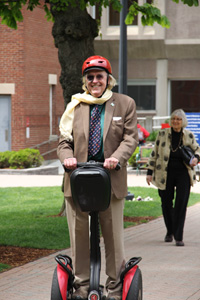
Bicknell, who died Tuesday night at his home in Marshfield, Mass., was the founder and chair emeritus of the Department of International Health at the School of Public Health and helped grow the department into a globally recognized leader. He held a dual appointment at the School of Medicine as a professor and director of international health programs in the Department of Family Medicine.
During a varied career that spanned five decades and merged disciplines of practice and policy, Bicknell held posts as the first medical director of the U.S. Job Corps, Massachusetts Commissioner of Public Health, acting director of the Neighborhood Health Center Program for the U.S. Office of Economic Opportunity, and medical director of health and retirement funds for the United Mine Workers of America.
School of Public Health Dean Robert Meenan credited Bicknell with being an essential part of the School almost from its beginning, and a fundamental force in the expanded presence of international health at BU. "Global health is now a major focus of Boston University and none of that would have been true without Bill Bicknell," Meenan said. "The mission of the school is to prioritize the disadvantaged, underserved and vulnerable and Bill has embodied that mission in his life's work. "
Diagnosed in 2010 with metastatic lung cancer that eventually spread to his brain, Bicknell detailed his fight with methodical precision in blog updates journal and in a poignant final lecture. On May 2, Bicknell returned to the BU Medical Campus to deliver "Lessons Learned from a Life in Public Health," a no-holds-barred personal recap of his experiences furthering public health in 62 countries.
In many ways, the lecture was a reflection of the man who gave it: blunt but caring; profane yet profound. Rapid-fire observations delivered with clinical detachment were followed by touching anecdotes about Bicknell's main career goal: making health services work better for the poor and other difficult to serve populations.
Dr. Brian Jack, professor and vice chairman of the Department of Family Medicine at Boston Medical Center and the BU School of Medicine, said Bicknell devoted the last years of his life to strengthening the work of the Lesotho-Boston Health Alliance. Bicknell and Jack founded the alliance a decade ago to improve Lesotho's medical capacity by strengthening hospitals and establishing a family medicine residency program to help retain physicians in the impoverished country.
"Lesotho is arguably one of the most needy countries in the world, and in the last years of his life, Bill dedicated himself to strengthening its health systems," Jack said. Even after Bicknell was diagnosed with cancer, he continued to travel to Lesotho, making a final trip in March to say goodbye to the many people he had befriended over the years.
"He was my good friend and a trusted colleague and mentor, and his heart was with the people of Lesotho, to make their lives better," Jack said.
Jack noted that Bicknell was a strong believer in empowering communities to solve their own health problems, rather than prescribing solutions. The Lesotho program grew out of a series of workshops that the two men had conducted in Lesotho, in which the recruiting and retaining of physicians emerged as a key problem for the country. Once the problem was identified, "we got to work on a strategy to address it," Jack said.
Bicknell was known to tell students and colleagues that the first step in approaching public health -- at home or abroad -- was simply to listen.
Kate Mitchell, MPH '09, was Bicknell's student in spring of 2008 and later worked as one of his teaching assistants. In a heartfelt reminiscence, Mitchell recalled that Bicknell began each semester with his unique definition of public health: "The art and science of deciding who dies, when, and with what degree of misery." But Bicknell also said public health could easily be defined as "the art and science of deciding who lives a longer, less miserable, happier life."
Bicknell's warning, Mitchell said: "If you approach your work with the second definition, you often forget the consequences of what happens when you fail. Always keep the first definition in mind."
Born and raised in Woburn, Mass., Bicknell earned a bachelor's degree in biology from Johns Hopkins University in 1958. After graduating from Duke University School of Medicine in 1963, Bicknell joined the US Public Health Service Commissioned Corps and was named senior physician for Peace Corps volunteers in Ethiopia. While there, he also worked in local hospitals and was exposed to a level of illness and suffering that presaged his shift to public health.
"It was a social and intellectual and emotional change for me," Bicknell said in April 2012. "It totally hooked me on making services work for people, on improving health care systems."
Several years after returning from Ethiopia, Bicknell earned an MPH from the University of California, Berkeley. He estimated during his May 2 talk that he had spent about half of his career working to further public health in the United States and half overseas – a proportion that he quipped "felt just right." After coming to BU in 1978, he focused on establishing the curriculum for the nascent Department of International Health and later established the Center for International Health that was eventually expanded into the current Center for Global Health and Development.
Watch Peace Corps Chronicles: Bill Bicknell
In recent weeks, tributes to Bicknell from faculty and former students flooded in to his CaringBridge website. Bicknell had posted frequent updates until Monday, June 4, when his wife, Brandeis University professor Jane Hale, wrote that Bill was no longer able to write to followers himself.
Former student Pratibha Shah, SPH '11, wrote on the CaringBridge site, "It has been a privilege and honor to have known you, taken your class and interacted with you. My journey in (the) US, especially my academic journey, has been filled with many unforgettable people and experiences. But you have definitely stamped my heart and mind forever with your indefatigable spirit and most unique personality. You have a lion's heart and a leopard's mind."
Another former student, Jane Craycroft, SPH '95, recalled the first time she met Bicknell: "You were my advisor at BUSPH. I first laid eyes on you during fall 1992 orientation and witnessed you deep in thought (sleeping?) while loads of us newbies filled one of the auditoriums. Later the same day, during the refreshment part of the event, while speaking with a group of students and eating a sandwich, you needed to be hands free (perhaps you started gesticulating or a handshake took place), so you put your sandwich in the pocket of your blue blazer. My initial thoughts were ... my advisor is a crazy nut, what have I gotten myself into?
"Shortly after that day, I realized that, yes, you were a crazy nut but crazy in a dedicated, trailblazing, passionate, and full-of-life sort of way. A way I wanted to be, a way I strive to be."
Monita Baba Djara, a clinical instructor in international health at BUSPH, said Bicknell's "iconic presence" would be missed.
"You have always been an inspiration to me in the fierceness of your commitment to making the world a less 'stupid' place," Djara wrote on the site. "Your legacy of asking the tough questions from a caring heart will live on in all of us who have had the privilege of working with you and being influenced by your unique brand of PH [public health]."
Many of those influenced by Bicknell said goodbye at the May 2 lecture and in small gatherings held in Boston and Lesotho. He spent his last days accompanied by family and friends at home in Marshfield, in a sunroom where he could look out across the salt-marsh landscape that he loved.
Memorial service details are pending.
Submitted by Michael Saunders and Lisa Chedekel.