New Research Discoveries: Prions and Synaptic Toxicity
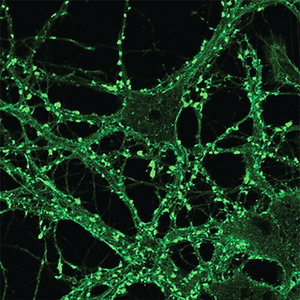 In a new research study from the Harris laboratory in PLOS pathogens, first author Cheng Feng and collaborators defined a new pathway mediated by the p38 MAPK signaling pathway that was important for prion synaptic toxicity. Furthermore this research identified that perturbations in the actin cytoskeleton within dendritic spines resulted in deficits in synaptic transmission.
This study has received significant press coverage and appeared on the cover of PLOS pathogens.
Congratulations Harris lab.
Message from the Chair, September 2018
In a new "Message from the Chair" Dr. David Harris describes the exciting, new developments in the Department.
Ladan Amin Receives Alzheimer’s Fellowship
 Congratulations to Ladan Amin, a Postdoctoral Associate in the Harris laboratory, who was just awarded a three-year research fellowship from the Alzheimer’s Association. The title of her project is: “A new approach to visualize the interaction between Aβ and its receptors”.
Barbara Schreiber Appointed as Assistant Dean
 Dr. Schreiber has recently been appointed as Assistant Dean GMS Alumni Affairs.
As the Assistant Dean for GMS Alumni Affairs, Dr. Schreiber will be responsible for:
- Serving as a liaison between GMS and the BUSM Office of Alumni Affairs representing GMS students and alumni in outreach efforts
- Coordinating and attending GMS alumni events and BUSM-wide events that include GMS alumni with the BUSM alumni office staff and deans
- Helping to identify GMS and other BUSM PhD alumni candidates for an annual award
- Developing a comprehensive database for PhD alumni
- Enabling a PhD alumni network that can offer support for doctoral and post-doctoral trainees in their professional development
Dr. Schreiber came to BUSM in 1975 as a graduate student in Microbiology and earned her PhD in Microbiology in 1981. She was a post-doctoral trainee in Clinical Microbiology at University Hospital from 1981-83 and a postdoctoral fellow in Biochemistry from 1983-87. Dr. Schreiber was appointed research assistant professor in 1987, research associate professor in 1997 and associate professor in 1999.
Dr. Schreiber currently serves as director of Biochemistry graduate studies, director of the GMS Program in Biomedical Sciences (PiBS), and course manager of the biochemistry class taught to first-year BU dental students and Oral Health Sciences students. Additionally, Dr. Schreiber is one of the co-PIs on the NIH-funded BU’s BEST award, dedicated to broadening experiences in biomedical science training for our PhD students and post-doctoral trainees.
Please join us in congratulating Dr. Schreiber on her latest appointment as Associate Dean, GMS Alumni Affairs.
Dr. Cathy Costello honored with special issue in The Journal of the American Society for Mass Spectrometry

In recognition of Dr. Catherine Costello's 2017 ASMS Award for a Distinguished Contribution in Mass Spectrometry, the entire June 2018 issue focused on Mass Spectrometry in Glycobiology and Related Fields and was a tribute to Dr. Costello's numerous contributions to the field. The first article in this issue written by Joe Zaia and Veronica Bierbaum describes Dr. Costello's vision and leadership in glycoscience mass spectrometry.
Please also read about the current research in the Costello lab.
New Software Developed for Glycosaminoglycan Analysis
The Zaia laboratory's recent study: “Software for peak finding and elemental composition assignment for glycosaminoglycan tandem mass spectra” has been selected to appear in a special virtual issue of ASBMB journal content on Omics of lipids, glycans and polar metabolites. This paper was selected from hundreds of papers and best represents the exciting advances made in studying these systems over the last three years.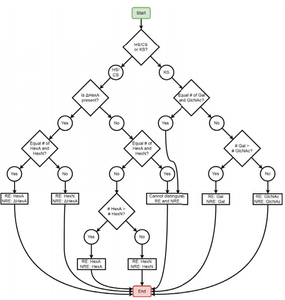
Glycosaminoglycans (GAGs) covalently linked to proteoglycans are characterized by repeating disaccharide units and variable sulfation patterns along the chain. The Zaia laboratory and others have demonstrated the usefulness of tandem mass spectrometry (MS2) for assigning the structures of GAG saccharides; however, manual interpretation of tandem mass spectra is time-consuming, so computational methods must be employed. The Zaia group developed GAGfinder, the first tandem mass spectrum peak finding algorithm developed specifically for GAGs. GAGfinder is a targeted, brute force approach to spectrum analysis that utilizes precursor composition information to generate all theoretical fragments. GAGfinder also performs peak isotope composition annotation, which is typically a subsequent step for averagine-based methods.
Valentina Perissi Promotion
The Department would like to congratulate Dr. Valentina Perissi on her recent promotion to Associate Professor of Biochemistry. This is a well-deserved honor. Please read more about the ongoing research in the Perissi lab.
Research Discoveries: Jello in Your Fat
A new study from the Layne lab "Aortic carboxypeptidase-like protein enhances adipose tissue stromal progenitor differentiation into myofibroblasts and is upregulated in fibrotic white adipose tissue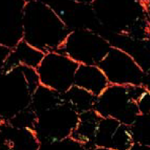 " was recently published in PLoS One. This research identified a new pathway regulating of adipose tissue differentiation and fibrotic remodeling. First author and graduate student Mike Jager, along with collaborators in the Farmer and Fried labs determimed that the secreted protein Aortic Carboxypeptidase-like Protein (ACLP) repressed the differentiation of mouse and human adipocyte progenitors and was upregulated in fibrotic adipose tissue. ACLP was co-expressed with collagens in the adipose tissue and indicate that ACLP is a novel regulator of adipose progenitors and fibrosis.
Matthew Layne receives GMS Faculty Recognition Award
The winner of the 2018 Graduate Medical Sciences Faculty Recognition Award was announced yesterday at John McCahan Medical Education Day (May 30, 2018) . A faculty member who epitomizes this award that recognizes those who go above and beyond expectations for our teaching mission, our own Dr. Matthew Layne is this year’s honoree! Dr. Layne is a premier educator and one so very deserving of this honor! Congratulations Dr. Layne!
New research discoveries: glutamine metabolism controls breast cancer
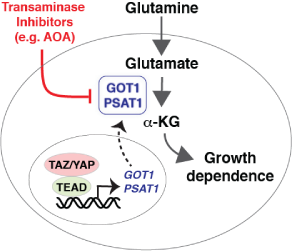 A new study from Dr. Varelas’ group has revealed important insights into the molecular mechanisms that control breast cancer cell growth. Their report, recently published in EMBO Reports, describes a role for the transcriptional regulators TAZ and YAP in driving oncogenic growth by promoting the expression of enzymes that control glutamine metabolism. Aggressive breast cancer cells are known to rely on an exogenous source of the amino acid glutamine for efficient growth. This study shows that TAZ and YAP contribute to glutamine dependence and reveals that cells with increased TAZ/YAP activity are vulnerable to compounds that inhibit key glutamine-utilizing enzymes, such as transaminases. Assessing TAZ/YAP activity in breast cancers may therefore offer a means for predicting response to targeted therapies with transaminase inhibitors, representing an exciting avenue for cancer therapy.