Student Updates
Leadership in Healthcare: A Conversation with Former Governor Dukakis
The BU Advocacy Training Program presents December Advocacy Grand Rounds, Leadership in Healthcare: A Conversation with Former Governor Michael Dukakis.
 Governor Dukakis, Massachusetts' longest serving governor and former Democratic Presidential candidate, has lectured extensively on healthcare policy and reform. Come hear about the changing landscape of healthcare in the US.
Where: BUSM Instructional Building, L-303
When: Thursday, Dec. 4, 5-6 p.m.
Dinner will be served. Sponsored by the BUSM Alumni Association
Training Medical Professionals to Teach
New online program now open for registration
Many medical students dream of being able to teach one day, but the intensive rigors of their curriculum leave them little time to acquire the skills that would prepare them to do so. The same is often true for doctors and nurses who have developed areas of expertise and are interested in teaching, but lack the requisite teaching background.
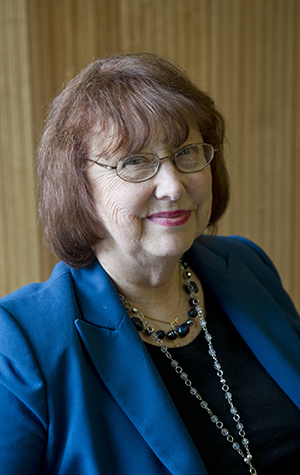
Gail March (CFA’73) has witnessed this firsthand as a School of Medicine assistant professor and director of instructional design and faculty development. For the past decade, March has run a faculty development program at MED. But she realized she wasn’t reaching everyone, particularly busy health care providers who have dedicated their professional lives to caring for patients and suddenly find themselves asked to teach. That led March to propose and create a new program, the BUSM+ Medical Education Badge Program through a Digital Learning Initiative (DLI) seed grant for online innovation in higher education.
The program’s first course, Teaching and Learning, will provide health care professionals with a foundation in students’ learning styles, give them tools to design an interactive course, and teach them how to evaluate students. Registration is open now through December 15. Sessions begin January 15 and run through March 30.
“It’s a very new concept,” says March. The program is designed for health care providers of all stripes—including doctors, nurses, chiropractors, and dentists—who are preparing to enter the classroom as instructors. March says the pilot program is also ideal for health care providers already teaching who want to enhance their skills. “We wanted to introduce some new ideas in medical teaching because there have been so many advances in medical technology,” says March.
“There is growing demand for nontraditional professional development programs,” says Chris Dellarocas, director of the DLI. “Such programs are typically short, highly targeted, and do not culminate in traditional degrees, but rather in micro-credentials, such as certificates and badges. Beyond the merits of its excellent content, the MED badge program is especially interesting because it is Boston University’s first experiment with badges.”
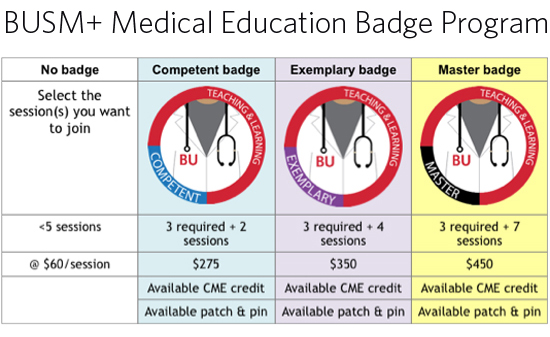
Registrants complete up to 10 online sessions to receive the badge level that corresponds with the number of sessions they complete: competent (5 sessions), exemplary (7 sessions), or master (10 sessions). Single sessions are also an option for those not looking to earn a badge.
Each session features a video with tips from MED’s leading faculty—such as Anna Hohler, associate professor of neurology; Robert C. Lowe, associate professor of medicine; and Wayne LaMorte, professor of surgery and School of Public Health professor of epidemiology—on topics such as facilitating small-group learning, developing interactive lectures and presentations, designing multiple-choice assessments, and identifying the neurological basis for the adult learner. Participants will have a week to complete each session, which can be accessed 24/7. Those electing to take all 10 sessions will be given 12 weeks to complete the program.
Registrants receive their digital badges once they’ve completed the requisite number of sessions. March says they can use Mozilla’s Open Badge infrastructure to create a “backpack” to store their new accolades. Or, if they prefer, they can attach them to their electronic portfolio, CV, or social media sites such as LinkedIn and Facebook.
Each badge is embedded with the professional’s name and the sessions he or she completed. “No one else can claim it,” March assures. “It’s your badge.” For those who prefer recognition the old-fashioned way, physical badges and pins can be requested at registration.
March has already heard from health care professionals interested in taking the sessions from as far away as India, Armenia, and Russia. She says the program is designed to be of use to fellows, residents, medical students, physician assistants, nurses, physical therapists, and many other health care professionals—especially considering that the sessions count toward required continuing medical education credits.
Registrants who teach at MED can take the sessions for free, while those affiliated with BU or the Boston Medical Center will receive a 50 percent discount. All other students will pay a fee of anywhere from $60 to $450, depending on whether they are taking a single session or acquiring a master-level badge, or something in between. March says she chose this pay structure because she wants students to be committed to the program and not drop out, which can occur in free massive open online courses. All profits from the program will go toward funding additional courses.
If all goes well, March envisions running the course again in the summer. She also plans to launch three more courses—Curriculum Design, Academic Leadership, and Medical Education Research—covering skills, she says, that medical students and professionals want to learn, but often don’t have time to pursue in traditional classes.
Visit this site for more information about the BUSM+ Medical Education Badge Program.
Institutions and schools outside of Boston University registering more than 10 people can email busmplus@bu.edu for discounts.
This BU Today story was written by Leslie Friday.
BUSM Faculty Named Top Docs
 Boston Magazine has released its annual Top Docs issue.
Sixty-two BUSM faculty and BMC physicians from 29 specialties are listed as “tops” in their respective fields, and Dr. Nahid Bhadelia, assistant professor of medicine and director of infection control at the National Emerging Infectious Diseases Laboratory (NEIDL) at Boston University is featured on the cover with a story about her recent work caring for Ebola patients in Sierra Leone.
In addition, Dr. Thea James, associate professor of emergency medicine and assistant dean for Diversity and Multicultural Affairs at BUSM, was featured in a story titled “A Day in the Medical Life,” which tracked personal health stats of five health care workers in 24 hours.
| Addiction Psychiatry Domenic Ciraulo, MD Allergy and Immunology Helen Hollingsworth, MD
Cardiac Electro-Physiology
Cardiovascular Disease
Dermatology Tania Phillips, MD
Endocrinology, Diabetes and Metabolism Alan Farwell, MD Michael Holick, PhD, MD Stephanie Lee, MD, PhD James Rosenzweig, MD
Family Medicine
Gastroenterology
Geriatric Medicine
Hand Surgery
Internal Medicine
Interventional Cardiology
Maternal and Fetal Medicine Robert Blatman, MD Aviva Lee-Parritz, MD
Medical Oncology |
Nephrology David Salant, MD Neurology Carlos Kase, MD Neuroradiology
Orthopaedic Surgery
Otolaryngology
Pediatric Infectious Disease
Physical Medicine & Rehabilitation Susan Bergman, MD
Pulmonary Disease
Radiation Oncology
Reproductive Endocrinology
Rheumatology
Surgery
Thoracic & Cardiac Surgery
Urology
Vascular Surgery |
Five BUMC Faculty Members Elected AAAS Fellows
The American Association for the Advancement of Science (AAAS), the world’s largest general scientific society and publisher of the journals Science, Science Translational Medicine and Science Signaling has named five members of the Boston University Medical Campus (BUMC) community AAAS Fellows.
They are: BU School of Medicine (BUSM) faculty David Michael Center, MD; Ronald B. Corley, PhD; Katya Ravid, Ph.D; and David J. Salant, MD; and Josée Dupuis, PhD, from BU School of Public Health (SPH).
The AAAS selects members whose work has helped to advance science and its applications. Now in its 140th year, 401 applicants will be awarded the title of fellow at the annual Fellows Forum in San Jose, Calif., in February.
 David Center, MD, Associate Provost for Translational Research, Director of BUMC Translational Research Institute and Chief of Pulmonary, Allergy and Critical Care Medicine at Boston Medical Center (BMC) was elected as a fellow under the Section on Medical Sciences for his contributions to the field of Immunology, particularly for the discovery of the first human (IL-16) and virus-derived (HIV-1 gp120) lymphocyte chemotactic factors.
 Ronald Corley, PhD, Professor of Microbiology, and Director at the National Emerging Infectious Diseases Laboratories, was elected as a fellow under the Section on Medical Sciences for his contributions to the field of immunology, particularly in elucidating innate functions of antibodies and B cells and their roles in accelerating adaptive immunity.
 Josée Dupuis, PhD, Professor and Associate Chair of Biostatistics, was elected as a fellow under the Section on Biological Sciences for her contributions to the field of statistical genetics, leading to the discovery and improved understanding of the genetic basis for common diseases.
 Katya Ravid, DSc, PhD, Professor of Medicine and Biochemistry, and Founding Director of the Evans Center for Interdisciplinary Biomedical Research, was elected as a fellow under the Section on Medical Sciences for pursuing interdisciplinary research, and outstandingly combining the fields of hematology and vascular biology, leading to the discovery of transcriptional and cell cycle signatures that govern polyploidy during megakaryocyte/platelet development.
 David Salant, MD, Professor of Pathology and Laboratory Medicine, BUSM and Chief of the Section of Nephrology at BMC, was elected as a fellow under the Section on Medical Sciences for his contributions to the field of immunological kidney diseases, particularly for discovering that the anti-phospholipase A2 receptor is the major autoantigen in human membranous nephropathy.
Submitted by Amanda Macone, MD.
BUSM’s Thea James Receives 2014 Schwartz Center Compassionate Caregiver Award

Thea James, MD, associate professor of Emergency Medicine at BU School of Medicine, is the recipient of the 2014 Schwartz Center Compassionate Caregiver Award, which recognizes health care providers who demonstrate extraordinary compassion in caring for patients and families.
One of the region's most prestigious honors, recipients are chosen based on how well they embody the characteristics of compassionate care, including effective communication, emotional support, mutual trust and respect, involving patients and families in health care decisions, and treating patients as people, not just illnesses.
James is an attending physician in Boston Medical Center’s (BMC) Emergency Department and Director of BMC’s Violence Intervention Advocacy Program (VIAP). She also cofounded Unified for Global Healing, an organization that seeks to improve health outcomes across the globe.
“Dr. James interacts with patients in a truly authentic and compassionate manner. She sees the person behind each injury and searches for that person’s story. Her sensitivity, communications skills, optimism and kindness have deeply impacted the lives of her patients and families. We’re so pleased to honor her and our extraordinary finalists,” said Schwartz Center Executive Director Julie Rosen when presenting James with the award.
Going Public with Ebola

- NEIDL director Ronald Corley said during the forum that the Ebola virus is not airborne, and there are almost no examples of a virus that has changed its mode of transmission once it’s in the human population. Above: panelists Jamie Childs (from left), Paul Biddinger, Nahid Bhadelia, and Corley. Photo by Jackie Ricciardi
NEIDL director says scientists need to engage with the public about the disease
Speaking at a public forum on Ebola at Boston University’s National Emerging Infectious Diseases Laboratories (NEIDL) earlier this month, NEIDL director Ronald B. Corley stressed the importance of scientists engaging with the public about the realities of the disease. The NEIDL, he said, has mounted an education outreach campaign to do just that.
“It’s not just about Ebola,” Corley told the audience of several dozen people from the business and health care community. “It’s about infectious diseases in general. It’s about research. We have to show we’re not just nerds working in a facility. We want to exchange information—not just with our nerd colleagues, but with the public in general. It’s not something we’ve done well over the last 10 to 20 years and it’s up to us to change, I think.”
The forum was convened by the New England Council, a business organization that has been a strong supporter of research at the NEIDL. Corley was joined by Nahid Bhadelia, a physician who is director of infection control for the NEIDL and who traveled to Sierra Leone in August to help care for Ebola patients; Paul Biddinger, chief of the division of emergency preparedness and medical director for emergency department operations at Massachusetts General Hospital, and Jamie Childs, a Yale School of Public Health senior research scientist and lecturer in epidemiology.
“One disappointing thing is the lack of trust in scientific information,” said Childs, noting the recent efforts by New Jersey, Maine, and other states to quarantine health care workers returning from West Africa who show no symptoms of the disease. “I don’t know where states got their information for the drastic measures they have recommended, but it clearly isn’t from knowledgeable epidemiologists and science experts.”
In a wide-ranging, two-hour discussion, the experts talked about the need to develop rapid diagnostics, vaccines, and additional therapeutics for Ebola and other emerging diseases; how hospitals in the Boston area are preparing for possible cases (none have been reported here), and how the disease is transmitted. The Ebola virus is not airborne, Corley said, repeating what he, Bhadelia, and other NEIDL researchers have been saying for months now.
“There are almost no examples of a virus that changes its mode of transmission once it’s in the human population,” Corley said. In the case of Ebola, the biological barriers the virus would have to get through in order to become airborne are so great as to make the chances of it happening close to none, he said.
While Ebola is highly infectious, it is extremely hard to catch, and the public health and medical infrastructure in place here ensures that any outbreak in the United States would be quickly contained, the experts said. There have been three travel-related cases, including two deaths, in the United States and two cases of health care workers in Texas becoming infected. Ebola is spread through direct contact with blood or bodily fluids or through objects, such as needles or syringes, that have been contaminated by the virus.
“The chance of it becoming a generalized epidemic, I will say, is zero here,” said Bhadelia, who is a hospital epidemiologist at Boston Medical Center. At Kenema Hospital in Sierra Leone, she was one of four physicians caring for over 100 Ebola patients. “There was no ventilation,” she said. “There was fluid everywhere. There were not enough hands to clean up the environment. You could see how it spread.”
The new system of checkpoints at US airports to track people arriving from West Africa makes it “extraordinarily unlikely that anyone who has had a plausible exposure will present unrecognized,” Biddinger said. “The idea that they would just show up at one of our clinics without communicating with us—with health authorities—is extraordinarily low.”
The experts expressed concern about the economies of the countries in West Africa that have been left devastated by the outbreak. “Resources are essential,” Childs said. “Otherwise, we are going to see another devastating impact following this one. We’ve had reports of large numbers of people who weren’t able to get their crops out of the field because of the impact of Ebola on families and workers.”
Here at home, Corley said, it is important to strengthen funding for research into Ebola and other emerging infectious diseases that are a reality of the global world.
“New infectious diseases are recognized once on an average of about every 18 months,” Corley said. “Unfortunately, this is a growth industry. If there is any silver lining in this outbreak, it’s that people really do understand now why it’s better to be able to treat these diseases when and where they occur, rather than allowing them to get where they are now.”
This BU Today story was written by Sara Rimer.
GSDM Students Travel to Gracias, Honduras, to Provide Dental Care

This past September, two Boston University Henry M. Goldman School of Dental Medicine (GSDM) students volunteered their time and talent treating Honduran residents in a very small, remote town called Gracias. During the week of Sept. 13–20, Stephanie Leung DMD 15 and Thomas Mosley DMD 15 participated in an externship under the guidance of Medical, Eye, and Dental International Care Organization (MEDICO), a nonprofit humanitarian service organization based in Austin, Texas, that has provided comprehensive health care in Central America since 1990. Its mission is to deliver medical, eye, and dental care and educational services to people in developing countries who have little or no access to health care.
Prior to their arrival in Gracias, Leung and Mosley admitted that they didn’t know what to expect and what oral-related challenges they would see in such a remote location. Since Honduras has a population of 8 million, with 65 percent of the population at or below poverty and a physician density of 57 physicians per 1,000 people, they felt it was safe to assume they would be exposed to somewhat complex cases.
Their assumptions were confirmed on the first day the makeshift dental treatment center opened, when patients began lining up to be seen in the early morning hours. Working under the supervision of and alongside MEDICO’s President, Dr. Robert Gurmankin and GSDM alum, Jahan Monirian DMD 13, Leung and Mosley hit the ground running providing amalgams, cleanings, composites, and a large number of tooth extractions.
Extensive tooth decay was common among the patients. Dental floss is very hard to come by in the region and the students noted that the majority of patients had already undergone multiple tooth extractions in the past and many specifically requested more due to continuing pain. At the end of the week, the team had seen a total of 364 patients. They performed 204 extractions, 112 composites, 143 cleanings, and 55 amalgam restorations (mainly in the back teeth).
When asked how the trip to Honduras contributed to their education, Mosley said, “A lot more practice.” He continued, “There were a limited number of providers and an unlimited number of patients waiting to be seen. The volume of hands-on patient contact each day was eye-opening.”
Leung added, “As GSDM students, work integrity is paramount. Due to the high volume of patients we saw in Honduras, we learned to think fast and work efficiently, while providing excellent dental care.”
Dean Hutter commended Leung and Mosley, “I appreciate and applaud their enthusiasm and willingness to volunteer for this elective externship to Honduras,” he said. He continued, “I am very proud of all of our students who commit to serving those in need.”’
Photos are available on Facebook and Flickr.
BU Researcher Awarded Grant to Pilot Autism Intervention

A BU School of Public Health and School of Medicine researcher will lead a $3 million study aimed at addressing racial and economic disparities in the early identification and treatment of autism spectrum disorder (ASD) among young children.
The five-year grant from the National Institute of Mental Health will allow a team led by Emily Feinberg, associate professor of community health sciences at BUSPH and associate professor of pediatrics at BUSM, to test an intervention at three urban primary care centers: Boston Medical Center, Children’s Hospital of Philadelphia, and Yale University. Feinberg and her collaborators from the national Developmental and Behavioral Research Network – Dr. Amanda Bennett of the Children’s Hospital and Carol Weitzman of Yale -- will target low-income and minority children, who are most likely to experience delays in ASD diagnosis and service provision.
All children between birth and age 2 will be screened as part of routine practice, and some of those with a confirmed risk for ASD will be assisted by “family navigators” to access high-quality ASD services. Patient “navigation” is a lay-delivered case management approach that focuses on overcoming logistical hurdles to care – such as transportation, language barriers or insurance complexities.
Emerging evidence shows that ASD can be reliably diagnosed by age 2, and that early screening and intervention can improve outcomes. However, service delivery changes that support early identification and linkage to services “have not kept pace with advances in diagnosis and treatment,” Feinberg said.
“Barriers are heightened for low-income and minority children with ASD, and contribute to disparities in age of diagnosis, timeliness of service provision, and access to quality services,” Feinberg said. “Feasible, culturally appropriate interventions are needed to reduce these disparities and to improve the developmental outcomes of children with ASD.”
ASD symptoms emerge in early childhood. The Centers for Disease Control and Prevention’s most recent data regarding ASD prevalence, released in March 2014, estimates that about 1 in 68 children are identified with ASD. The central features of ASD are deficits in social communication and restricted, repetitive patterns of behavior and interests.
The grant to Feinberg’s team was one of five grants recently awarded by the NIMH for research into ASD early detection and treatment.
Despite increasing numbers of people of all ages identified with ASD, “access to effective services remains inconsistent, at best,” NIMH Director Dr. Thomas Insel said in announcing the grants. “Parents are often left to navigate what is available as best they can, and worry for the future as their affected children grow into adulthood . . .
“This research is aimed at testing care strategies, adaptable across communities, in which identification of need and engagement in optimal interventions and services will be standard for all ages.”
The BU-led study seeks to screen at least 80 percent of all young children across the three primary care sites, shorten the time to diagnosis, and increase engagement in evidence-based treatments. The research team also will examine key barriers to care and gauge caregiver stress.
Feinberg has led previous research on ASD, including a study published earlier this year in JAMA Pediatrics that found that a brief, problem-solving intervention helped to reduced stress and depressive symptoms in mothers of children who had recently been diagnosed with ASD.
Submitted by: Lisa Chedekel
Center for Regenerative Medicine to Create First Open Access Lung Stem Cell Repository
 The BU/BMC Center for Regenerative Medicine (CReM) has been awarded a grant to establish the first-of-its-kind stem cell repository that researchers across the country can access for free.
The five-year $2.7 million federal grant from the National Heart, Lung, and Blood Institute (NHLBI) will help expand and grow stem cell research aimed at developing treatment for diseases affecting the lungs.
CReM’s pioneering research using Induced Pluripotent Stem Cells (iPSCs), which self-renew indefinitely as undifferentiated cells that become specific adult cell types, has helped create an inexhaustible source of disease or patient-specific stem cells. Researchers use these cells to construct disease models in a lab and test potential treatments for a variety of diseases – all without limits that are currently in place for embryonic stem cell research.
The Repository, to be housed at CReM’s laboratory on the Medical Campus, will provide access to iPSCs from patients with both normal and diseased lungs. The cells will be expanded, frozen and shipped to investigators who request them to use in their own laboratories.
The grant also will allow CReM investigators to provide training courses on the different methodologies for the generation and maintenance of iPSCs and the proven techniques to differentiate them into adult lung cells. “This grant will support the widest possible sharing of our cells with the national research community and should provide the most rapid possible path for a national collaboration to develop new disease treatments using this state-of-the-art technology,” said Darrell Kotton, MD, director of the CReM who will serve as the co-Principal Investigator (PI) of this project. “We feel strongly about the power of collaboration, and that through our center’s ‘Open Source Biology’ philosophy, we can advance science to heal the world. This grant will help us do just that.”
“This resource will facilitate lung research by making available human cells for modeling lung health and disease,” said James P. Kiley, PhD, director, Division of Lung Diseases, NHLBI.
Diseases affecting the lung, including emphysema, cystic fibrosis, acute respiratory distress syndrome and pulmonary fibrosis, cause considerable morbidity and mortality in the US today, yet there are few therapeutic options available. These limited options are due, in part, to limited access to an available supply of primary human lung cells, or lung progenitors, for biomedical research.
“We are thrilled to receive this grant from the NHLBI,” said Gustavo Mostoslavsky, MD, PhD, the project’s other co-PI and co-director of CReM. “The grant will help promote collaboration among researchers in the field and will help pave the way to the development of newer, better treatments for diseases of the lung.”
Funding for this study is provided in part by the National Institutes of Health’s NHLBI under grant award number 1R24HL123828-01.
“When Patients Heal You” BUMC Concert Nov. 21

The BU Arts Outreach Initiative, BUSM Office of Multicultural Affairs and Diversity, and the BMC Neurology Department announce the third annual “When Patients Heal You” concert on Nov. 21 at 7 p.m. in Keefer Auditorium. A creative collaboration between neurology patients and BU/BUMC musicians, the concert features musical performances by patients of the BMC Neurology Department accompanied by the BU Jazz Combo and BUMC Band.
Discover the talents of this group of patients and enjoy jazz, French, Creole and Latin music performed at its best. “When Patients Heal You" is an opportunity for these musicians to celebrate and thank their care givers.
Admission is free and a reception follows the performance.