Student Updates
BUMC FedEx Print Center is Moving Dec. 1
The FedEx Office On-Campus Print Center is moving! The new print center will be located at 700 Albany St. (next to City Convenience). The existing print center, at 715 Albany St., will remain open for business through Nov. 30. The new print center location will be open for business on Dec. 2. Both print centers will be closed on Dec. 1, but print support will be available through the Charles River Campus Print Center, located at 115 Cummington Mall, usa5012@fedex.com, 617-358-2679. If you have any questions about print support during this transition, please contact Robert Munstis at robert.munstis@fedex.com or 339-832.8007.
Open House
Thursday, Dec. 12
10 a.m.-2 p.m.
700 Albany St.
Visit the new and improved FedEx Office On-Campus Print Center and learn more about products and services offered. The customer service team will be on site to discuss the details behind the 10+ year partnership with the Medical Campus, recent changes/upgrades to services and capabilities, and to answer any questions you have about pricing, capabilities, lead times and delivery options. Stop by and learn how the FedEx Office On-Campus Print Center can help your team reduce costs and improve productivity!
Nov. 16 The Life Equation

Big data is coming to global health.
But who should decide who lives and dies:
Doctors on the front lines or a mathematical formula?
Join emmy-winning filmmaker Rob Tinworth as he discusses the ethics surrounding data-driven health care. He will screen clips from his film 'The Life Equation ' a documentary film that follows extraordinary people making impossible choices.
Watch the trailer
Attend the event
Monday, Nov. 16
5:30-7 p.m.
BUSM Instructional Building, Room L-210
Light refreshments provided
Sponsored by the BUSM Office of Enrichment
Nov. 17 Resilience and Mindfulness Workshop
Life is full of challenges. While we often have no choice over the challenges we encounter, we do have some control over how we respond. BUMC faculty and staff are invited to a free wellness workshop, Tuesday, Nov. 17. (Register at fitness@bu.edu)
This presentation will focus on cultivating psychological resilience – the ability to cope effectively with crises and bounce back quickly from setbacks.
In this interactive workshop participants will:
- Explore the concepts of resilience and of mindfulness and the ways in which mindfulness boosts resilience
- Sample mindfulness practices including mindful eating, meditation, and mindful stretching
- Learn about other simple activities demonstrated to boost resilience
- Identify free resources available for use in cultivating mindfulness and resilience
Nov. 17 Resilience and Mindfulness Workshop
Tuesday, Nov. 17
Noon-1 p.m.
BUSM Instructional Building, Room L209
Please register at fitness@bu.edu.
GSDM Hosts Students And Faculty From Three Chinese Dental Schools
Boston University Henry M. Goldman School of Dental Medicine (GSDM) hosted students and faculty from three Schools of Stomatology in China this summer, during three separate 14-day visits. The visits were part of an ongoing Global Externship Exchange with three Chinese institutions that began in October 2013. The exchange allows fourth-year DMD students to spend three weeks—guided by a GSDM faculty member—at three Chinese dental schools, gaining clinical and cultural experience as well as course credit. The exchange also allows for students and faculty from the Chinese schools to visit GSDM. These corresponding visits have been taking place each year since 2013.

The three groups of Chinese students and faculty that visited GSDM this summer were from Shanghai Jiaotong University School of Stomatology (SJUSS), Peking University School of Stomatology (PKUSS) and the Fourth Military Medical University School of Stomatology (FMMUSS). The visitors were each in Boston for 14 days this summer, touring GSDM and the city of Boston while observation all of GSDM’s academic and clinical programs, as well as the school’s other various scholarly and research activities.
The Chinese visitors participating in this cultural exchange program all specialize in postdoctoral programs, and many of the visiting Chinese students had specific interest in rotations of GSDM’s postdoctoral clinic such as Orthodontics, Endodontics, Periodontology, Prosthodontics, Oral Surgery and Pediatric Dentistry. Therefore, each 14-day schedule was tailored to the interests of the visitors.
Visiting first, from June 25 to July 7, were Dr. Ming Cai, Ying Chen (student), and ZhouXi Ye (student) from SJUSS in Shanghai.
Visiting second, from July 8 to July 19, were Dr. Yumei Zhang, Dr. Jing Gao, and Dr. Lingzhou Zhao from FMMUSS in Xi’an.
Visiting third, from August 24 to September 3, were Meili Dong, Keang Fan (student), Donghao Wei (student), and Jihao Zhang (student) from PKUSS in Beijing.
“I am delighted to see that this important cultural and academic exchange between GSDM and our partner institutions continues to be both immensely beneficial as well as enjoyable for everyone involved” said Dean Jeffrey W. Hutter. “It was a pleasure to get to know all of the visitors from SJUSS, FMMUSS, and PKUSS during their visits.”
The exchange program is overseen by GSDM’s Office of Global & Population Health. Dr. Laisheng Chou, Professor and Director of Oral Medicine and Professor of Biomaterials, and Consultant to the Dean on Far Easter Programs serves as the Program Director.
The exchange program started with SJUSS and FMMUSS in 2013 and expanded quickly to include PKUSS in 2014. In 2015, the program continues to grow. Both Tokyo Medical and Dental University in Tokyo, Japan, and Chulalongkorn University Faculty of Dentistry, in Bangkok, Thailand were recently added to the exchange program, with students from GSDM visiting those schools in September 2015, and students from the respective schools set to visit GSDM in the summer of 2016.
This means that visiting international students—from five schools—will be on GSDM’s campus for a combined length of nearly two months in the summer of 2016. At the same time, GSDM will continue to send its fourth year DMD students to five dental schools in Beijing, Shanghai, Xi’an, Tokyo and Bangkok for their global externship program.
The rapidly growing program is incredibly beneficial to GSDM students. The students who are selected to participate—only eight students can be selected into the program each year from a very competitive pool of applicants—receive fantastic exposure to the workings of international dental schools while also experiencing different cultures.
“The quantity and variety of the cases our students are exposed to at the dental schools in China, Japan and Thailand are remarkable,” said Dr. Chou. “It would certainly be unlikely for the students to experience the same type of cases in their short four-year DMD program in the United States.”
The schedules of the 14-day visits for this year’s incoming visitors from SJUSS, PKUSS and FMMUSS were jam-packed with events and activities designed to fully expose the Chinese faculty and students to the workings of GSDM, and help them explore any curiosities they may have about GSDM’s programs.
Each visit included a special dinner at Dean Hutter’s home, at which Dean Hutter personally welcomed the scholars and students from China to Boston, and thanked them for their continued support of the exchange program.
The Saturday and Sunday of each visit was reserved for sightseeing around Boston and the greater Boston area. DMD students were tasks with touring the Chinese visitors around the city. The DMD students who took part in these city tours were: Wenyu Qu DMD 17, Annie Xiaomeng DMD 17, Sen Wang DMD 17, Nic Branshaw DMD 16, Mohamed Bayoumy DMD 16, Kayla Cuddy DMD 16.
While the weekends of each of the visits this year were filled with laid-back, fun activities, the weekdays were packed tight with presentations and events designed to showcase GSDM to the Chinese visitors. Each group of Chinese scholars and students was given a tour of GSDM and the Medical Campus before immersing in their dense schedule of presentations and other activities.
The visitors were also able to observe GSDM’s Grand Rounds presentations and enjoy a lunch with the Boston University Asian Dental Student Organization (ADSO).
Faculty members participating in the SJUSS visit (faculty previously mentioned in this article will not have titles in the following list):
- Assistant Professor in the Department of Oral & Maxillofacial Surgery Hussam Batal
- Clinical Associate Professor in the Department of General Dentistry, Assistant Dean of Students, and Director of Geriatric Dental Medicine Joseph Calabrese
- Laisheng Chou
- Professor in the Department of Health Policy & Health Services Research and Associate Dean for Global & Population Health Michelle Henshaw
- Assistant Professor in the Department of Oral & Maxillofacial Surgery and Director of the Preliminary Internship Program Timothy Osborn
- Clinical Associate Professor in the Department of Periodontology Dr. Mingfang Su
Faculty members participating in the FMMUSS visit (faculty previously mentioned in this article will not have titles in the following list):
- Clinical Associate Professor in the Department of Restorative Sciences & Biomaterials and Clinical Director of the Advanced Specialty Education Program in Prosthodontics Alexander Bendayan
- Clinical Associate Professor in the Department of Oral & Maxillofacial Surgery Ishwar Bhatia
- Clinical Assistant Professor in the Department of Oral & Maxillofacial Surgery and Director of Credentialing at Boston Medical Center Steven J. Bookless
- Laisheng Chou
- Associate Dean for Clinical Affairs and Clinical Professor in the Department of General Dentistry John Guarente
- Michelle Henshaw
- Clinical Instructor in the Department of General Dentistry Eric Mandelbaum
- Assistant Professor in the Department of Endodontics Ramzi Sarkis
Faculty members participating in the PKUSS visit (faculty previously mentioned in this article will not have titles in the following list):
- Assistant Professor in the Department of Oral & Maxillofacial Surgery and Director of Faculty Practice Clinical Services Hussam Batal
- Assistant Professor in the Department of General Dentistry Louis Brown
- Joseph Calabrese
- Associate Professor and Director of Research in the Department of Oral & Maxillofacial Surgery Radhika Chigurupati
- Laisheng Chou
- Clinical Professor and Director of Pre-doctoral Education in the Department of Oral & Maxillofacial Surgery and Vice Chairman of Dentistry and Oral & Maxillofacial Surgery at Boston Medical Center Richard D’Innocenzo
- Clinical Assistant Professor in the Department of General Dentistry and Clinical Assistant Professor in the Department of Orthodontics & Dentofacial Orthopedics Yael Frydman
- Professor of Oral and Maxillofacial Pathology and Head of the Division of Oral and Maxillofacial Pathology George Gallagher
- John Guarente
- Associate Professor in the Department of Restorative Sciences & Biomaterials Russell A. Giordano
- Michelle Henshaw
- Clinical Assistant Professor in the Department of Restorative Sciences & Biomaterials Ali Khiblil
- Professor in the Department of Molecular & Cell Biology and Associate Dean for Research Maria A. Kukuruzinska
- Eric Mandelbaum
- Professor in the Department of General Dentistry Carl McManama
- Professor and Chair of the Department of Oral & Maxillofacial Surgery and Associate Dean for Hospital Affairs Pushkar Mehra
- Clinical Professor in the Department of General Dentistry and Director of the Division of Pre-doctoral Removable Prosthodontics Ronni Schnell
- Clinical Assistant Professor in the Department of Oral & Maxillofacial Surgery and Director of Quality Assurance and Ambulatory Operations at Boston Medical Center Bradford Towne
Other GSDM community members participating in the PKUSS visit:
- Advanced Education in General Dentistry (AEGD) Resident Gaby Bonilla
- Advanced Education in General Dentistry (AEGD) Resident Natalia Lopez
Photos from the visits from SJUSS, FMMUSS and PKUSS visits can be found on Facebook and Flickr.
Submitted by GSDM Communications.
Dec. 9 BUMC Provost Guest Lecture
Extending a Hand: Dr. Salman Zarka on the humanitarian treatment of Syrian casualties in Israel
Salman Zarka, MD, MPH, Director General of Ziv Medical Center, Safed, Israel
Students, faculty and staff are invited to the BUMC Provost Guest Lecture on Dec. 9.

Prior to his position at Ziv Medical Center, Dr. Zarka served as a Colonel in the Israel Defense Forces for 25 years in a variety of positions, the last of which was as Commander of the Military Health Services Department. Prior to this position, Dr. Zarka was the head of the Medical Corps of the Northern Command and Commander of the Military Field Hospital for the Syrian casualties in the Golan Heights.
Dr. Zarka graduated from the Faculty of Medicine, Technion – Israel Institute of Technology, Haifa in 1988. He received a master's degree in Public Health from Hebrew University, Jerusalem, as well as a master's in Political Science from the University of Haifa.
Dr. Zarka will be accompanied by Jennifer Sieber, Director of Academic Affairs, Consulate General of Israel to New England.
Extending a Hand: Dr. Salman Zarka on the humanitarian treatment of Syrian casualties in Israel
- Wednesday, Dec. 9
- 11:30 a.m.-1 p.m. Hiebert Lounge
- Presentation followed by luncheon
An Extraordinary Concert
 On Friday, Oct. 16, the BUMC Arts Lab, BUSM Office of Multicultural Affairs and Diversity, and the BMC Neurology Department hosted, “An Extraordinary Concert” – a creative collaboration between neurology patients and BUMC musicians. The concert is an opportunity for patients who have been successfully treated by the Department of Neurology to thank their care givers and showcase their many musical talents.
Performances ranged from classic and country to Creole. This is the fourth year that BUMC has hosted this event. View the Facebook album.
BUMC Influenza (Flu) Vaccination Clinic Nov. 2
The Occupational Health Center will be offering an additional influenza (flu) vaccination clinic for those who were unable to attend the previously scheduled clinics. The vaccine is available at no cost to BUMC employees. We encourage you to protect yourselves and those around you during this flu season.
For information regarding the 2015-2016 flu vaccine please refer to the Occupational Health Center's website at http://www.bu.edu/buohc/flu/. If you have any questions regarding the vaccine or clinic schedule, please email buohc@bu.edu.
The clinics will be held on both Charles River and Medical campuses and open to all BU employees on a walk-in basis.
Medical Campus
Location: Goldman School of Dental Medicine, 100 E. Newton Street, Room 309
Monday, Nov. 2, 1-3:30 p.m.
Please note:
- Wear a short sleeve shirt to enable easier access to your upper arm.
- Please bring your BU ID card.
- MA DPH recommends that all health care providers receive the influenza vaccine unless contraindicated*
*Contraindications:
- Severe allergy to eggs
- History of severe reaction to influenza vaccination
- Moderate-to-severe illness
- History of Guillain-Barre syndrome
Oct. 29 Symposium: Ebola, The Disease and Immune Privilege
Medical Campus students, faculty and staff are invited to the “Ebola, The Disease, and Immune Privilege” symposium.
- Thursday, Oct. 29
- 1-6 p.m.
- BUSM Instructional Building, Hiebert Lounge

The Symposium will feature guest speaker Ian Crozier, MD, an infectious disease specialist who while helping to fight against the Ebola outbreak in Kenema, Sierra Leone in August 2014, contracted the disease and was evacuated to Emory University Hospital where he recovered. Two months later with fading vision it was discovered that while his blood was Ebola-free, the eye was not. With Dr. Crozier our second invited speaker will be Steven Yeh, MD, Louise M. Simpson Professor of Ophthalmology, Emory Eye Center, who led the team to save his vision.
The symposium will include additional talks and discussions on immune privileged tissues, filovirus infections, infection control and testing, and the sequential care needed for patients surviving Ebola by BUSM faculty Andrew Taylor, PhD, Department of Ophthalmology; Elke Muhlberger, PhD, Department of Microbiology; Nahid Bhadelia, MD, Department of Medicine; and Nancy Miller, MD, Department of Pathology & Laboratory Medicine.
To learn more about Dr. Cozier’s experience visit the New York Times story Questions? Email Bolanos@bu.edu
Ebola, The Disease and Immune Privilege Symposium
Hiebert Lounge
Oct. 29, 1-6 p.m.
1-1:30 p.m. “Welcome & Introduction to Immune Privilege”
Andrew W. Taylor, PhD, Associate Dean For Research, Professor of Ophthalmology
1:35-2:05 “Not so silent – How primary human macrophages respond to Ebola virus infection”
Elke Mühlberger, PhD, Associate Professor, Microbiology
2:10-2:40 “Ebola Dx and the U.S. clinical laboratory: From practical to practice to promise”
Nancy S. Miller, MD, Assistant Professor, Pathology & Laboratory Medicine
2:45-3:35 "Dual citizenship at the Ebola bedside: a provider become a patient”
Ian Crozier, MD, Infectious Diseases Specialist
3:40-4:10 "Eye Disease in Ebola Survivors: Individual and Global Health Implications"
Steven Yeh, MD, Louise M. Simpson Professor of Ophthalmology, The Emory Eye Center - Atlanta, Georgia
4:15-4:45 “Dual citizenship at the Ebola bedside: a survivor’s story”
Ian Crozier, MD, Infectious Diseases Specialist
4:45-5 Questions & Answers
Drs. Taylor, Mühlberger, Miller, Yeh and Crozier.
5- 6 p.m. Reception
Rocking with the BU Medical Campus Band
Ensemble fuses genres, fuels camaraderie
Poverty Expert Sheldon Danziger to Give 2015 Bicknell Lecture
Economic inequality, not government programs, cause of stagnant poverty rate

A generation ago, in a now-famous speech to Congress, President Ronald Reagan pronounced antipoverty programs an abject failure.
“The government fought a War on Poverty, and poverty won,” he said.
Critics of the War on Poverty (legislation first proposed by Lyndon Johnson in his 1964 State of the Union address), including some presidential candidates, have echoed that view in recent months, as US Census Bureau figures show the poverty rate has remained relatively stagnant over the past 30 years. The latest report puts the poverty rate last year at 14.8 percent, 2.3 percentage points higher than in 2007, the year before the most recent recession. Median household income in 2014 was reported as $53,657—statistically the same as it was in 2013.
But while some look at those numbers as signs that government safety-net programs have failed, Sheldon Danziger, president of the Russell Sage Foundation, offers a different narrative based on recent social science research. With the benefits of economic growth going to the elite, not the average worker, he says, government programs are the main reason why the poverty rate has not climbed even higher.
“The conventional wisdom is that a rising economic tide lifts all boats. But it no longer works that way,” Danziger says. “The last 40 years have been a period of very slow wage growth and rising inequality.”
Disparities in income lead to disparities in health—a topic that Danziger, one of the country’s top experts on poverty and the social safety net, will explore tomorrow when he delivers the 2015 William J. Bicknell Lecture at the School of Public Health. His talk, Poverty, Public Policy and Public Health, will be followed by a panel discussion with Charles E. Carter, chief strategy officer at the Harvard University Center on the Developing Child; Molly Baldwin, founder and CEO of Roca, Inc., a nonprofit seeking to help young people transform their lives; and pediatrician Perri Klass, a New York University professor of journalism and of pediatrics. They will discuss the question: Should the mission of public health be the eradication of poverty?
Danziger, former Henry J. Meyer Distinguished University Professor of Public Policy at the University of Michigan Gerald R. Ford School of Public Policy and director of its National Poverty Center has written and edited a number of books on economic conditions, social programs, and poverty. He views public health as one way to improve the lives of the poor, touting Obamacare as a meaningful antipoverty program.
BU Today spoke with him recently about his views on poverty and public health:
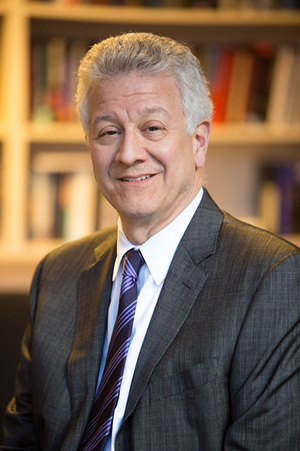
BU Today: The US Census Bureau’s latest report shows little improvement for American families in the past year. Despite a falling unemployment rate, the median income is not budging. What’s wrong?
Danziger: The main problem, which has been going on for several decades, is that when the economy does improve, as it has for the past few years, the gains from economic growth have been uneven. In the past, when the economy improved, people got called back to work—there were benefits to the average worker. These days, wages don’t necessarily rise when the economy improves. In fact, people going back to work after the recession may earn less money than they did before. Many firms have not provided wage increases, and some are using technology to reduce hours and pay.
You’ve talked about income inequality worsening—that prosperity is no longer widely shared when the economy grows. Can you explain why that is?
We’re in a period of very slow wage growth. At the bottom, wages have not kept up with productivity growth, especially for workers without a college degree. Meanwhile, at the top, the inequality has become so extreme that it will take major tax reform to begin to reduce it.
At some point, incomes at the top began to explode. In 1965, the typical CEO of a major firm made 20 times what the average worker at his or her company made. That increased to 60 times in 1989—and it’s currently at 230. As just one example, consider Republican presidential candidate Carly Fiorina. She was paid more than $100 million during her short tenure as CEO at Hewlett-Packard, including a $65 million signing bonus and $21 million in severance pay.
So we have a situation where the increased productivity of the economy has been captured by the economic elite. This was not the environment that the War on Poverty era was launched in. In other words, poverty has remained high because of the failure of the economy to benefit the average worker—not because of the failure of government programs. Because the economy and poverty programs are working in opposite directions, you end up with a roughly constant poverty rate.
If inequality is the root problem, shouldn’t we be doing more to bring up the people at the bottom?
Certainly, yes. For starters, you could raise the well-being of those at the bottom through higher wages. Workers with a high school degree or less have been left behind: their wages adjusted for inflation are lower than they were 40 years ago.
We could make a significant dent in poverty through a number of public policies—raising the minimum wage, expanding subsidies for child care, increasing the earned income tax credit, launching a subsidized jobs program. All of these steps would help to bring up the bottom and have a modest effect on reducing inequality.
One of the newer policies that certainly has helped is the dramatic increase in insurance coverage under Obamacare. We have good examples of government programs bringing up the bottom; what we don’t have are very good examples of government bringing down inequality at the top.
Would you consider Obamacare an antipoverty program?
Yes. People who were uninsured or paying for their health care now have more money for other goods and services—food, clothing, shelter. It’s less likely that they’re being forced into bankruptcy because of unpaid medical bills.
Having access to health care means people are able to work more. If we discover a disease at an early stage and do something about it, that person can stay in good health and remain productive. It’s clearly the case that there are other government programs, such as food stamps and Medicaid coverage for poor kids, that have led to long-term improvements in health outcomes.
What about health disparities between the rich and poor or minorities and whites? Can government programs fix those?
They can certainly help. Consider what happened when Medicare was passed. There were millions of uninsured elderly people who were going to get covered by Medicare, and the Johnson administration made clear that no Medicare payments would go to segregated hospitals. This led to the eventual desegregation of hospitals throughout the South. There is now research documenting that because of this, large numbers of black women gave birth in hospitals instead of at home, and black infant mortality declined.
Health disparities are tied to poverty rates. Those at the bottom have lower life expectancies, higher unemployment. And the causation goes both ways–people in poor health are less likely to work.
Even within the white population, there are growing disparities by social class. Those disparities are much greater now than they were 30 years ago. There’s a new report by the National Academy of Sciences that suggests a correlation between rising income inequality and the increasing disparities in life expectancy. For males, the estimated life expectancy for 50-year-olds born in 1930 who were in the bottom 20 percent of income was 26.6 years more compared to 31.7 years more for those in the top 20 percent. That’s a five-year difference. Today, it’s 12 and a half years between the poorest and the richest 20 percent. Rising inequality is one of the reasons.
There will always be a bottom rung at elevated health risk. But the question is, can you reduce that risk? That’s the domain of public health, and it’s important.
The 2015 William J. Bicknell Lecture in Public Health is tomorrow, Wednesday, October 21, from 10 a.m. to 1 p.m. in the Hiebert Lounge at the School of Medicine Instructional Building, 72 East Concord St. The event is free and open to the public. The lectureship is named in honor of the late William J. Bicknell, founder and chair emeritus of the SPH international health department.
This BU Today story was written by Lisa Chedekel, She can be reached at chedekel@bu.edu.