Student Updates
Submission for Art Days 2018
ART DAYS 2018
Monday-Tuesday, April 2-3 | Instructional Building, Hiebert Lounge

Students, faculty and staff are encouraged to submit artwork of any medium to the 28th annual BUMC Gallery for the Arts, sponsored by the Provost's Office. Art Days was started by BUSM Dean Emeritus Chobanian to foster the support and growth of the creative arts at BUMC. The exhibition is mounted by the Creative Arts Society. To be placed on the "submit list" or if you have any questions, please contact Keith Tornheim, PhD, at tornheim@bu.edu or 617-358-4172.
Artwork (paintings, photos, poetry, sculpture, needlework, etc.) will be collected on Friday, March 30. Pieces should be framed if possible. Security will be provided. Work will be returned Wednesday, April 4. Specific instructions will be sent at a later date to those who respond to this announcement.
Disagreeing on Difficult Issues: Sexual Harassment

Monday, March 19
4:30-6 p.m. (Doors open at 4 p.m.)
Instructional Building, Hiebert Lounge
In divisive times, it is more important than ever to provide spaces where complex and competing ideas can be discussed in the context of civility and respect. We believe that having such conversations is possible if we can affirm the dignity of all participants and accommodate the possibility of conflict. This discussion series, “Disagreeing on Difficult Issues,” is meant to help create a space for these discussions on our campus.
Partners include Emelia Benjamin, Assistant Provost for Faculty Development, BUMC; Yvette Cozier, Assistant Dean for Diversity and Inclusion, BUSPH; and Rafael Ortega, Associate Dean for Diversity and Multicultural Affairs, BUSM.
 |
Speaker Caryl Rivers, Professor of Journalism, College of Communication |
 |
Moderator Kenneth Elmore, Associate Provost and Dean of Students |
Livestreaming Available During Event
CLICK HERE TO REGISTER
Eight Faculty Promoted to Professor
The following faculty have been promoted to the rank of Professor:
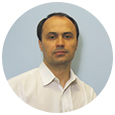 |
Gheorghe Doros, SPH, Biostatistics, is an expert in the development of and methodological approaches to the design and analyses of clinical trials, with an emphasis on clinical trial data. He has published more than 130 peer-reviewed journal articles, including JAMA, Statistics in Medicine, JASA, Lancet, Neurology and the Journal of Vascular Surgery. His work has been cited more than 2,000 times. Doros maintains a rich research portfolio, and has served as key investigator on $21 million in funding. He has won three BUSPH Excellence in Teaching awards. He is an associate editor for the Journal Trials and served as a senior consultant for multicenter trials and/or programs for Pfizer, Takeda, Novartis, Massachusetts General Hospital and Boston Children's Hospital. . |
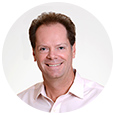 |
Tony Godfrey, MED, Surgery and Medicine, is internationally known for his expertise in cancer genetics and molecular pathology, particularly in Barrett's esophagus and esophageal adenocarcinoma, and his work to develop new molecular biomarkers for cancer detection, staging and treatment. Godfrey has 74 peer-reviewed publications, four textbook chapters, four issued patents and has been continually funded since 2001 by numerous NIH and Foundation grants for which he has served as either PI or co-PI. He is a member of the Esophageal Adenocarcinoma Working Group for the Cancer Genome Anatomy Project and has served on numerous NIH and other study sections, including the National Cancer Institute of Canada. An associate editor for the journal Diseases of the Esophagus, he has presented at numerous national and international conferences. Godfrey has mentored a generation of research trainees, including graduate and medical students, residents and fellows, many of whom have gone on to their own successful academic careers. . |
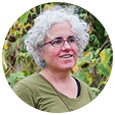 |
Wendy Heiger-Bernays, SPH, Environmental Health, is a distinguished educator and scholar in the fields of toxicology and research translation. She has earned a reputation for the rigor of her teaching, having received BUSPH teaching awards and the Norman Scotch Award, the School's highest teaching honor. Over 20 years, she has incorporated her research and practice training in toxicology and risk assessment into two levels of courses in Toxicology and Foundations of Environmental Health, as well as courses in Risk Assessment Methods, Water Quality and Health, and Environmental Health Science, Policy and Law. Heiger-Bernays is the director of the MPH Concentration in Environmental Health and the new Certificate in Environmental Health Assessment, in addition to serving on doctoral committees as primary advisor or member. In addition, she heads the Research Translation Core for her department's prestigious Superfund Research Program. . |
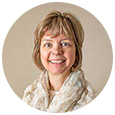 |
Susan Minear, MED, Pediatrics, is an internationally recognized developmental and behavioral pediatrician with more than 20 years of clinical care and teaching in pediatric primary care, child development and newborn medicine. She co-created the Newborn Behavior Observation (NBO) Curriculum and Training, recognized around the world. More than 9,000 newborn care professionals and students have been trained using this curriculum in 19 states within the US and 13 countries around the world. Minear was a member of the Boston Medical Center (BMC) Baby-Friendly task force, which led BMC to become the first Baby-Friendly Hospital in Massachusetts in 1999. She is a member of the Neonatal Abstinence Syndrome task force at BMC and helped develop the Eat Sleep and Console (ESC) Training for professionals who care for infants exposed to opiates prenatally. The ESC tool is now being disseminated throughout Massachusetts and New England. Since 2009, Minear has been the medical director of Baby Steps, a BMC outpatient multidisciplinary clinic that strives to prevent failure to thrive and promote early intervention for infants born at risk. . |
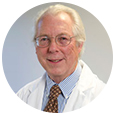 |
Albert Price, GSDM, Periodontology, is a well-known periodontist with more than 40 years of clinical care and teaching in periodontics and implant dentistry. Since his promotion to Clinical Associate Professor in 2006, he has written numerous book chapters and published papers on wound healing, surgical implants, bone grafts and augmentations. He has mentored many dental students, periodontal residents and implant fellows over the decades. In addition to his current teaching responsibilities, he is developing the digital dentistry curriculum in collaboration with Jess Liu. A fellow of the International College of Dentists, Price is a member of numerous dental societies, including the American Dental Association, International Association of Dental Research and the American Academy of Periodontology. . |
 |
Michael Silverstein, MED, Pediatrics, is widely recognized for his work in maternal depression, mental illness prevention and systems of care to promote bi-generational mental health. He has been the PI of numerous grants from the National Institute of Mental Health, National Institute of Child Health and Human Development, the Health Resources and Services Administration and the Patient Centered Outcomes Research Institute. The majority of his work uses community based participatory research techniques to develop scalable interventions to prevent depression in low-income parents. Silverstein served as Associate Editor for the Archives of Disease of Childhood, the publication of the Royal College of Pediatrics and Child Health in the United Kingdom, and currently is a reviewer for a number of journals. He is one of 16 members of the United States Preventive Services Task Force, one of the most prestigious and impactful organizations in the area of prevention and evidence-based medicine. Passionate about mentoring junior faculty, he currently serves as Associate Chief Medical Officer for Research and Population Health at BMC. . |
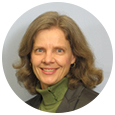 |
Taryn Vian, SPH, Global Health, is internationally known for her groundbreaking, objective scholarship in and advocacy for the study (and control) of corruption in health care, most recently the increasingly controversial health policy on the use of public private partnerships to develop and operate complex health facilities in developing countries. The recipient of seven teaching awards and the School's highest teaching honor, the Norman Scotch Award, she developed an online course on health care corruption offered around the world. Vian's skill and experience in teaching and course design has made her the de-facto mentor for nearly all the junior faculty in her department. Since her promotion to associate professor in 2010, she has published 14 peer-reviewed articles that has appeared in high-impact journals, including PLoS One, Social Science and Medicine, and Health Affairs, plus numerous reports and book chapters for policymakers such as the World Health Organization, the World Bank, and Transparency International. . |
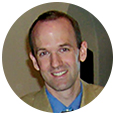 |
Kevin Wilson, MED, Pulmonary, Allergy, Sleep & Critical Care, is an expert in developing evidence-based clinical practice guidelines on the management of various pulmonary disorders, after a successful career as a traditional physician scientist in cytokine biology related to T cell cycle progression. His peer-reviewed publications have appeared in noted pulmonary journals, including the American Journal of Respiratory Critical Care Medicine, European Respiratory Journal, Virology, Cellular Immunology and Biochemistry. Wilson serves as the Chief of Documents and Medical Affairs for the American Thoracic Society (ATS) and founded the ATS training program in guidelines and methodology, the first of its kind worldwide. In addition, he is a two-time awardee of an ATS Presidential Commendation. He has mentored 22 fellows, and is the recipient of his department's teaching award in Pulmonary and Critical Care. . |
Celebrating Five Years of Arts at BUMC
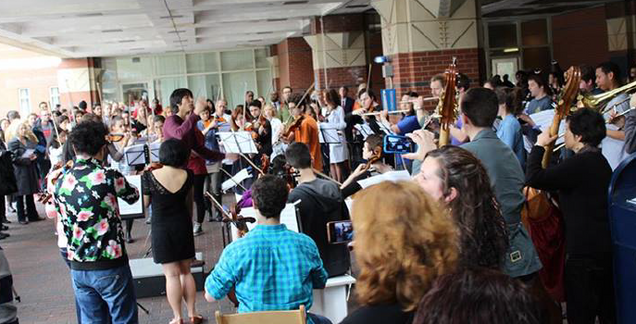
Thursday, March 8
7-8 p.m.
Bakst Auditorium
ARTS | LAB 2013-2018
Celebrate five years of collaboration between the College of Fine Arts, the BUSM Office of Diversity and Multicultural Affairs and Boston Medical Center.
Welcome new CFA Dean Harvey Young to the Medical Campus and enjoy performances and projects that connect students, faculty, staff and patients.
Parking and Transportation Services for President’s Day
The President's Day holiday will be celebrated on Monday, Feb. 19. The following schedule and services will be in effect:
Shuttles: No shuttles will be operating on President’s Day. This includes the HealthNet shuttle.
Boston University’s (TheBUS) shuttle will not run its weekday schedule but will run its Late Night service along the Charles River Campus in the evening.
MBTA: Commuter rail trains will operate on a Saturday schedule. The subway and buses will operate on a Saturday schedule EXCEPT the Crosstown buses which will NOT operate on the holiday. For additional information on routes and schedules, please call the MBTA Customer Service Center at 617-222-3200 or visit www.mbta.com
Parking: All Parking facilities will be open. Drivers with 610 Garage access may park in the 710 Garage or the DOB Garage on the holiday. Those who do not have garage access may park in the 710 Garage or the DOB garage for a flat rate fee of $8.
If you have any questions regarding this holiday schedule, please call the TranSComm Office at 617-638-7473 or the Parking Office at 617-638-4915.
BUMC Students Help with Boston Homeless Census
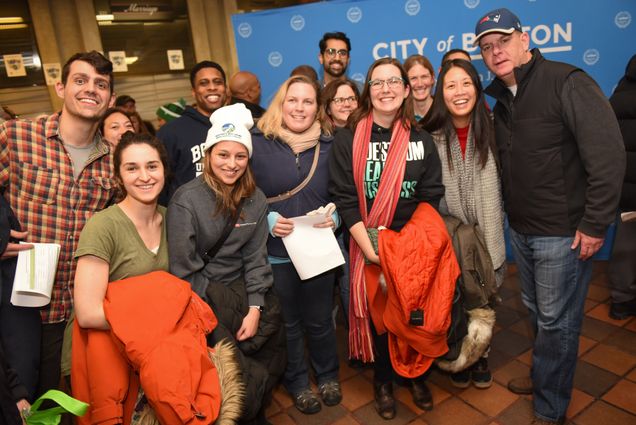
BUMC students were among the estimated 300 volunteers who fanned out on the city streets Jan. 31 to conduct the 38th City of Boston Homeless Census. Read the Boston Globe’s story on the event.
Helping Postdocs Take Charge of Their Lives
CAS alum new director of Professional Development and Postdoctoral Affairs

Sarah Hokanson, the new director of BU’s Professional Development and Postdoctoral Affairs office, wants to help the University’s postdocs launch successful careers. Photo by Dan Aguirre
Sarah Hokanson knows what it’s like to be a perpetually waiting postdoctoral researcher. “When I was a postdoc, I felt like I was always waiting for something to happen—for my experiment to work, for my principal investigator to talk to me, for someone to offer me a job,” she says, of her three-year fellowship in biophysics at Cornell University. “The life sciences can be slow. It took me a year to purify my enzyme.”
A decade after graduating from the College of Arts & Sciences with a bachelor’s in chemistry, Hokanson (CAS’05) returned this spring as program director of the University’s newly expanded campus-wide Professional Development and Postdoctoral Affairs (PDPA) office. Her message for postdocs: “You don’t have to wait.” Science may be slow, she says, but that doesn’t mean you have to hold off on making decisions about your career—or the rest of your life. She wants to help postdocs take charge. Her appointment is part of the University’s increasing efforts to help postdocs in all fields get the most out of their training at BU and launch successful careers.
“Postdocs are in transition,” Hokanson says. “We have a responsibility to make sure that we as an institution are giving them everything they need to be successful. If someone’s really driven in academia, what can we do to make them more competitive? Is it that they don’t have enough publications? How can we help? If someone wants to go into industry or work in science policy or something else, how can we help them transfer their skills somewhere else?”
The University opened PDPA on the Medical Campus four years ago under Linda E. Hyman, School of Medicine associate provost for the Division of Graduate Medical Sciences, with Yolanta Kovalko (MET’04,’08) as administrative manager. Under Hokanson’s direction, PDPA is now expanding to include all postdocs at the University, and she and Kovalko will work closely with Gloria S. Waters, vice president and associate provost for research, as well as with Hyman.
“We are delighted to have Sarah in this critical role for the University,” Waters says. “She brings not only a deep understanding of the issues which postdocs face, but also a sensitivity to the complexity of the issues and the needs of the various stakeholders. She is able to think creatively about the challenges postdocs and their mentors face and she wants to systematize, as well as document and quantify, our success in providing postdocs with the right environment to achieve their goals.”
Hyman says she welcomes Hokanson’s appointment. “It is very gratifying to see the entire University embrace the postdoc community and recognize how important they are to us,” she says. “With the Medical Campus jump-starting the effort four years ago, we hope that we have provided Sarah with the foundation and infrastructure she needs to hit the ground running.”
Compiling data to get a clearer picture
One of Hokanson’s first tasks has been to compile data on postdocs, an effort that is complicated at BU, as elsewhere, because they are connected more closely to individual departments than to the overall institution. She says she hopes to help the University develop a set of policies for postdocs that will provide more consistency.
There are 525 postdocs across the University, with two thirds of them focused on biomedical research. The average salary for postdocs across both campuses is about $47,000 a year, according to preliminary data. While the average length of time a postdoc spends in a training position varies widely by school across BU, Hokanson says, initial data from 2014 puts the institutional average at three and a half years.
She is wrapping up an anonymous survey on how postdocs view their training experience at BU and what skills they want to develop while they’re here. She plans to present the data at a town meeting sometime in the next several months. Meanwhile, she has begun hosting events to bring postdocs together.
“I am very confident of Sarah’s abilities, based on what she has already accomplished in her short tenure,” says Sarah Mazzilli, who has a PhD in cancer pharmacology and experimental therapeutics and began as a postdoc in the pulmonary research lab of Avrum Spira (ENG’02), a MED professor of medicine, pathology and laboratory medicine, and bioinformatics, 18 months ago. “Because of her, I now know more about postdoc data and have met more postdocs from diverse programs in the last month than I had since I arrived.” Mazzilli is the postdoc rep on the Division of Graduate Medical Sciences PhD steering committee.
The postdoc is supposed to be a temporary period of mentored training in advanced research. For many people, though, especially those in the life sciences, the postdoc has become the default next step after earning a PhD.
“Should everyone be a postdoc?” Hokanson asks, echoing a question being asked across the country by senior researchers, university leaders, and postdocs themselves. “I don’t think so. We need to do a better job of directing PhD students and postdocs toward the right path. Not every job needs a postdoc.”
Postdocs are generally paid through a variety of fellowships, trainee grants, and research project grants, with the majority at BU paid by federal research grants awarded to individual principal investigators (PIs). The latter arrangement creates “inherent stress” around a PI’s conflicting responsibilities, as a mentor and as a scientist “whose primary mission is to complete the research, and any time spent training the postdoc is time not spent on research,” the National Academy of Sciences Committee on Science, Engineering and Public Policy concluded in its 2014 report The Postdoctoral Experience Revisited.
“There are tremendous pressures on faculty, too,” Hokanson says. “Their careers are dependent upon the productivity of their postdocs and graduate students. In addition to their own personal growth as scientists, postdocs are here to perform a job that involves doing bench science and generating results. They are the hands of science contributing to the success of the lab. If things are working well, there’s a balance between productivity and mentoring. I now have accountability to train and support postdocs. But I want postdocs to remember that they own a piece of this accountability, too.”
With the number of postdocs, particularly in the life sciences, exceeding the available tenure-track academic research jobs across the country, most will not find jobs in academia, but in industry, government, science policy, law, education, and other fields. Hokanson says she wants to work with faculty to help them become more familiar with these nonacademic career options so they can better guide their postdocs.
Jumping the tracks
Her own path shows that there are many ways to build a career in science. She earned a PhD in biochemistry and molecular biophysics and did a National Science Foundation Graduate Research Fellowship at the University of Pennsylvania and completed a National Institutes of Health Ruth L. Kirschstein Postdoctoral National Research Service Award Fellowship at Cornell from 2010 to 2012.
“I didn’t know exactly what I wanted to do,” she says. “I was competitive. A lot of people were saying, ‘You were born to be an academic researcher,’ but it just didn’t feel right for me.”
So she “jumped the tracks,” as she puts it, and went to work at the British Consulate-General in Boston as a senior officer for the Science and Innovation Network. “It was a risk,” she says. “Most people said, ‘Where does it lead? It’s a dead end. She’s not even British, she’s throwing it all away.’”
But Hokanson says the job gave her valuable hands-on training in science policy. She got to work with top research scientists from industry and academia as well as with university administrators and government leaders in Britain and the United States. “The people who I thought had the coolest jobs were the university administrators,” she says.
During her time at the consulate, she was promoted to US deputy director of the Science and Innovation Network. The constant travel eventually became too hard on her family. She and her husband, David, a biochemical scientist, have three-year-old twins, Finn and Erik.
Hokanson arrived at BU 14 years ago as a premed freshman majoring in English. Then she took an introductory course in chemistry to fulfill her premed requirements and became fascinated by molecules. As a sophomore, she became a peer-led team learning teacher for the same introductory chemistry course, and switched her major to chemistry, with a minor in English. She joined the lab of Sean J. Elliott, a CAS professor of chemistry. “Sean changed my life,” she says. “I fell in love with doing research while in his lab. He was the first person who really believed in me as a scientist. He transformed me from an average but extremely interested chemistry student into a credible researcher.”
She connected with the Undergraduate Research Opportunities Program (UROP), which provides funding for faculty-mentored research by undergrad students in the humanities, natural sciences, medicine, arts, and education, and ended up publishing five papers as an undergraduate and winning national and international recognition for her work on how thioredoxin proteins combat oxidative stress in cells.
“Any successes I’ve had so far can be traced back to the support that I had at BU,” Hokanson says, “and I’m excited to build on that success here.”
A version of this article originally appeared on the BU Research site.
This BU Today story was written by Sara Rimer.
What a Government Shutdown Means to BU
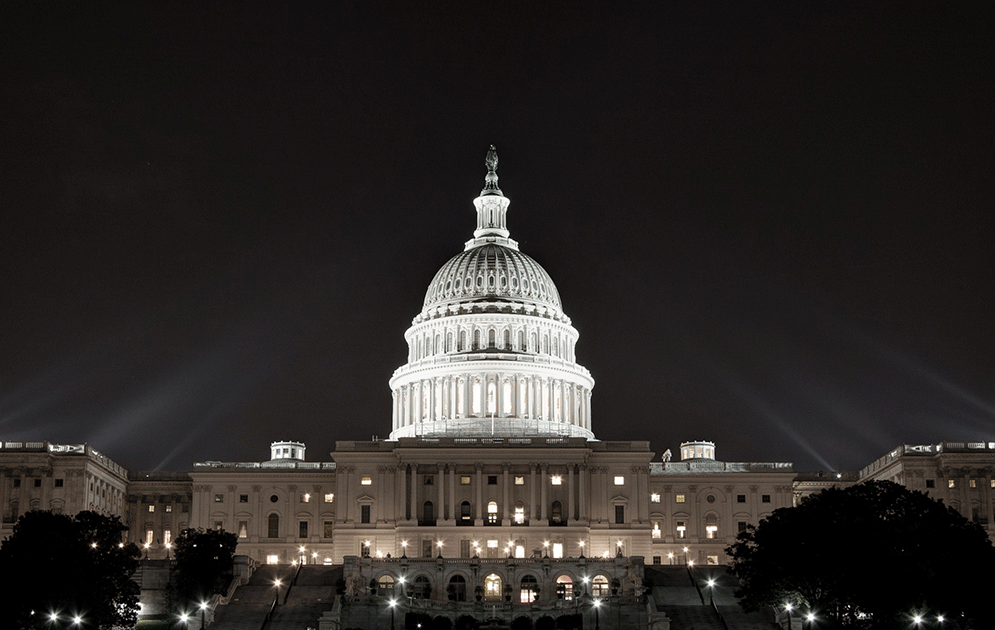 The shutdown of the federal government has stretched into a third day after Capitol Hill lawmakers failed to reach agreement on a spending bill over the weekend. Photo By Drew Stephens
Investigators should continue working on and submitting proposals to Sponsored Programs
- Shutdown of federal government enters third day
- BU investigators should continue working on and submitting proposals to Sponsored Programs as indicated
- Federal student financial aid should not be impacted by shutdown
With Congress and the White House locked in a failure to agree on a spending bill, the federal government remains shut down for the third day. The shutdown, the first since 2013, affects the lives of Americans in numerous ways, as described in this Washington Post story.
At Boston University and universities across the country, the shutdown’s most immediate effects are likely to impact researchers working with federal grants. In a letter being sent to BU faculty Monday morning, Jean Morrison, University provost and chief academic officer, advises investigators to assume that deadlines for proposal submissions will remain unchanged.
To learn more about what the government shutdown means to the BU community, BU Today spoke with Jennifer Grodsky, the University’s vice president for federal relations.
BU Today: What does the shutdown mean for investigators who are submitting proposals for federally sponsored research?
Grodsky: For now, it means that some of their program managers and contacts at federal agencies may not be available. But even though it is unsettling to hear that agencies are closed, faculty should continue to work on their proposals as if the government were still open. It’s possible some government systems may not be working. For example, the National Science Foundation has announced that FastLane, its web-based grants management system, is closed during the shutdown. But the best thing investigators can do is have their proposals ready so that Sponsored Programs can process them according to the most up-to-date guidelines given by each specific agency.
Will the shutdown delay deadlines for a grant proposal?
We don’t know yet, so it’s really important that investigators continue to prepare and submit their proposals to Sponsored Programs in a timely manner. It’s also really important to remember that regardless of the headlines about the political situation, we need to proceed as if there will be no change in grant submission deadlines.
What about researchers who are currently working under federal contracts grants? Should they continue to work?
Yes, researchers should continue to work on their grants and contracts unless their agency or program officer has advised them otherwise. Faculty should keep in close touch with their Sponsored Programs contacts and check the Research Support website for updates.
Are some federal agencies still operating? Which agencies are open and which are closed?
Essential federal personnel are working, and each agency defines “essential” differently. You can see how every agency operates in a shutdown by looking at the agency contingency plans on the White House Office of Management and Budget website.
What does the shutdown mean for students?
Fortunately, federal financial aid should not be impacted. The US Department of Education has explicitly stated that Pell Grants and student loans will continue as normal. The small number of students enrolled in the BU Study Abroad Washington program who were scheduled to begin internships with federal agencies on Monday may see those internships delayed.
Will the shutdown affect faculty and staff at all?
Faculty and staff who planned to travel to Washington, D.C., for meetings with federal officials should check whether their federal contact will be available to meet. Most federal agency staff will not be working during the shutdown. Similarly, if a faculty or staff member has invited a federal official to visit BU, it’s possible the visit would need to be rescheduled.
How long is the shutdown likely to last?
That is the question everyone in Washington is trying to answer. A bipartisan group of legislators is working to negotiate a deal that would reopen the government for several weeks and give lawmakers more time to find a long-term solution. While a shutdown could last just a few more hours, I’m mindful that the last government shutdown, in 2013, lasted more than two weeks.
This BU Today story was written by Art Jahnke.
BUMC Celebrates Legacy of MLK

More than 100 members of the Medical Campus community gathered in the Hiebert Lounge on Thursday, Jan. 18, to commemorate the legacy of Martin Luther King, Jr. This year the annual event featured a conversation with Jonathan Woodson, MD, director of the BU Institute for Health System Innovation and Policy.
Rafael Ortega, MD, associate dean of Diversity and Multicultural Affairs, welcomed esteemed guests, including University Provost Jean Morrison, PhD; BUMC Provost and BUSM Dean Karen Antman, MD; Associate Provost and Dean of Students Ken Elmore; and Associate Provost for Diversity & Inclusion Crystal Williams.
Rev. Julian Armand Cook, assistant director of BU’s Howard Thurman Center, began the event with an invocation. “We are challenged, inspired and renewed by the vision and witness of Dr. King,” Cook proclaimed. “As we watch in concern, we will work in hope. Because justice may be deferred, it may be delayed, but it cannot be destroyed.”
Woodson’s presentation, “My Soul Looks Back, Lest I Forget,” reflected on his life growing up in New York during segregation, bussing and police riots. He shared the fears of his mother, who gave him a 5 p.m. curfew as police gathered on his street. He remembered the influence of his brother and sister, and their eagerness to be part of demonstrations. As the Civil Rights movement broke barriers, Woodson worked his way up the ranks of the Army. He shared memories of calls from his uncle, who was proud to be talking with a general.
Woodson holds the rank of Brigadier General in the US Army Reserves and served from 2010 to 2016 as Assistant Secretary of Defense for Health Affairs in the US Department of Defense. There, he was the principal advisor to the Secretary of Defense for all health and health protection issues while ensuring the effective execution of the Department's medical mission.
“On a day like today, it’s important to look back with one’s soul. Do some introspection, [don’t] forget the lessons of the path, and find strength and optimism for the future,” said Woodson.
He concluded with asking, “What would MLK do?” and acknowledged some think this question is cliché, but he believes that the “conditions and challenges of the time in which he led provide a litmus test for clarity of purpose and values through which issues, challenges and efforts of today can be examined.
“We must examine this history with our souls.”
This event was sponsored by the BUSM Office of Diversity and Multicultural Affairs, Goldman School of Dental Medicine Office of Diversity, BU School of Public Health, and BMC Minority Recruitment Program.
To view photos from the event, visit our Facebook album.
Click here to see a video of the event.
Parking and Transportation Services for Martin Luther King Day
The Martin Luther King, Jr. holiday will be celebrated on Monday, Jan. 15. Below is parking and commuting information for that day.
Parking: All parking facilities will be open. Employees with 610 Garage access may park in the 710 or DOB garages. Those without parking garage access may park in the 710 Garage for $8 on the holiday.
Shuttles: No shuttles will be operating including the BU Shuttle Bus and the Health-net Shuttle.
MBTA Services: All buses and trains will operate on a Saturday schedule except the CT1 and the CT3 which are NOT operating. Commuter rail will operate on its regular schedule. For additional MBTA information visit www.mbta.com or call customer service at 617-222-3200
Any questions? Call TranSComm at 638-7473 or the Parking office at 638-4915.