Student Updates
GSDM, SPH Faculty Appointments and Promotions
Congratulations to the following Medical Campus faculty on their recent appointment or promotion.
Henry M. Goldman School of Dental Medicine
Professor

Mary Tavares, DMD, MPH, Health Policy & Health Services Research, joined the faculty of the department of health policy & health services research in 2020 as clinical professor and program director of the school's Advanced Education Program in Dental Public Health. She also serves as director for the school’s HRSA-funded training grant on “Team-based Oral Health Care for Vulnerable Populations: Integrated Training, Practice and Leadership” in collaboration with GSDM's department of pediatric dentistry. Dr. Tavares' expertise and research focuses on risk factors for obesity in children and improving oral health outcomes for children in both urban and rural areas. Dr. Tavares is recognized internationally as a leader in dental public health, serving as a co-investigator on the nationwide study in Kuwait, "The Kuwait Healthy Lifestyle Study," of The Kuwait National Programme for Healthy Living. She collaborates on public health initiatives for Kuwaiti children through the “School Oral Health Program for Kuwait,” a partnership between the Kuwait Ministry of Health and the Forsyth Dental Institute in Cambridge, Mass. In 2023, Dr. Tavares was named dental director of the “ForsythKids School-Based Oral Health Program” supported by the Commonwealth of Massachusetts Office of Oral Health. Also in 2023, she was appointed program director of the Kuwait school oral health program. Over a career of more than 40 years, Dr. Tavares' contributions to dental public health service in the U.S. have had a major impact on reducing oral heath disparities in children. She has served as chair of the Dental Public Health Residency Directors Group, president of the American Association of Public Health Dentistry, president of the Behavioral, Epidemiologic and Health Services Research Group of the International and American Associations for Dental Research. Dr. Tavares currently serves as a director of the American Board of Dental Public Health, which will culminate in her appointment as president and chair of that organization during her seven-year term.
BU School of Public Health
Research Associate Professor

Maureen Stewart, PhD, Health Law, Policy & Management, is a behavioral health services and policy researcher whose work has sought to improve access to and quality of substance use and mental health treatment. Her work examines state law and regulatory policy regarding Medicaid health plans, often using economic theory and causal inference methods. She joins BU from Brandeis University and has seven active grants, including several RO1s. She has mentored students in her department and for the addiction health services research field, advising PhD students and including undergraduate, master’s and PhD students in her research projects. She has co-led the mentoring activities for the Brandeis-Harvard SPIRE Center, a program that has recruited more than 100 senior and mid-career researchers to provide mentoring and guidance to emerging scholars.
 Nafisa Halim, PhD, Global Health, is an applied sociologist with research interests in developing and testing interventions to improve pregnancy and childbirth outcomes among women with a history of abuse. Her current work focuses on the effect of antenatal screening for sickle cell disease on intimate partner violence (IPV) in central India. In recent work, Dr. Halim led a systematic review documenting evidence of IPV effects on maternal mental health during pregnancy and the postnatal period; led a formative evaluation study using qualitative methods, which aims to inform the development of an intervention for men to prevent women’s IPV victimization in Bangladesh; and examined using a cluster randomized controlled trial the efficacy of a gender-training intervention targeting men and community leaders to improve gender attitudes and reduce IPV perpetration in men in Tanzania.
Overnight Network Outages Jan. 5-7
During the early morning hours of Sunday, Jan. 5, Tuesday, Jan. 7, and Wednesday, Jan. 8, 2025, the following locations will experience a 5-minute network outage to perform updates. These updates will be done in a rolling manner, with multiple floors starting every 5-10 minutes. For some buildings, not every floor will be affected. To report an issue or if you have any questions, email bumchelp@bu.edu.
Jan. 5: 12:01-8 a.m.
801 Massachusetts Avenue - Crosstown (CT)
72 East Concord St. - Instructional (L)
750 Harrison Ave. - Robinson (B)
560 Harrison Ave.
635 Albany St. - Henry M. Goldman School of Dental Medicine (G)
Jan. 7: 2-6:30 a.m.
85 East Newton St. - Fuller (M)
75 East Newton St. - Evans (E)
85 East Concord St.
80 East Concord St. - (A)
72 East Concord St. - Instructional (L)
815 Albany St. - Medical Student Residence
715 Albany St. - Talbot
700 Albany St. - CABR (W)
670 Albany St.
Jan. 8: 2-6:30 a.m.
650 Albany St.- EBRC (X)
609 Albany St. - (J)
Intersession 2024 Preparations
BUMC Facilities would like to conserve energy over Intersession in non-occupied spaces. Below is a list of steps to follow before leaving on holiday break as we head into Intersession.
Office Spaces & Labs:
- Close windows.
- Turn off all electrical equipment i.e. computers, monitor, lights, any portable heaters, copiers, printers, coffee pots and lamps.
- Lock all doors that can be secured; close any propped doors.
- Contact the Control Center regarding any special conditions that may need to be monitored (email: CPO-FMO-BUMC-CONTROL-CENTER@bu.edu or call 617-358-4144).
- Remove all holiday decorations.
- Check all your lab equipment status before leaving and add contact information on -80 and incubators in case an event occurs.
- Power down all non-essential lab equipment.
- Turn off all sterilizers.
- Refrigerators – Adjust the setting to 1 or 3 to keep the compressor from cycling on and off. If possible, empty the refrigerator and turn the unit off. If refrigerator is turned off, place a bucket inside to catch water when the ice melts and put some absorbent pads under the refrigerator to catch any water, which might get past the gasket.
Building Access: Entrance will be by card access only.
Email: Please post an “Out of Office” message.
Mail Services:
- Internal Mail will be suspended; normal operations resume Jan. 2, 2025.
- UPS-FedEx-Amazon: Mail Services will contact carriers to inform them BUMC is not open for deliveries.
- For those who are on campus and wish to collect mail for their department, mail pick-ups may be made on Dec. 26-27 and 31, between 11 a.m.-2 p.m. at University Mail Services located at 120 Ashford St., Room 163. Individuals must show a valid BU ID card.
On Jan. 2, 2025, all adjustments to the buildings air handlers and hot water systems should return to their normal settings to ensure everyone who returns on Thursday, Jan. 2, enters into a normal working climate.
ME-ARC Lightning Talks: “Innovations in Digital Health Interventions”
 The Mobile & Electronic Health ARC (ME-ARC) held the event, "Innovations in Digital Health Interventions" on Nov. 20 to share ongoing research in digital health interventions, form new collaborations and reignite old ones, and identify next steps for the ME-ARC and digital health at BU.
Twelve faculty members from both campuses and numerous departments (CAS, GSDM, Medicine, SPH, Questrom, Sargent, Social Work, and VA Boston), presented 5-minute lightning presentations on their recent work.
A group lunch and discussion among attendees followed. The ME-ARC and symposium attendees will reconvene in January to operationalize future directions. Please contact the ME-ARC if you would like to be involved.
About the ME-ARC
Founded in 2016 by Belinda Borrelli, PhD, the mission of the ME-ARC is to conduct transdisciplinary research and training with an emphasis on developing and testing digital solutions to improve health and wellness, particularly among disparity-facing populations. To foster collaboration, the ME-ARC holds monthly seminars, annual symposia, assesses BU digital needs through discussion groups and surveys, and provides consultation to BU researchers. The ME-ARC established a pilot funding program, which helped launch a number of collaborations and resulted in publications and funded grants.
ME-ARC Leadership Team: Director & PI: Belinda Borrelli, PhD; Co-Directors: Dan Fulford, PhD (SAR); Joanne Murabito, MD (Medicine); Former Co-Director/External Collaborator: Lisa Quintiliani, PhD (Tufts).
Submitted by Belinda Borrelli, PhD.
Alik Farber, MD, MBA, Named Surgeon-in-Chief, and James Utley Professor and Chair of Surgery

Alik Farber, MD, MBA, has been named Surgeon-in-Chief at Boston Medical Center and James Utley Professor and Chair of Surgery at BU Chobanian & Avedisian School of Medicine, following a national search.
Farber, who was appointed interim chief and chair of surgery in January of this year, is deeply committed to advancing the department’s goals with a focus on patient care, quality and advancing innovative research. Under his leadership, the department will continue to cultivate and attract top academic talent and clinicians who are also committed to mentoring the next generation of expert academic surgeons.
Farber is internationally renowned for his clinical expertise and research in the treatment of peripheral artery disease. He has published more than 260 peer-reviewed articles and is co-principal investigator of the landmark National Institutes of Health-sponsored Best Endovascular versus Best Surgical Therapy in Patients with Critical Limb Ischemia (BEST-CLI) trial, a multicenter, multispecialty, pragmatic, randomized, controlled trial recently completed at 150 sites across North America, Europe and New Zealand.
He chairs the BEST-CLI Publications Committee to oversee the analysis and dissemination of clinical research from the BEST-CLI dataset, with more than 40 manuscripts currently in process. As part of the International BEST-CLI Collaborative, he and 25 leading vascular specialists from across the world are building on the BEST-CLI evidence base to answer the most pressing research questions and to accelerate global patient-oriented solutions for peripheral artery disease.
Farber began his career in 1999 as a vascular surgeon at Cedars-Sinai Medical Center in Los Angeles. In 2005, he was recruited to Boston Medical Center as a vascular surgeon and joined the faculty of the Chobanian & Avedisian School of Medicine as an assistant professor, rising to full professor in 2015. Throughout his tenure, Farber has been involved in a variety of clinical, academic, educational and operational leadership roles.
A graduate of Brown University and Harvard Medical School, he completed a residency in general surgery at Massachusetts General Hospital, a vascular surgery fellowship at Dartmouth-Hitchcock Medical Center and an endovascular surgery fellowship at Southern Illinois University School of Medicine. He received an MBA from the Heller School for Social Policy and Management at Brandeis University.
BUMC Celebrates Historic Inauguration of President Melissa Gilliam

To those celebrating the inauguration of Dr. Melissa Gilliam as Boston University’s 11th president either at a watch party on the Medical Campus, or as part of the sizeable campus contingent who attended in person at Agganis Arena, there was a profound sense of history of the moment and enthusiasm for her message, including her call for tighter bonds between the two campuses, the need for increased collaborative research, the value of diversity and inclusion, and the importance of the university’s connections and impacts on Boston and surrounding communities.
Professor of Medicine and Assistant Dean of Admissions Shoumita Dasgupta, PhD, marched in the procession at Agganis.
“I chose to go because this is a really special moment in BU’s history; we have a leader who embodies all of our values of inclusive excellence and education for all, as well as interdisciplinary science and study,” said Dasgupta. “It’s really exciting to be part of this new beginning.”
In her inaugural address, Gilliam, an interdisciplinary researcher in medicine, public health and the humanities, spoke early and often of the importance of the Medical Campus. Dasgupta said she was encouraged by a listening session with the president and by her decision to have an office on the Medical Campus.
“It’s really clear from attending the listening session that she values what our faculty has to say and that she’s going to take our message to heart and prioritize issues that benefit everybody,” said Dasgupta.
Priya Garg, MD, associate dean of medical education, joined approximately 50 people in attendance at the watch party in Hiebert Lounge.
“I wanted to see this historic event. I’m so proud of the fact that we have our first woman president here at BU,” Garg said. “I think her physically being here on campus will be a wonderful way to hopefully share ideas and to be a part of this community.”
Garg said this was especially important as the medical school embarks on a search for a new dean.
“It’s huge for underrepresented communities (for BU to have its first Black and female president),” said third year medical student Nora Sheehan. “I think it shows BU’s commitment to providing opportunities for everyone.”

Zhara Shokoohi is a new arrival in Boston and at BU, where she just began her first year as a PhD student in anatomy & neurobiology after flying in from Iran a month ago.
“By the time I was coming, I just got the news of the new president and I thought it was really great to have someone from the Black community,” she said. “I am a minority in this country and I felt…I was coming to a place where I am seen and heard.”
Karin Schon, PhD, associate professor of anatomy and neurobiology, was especially encouraged that Gilliam spoke to closer ties and cooperation between the two campuses.
“The one thing I would love for her to do is to continue listening, not only within BU, but to those outside the university, making connections with the community,” she said.
Deborah Gatachew grew up in Boston and knows the communities that surround the Medical Campus. An MPH student in her last semester, she appreciated Gilliam’s pledge to have greater impact on those communities.
“I really hope her promises do spark change and improve the health of the people struggling in our communities, especially the ones we see every day,” she said.
July 2024 Avedisian & Chobanian School of Medicine Faculty Promotions
Congratulations to the following Chobanian & Avedisian School of Medicine faculty on their recent appointment or promotion.
Associate Professor

Heather Edwards, MD, Otolaryngology-Head & Neck Surgery, focuses on improving access and equity in oncology clinical trials. While her primary research focus centers on access to clinical trials for historically underrepresented populations, she also explores optimal cancer care for communities that have been historically neglected in oncology research, including patients with a history of substance abuse and patients with limited English proficiency. In addition, she works to promote gender equity in academic medicine. Dr. Edwards was a founding member of the Women’s Head and Neck Reconstructive Surgery Consortium (HERS), a 104-member group of head and neck microvascular surgeons in North America who collaborate on research and knowledge sharing projects to improve equity and quality in cancer and reconstructive care. In 2023, she was appointed chair of the Boston University Medical Group Gender Equity Advisory Council.

Kimberley Mak, MD, MPH, Radiation Oncology, is a lung and gastrointestinal radiation oncologist known for her contributions in patient-reported outcomes (PROs), treatment toxicity and disparities research. As clinical director of the department of radiation oncology at Boston Medical Center (BMC), she spearheaded quality improvement efforts leading to BMC becoming the first site in Massachusetts to achieve accreditation through the American Society for Radiation Oncology (ASTRO) Accreditation Program for Excellence (APEx). She further analyzes quality metrics as Cancer Liaison Physician for the BMC Cancer Care Committee/American College of Surgeons Commission on Cancer. Dr. Mak serves on multiple committees for ASTRO and the international cooperative research group, NRG Oncology. She has contributed her expertise in working groups for the National Quality Forum, Lung Cancer 360 and International Consortium for Health Outcomes Measurement. She is PRO chair for a national clinical trial, and currently is studying the use of electronic conversational agents for PRO measurement.
 Katherine Gifford, PsyD, Anatomy & Neurobiology, is a clinical neuropsychologist who comes to BU from Vanderbilt University. Her work focuses on early detection of unhealthy brain aging, with a focus on brain injury and Alzheimer’s disease (AD). She developed a tool to index subjective cognitive decline and evaluates other clinical tools and biomarkers of AD. Beyond her independent research, she has collaborated on >15 NIH-funded studies as an expert neuropsychologist. Dr. Gifford is an associate editor for Journal of Alzheimer’s Disease, chaired an International Society to Advance Alzheimer’s Research and Treatment special interest group, and serves as a reviewer for multiple NIA grant panels.
Clinical Associate Professor

Sonia Ananthakrishnan, MD, Medicine/Endocrinology, Diabetes & Nutrition, is a clinical endocrinologist specializing in neuroendocrinology. As a member of the department of medicine’s student education team since 2009, she is director of clinical student education in the department and clerkship director for third-year students in the medicine clerkship. She has served as the faculty mentor for the Internal Medicine Interest Group since 2012. Dr. Ananthakrishnan was one of the original creators of the Lights On, Intent vs Impact, Full Stop, Teach (LIFT) training for bystanders addressing microaggressions as part of the Mid-Career Faculty Leadership Program in 2020. She is the 2023 recipient of the Stanley L. Robbins Award for Excellence in Teaching.

Andrew Kompel, MD’07, Radiology, specializes in musculoskeletal imaging and interventions. Named section chief of musculoskeletal imaging in 2021, he has streamlined imaging protocols, and prioritized teamwork and communication between schedulers, trainees, technologists and other non-radiology providers. Within the department of radiology, he has developed a standardized resident curriculum in musculoskeletal imaging for the diagnostic and integrated radiology trainees and created and directed the fellowship in musculoskeletal imaging.
Research Associate Professor
 Sherral Devine, PhD, Anatomy & Neurobiology, studies brain/cognitive aging with a specialization in preclinical/clinical Alzheimer’s disease and related dementias (ADRD). A member of the Framingham Heart Study (FHS) research team, she helped develop the FHS neuropsychological (NP) test battery, oversaw the NP testing of 3,000+ FHS participants, managed the training/supervision of neuropsychologists and research assistants. Dr. Devine served on the consensus diagnosis review committee, which has generated the dementia endpoints used in all FHS research on dementia by investigators both internal and external to BU. She designed and implemented a course for investigators to understand and use appropriately FHS cognitive data. She is now developing a brain aging mentorship program, which includes pipeline opportunities for people from underrepresented groups.
BU’s Framingham Heart Study Gets New Director
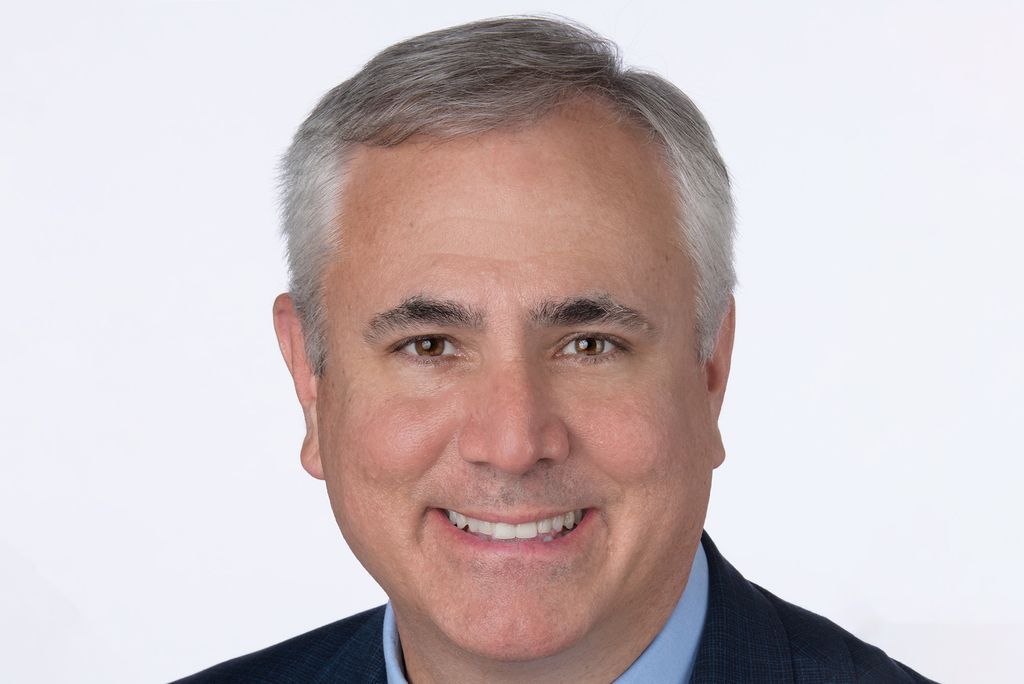
The nation’s longest-running study of heart disease, credited with improving and saving countless lives since Harry Truman was president in 1948, has a new director. The Framingham Heart Study, run by Boston University and the National Heart, Lung, and Blood Institute, will be led by Donald M. Lloyd-Jones, who has accepted the position of director of the Framingham Center for Population and Prevention Science, principal investigator of the Framingham study, and chief of the section of preventive medicine within the department of medicine at BU’s Chobanian & Avedisian School of Medicine and Boston Medical Center (BMC).
The appointment, which takes effect January 1, 2025, was announced Tuesday by Karen Antman, provost of the BU Medical Campus and dean of the Chobanian & Avedisian School of Medicine, and Sushrut Waikar, the ad interim chair of medicine at BU and Boston Medical Center (BMC), the school’s primary teaching hospital.
Lloyd-Jones, former president of the American Heart Association and a former Framingham Heart Study researcher, replaces Vasan Ramachandran, who left Boston to become the founding dean of the University of Texas School of Public Health at San Antonio. Joanne Murabito and George O’Connor served as ad interim directors and co-PIs of the Framingham study during the search to replace Ramachandran; Murabito will remain co-PI of the Framingham study.
“I am truly excited to return to the Framingham [Heart] Study and BU, where I began my research career in earnest,” Lloyd-Jones said in a statement released Tuesday. “I am mindful of the incredible legacy of past leaders, who are all giants in our field.” He added: “We have an incredible team, and remarkable opportunities to take Framingham and BU to new heights.”
"We have an incredible team, and remarkable opportunities to take Framingham and BU to new heights."
Donald M. Lloyd-Jones
BU administers the Framingham Heart Study, which includes researchers from the medical school, the School of Public Health, and the College of Arts & Sciences. It has accumulated an astonishing record of helping both patients and doctors better understand the risk factors associated with heart disease and has published close to 3,000 research papers over seven-plus decades.
Some of the most prominent findings from the study have included the basic risk factors of heart disease (1961), the heightened heart disease risk of smoking, the heart benefits of exercise and the heart risk of obesity, and the impact of hypertension in increasing the risk of stroke.
“The Framingham Heart Study is one of Boston University’s proudest medical legacies, and the appointment of Dr. Lloyd-Jones will ensure that its long tradition continues in the pursuit of helping researchers understand the risks of heart disease,” said BU President Melissa L. Gilliam, who is also a professor of obstetrics and gynecology and of epidemiology.
Lloyd-Jones is currently the chair of preventive medicine and Eileen M. Foell Professor of Heart Research and professor of preventive medicine, medicine, and pediatrics at Northwestern University. He previously served as senior associate dean for clinical and translational research and PI/director of the Northwestern University Clinical & Translational Sciences Institute, and he served as the national president of the American Heart Association from 2021–22.
“Over decades, the Framingham Heart Study has produced great learnings that further our understanding of cardiovascular disease in America,” said David C. Goff, director of the division of cardiovascular sciences at the National Heart, Lung, and Blood Institute, part of the National Institutes of Health. “This transition to new leadership retains the depth of familiarity with the study while advancing the latest science and innovations in epidemiology. We have great confidence in Dr. Lloyd-Jones’ ability to lead the Framingham Heart Study into a new era of scientific excellence.”
Lloyd-Jones received his undergraduate degree from Swarthmore College, his medical degree from Columbia University College of Physicians and Surgeons, and a master’s in epidemiology from Harvard T.H. Chan School of Public Health. He completed his residency in internal medicine at Massachusetts General Hospital and served as chief medical resident there. After a cardiology fellowship at MGH, he joined the staff as an attending cardiologist, and was an instructor and then assistant professor of medicine at Harvard Medical School and MGH. From there, he joined the Framingham Heart Study as a research fellow in 1997 and was a research associate from 1999–2004. In 2004, he moved to Northwestern’s Feinberg School of Medicine and became chair of preventive medicine in 2009.
His research interests include the study of the mechanisms and life course of cardiovascular health and healthy aging, and cardiovascular disease epidemiology, risk estimation, and prevention. His clinical and teaching interests lie in general cardiology, with a focus on prevention. He has authored over 750 peer-reviewed scientific publications and has been a PI or co-PI on more than 120 grants, the vast majority from the National Institutes of Health.
His research especially aligns with some of the most recent findings of the Framingham Heart Study, such as confirmation that people whose parents had heart disease or stroke before the age of 65 are at increased risk of those same illnesses by a factor of two or three.
Story by BU Today.
June 2024 SPH Faculty Appointments & Promotions
Congratulations to the following BU School of Public Health faculty on their recent promotion.
Professor
 Jennifer Schlezinger, PhD, Environmental Health, is a molecular toxicologist who has investigated nuclear receptor activation in bone/adipose forming cells and hepatocytes and the physiological impact of environmental/consumer product chemical-driven changes in the activities of these receptors. In the past five years, her work has focused on the critical public health problem of exposure to per- and polyfluoroalkyl substances (PFAS). To conduct human relevant research on PFAS in animal models, she developed novel animal models and experimental designs to maximize the applicability of the results to understanding adverse health effects in people. She has shown that PFAS could induce an increase in serum lipids, one of the human health effects most strongly associated with PFAS exposure. Dr. Schlezinger now is investigating not only the mechanisms by which PFAS modulate lipid homeostasis but also how PFAS and other environmental chemicals may stimulate the development of atherosclerosis.
Associate Professor
 Kevin Lane, PhD, Environmental Health, broadly focuses on exposure assessment and geographic information systems (GIS), most often focusing on air pollution and greenspace/nature. His is PI for the Federal Aviation Administration ASCENT Project 18 Community Measurements of Aviation Emissions Contribution to Ambient Air Quality. Additionally, he examines air pollution and temperature effects on cardio-metabolic health in India as a co-investigator on the Climate Health and Air (CHAIR) Pollution study, and works on additional studies examining the interactions between air pollution, climate and social stressors on the associations with adverse health outcomes such as preterm birth, low birthweight, menstrual health, polycystic ovary syndrome (PCOS), cardiovascular disease and mortality.
19th Annual John McCahan Medical Campus Education Conference Highlights Collaborative Education
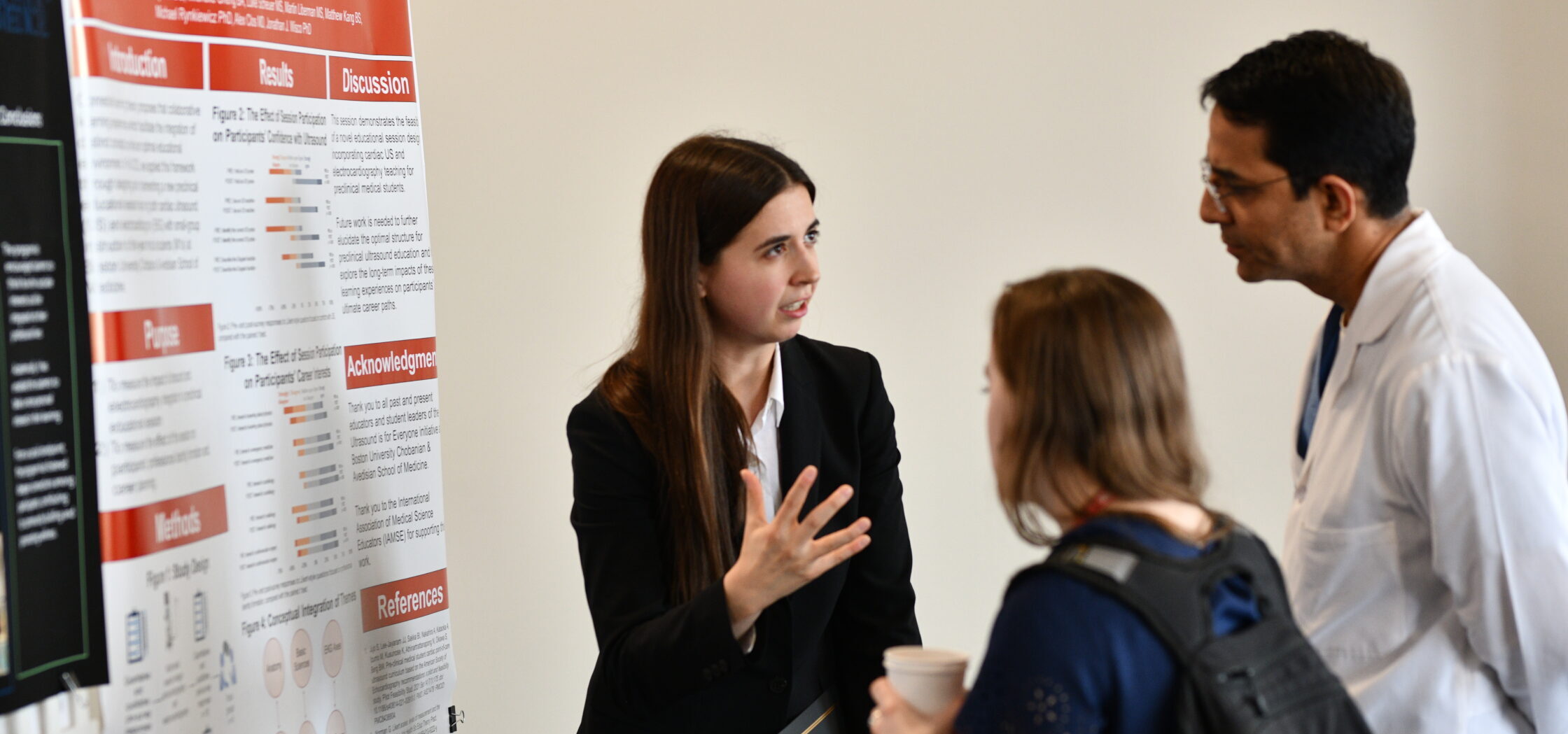
On May 23, students, faculty, staff, residents and fellows from across the Medical Campus gathered in Hiebert Lounge, and online, for the 19th annual John McCahan Medical Campus Education Conference.
“The importance of educational research and the role of educators continues to grow, and we recognize how important it is to continue to develop and study the most effective way to educate our students,” said Hee-Young Park, PhD, professor and chair of medical sciences & education and associate dean for faculty affairs, in her welcoming address to approximately 50 in person attendees and another 25 online.
Named for John McCahan, MD, who served for 30 years as the school’s associate dean for academic affairs and interim medical school dean, the conference focus on collaborative education was highlighted in a keynote address by Binyomin Abrams, PhD, on the “Evolution of a Student-Driven Collaborative Research Project to Address Equity in STEM Participation.”
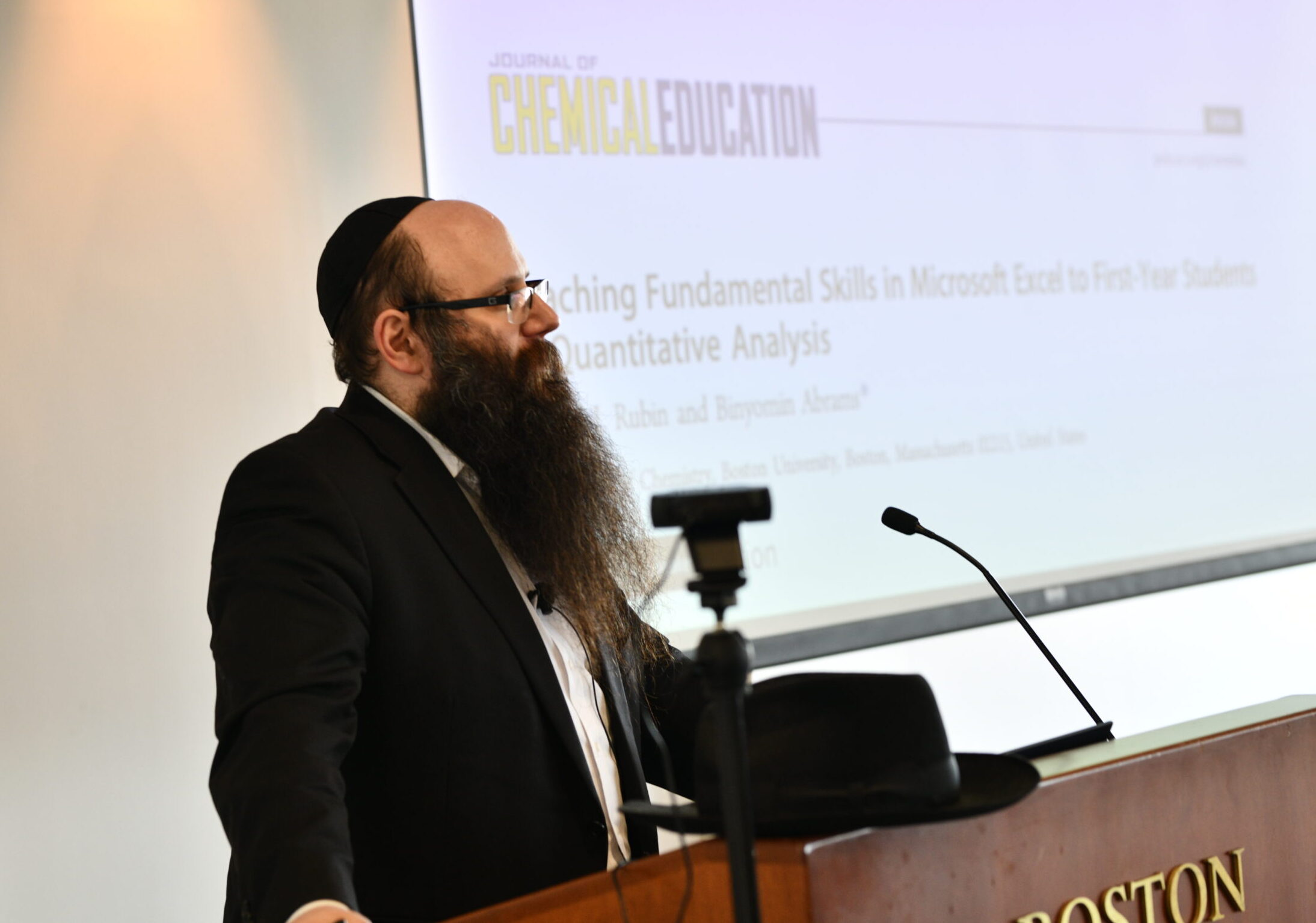
“We have to look at the learner and see what assets they bring, but at the same time, we also have to look at the circumstances behind how they’ve grown up cognitively,” said Abrams, a research associate professor in chemistry and director of the College of Arts & Sciences Program in Science Education. He is a recipient of the Metcalf Award for Excellence in Teaching, the university’s highest teaching honor, and the Templeton Prize for Excellence in Student Advising.
“You can either make chemistry hard and fun or hard and boring,” he said. “It’s going to be hard for most students, but at least we can try to make it hard and fun.”
Throughout Abrams’s teaching career, he’s looked for ways to engage students, tasking them to work on solutions to overcome barriers to learning.
“If a student comes to you to complain, or bemoan a certain truth, say ‘Great! How about you and I fix that? How about we try to change things?” said Abrams. He formed the award-winning Abrams Research Group, with student-driven research focused on “developing novel approaches to teaching introductory chemistry that excite students across disciplines.”
One pivotal event in Abrams’s teaching career occurred at a 2018 meeting when faculty said students were not retaining a basic concept known as Lewis structures that illustrate the bonds between a molecule and electrons.
“I vividly remembered teaching it,” recalled Abrams. “The issue was that students were getting to organic chemistry and it’s as if they had learned nothing.”
That one meeting spawned six years of research projects that included students as researchers looking at various ways to deliver and retain knowledge.
They found that traditional chemistry lectures weren’t working and that students retained more if they viewed videos, at their own pace outside the classroom, with students required to pause and answer questions embedded in the videos.
Working with BU’s Educational Resource Center, a free service to help students navigate academics, chemistry education teams created OrgoPrep, a six-week award-winning summer program to prepare students for organic chemistry using question embedded videos and peer mentors.
Subsequent assessments found that students participating in OrgoPrep were 98% more confident entering organic chemistry, 75% less anxious and three times less likely to have a negative outcome. That also was largely true for students from historically marginalized groups, like underrepresented minorities and low-income students, said Abrams.
“So, giving students an opportunity to increase their confidence, their self-advocacy, decrease nervousness and anxiety has downstream effects. It can really transform student lives,” he said.
Conference attendees chose from five workshops this year:
- Redesigning Courses in the School of Medicine to Promote Flipped Learning and Application in Blackboard Ultra presented by Molly Cohen-Osher, MD, MMedEd, and Priya Garg, MD.
- Deconstructing Concepts of “Professionalism” to Foster an Inclusive Medical Education Experience presented by Kimberly Zayhowski, MS, CGC, and Lillian Sosa, MS’14, CGC.
- Creating a Best Self Toolkit: Learning and Understanding Strategies Based on Positive Psychology Principles for Promoting Being Our Best Selves presented by Marisol Lopez, PhD, and Carly Block, PhD, CMPC.
- Feedback Not Evaluation: Using Reflection for an Effective Constructive Dialogue Between Students and Faculty presented by Felipe Agudelo, PhD, MPH; Jeselle Dookran, DO, MSc; Ephraim Senkyre, BSc, RGN, CGNC and Jeff Markuns, MD, EdM.
- Applying Dual Processing Theory to Feedback Conversations presented by Jonathan Wisco, PhD, and Catlin Neri, MD, MPH.
John McCahan Educator Awards
Graduate Medical Sciences Faculty Recognition Award—Robin Cotton, PhD, associate professor in the anatomy / biomedical forensics program
Henry M. Goldman Faculty Appreciation Award – Predoctoral Category—Sepideh Novid, DMD, clinical assistant professor of general dentistry
Henry M. Goldman Faculty Appreciation Award – Postdoctoral Category—Melih Motro, PhD, assistant clinical professor orthodontics & dentofacial orthopedics
Crest Oral-B P&G Professional Oral Health Excellence in Teaching the Basic Sciences Award—Yoshiyuki Mochida, PhD, DDS, clinical professor, molecular & cell biology
Chobanian & Avedisian School of Medicine Affiliate Teaching Award—Michael Slama, MD, PhD, adjunct assistant professor of neurology.
Chobanian & Avedisian School of Medicine Kaiser Permanente Silicon Valley Affiliate Teaching Award—Subbu Lakshmi, MD, assistant professor of medicine
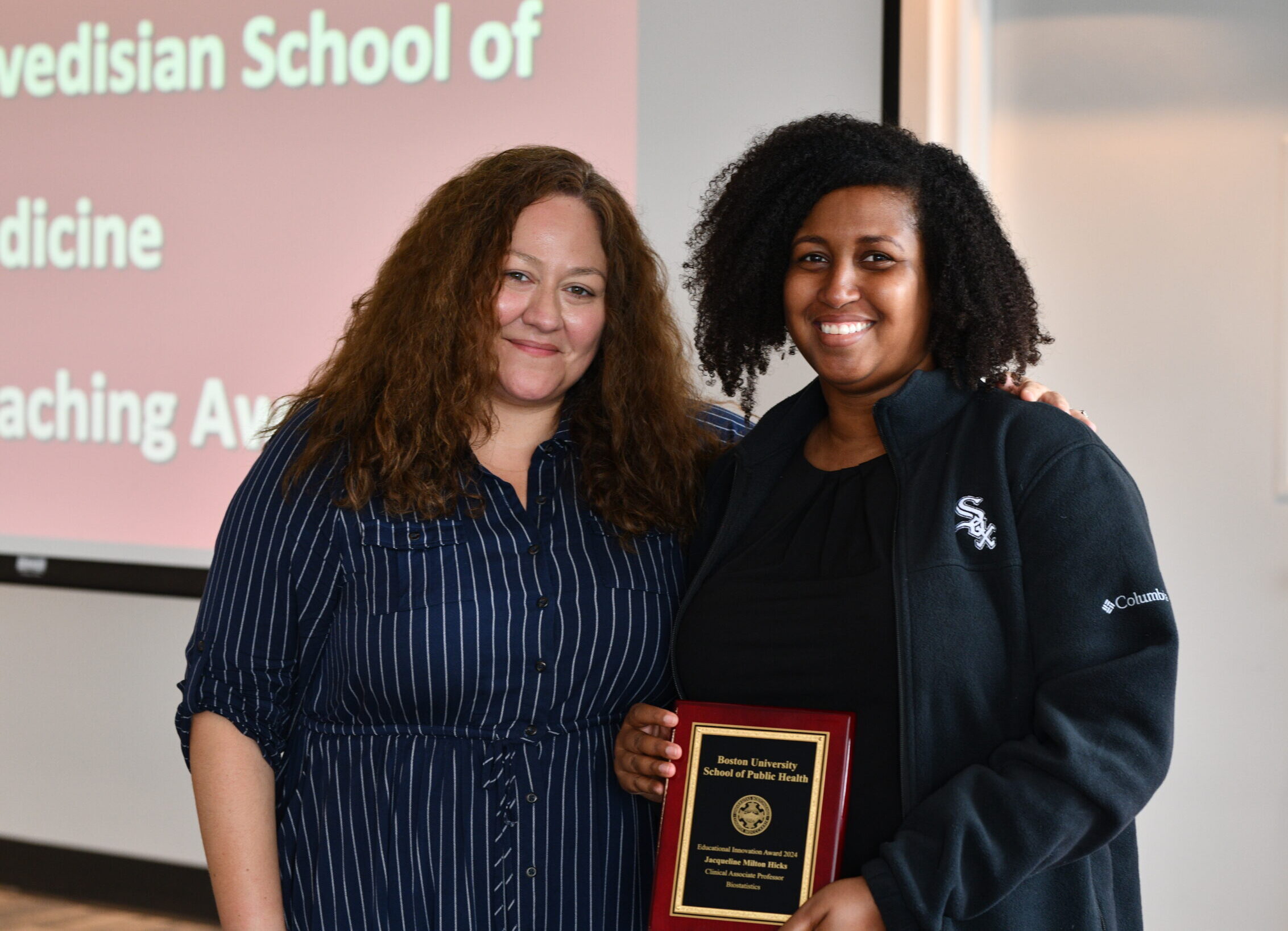
School of Public Health Educational Innovation Award—Megan Healey, MD, MPH, clinical associate professor of epidemiology, and Jacqueline Hicks, PhD, clinical associate professor of biostatistics
Abstracts Award Winners
Best Faculty & Staff Abstract – “CASPer Situational Judgement Test Score as a Predictor of Success,” John Weinstein, PhD, MS; Robert O'Brien, MPAS, MPH; Dan Tzizik, DrPH, MHS; Aliza Stern, MMSc, PA-C.
Best Resident & Fellow Abstract—"Leveraging Virtual Reality (VR) for Interprofessional Competency Development to Address Social Drivers of Health,” Joo J. Lee, MD; Stacey Zawacki, DrPH, RDN; Heather Miselis, MD, MPH; Linda Sprague Martinez, PhD; Aliza Stern, MMSc, PA-C; Rachel Thompson, MD; Maria Emilia Bianco Galindez, PhD, MSW; Pablo Buitron de la Vega, MD, MSc.
Best Student Abstract—“A Novel Preclinical Cardiac Ultrasound and Electrocardiography Program and its Impact on Professional Identity Formation,” Lindsay A. Claus, MS; Rutvin Kyada, BA; Michelle Cheng, BA; Luke Scheuer, MS; Martin Liberman, MS; Matthew Kang, BS; Michael Rynkiewicz, PhD; Alex Clos, MD; Jonathan Wisco, PhD.