Student Updates
5/31 GSDM Update from Dean Hutter
Click to learn more. Memo from Office of the Dean
Weekly Safe Return to BUMC Update: May 29
BUMC Facilities has been preparing the Medical Campus for the incremental resumption of research and the anticipated return of our students to the clinics and classroom as per CDC, Commonwealth and University guidance to provide a safe environment for all members of our community.
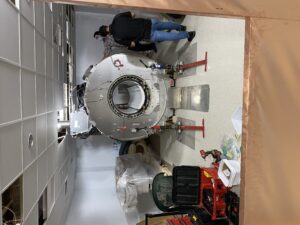 Furthermore, construction has continued on the MRI Imaging center. The 3.0 Philips (Ingenia Elition X) MRI arrived yesterday and is being installed today. Construction is nearly complete on Center for Translation Neurotrauma Imaging (CTNI) located in the X Building. The state-of-the art center also will feature new preclinical MRI (9.4 T, Bruker BioSpec) and ultrasound (Vantage 256, Verasonics) platforms. Supported by an award from the Massachusetts Life Sciences Center's Capital Program, the new imaging core facility co-directed by Stephan Anderson, MD, and Lee Goldstein, MD, PhD, aims to serve the imaging needs of the broad scientific community at BU and beyond. Kudos to John Barton for getting this important work approved to proceed during the COVID-19 shutdown. It is the first project completed at BU within the new construction guidelines.
This week and early next week the Building Coordinators and members of Environmental Health and Safety (EH&S) are touring each floor of our campus buildings to check that required adjustments are in place so that we can safely begin to approve initial ramp-up of laboratory research.
Building Coordinators include:
School of Medicine: Andrew Taylor, Associate Dean for Research, and John Barton, Executive Director, BUMC Facilities
Henry M. Goldman School of Dental Medicine: Andrew Burke, Director of Facilities and Operations
School of Public Health: Ira Lazic, Associate Dean for Administration, and Michael Koehler, Manager of facilities and Building Operations
When faculty, staff and students return to the Medical Campus, please carry your BU ID with you at all times to ensure building access and allow for extra time in getting to your destination, particularly upper building floors.
You will be expected to wear a mask while on campus, maintain a 6-foot distance from others and wash or disinfect your hands frequently.
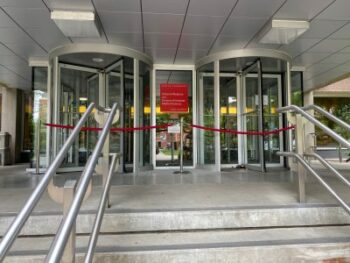
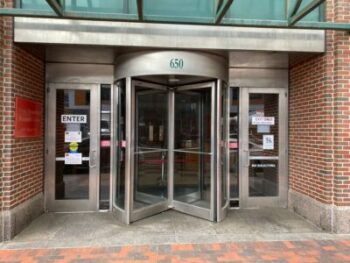
Building Entrances and Exits: All revolving doors are now roped off with designated entrance and exit signs.
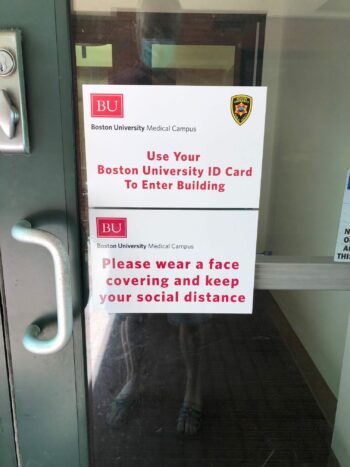
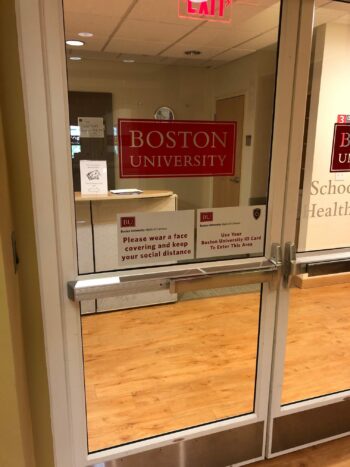
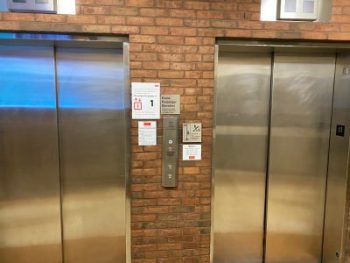
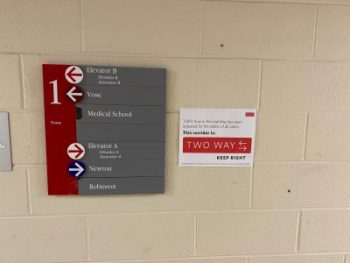
Corridors, Stairwells and Elevators: signs in corridors, stairwells and elevators now indicate one-way or two-way to facilitate appropriate physical distancing. Signs indicate how many passengers at a time may be on elevators (often just one).
Common and kitchen areas remain closed. Some furniture in common areas, such as the Instructional Building Lobby, has been removed to ensure physical distancing.
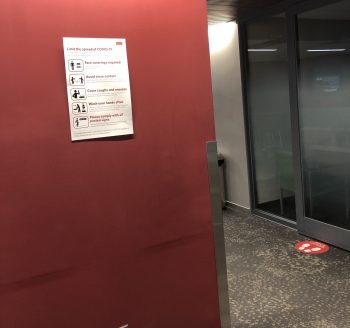
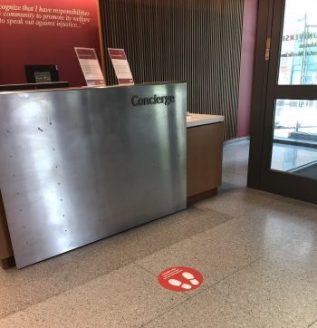
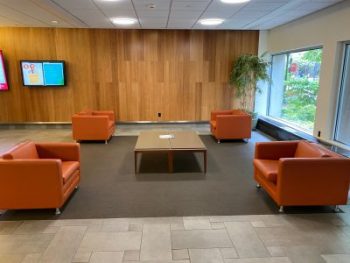
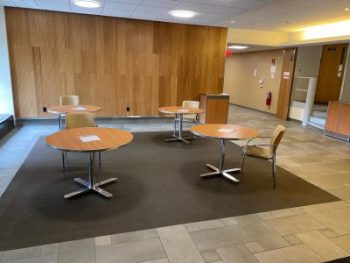
Cleaning: Campus common areas, restrooms, as well as high-touch surfaces such as elevator buttons, stairwell hand rails, door handles and push plates will be cleaned and disinfected several times a day.
We will continue to provide updates on reopening our campus each week.
BU to Set Up COVID-19 Testing for Students, Faculty, and Staff
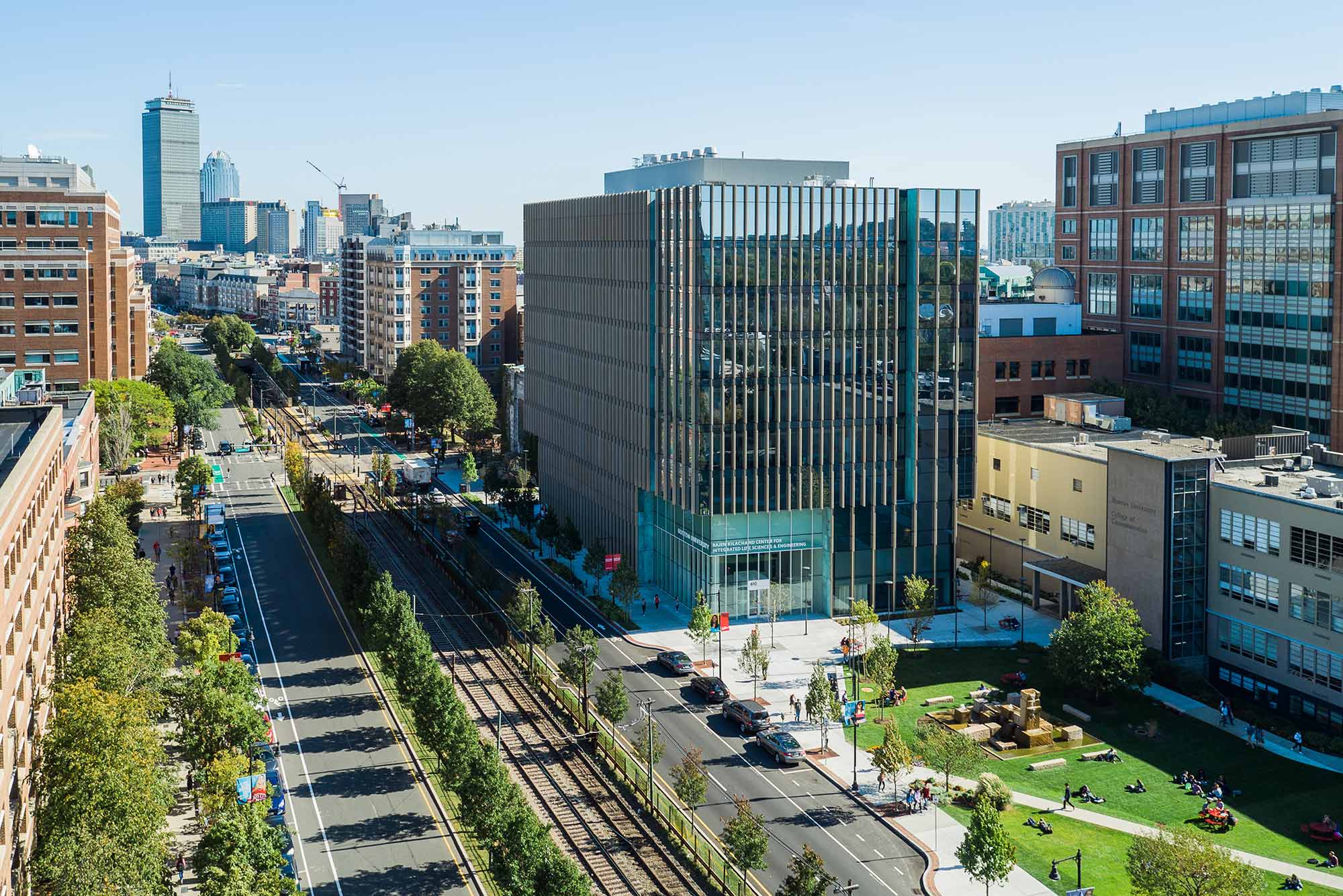
Boston University announced on Thursday that it is planning to stand up its own COVID-19 testing program this fall for faculty, staff, and students, a critical step—along with contact tracing, social distancing, hygiene, and isolation and treatment for those infected—in a multipronged approach to repopulating its residential campus.
Details are still being finalized, with a team under Gloria Waters, vice president and associate provost for research, ironing out issues from the projected costs to the volume of tests that could be performed on a campus with 40,000 people to the precise methodology for testing people.
The samples would be tested for the coronavirus at a lab inside the Rajen Kilachand Center for Integrated Life Sciences & Engineering. Newly purchased specialized robots would be used to help speed up the test result process, and results of the tests would be delivered to people electronically. Leading the testing program will be Catherine Klapperich, a College of Engineering professor of biomedical engineering and director of the BU Precision Diagnostics Center. Once it’s running, the laboratory will be run and overseen by certified clinical lab professionals and will work closely with the offices of Student Health and Occupational Health.
The decision to implement a University-wide testing program is not viewed as a stand-alone solution to resuming in-person classes after their abrupt interruption in March because of the global coronavirus pandemic, says Robert A. Brown, BU president. Rather, it’s one key step in a series of public health measures BU is taking to make all members of the University community feel comfortable, and safe, about returning to the Charles River, Fenway, and Medical campuses.
The “gold standard” of testing
“We are starting to see a vision of fall emerge,” Brown says. “The goal is to take advantage of the best public health and safety tools at our disposal in order to allow our students to get back to school. Our classroom instruction will be designed with flexibility in mind, offering both remote learning with in-person participation, so that every student, whatever their location or personal circumstance, will receive the academic support and instruction they deserve.”
BU’s testing protocols most likely will involve distributing testing kits for self-sampling and could require people to spit their saliva into a cup, or possibly swab inside their nostrils, which is called an anterior nasal swab. That decision has not been made, because officials want to be sure the most accurate and reliable methodology is used and saliva is considered less reliable than the swab. The kits would then be sealed, collected, and brought to the lab for testing. Davidson Hamer, a School of Public Health professor of global health and medicine, is chairing a multi-institution group looking to determine testing frequency and surveillance protocols on college campuses.
The coronavirus test that BU is planning to use is called RT-PCR, which Klapperich calls the “gold standard” of available tests because of its ability to detect people “who are asymptomatic and/or people early in the course of disease.” She says that RT-PCR test has the “highest sensitivity for this kind of infection.” By detecting people who have the virus, but no symptoms, the test could help contain its spread on campus through early intervention, self-isolation, and medical treatment.
During a virtual Management Town Meeting last week with other University leaders, Brown said that BU’s focus is on three key steps: testing, tracing, and isolation. “We hope to roll out a set of protocols that would lead to containment of any cases, or any symptomatic people, within our community,” he said.
Additionally, the president said, BU is adapting its housing, dining, and extracurricular activities so they still provide the residential experience people want, while using appropriate health and safety practices.
“Testing of students, faculty, and staff will provide us with real-time data about the health of the campus,” says Ann Zaia, director of BU’s Occupational Health Center. “Having this information will allow us to act quickly to control potential outbreaks by implementing quarantine, isolation, cleaning, and contact tracing protocols.”
Judy Platt, BU Student Health Services director, adds that widespread robust testing is still being implemented around the country and by having its own facility, BU can prioritize testing for members of the campus who need it. “The other elements of recovery, like physical distancing and practicing good hygiene, are also important,” Platt says, “but we still need testing to provide greater certainty that someone actually has the virus.”
(The University also has set up a COVID hotline, 617-358-4990, for anyone to call Monday through Friday from 9 am to 5 pm. And students can message a nurse 24/7 through their Patient Connect portal.)
The goal is for people to be tested, but not all with the same frequency. Students with roommates in high-density dorms, for example, might be tested more regularly. And anybody experiencing possible symptoms would always be able to visit Student Health Services, or after visiting their primary care provider, could notify the Occupational Health Center.
“We can’t do adequate risk assessment and risk reduction if we don’t know the prevalence of the virus in our community,” Klapperich says. “If we learn that particular situations are high-risk, we can alert people to increase distance and take other steps. Testing like this will take asymptomatic infections out of the chain of infection earlier, and fewer people will get sick as a result.”
“A different set of rules”
Both Brown and Klapperich say they recognize that testing is not a guarantee of safety. “But when combined with other elements of our plan, including contact tracing and treatment strategies such as self-quarantine,” Brown says, “we will have a safer campus environment that combines teaching and research with public health vigilance.”
In addition, he says, the University’s research and clinical activities will continue a gradual resumption, following the testing, tracing, and isolation practices being put in place. “Those steps make it possible for us to be more confident in our ability to reopen this fall, even though under a very different set of rules,” Brown says.
"We will have a safer campus environment that combines teaching and research with public health vigilance."
—Robert A. Brown, BU president
BU’s plan comes as colleges and universities across the country, after moving to remote teaching and learning in March, canceling commencements, and adjusting or canceling their summer programs, are now grappling with their fall strategies. The coronavirus has infected more than 1.5 million people nationwide and killed more than 95,000 Americans; Massachusetts has been one of the hardest hit states, with more than 6,000 deaths and 89,000 confirmed cases, while performing more than 400,000 COVID-19 tests.
A national issue
In a sign of just how important the issue of higher education is amid the pandemic, it became a focus of a US Senate hearing May 12 on the subject of reopening the economy, when Anthony Fauci (Hon.’18), the nation’s leading infectious disease expert, testified about the state of the virus and testing being done.
Panel chairman Senator Lamar Alexander (R-Tenn.) asked Fauci his thoughts on the possibility of 5,000 campuses nationwide reopening in the fall and bringing 20 million students back. Fauci answered that it was a “bridge too far” to expect a vaccine or treatment by the fall. He said that whether students will feel safe returning to school would largely depend on testing capabilities.
To that point, Admiral Brett Giroir, the coronavirus “testing czar” at the Department of Health and Human Services, said one possibility was if colleges could develop a strategy where every student on campus was tested at the same time. Giroir predicted that the United States could have the capacity to conduct 25 million to 30 million tests a month by the fall, allowing schools to have a strategy in place to quickly identify their confirmed COVID-19 cases and isolate the necessary people.
“The vast majority of reopening plans have testing as a core element necessary to help identify people who have the virus,” says Platt of Student Health Services. “Once we know who those people are, we can provide them with support and isolation housing recommendations. We can then trace their contacts to help limit the spread of infection.”
Also, for the first time the World Health Organization shifted its worried tone of the last few months to one of cautious optimism. The organization said that it sees “potentially positive data” in four or five treatments for the coronavirus and after more studies, might be able to make some recommendations soon. “We do have some treatments that seem to be in very early studies limiting the severity or the length of the illness,” WHO spokeswoman Margaret Harris said.
President Brown, similarly, expresses his own cautious optimism for BU’s future. “We have a lot more to do to get ready,” he says, “but we are starting to see a residential campus environment for our students, faculty, and staff this fall.”
This BU Today story was written by Doug Most.
Translational Research Hub at BU Gets $38.3 Million Renewal from NIH
BU’s Clinical and Translational Science Institute (BU CTSI) aids junior investigators and bench-to-bedside research, including new coronavirus studies

The importance of translating science rapidly from laboratory bench to clinical bedside has never been more apparent, thanks to the coronavirus pandemic and the researchers who are racing to understand and combat the virus’s spread. Now, further boosting Boston University’s ability to move research science into the real world—and provide junior investigators with startup funds and infrastructure to begin studying promising but untested new ideas—BU’s Clinical and Translational Science Institute (BU CTSI) has received $38.3 million in renewal funding at a critical moment for global health, science, and research.
The funding comes from the National Center for Advancing Translational Sciences (NCATS), part of the National Institutes of Health (NIH). BU clinical trials that could immediately benefit from the funding are those studying antibody testing, virus detection, and how COVID-19 is affecting individuals differently.
“This renewal, which will fund CTSI for another five years, comes in a timely fashion to help us invest in coronavirus-related science, epidemiology, and clinical research,” says David Center, director of BU CTSI. “We are well-poised to help fund translational research in COVID-19 because we already have an infrastructure that expedites the ability of BU’s investigators to get moving on studies and identify patients to enroll in new clinical trials. We’ve made an enormous difference getting patients into [COVID-19-related] clinical trials.”
Center, who has led BU CTSI since it launched in 2008, is co-principal investigator of the new $38.3 million grant, alongside Richard Saitz, BU School of Public Health professor and chair of community health sciences, and Megan Bair-Merritt, professor of pediatrics at BU School of Medicine and chair of the women’s leadership advisory council for the BU Medical Group. All three are also physicians at Boston Medical Center (BMC), BU’s teaching hospital.
BU CTSI supports researchers at BU and BMC, which as the city’s safety net hospital has been shouldering a lion’s share of coronavirus cases since the local number of patients began to surge in early April. BU CTSI works with teams on both BU’s Charles River and Medical Campuses, partnering with researchers to secure funding and design studies with translation in mind.
A major aspect of the BU CTSI is its support of junior investigators who have not yet received external funding for their research ideas, providing them with salary and grant money to kickstart their research to a point where federal and foundation funders are more likely to see the promise.
“Our goal is to support the careers of researchers overall, including a focus on supporting the trajectories of early career investigators,” says Bair-Merritt. Over the last 10 years, she says, the funding landscape has become more difficult.
The institute also helps research teams design and manage their statistical methods and data analyses, providing software tools to collect, organize, and store experimental data. Recently, BU CTSI consultants helped a clinical team get approval for a coronavirus-related clinical study within just 24 hours’ time.
During the current COVID-19 pandemic, BU CTSI has taken on the role of “organizer, clearing house, and facilitator for a wide range of COVID-19-related research studies that need to be started urgently,” Saitz says. “The institute is providing substantial pilot awards, helping to avoid duplication, connecting investigators with funding and each other, and helping get rapid institutional review board review.”
Through its NCATS funding, of which the institute has received more than $115 million to date, BU CTSI also acts as a connector between BU/BMC and more than 50 other translational science hubs across the country. It partners scientists with complementary expertise to move research forward. Since 2008, BU CTSI has also helped generate almost $50 million in additional funding opportunities.
Twice a year, BU CTSI runs the Career Development Award Grant Writing Course. “Early career faculty investigators learn how to write a competitive career development proposal,” Bair-Merritt says. “This is a particularly important time to support researchers as it is often the first large grant that they have written.”
In the current coronavirus crisis and across so many other health challenges, Saitz says that BU CTSI’s greatest strength lies in its service to advance “research that will actually improve health, by engaging the entire BU and BMC community of researchers and beyond.”
This story appeared in The Brink and was written by Kat J. McAlpine and Michelle Samuels.
5/20 GSDM COVID-19 Update from Dean Hutter
Click to learn more. Memo from Office of the Dean
Phased Return to Work Process

To: BUMC Faculty and Staff
From: Karen Antman, MD, BUMC Provost and BUSM Dean
Date: May 15, 2020
Re: Phased Return to Work Process
If on Monday, May 18, the Governor lifts the Massachusetts stay-at-home order and begins Phase 1 of reopening the MA economy, the University will begin a phased return to work process.
Do not return to campus unless you have been designated as an essential employee or have applied for and been approved to restart research. All others should continue to work remotely. See the story in BU Today and read the BU Back to On-Campus Work document.
Please note that BU will not return to prior standard operations until Phase 4 at some time in the future, and most likely even then, standard operations will have changed.
2020 BUMC Faculty Promotions to Professor Announced
The following nine BUMC faculty have been promoted to the rank of Professor: Megan Bair-Merritt, Suryaram Gummuluru, Andrew Henderson, Judith Linden, Thanh Nguyen, Steven Pizer, Wendy Qiu, Robert Saper, and Minh-Tam Truong. Congratulations!

Megan Bair-Merritt, MD, MED, Pediatrics, is a leader in the field of intimate partner violence and regarded research mentor in the educational field of Academic General Pediatrics. She has transformed the fellowship program in Academic General Pediatrics from a well-regarded local program to one of the top programs in the nation. Dr. Bair-Merritt has taken a leadership role in a large, integrated behavioral health project and the new Center for the Urban Child and Healthy Family at Boston Medical Center. She has been a PI or co-PI on 15 extramural awards from the Health Research and Services Administration, National Institute of Justice, the Maternal and Child Health Bureau, PCORI and National Institutes of Health, and recently was awarded a T32 from the Agency for Healthcare Research and Quality. Dr. Bair-Merritt is the author of over 70 original peer reviewed publications. Of note, her 2010 first-author publication, ‘Reducing Maternal Intimate partner violence After the Birth of a Child: A Randomized Controlled Trial of the Hawaii Healthy Start Home Visitation Program, represents one of the most substantial contributions to the field of intimate partner violence, and is one of only 30 studies to be considered as positive evidence by the United States Preventive Services Task Force in its 2018 recommendation for screening for intimate partner violence.
 Suryaram Gummuluru, PhD, MED, Microbiology, is a scientist in HIV pathogenesis. His research primarily focuses on understanding how HIV-1 is captured and disseminated by cells of the innate immune system, including dendritic cells and macrophages. His work demonstrated the role of a novel, otherwise unknown, receptor-ligand pathway in HIV capture, a finding that has been replicated by a number of other laboratories since that time. He also has demonstrated that this pathway can be exploited for therapeutic delivery to select myeloid cell types in secondary lymphoid tissues.This latter work has been patented with his collaborator, B Reinhard. More recently, he has begun to dissect the mechanisms by which HIV continues to induce a chronic inflammatory state in infected individuals, even when HIV production is fully suppressed by combinatorial antiretroviral therapies, and contributes to numerous virus-associated co-morbidities. He is a regular member of NIH study sections, including chairing special emphasis panels on AIDS and AIDS-related applications. He is a sought-after invited speaker, has been session chair at Cold Spring Harbor meetings and serves as a member of the editorial boards of Virology and Frontiers in Virology.
 Andrew Henderson, PhD, MED, Medicine/Infectious Diseases, is known for his work in HIV cell and molecular biology. His research, consistently funded since 1997, primarily focuses on cellular mechanisms of HIV latency with the overall goal of discovering potential targets that may be used to control the HIV reservoir. Highlights from his research include understanding how signals control HIV replication and latency and characterizing transcriptional networks that establish HIV latency. He has more than 60 peer-reviewed publications, delivered 65 invited seminars and participates on more than 50 scientific review panels, including serving as chair and standing member of the NIH AIDS Molecular and Cellular Biology study section. In addition to his research, Dr. Henderson has helped establish an NIH-sponsored STEM post-baccalaureate training program for underrepresented groups and established and participated in NIH Fogarty International Center training grants at Makerere University, Uganda, and the University of Liberia. He also is an associate director of the NIH-sponsored Providence/Boston Center for AIDS Research.
 Judith Linden, MD, MED, Emergency Medicine, is known for her expertise in violence against women/sexual assault and substance use disorder recognition and intervention. She was co-investigator for a National Institute of Justice-sponsored program to train medical and law students to advocate for victims of intimate partner violence (IPV), developed best practices for IPV documentation, and served for many years on the Massachusetts Medical Society Committee on Violence. She co-led a program for Israeli and Palestinian health care workers, focused on developing best practices and interventions for intimate partner violence survivors. Dr. Linden published an invited review in the New England Journal of Medicine on the acute care of sexual assault survivors, cited 106 times and downloaded internationally. She served on a committee to update CDC Guidelines for the treatment/prevention of STI in sexual assault victims, and currently serves on the AAMC's Women in Medicine and Science Intimate Partner Violence Task Force. Dr. Linden has trained physicians in brief intervention and referral for treatment in substance use disorders. She was a coinvestigator on a $1.3 million Bureau of Justice Assistance (BJA) grant to develop and evaluate a web-based curriculum to assist providers identify and treat neonatal abstinence syndrome (NAS) and opioid use disorders (OUD) among child bearing age women. More than 300 prescribers have completed the course in person or online. She is a champion of increasing diversity in academic Emergency Medicine, and currently serves on the American College of Emergency Physicians Committee on Diversity and Inclusion in Academic Promotion, as well as the AWAEM (Academy for Women in Emergency Medicine) Administrative Leadership Development Committee.
 Thanh Nguyen, MD, MED, Neurology, is a leader in the field of stroke, brain aneurysms and interventional neuroradiology. Her most impactful work is advancing endovascular treatment of brain aneurysms and reperfusion of large vessel occlusion stroke. She is the author of more than 90 peer-reviewed publications, national guidelines (American Heart Association), textbook chapters including Neurology in Clinical Practice and numerous case reports. She serves on multiple editorial boards, including Frontiers of Vascular and Interventional Neuroradiology, and Interventional Neurology. Dr. Nguyen has been an invited speaker around the world, including the American Academy of Neurology, Society of Neurointerventional Surgery and International Stroke Conference. In the Society of Vascular and Interventional Neurology (SVIN), she was elected Research Chair and was Chair of the SVIN 10th Annual Meeting held in Boston in 2017. She has received numerous awards, including a 2018 Boston Medical Center Be Exceptional Award and 2018 SVIN Distinguished Service Award. In addition, she participates in federal governmental research, specifically for the Canadian Institute of Health Research and has served on multiple data safety monitoring boards for major international studies DELTA, TESLA, ENDOLOW and TATUM. Currently, she is Principal Investigator of the CLEAR trial, a multicenter study on imaging selection for acute stroke in the late window.
 Steven Pizer, PhD, SPH, Health Law, Policy & Management, is a health economist with expertise in microeconometrics, program evaluation and policy analysis. His applied research addresses the consequences of management and policy related to access to care, health care financing, and choices of coverage and treatment. He is a leader in methodology for observational comparative effectiveness research and validation of performance metrics built from large administrative databases. Since 2003, his work has been continuously supported by NIH, CMS, AHRQ, VA, the Robert Wood Johnson Foundation, and the Laura and John Arnold Foundation. Dr. Pizer has reviewed grants for NIH, VA, PCORI (session chair), and the Health Research Board of Ireland. He serves as Deputy Editor for Medical Care, the official journal of the Medical Care Section of the American Public Health Association. He chaired the Methodology Theme for the AcademyHealth Annual Research Meeting and served as a Scientific Reviewer for the European Health Econometrics Workshop in addition to chairing or facilitating a variety of national scholarly and policy meetings for the US Department of Veterans Affairs.
 Wendy Qiu, MD, PhD, MED, Psychiatry, is known for her work studying the fundamental causation mechanisms of dementia by seeking biomarkers for the diagnoses and treatment of psychiatric illnesses. Dr. Qiu's research capitalizes on the combination of several large human studies, including the Framingham Heart Study, and the disease mouse models to identify biomarkers leading to Alzheimer’s disease (AD) and seek the drug targets for AD. She has successfully conducted a pilot clinical trial on pramlintide to repurpose the drug for AD, in which Dr. Qiu and Boston University received a patent for this work. Her research has provided a new perspective for Alzheimer's therapeutics, which currently has no disease-modifying treatment. Because of her scientific achievements, Dr. Qiu has received several NIH grants, including the NIH K24 award, NIH R21, and three NIH R01 grants. Dr. Qiu served as a Principal Investigator (Pl) on the Investigator-Initiated Research Grant from the Alzheimer's Association on setting up a challenge diagnostic test. In 2018, this project provided evidence to support the amylin challenge test for AD in humans by using the amylin analog pramlintide.
 Robert Saper, MD, MPH, MED, Family Medicine, is an investigator, scholar and leader in integrative medicine and family medicine. Dr. Saper has published nearly 60 peer-reviewed papers in high-impact journals and received numerous federal awards, including NIH R01 and large national PCORI awards. His 2017 Annals of Internal Medicine paper demonstrating non-inferiority of yoga to physical therapy for improving chronic low back pain in underserved populations was critical in moving yoga forward as an evidence-based approach for nonpharmacologic pain management. He is a sought-after presenter with almost 200 invited presentations. He is the creator of the multi-disciplinary Program for Integrative Medicine and Health Disparities, which has earned international praise for its excellence and innovation.
 Minh-Tam Truong, MD, MED, Radiation Oncology, is a head and neck radiation oncologist, known for her contributions in evaluating the Quality of Life (QOL) and improving functional outcomes of head and neck cancer patients. She has designed several QOL multicenter trials and is study co-chair on six NRG Oncology internationally conducted randomized trials and concepts conducted by the NRG Oncology Group, which is part of the National Cancer Trials Network (NCTN). She is known for her work in normal tissue toxicity and improving radiation techniques for head and neck cancer. Her research work includes functional imaging using PET/CT and CT perfusion imaging and brachial plexus contouring techniques for Intensity Modulated Radiation Therapy for head and neck cancer. She has expertise in the application of radiotherapy for benign diseases, including localized airway amyloidosis. She has served as the track chair for benign diseases for the Scientific Committee of the American Society of Radiation Oncology. She is an invited oral board examiner for the head and neck and skin section of the American Board of Radiology. She has co-authored over 65 peer-reviewed publications, several book chapters, editorials, and invited reviews and more than 100 abstract presentations at national and international meetings. She also contributes her head and neck expertise to the National Cancer Institute's Physician Data Query Editorial Board, which has more than 12 million annual internet visits, of which 61 percent are international.
BU Plans Fall In-Person/Remote Hybrid Teaching of 44 Graduate and Professional Programs
University leaders have outlined a plan for the fall semester that will move 44 graduate and professional programs to a new format that will simultaneously offer classes on campus for students who can be in classrooms, and via various technologies to students both on or off campus.
The University plans to expand the current list of graduate and professional programs slated for transition in the coming weeks, and students enrolled in affected programs will be notified as those decisions are made.
The new “hybrid/simultaneous” approach is designed to accommodate safety requirements that may be imposed by public health authorities to control the spread of COVID-19 and to provide flexibility for those students who are unable to attend classroom sessions. Learn more
4/24 BUSM Update

To: BUSM Faculty, Staff, Students and Alumni
From: Karen Antman, MD, BUMC Provost and BUSM Dean
Date: April 24, 2020
Re: 4/24 Status of BUSM
As we complete our sixth week of virtual education, COVID-19 specific research and mandated travel restrictions, I wanted to provide an update on school operations. Many thanks to our faculty, staff and students for their collaboration and teamwork in continuing our mission of education, research and caring for our patients, especially EdMedia and BUMC IS&T in support of our teaching activities, Facilities for their work in keeping our buildings clean and disinfected, and Public Safety for keeping our campus safe.
Our faculty will detail their work in the diagnosis and treatment of COVID-19 at our second Town Hall and we will describe the current status of our recovery plans on Friday, May 1, from Noon-1:30 p.m. Register here.
The Communications Office will be sending out a survey on our communications activities later today. Please take a moment to complete it so that we can assess whether you are drowning in too much information or need more.
Faculty Affairs
Faculty Affairs (FA) continues to process faculty appointments and promotions electronically. A virtual Faculty Appointments and Promotions (FAP) meeting was held on April 2.
FA will host a virtual CV boot camp and continue to offer to individual CV review by the FAP committee members.
To keep our community connected, FA has been organizing virtual Town Halls, the next of which is May 1, to answer questions that faculty, staff and students might have relating to the pandemic.
Research
The Medical School’s research enterprise has ramped-down in response to COVID-19 physical-distancing regulations, and many laboratories have contributed PPE to the hospital and reagents to a collaborative program that developed a clinical test to identify BMC patients with SARS-CoV2.
At least 27 research programs have pivoted to applying for COVID-19 specific grant awards and the University and School are now planning for how to reopen laboratories incrementally when allowed.
MD Degree Program
Students helped design the virtual (but joyful!) celebration on March 20 of a successful Match Day, though very different from what had been planned. Congratulations to the Class of 2020!
On April 17, 190 fourth-year MD students graduated one month early in a virtual ceremony with very much appreciated participation of Governor. Baker, Mayor Walsh, Kate Walsh, Drs. Schneider and Davidoff. Congratulations to all of them as they start the next phase of their medical education as physicians.
Student Affairs
Preparation for Match 2021 is underway, with virtual meetings to discuss residency application strategies, Weekly town hall meetings update students on Step 1 and 2 timing, potential for delayed opening of ERAS, and changes in the interview cycle. Student Affairs is hosting regular wellness check-ins for students and virtual wellness events, daily open office hours and one-on-one meetings.
Almost 500 medical students have signed up to participate in numerous volunteer activities providing childcare to BMC staff and faculty, delivering meals, tracing contacts, calling patients for follow up, distributing BP cuffs to pregnant patients, collecting and distributing PPE to homeless shelters, and more.
Medical Education
The Academy of Medical Educators (AME), a cohort of faculty who teach and advise a group of medical students over four years, have been critical as we transitioned Doctoring, an all small-group course, to a virtual-small-group course with Zoom. The faculty were able to maintain discussion groups and interactive role play despite the distance.
Clinical material for third- and fourth-year students has been delivered through virtual clerkships and a new Transition to Fourth-Year elective.
The first virtual Objective Structured Clinical Examination (OSCE) was administered to assess student communication skills and clinical reasoning skills using standardized patients. With innovative adaptation from the clinical skills center directors and coordinators, faculty directly observed students' clinical skills and provided feedback, despite the distance between the faculty, standardized patient and student.
MD Admissions
The Medical School admissions cycle for Fall 2020 is drawing to a close. Admitted students must make a final decision about where they will attend medical school by April 30, after which we will have a clearer sense of the composition of our class.
More than 150 accepted students participated in the April 4 virtual Open House, and current students have reached out to accepted students, particularly those students from groups under represented in medicine (URM) with an excellent response.
We have completed the selection process for our MMEDIC, EMSSP, SMED and linkage students.
In the coming weeks Admissions will begin to recruit faculty for next year's admissions committee and hold training sessions for fall 2021.
Some modifications to accommodate the COVID-19 pandemic may include delaying interviews, modifying the interview process, or changing the structure of visit days and interviews.
Graduate Medical Sciences
Faculty and students have adapted to remote learning approaches for classes and exams, although exam grades have been posted somewhat later because of remote proctoring program issues.
GMS is planning a May celebration for Master’s and PhDs programs.
Admissions (as of April 17) compared to this time last year:
- Master’s programs: 232 mutual accepts (up 6%).
- PhD programs: 45 mutual accepts in 5 programs (up 2%)
- Master’s program directors will communicate with accepted students to engage them with their programs.
- A virtual Accepted Student Day is planned for early June.
Student Financial Services (SFS)
SFS hosted a financial aid session for ~100 students for during the April 4 MD Open House followed by individual counseling appointments on April 6. Students told SFS personnel that BU was the only medical school offering individualized counseling.
SFS also provided both financial aid and housing presentations online for accepted GMS students and have started awarding federal financial aid to GMS accepted students.
Exit Counseling sessions were held with our graduating medical students that included loan repayment strategies from the AAMC and loan relief options offered by the Federal Government as part of the CARES Act. These students still need to complete online exit counseling.
SFS also is working with all BUMC students who are experiencing COVID-19 related financial hardship. Please visit the COVID-19 web page for more information.
BUSM Financial Affairs/Operations
Our current estimate is that BUSM operating revenues from tuition and grants will cover our expenses for Fiscal Year 2020 (July 1, 2019-June 30, 2020). However, COVID-19's financial impact for Fiscal Year 2021 (July 1, 2020-June 30, 2021) is uncertain. Current MD and Graduate enrollment projections are similar to last year, but requires monitoring. Grant funding could drop if faculty are unable to collect research data to secure additional research grants.
Given the uncertainty, we must control costs by adhering to the budgetary constraints outlined by President Brown in his letter including a staff hiring freeze and a hold on non-essential renovations. We hope that all units will work with the Dean’s Office and Budget Office to identify discretionary spending reductions to preserve funds for the remainder of FY2020 and FY2021.
4/17 GSDM COVID-19 Update from Dean Hutter
Click to learn more. Memo from Office of the Dean