Student Updates
GSDM DAB Member Sinkford Receives AAMC Herbert W. Nickens Award
American Dental Education Association (ADEA) Associate Executive Director and Director of the ADEA Center for Equity and Diversity Dr. Jeanne C. Sinkford received the 2009 Herbert W. Nickens Award on November 7 at the Association of American Medical College's (AAMC) annual meeting.
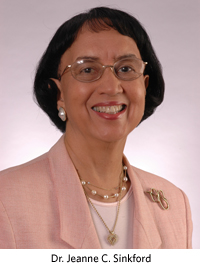
The Herbert W. Nickens Award honors an individual who has made outstanding contributions to promoting justice in medical education and health care and is named for a former vice president of the AAMC. Dr. Sinkford was selected for this prestigious award based on her contributions to the dental and philanthropic communities. Through her ability to leverage human talent and financial resources she has helped realize ADEA ’s mission of delivering oral health care for the improvement of the health of the public.
As an Associate Executive Director and Director of the ADEA Center for Equity and Diversity, her work has provided numerous opportunities for women and underrepresented minorities in dental education through innovative faculty development and pipeline programs that include the ADEA/W.K. Kellogg Access to Dental Careers Program and the ADEA/W.K. Kellogg Minority Dental Faculty Development Program. She is also the creator of the ADEA International Women’s Leadership Conference that will be held for the fourth time in 2010 in Salvador, Brazil.
“Dr. Sinkford is a trailblazer in the health care community who uses her natural ability to see the big picture to enhance lives," said ADEA President Ronald J. Hunt, DDS in a statement released by ADEA. "Her work has improved the access to oral health care for many, created new paths for students and educators in dental education, and continues to demonstrate the important connection between oral and systemic health. ADEA congratulates her on receiving this prestigious award.”
Dr. Sinkford has been a member of the Boston University Henry M. Goldman School of Dental Medicine (GSDM) Dean's Advisory Board since it's creation in 2008. Prior to that she was a member of the GSDM Board of Visitors from 1981 to 2008.
"I am honored to have such an accomplished individual on my advisory board," said Dean Jeffrey Hutter, adding, "Dr. Sinkford brings a unique and much needed perspective to the GSDM Dean's Advisory Board."
Dr. Sinkford also has the distinction of being the first female Dean of a United States dental school. She was appointed Dean at Howard University College of Dentistry (HUCD) in 1975 after serving as an Associate Professor and Associate Dean. She had been a member of the faculty since 1958, when she graduated first in her class from HUCD. She was awarded a MA in 1962 and a PhD in 1963 from Northwestern University and completed a residency in Pedodontics in 1964 at the Children’s National Medical Center in Washington, D.C.
Wendy Mariner Named Utley Professor in Health Law
Wendy K. Mariner, professor of health law, bioethics and human rights at the Boston University School of Public Health has been appointed Edward R. Utley Professor in Health Law at Boston University School of Public Health (BUSPH).

Mariner's nomination to the endowed professorship by BUSPH Dean Robert Meenan was approved by University Provost David Campbell and BU President Robert Brown. She will succeed Professor George J. Annas, chairman of the Department of Health Law, Bioethics and Human Rights, who vacated the Utley chair in May when he was named a William Fairfield Warren Distinguished Professor at Boston University. Annas was one of the first two BU faculty members appointed to the Warren Professorship.
"Wendy is superbly qualified for the Utley Professorship based on her outstanding accomplishments and her notable contributions to scholarship, teaching, and service in the field of health law," said Dean Meenan. "It is gratifying as dean to have a faculty member of Wendy's caliber ready to fill the Utley Professorship that was held so ably since 1982 by George Annas. Not only has she demonstrated the excellence required for appointment to a named professorship at Boston University, her work is exactly suited to the goals of the Utley Chair," said Meenan. The chair was established by Edward R. Utley as a "memorial" to his own career in the field of legal medicine (health law).
"It is quite an honor, and a lovely surprise, even to be nominated," said Mariner. "The Utley Professorship represents the highest aspirations in health law scholarship. Professor Annas more than fulfilled those aspirations. It will be a challenge and a joy to pursue further research in this exciting field."
Mariner is well known and highly regarded across the University. She holds secondary academic appointments as professor of law at the School of Law and as professor of socio-medical sciences and community medicine at the School of Medicine. She directs the JD-MPH dual degree program and co-directs the Regulatory Knowledge and Research Ethics section of the BU Clinical and Translational Science Institute. She currently serves as Chair of the BU Faculty Council and, ex officio, as a BU trustee.
Mariner's scholarship explores legal principles governing social responsibility and personal responsibility for health and links health law with human rights theory. Her research bridges constitutional, insurance, privacy and tort law to assess when justice requires individual responsibility for health and when it requires societal measures to prevent harm and provide health care. Her early work analyzed no-fault compensation programs around the world to identify a mechanism for providing care to disabled children, and influenced the development of the National Vaccine Injury Compensation Program.
Professor Mariner's recent research concentrates on developing new conceptions of insurance as a mechanism for financing medical care, distributing risk, and changing risk behavior. This work builds on her early insight into the effect of the Employee Retirement Income Security Act (ERISA) on health insurance design and the legal structure for regulating insurance. Faculty and legislators from around the country frequently seek her expertise on ERISA and health insurance reform legislation as a result of her influential analyses.
Her health law research has been published in medical and health policy, as well as law journals. Her textbook, Public Health Law, coauthored with leading scholars George Annas, Boston University School of Public Health; Ken Wing, professor of law at the Seattle University School of Law; and the late Daniel Strouse, a professor of law at the Sandra Day O'Connor College of Law at Arizona State University, is the standard text in schools of law and public health.
Mariner's teaching excellence has been recognized by her peers across the country. In 2008, she received the Jay Healey Distinguished Health Law Teacher Award from the American Society of Law, Medicine & Ethics, which includes in its membership virtually all health law faculty in the United States.
BUSPH-based Prevention Research Center Receives Five-Year Grant to Continue Work
The Partners in Health and Housing Prevention Research Center (PHH-PRC) -- a partnership between the BU School of Public Health, the Boston Housing Authority, the Boston Public Health Commission, and the Community Committee for Health Promotion -- has been awarded a five-year grant that will allow it to continue innovative programs to improve the health of residents of Boston's public housing.

The five-year, $3.5 million award from the Centers for Disease Control and Prevention (CDC) will allow the center "to continue building on our collaboration and improving the health of public housing residents," said Dr. Robert Horsburgh, director of the center and chair and professor of the Department of Epidemiology at BUSPH. "The success of this application reflects the strong partnership and dedicated participation of all four of our partner organizations."
The center, established in 2001, is one of 35 prevention research centers nationwide that has received funding from the CDC for 2010-2014 for programs aimed at reducing the risk of chronic illnesses in various communities. The PHH-PRC is the only center that focuses exclusively on public housing, engaging residents in activities and research designed to improve their health and reduce health disparities.
The Community Committee for Health Promotion, one of the center's partners, is composed of public housing residents and community representatives.
Horsburgh said the continued funding will allow the center to move forward with several initiatives, including a study to determine how Resident Health Advocates, who are trained through the center, can best ensure that their fellow public housing residents access care for diseases found during health screenings or enroll in prevention programs for health risks. Dr. Tracy Battaglia, an assistant professor of epidemiology at BUSPH and assistant professor of medicine at the BU School of Medicine, will lead that study. Deborah Bowen, chair and professor of community health sciences at BUSPH, has joined the center as a senior advisor and will assist with the study.
The center recently completed research showing that Resident Health Advocates (RHAs) significantly increased the participation of public housing residents in health screenings. Residents of several Boston public housing developments received health screenings via a mobile van, in an effort to remove transportation and financial barriers to accessing preventive health services.
The center trains a group of residents annually to become RHAs. Graduates are hired as paid interns by the Housing Authority and provide fellow residents with information about local health services and encourage them to access those services.
In addition to expanding the RHA program, the center also plans to continue work on a project called Knowledge is Power (KIP), which trains public housing residents to organize health-education workshops at their developments.
Other projects underway in collaboration with the center include a smoking cessation program for residents, and a study of dental sealants to help prevent cavities in children.
More information on the PHH-PRC is available on the center's website.
Alani Named Chief and Chair of Dermatology
Rhoda M. Alani, MD, has been appointed chair of the Department of Dermatology, Herbert Mescon Chair and professor of dermatology at Boston University School of Medicine (BUSM) and chief of the Department of Dermatology at Boston Medical Center (BMC). She will assume these positions in January 2010.
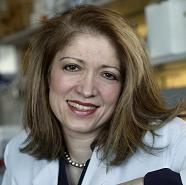
Prior to these appointments, Alani was a faculty member in Oncology, Dermatology, and Molecular Biology and Genetics at Johns Hopkins University School of Medicine, where she currently serves as Director of The Laboratory of Cutaneous Oncology in the Sidney Kimmel Cancer Center. Alani's research focus is in understanding the molecular basis of melanoma development and progression with the aim of translating her laboratory findings to better prevention, detection, diagnosis, and treatment of melanoma. Alani's clinical interests are focused on pigmented lesions and melanoma and she is currently Director of the Pigmented Lesion and Melanoma Clinic in Dermatology at Johns Hopkins. She is also actively involved in teaching medical students, graduate students, and dermatology residents and has served as Director of the Dermatology Residency Training Program at Johns Hopkins.
“Dr. Alani is an outstanding academician who has been a leader in research and education, and a outstanding addition to our faculty leadership,” said BUSM Dean Karen Antman, MD, provost of the Boston University Medical Campus.
“Dr. Alani brings a wealth of clinical experience to this role, which will be of great benefit to our patients. We look forward to the leadership she will provide to the department of dermatology and the hospital,” said Elaine Ullian, BMC president and CEO.
Alani received her medical degree from the University of Michigan Medical School, where she received the Graduation with Distinction in Research Award. She completed an internship in internal medicine at Yale University School of Medicine, and a residency in dermatology at Harvard Medical School. From 1995 to1997 Alani served as an instructor in dermatology at Harvard Medical School and from 1997 to 1999 as an instructor in dermatology at Memorial Sloan-Kettering Cancer Center in New York City.
She was elected to the American Society for Clinical Investigation (ASCI) in 2005 and currently serves as the Johns Hopkins University School of Medicine representative to this organization. She is also a member of the American Academy of Dermatology, the American Association for the Advancement of Science, the Society for Investigative Dermatology and a Founding member of the Society for Melanoma Research.
GSDM on Twitter
Boston University Henry M. Goldman School of Dental Medicine (GSDM) is now on Twitter. Follow us @budental.
For those of you without a Twitter account you can view budental tweets at our public page, http://twitter.com/budental, without signing up.
We also want to know if you use Twitter. Please answer our quick poll on the GSDM Facebook page.
MBTA Allows Boston's School Children to Be Heavily Exposed to Alcohol Advertising, SPH Study Finds
While other cities have adopted bans on alcohol advertising on public transit systems, Boston's MBTA is allowing youths to be exposed heavily to such ads, some of which are designed to entice young people to drink, a new study by a team of Boston University School of Public Health researchers shows.

The study, published online in the November supplement of the American Journal of Public Health, reveals that on a typical weekday, the alcohol advertising exposure among Boston youths, ages 11-18, via MBTA trains is 5.5 times greater than the exposure among this age group that alcohol companies would achieve through a televised Super Bowl commercial. Approximately 9,615 Boston Public School commuters use the transit system daily.
The study, led by Michael Siegel, professor of community health sciences at BUSPH, notes that cities such as Chicago, Los Angeles, Philadelphia, San Francisco and Washington D.C. have policies that prohibit alcohol ads on public transit systems. Previous studies have shown that alcohol advertising is linked to youth alcohol consumption and that it undermines the alcohol-prevention messages learned in school. The Center on Alcohol Marketing and Youth found that people aged 12 to 20 are 96 more times likely to be exposed to an advertisement that promotes alcohol, rather than one that discourages underage drinking.
Cigarette advertisements and ads containing violence and nudity are prohibited by the state-funded MBTA because they are deemed inappropriate.
"By allowing alcohol advertising on the T, the state is not only allowing alcohol companies to bombard our kids with enticing advertisements, it is also allowing these companies to successfully recruit new drinkers among underage youths in the Commonwealth," Siegel said.
A proposal introduced in January in the Massachusetts House of Representatives by Rep. Martin J. Walsh of the 13th District would ban alcohol advertising on any property owned or operated by the Commonwealth, including the MBTA. Siegel testified before the Joint Committee on State Administration and Regulatory Oversight in September on the importance of legislators acting on this bill.
In the published study, a team of researchers recorded the number of, and nature of, alcohol advertisements in every car of four consecutive trains on each of the four MBTA subway lines: the red, green, orange, and blue lines. The same survey was conducted one month later. In total, the group sampled 142 subway cars, which represents 29 percent of the 246 cars in operation on the four transit lines.
The researchers found a total of 267 alcohol advertisements on the 142 subway cars, or an average of about 2 alcohol ads per car. Based on MBTA ridership statistics, that translates into a total of 1.2 million advertising exposures on a typical weekday. Given the number of Boston Public School students who ride the T, the research team estimated that there are 18,000 advertising exposures on a typical weekday among those youths.
"Parents do not stand a chance in protecting their children against this powerful advertisement campaign designed by alcohol companies and enabled by the state of Massachusetts," Siegel said.
Besides Siegel, researchers on the study included BU School of Public Health students Justin Nyborn, Siphannay Nhean, and Kimber Wukitsch.
Submitted by Lisa Chedekel
chedekel@bu.edu
Nov. 18 Public Health Forum: Promising Approaches to Prevention
On Wednesday, November 18, join Debra Furr-Holden, assistant professor in the Mental Health Department at Johns Hopkins Bloomberg School of Public Health, as she presents a talk on "Promising Environmental Approaches to Violence, Alcohol, and Other Drug Prevention."

Her presentation will look at the geographic distribution and determinants of violence, alcohol and other drug problems, and cover new environmental assessment and analytic methods that integrate geographic information system technology with biobehavioral research. Implications for policy and environmental preventive intervention strategies will also be discussed.
Furr-Holden is an epidemiologist by training with expertise in drug and alcohol dependence epidemiology, psychiatric epidemiology, prevention science and psychosocial measurement. In the last 5 years her work has focused largely on developing environmental strategies for violence, alcohol, tobacco and other drug prevention in high-risk urban settings. Furr-Holden also initiated the Drug Investigations, Violence and Environmental Studies Laboratory (The DIVE Studies Lab) in Baltimore, Maryland, which seeks to provide contextual insight on violence and alcohol and other drug exposure among Baltimore city youth.
The BUSPH Public Health Forum is a regular series presented by the School of Public Health. It is free and open to the public
BUSPH Public Health Forum: "Promising Environmental Approaches to Violence, Alcohol, and Other Drug Prevention"
- Speakers: Debra Furr-Holden, Johns Hopkins Bloomberg School of Public Health
- Date: November 18, 2009
- Time: 12:00 p.m. – 1:00 p.m.
- Location: BUSM Instructional Building, Room L-112
For more information, contact Lizzy Romero, eromero@bu.edu
Students are also welcome to join Dr. Furr-Holden for an informal meet and greet session from 1:00 p.m. - 1:45 p.m. in room R110.
BU ASDA Helps Students Prepare for Success
On November 6, the Boston University chapter of the American Student Dental Association (ASDA) hosted a Success seminar given by Dr. Robert Madden titled, "Practice Management for Seniors." Dr. Madden is an experienced family dentist with a DDS degree from the University of Nebraska College of Dentistry and a MBA from the University of Colorado. He works in private practice in Littleton, Colorado and serves as a consultant to the American Dental Association's (ADA) Council on Private Practice and has been a Success Speaker since 1991. The seminar was sponsored by Patterson Dental and the Professional Protector Plan for Dentists.
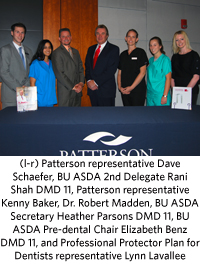
The goal of the seminar was for pre-doctoral students in their last year of Dental School to learn about the practice management aspects of dentistry and ethical aspects of dental practice. Topics included practice location and acquisition/start-up; practice financing; practice marketing; recruiting and leading a successful dental team; production, collection, and expense management; dental reimbursement; financial management, taxes, and avoiding embezzlement; maintaining records, privacy, and security; patient expectations and dentist responsibility; ethics in real life situations new dentists face; and ADA resources for practice success.
This is the first of two seminars for DMD IV and AS II students. The second will cover the same information and will be held on Friday, February 26 from 8:00 a.m. to 1:00 p.m. in the 670 Albany Street Auditorium. Attendance is mandatory and each student has been assigned a specific date. A high-speed hand piece will be raffled off to one lucky student in attendance.
"We think these seminars are a great opportunity for students to gain a unique perspective into organized dentistry and a fresh look at dentistry through the eyes of a private practitioner who is committed to the community," said BU ASDA Secretary Heather Parsons DMD 11.
Genome Science Institute Announces Award Winners
The Genome Science Institute held its inaugural Research Symposium, an interdisciplinary research symposium that explores genetic and genomic science, in the Boston University Medical Campus Hiebert Lounge on Thursday, Oct. 8. Sixty-three abstracts were submitted by students, post-doctoral fellows, and faculty from Institutions throughout the Boston area.
Prizes were awarded in undergraduate, graduate and postdoctoral fellow categories. Six abstracts were chosen for oral distinction and the first authors were invited to give an oral presentation at the symposium. Seven researchers were awarded outstanding poster prizes. Winners of both oral distinction and poster prizes received an award of $100.
Award Winners for Oral Distinction:
Graduate Level
Adam Gower, "openSESAME: A new tool for discovering biologically relevant connections in public gene expression data." Faculty advisors: Marc Lenburg, PhD., and Avrum Spira, MD., PhD., BUSM.
Paul Romesser, "Cancer biomarker discovery by genome-wide transcriptome vs. proteome profiling: problems, advantages, limitations and insights." Faculty advisor: Gerald Denis, PhD., BUSM.
Undergraduate Level
Vishal Patel, BU, Biology, "Understanding the Molecular Nature of the Loss of Function Mutation, THREAD 1." Faculty Advisor: Kim McCall, PhD., BU.
Arun Rai, BUSM, Biochemistry, "GM-CSF is a novel target of p53-related p63." Faculty Advisor: Jim Xiao, PhD., BUSM.
Post-Doctoral Level
Hamid M Abdolmaleky, BUSM, Genetics Program, "Epigenetic dysregulation of serotonin receptors type-2 (5HTR2A) in post-mortem brains of patients with schizophrenia and bipolar disorder." Faculty advisor: Sam Thiagalingam, PhD., BUSM.
Jean-Bosco Tagne, BUSM, Pulmonary Center, "Genome-wide Identification of Titf1 Target Genes in the Developing Lung." Faculty advisor: Maria Ramirez, PhD., BUSM.
Outstanding Poster Prizes:
Graduate
Alexandra Silveira, Massachusetts Eye and Ear Infirmary, Harvard Medical School, "Haplotypes Within The Vitamin D Metabolism Gene CYP24A1 Are Associated With the Development Neovascular AMD." Faculty Advisor: Margaret DeAngelis, MD., PhD., Harvard Medical School.
Ari Friedland, BUSM, Biomedical Engineering, "A Synthetic Gene Network that Counts." Faculty Advisor: James Collins, PhD., BUSM.
Jenny Loew, BUSM, Medical Nutrition Program, Cancer Research Center, "CpG Demethylation of ARHI Gene and Synergistic Inhibition of Ovary and Breast Cancer Cells by HDAC Inhibitors and Natural Isoflavonoid Product Genistein." Faculty Advisor: Sibaji Sarkar, PhD., BUSM.
Joseph Gerrein, BU, Bioinformatics Program, "Deep-sequencing identifies smoking and lung-cancer associated changes to the large airway transcriptome." Faculty Advisor: Avrum Spira, MD., PhD., BUSM.
Josh Campbell, BUSM, Pulmonomics, "Changes in gene expression with progression of emphysematous destruction in COPD." Faculty Advisor: Avrum Spira, MD., PhD., BUSM.
Postdoc
Alexia Eliades, BUSM, Biochemistry, "New roles for cyclin E in megakaryocyte polyploidization." Faculty Advisor: Katya Ravid, PhD., BUSM.
Alex Ensminger, Tufts University, Molecular Biology and Microbiology, "From broad host range to isogenic prison: genotypic plasticity in experimentally evolved strains of Legionella." Faculty Advisor: Ralph Isberg, PhD., Tufts University.
Kelly Harrington, VA Boston, "Reexamining the Associations of DRD4 and 5-HTT with ADHD Using an Alternative Comorbid ADHD Phenotype." Faculty advisor: Irwin Waldman, PhD. Emory University.
Widespread Chemicals May Affect Cholesterol, Study Finds
A study by BU School of Public Health researchers, published ahead of print in the journal Environmental Health Perspectives, suggests that polyfluoroalkyl chemicals (PFCs) may affect serum cholesterol levels in people.
The authors analyzed the relationship between serum concentrations of four PFCs-perfluorooctanoic acid (PFOA), perfluorononanoic acid (PFNA), perfluorooctane sulfonic acid (PFOS) and perfluorohexane sulfonic acid (PFHxS)-and measures of cholesterol, body size and insulin resistance. Participants with PFOS, PFOA and PFNA levels in the top 25 percent of the study population had higher total and non-HDL cholesterol (which is primarily LDL, or "bad" cholesterol) than participants whose PFOS, PFOA, PFNA concentrations were in the lowest 25 percent.
Most previous studies of people with high PFC exposures have also reported positive associations, but the current study suggests that much lower PFC exposures experienced by typical U.S. adults may also affect cholesterol levels. The association was most striking for PFNA, with a 13.9 mg/dL difference in estimated serum cholesterol levels between people with the highest and lowest serum PFNA concentrations. In contrast, people with the highest levels of PFHxS, a PFC that has not been extensively studied, had lower total and non-HDL cholesterol than those with lower PFHxS concentrations.
The study found little evidence of an association between PFCs and body size or insulin resistance.
"Though these results are based on cross-sectional data and are exploratory, they are consistent with much of the human epidemiologic literature and indicate that PFCs may be exerting an effect on cholesterol at environmentally relevant exposures," wrote first author Jessica Nelson, a doctoral candidate in environmental health, and colleagues. "Our study affirms the importance of investigating PFCs other than PFOS and PFOA, particularly as industrial uses of PFOS and PFOA decline and other PFCs are substituted."
Other authors included Elizabeth Hatch, associate professor of epidemiology, and Tom Webster, associate professor of environmental health. This study was partially supported by a grant from the National Institute of Environmental Health Sciences.
The full study is available on the Environmental Health Perspectives website.
Submitted by Lisa Chedekel