Student Updates
New Book Details DASH Diet: Blood pressure plan effective in weight loss, too
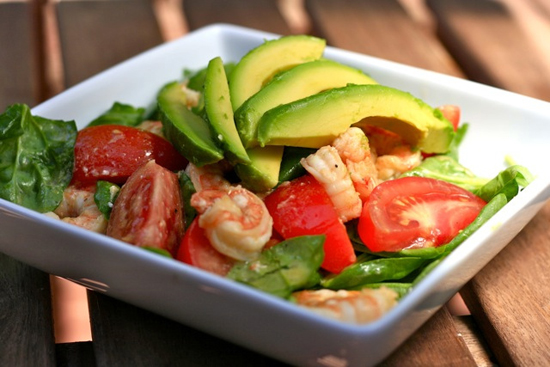
Can the movie version be far behind? The DASH diet, developed in the 1990s and lauded last year as the best overall weight-reduction plan by U.S. News & World Report, is now in book form.
Just published, The DASH Diet for Weight Loss (Free Press, 2012) could add to the arsenal of books aimed at the current obesity upsurge, says coauthor Thomas Moore, a School of Medicine professor, associate provost of the Medical Campus, and leader of the multi–medical center team that developed DASH.
Moore was a researcher at Brigham and Women’s Hospital when he helped devise DASH. Originally, the team conceived the diet as a way to control high blood pressure, not weight. But several studies confirmed its effectiveness with weight control, among them a Boston Medical Center review, and last year, U.S. News & World Report rated DASH more effective on that score than such popular diet plans as Atkins, Jenny Craig, and Slim-Fast. DASH is similar to the Mediterranean diet—which tied for third in the magazine’s rankings—and emphasizes eating plenty of fruits, vegetables, and whole grains, exercising, and avoiding high-fat, high-sugar foods.
Moore wrote a 2002 book about DASH’s blood pressure–lowering effects, but this is the first book about it that’s aimed at dieters seeking trimmer waistlines, he says. “Given the obesity epidemic we are in the midst of,” he says, “I hope this book will help people use the DASH diet to lose weight in a safe and healthy way and maintain their weight loss.” The new information in the book includes a menu of seven-day meal plans, each with varying calorie levels, tailored to a variety of diets, including vegetarian, according to Moore. The book also includes comments from patrons of the Dash for Health website developed with the plan. Enrollment in the DASH for Health online program is free to BU staff as an employee benefit.
In last year’s review of 20 popular diets, U.S. News praised the wide array of healthy foods enabling weight loss on the DASH diet. “Rigorous studies show DASH can lower blood pressure, which if too high can trigger heart disease, heart failure, and stroke,” the magazine noted. “It’s also been shown to increase ‘good’ HDL cholesterol and decrease ‘bad’ LDL cholesterol and triglycerides, a fatty substance that in excess has been linked to heart disease. Overall, DASH reflects the medical community’s widely accepted definition of a heart-healthy diet.”
Moore says the diet’s strength is conveying all these benefits and controlling weight simultaneously.
This BU Today story was written by Rich Barlow. He can be reached at barlowr@bu.edu.
GSDM Represented at 2012 Multicultural Oral Health Summit
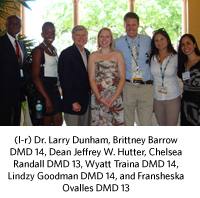 The National Dental Association (NDA) hosted its 2012 Annual National Convention at the Boca Raton Resort & Club, in Boca Raton, Florida July 20-24, 2012. For the first time, this year’s annual convention was held in conjunction with the Hispanic Dental Association (HDA) and the Society of Indian American Dentists (SAID). The convention focused on the theme, “Collectively Meeting the Needs of a Diverse Population to Improve Oral Health.”
Five GSDM students attended: Brittney Barrow DMD 14, Lindzy Goodman DMD 14, and Wyatt Traina DMD 14 represented the Student National Dental Association; and Fransheska Ovalles DMD 13, and Chelsea Randall DMD 13, represented the Student Hispanic Dental Association. Newly appointed Director of Diversity & Multicultural Affairs and Clinical Assistant Professor, Dr. Larry Dunham also attended the convention for the first time since his appointment on July 1, 2012. The GSDM group was able to reunite with GSDM alum and former BU HSDA President, Liz Montero DMD 11, who also attended the convention. Dean Hutter also attended and commented, “It was a wonderful conference and it was so very special to see one of our newest alumni, Liz Montero. This is such an important convention for our students and dental students everywhere, and I am so very glad that the HDA and SAID were involved this year.”
On Friday, July 20, Dean Hutter hosted a luncheon for the GSDM students during which they had an opportunity to meet Dr. Dunham. On Saturday, July 21, a Pre-doctoral and Post-doctoral Recruitment Fair for pre-dental and dental students was held. The GSDM table was hosted by Dean Hutter, Brittney Barrow, and Dr. Dunham, who said, “Boca Raton, FL was a beautiful environment for this important conference. There was a positive energy generated to prospective students by having our Dean present, along with GSDM students, promoting our dental school. I was grateful to be a part of this conference.”
Barrow, who was elected SNDA Representative to the NDA House of Delegates during the conference said, “It was a great experience having our newest Director of Multicultural Affairs, Dr. Larry Dunham, as well as Dean Hutter personally interact with the nearly 200+ student attendees! Boston University’s presence was so well received that we were invited to attend next year’s SNDA National Convention being held in Washington DC.”
NEIDL Website Puts Research on Display: Facility seeks to expand community engagement
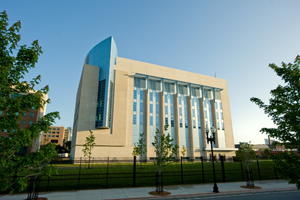
Watch the video in which James Galagan, NEIDL’s associate director of systems biology, describes his tuberculosis research and the importance of transparency in NEIDL’s work. Video by Donaldson Productions.
Long a source of apprehension for some neighbors and community activists, the National Emerging Infectious Diseases Laboratories (NEIDL) on the Boston University Medical Campus is working hard to become an open book: the research facility has launched a new website where visitors can read about its research and safety procedures, review quarterly incident reports, or read meeting notes from the Community Liaison Committee (CLC), which is recruiting additional members.
“Transparency is really a critical element,” says Stephen Burgay, BU senior vice president for external affairs. “Given the unique nature of this lab, we found it was important to take as many steps as we can to give people confidence that they know exactly what’s going on inside.”
Scott Dasse, the University’s creative director for interactive design, says the site, which launched this month, strives to make the facility fully accountable and transparent to the community. Web visitors will find video tours of the labs, discussions with researchers, and detailed accounts of scientists’ backgrounds and the focus of their current research. The site also states that classified research is prohibited at the lab.
“It should be very clear that the type of work that we’re doing is intended to help find cures for infectious disease, rather than finding ways to use infectious disease to inflict harm on people,” says Burgay.
The website provides direct links to NEIDL’s safety procedures and to the work of the Institutional Biosafety Committee, a panel of experts and community members who review and approve all experiments before they are conducted. Quarterly reports of all safety-related incidents are published on the site.
NEIDL is also expanding the membership of its Community Liaison Committee, from 6 volunteer members to 14, according to Valeda Britton, executive director of community relations for the Medical Campus. The committee, which meets monthly, welcomes candidates with backgrounds in science, public health, and communications, particularly those who are bilingual, to cater to the needs of the surrounding diverse population. Britton says the committee’s original deadline for applications, July 27, has been extended to August 31.
Community Liaison Committee members convey local concerns to NEIDL officials and help keep the public informed about work conducted at the facility. “It’s a two-way street,” says Britton.
Construction on the $200 million NEIDL was completed in September 2008, but controversy and litigation surrounding the study of infectious diseases requiring the highest biosafety level, or BSL-4, kept the building’s 192,000 square feet of laboratory space closed. That changed late last year when the Massachusetts Executive Office of Energy and Environmental Affairs gave the facility clearance to conduct research at Biosafety Level 2. (Research at that level, as well at BSL-3, is conducted at dozens of other labs throughout the commonwealth, including some at BU.)
As of April, researchers in BSL-2 labs began exploring better ways to prevent tuberculosis—an infectious disease that kills more than one million people each year. The University is still seeking a permit to pursue judicial and regulatory approval for research in NEIDL’s BSL-3 and BSL-4 laboratories. On July 6, the University’s effort was reinforced by a National Institutes of Health report asserting that the risk is very low that an infection arising in the facility would spread to the larger community.
Residents of Dorchester, Roxbury, South Boston, and the South End are encouraged to apply for membership to the Community Liaison Committee by filling out this form or by contacting Valeda Britton. Applications will be accepted until Friday, August 31.
These videos discuss the importance of BSL-3 research and provide a virtual tour of BSL-4. Videos by Joe Chan.
This BU Today story was written by Leslie Friday
BUSM/VA Boston Healthcare System Investigators Identify New Gene Linked to PTSD
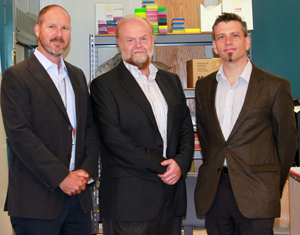
Investigators at Boston University School of Medicine (BUSM) and Veterans Affairs (VA) Boston Healthcare System have identified a new gene linked to post-traumatic stress disorder (PTSD). The findings, published online in Molecular Psychiatry, indicate that a gene known to play a role in protecting brain cells from the damaging effects of stress may also be involved in the development of PTSD.
The article reports the first positive results of a genome-wide association study (GWAS) of PTSD and suggests that variations in the retinoid-related orphan receptor alpha (RORA) gene are linked to the development of PTSD.
Mark W. Miller, PhD, associate professor at BUSM and a clinical research psychologist in the National Center for PTSD at VA Boston Healthcare System was the study’s principal investigator. Mark Logue, PhD, research assistant professor at BUSM and Boston University School of Public Health and Clinton Baldwin, PhD, professor at BUSM, were co-first authors of the paper.
PTSD is a psychiatric disorder defined by serious changes in cognitive, emotional, behavioral and psychological functioning that can occur in response to a psychologically traumatic event. Previous studies have estimated that approximately eight percent of the U.S. population will develop PTSD in their lifetime. That number is significantly greater among combat veterans where as many as one out of five suffer symptoms of the disorder.
Previous GWAS studies have linked the RORA gene to other psychiatric conditions, including attention-deficit hyperactivity disorder, bipolar disorder, autism and depression.
“Like PTSD, all of these conditions have been linked to alterations in brain functioning, so it is particularly interesting that one of the primary functions of RORA is to protect brain cells from the damaging effects of oxidative stress, hypoxia and inflammation,” said Miller.
Participants in the study were approximately 500 male and female veterans and their intimate partners, all of whom had experienced trauma and approximately half of whom had PTSD. The majority of the veterans had been exposed to trauma related to their military experience whereas their intimate partners had experienced trauma related to other experiences, such as sexual or physical assault, serious accidents, or the sudden death of a loved one. Each participant was interviewed by a trained clinician, and DNA was extracted from samples of their blood.
The DNA analysis examined approximately 1.5 million genetic markers for signs of association with PTSD and revealed a highly significant association with a variant (rs8042149) in the RORA gene. The researchers then looked for evidence of replication using data from the Detroit Neighborhood Health Study where they also found a significant, though weaker, association between RORA and PTSD.
“These results suggest that individuals with the RORA risk variant are more likely to develop PTSD following trauma exposure and point to a new avenue for research on how the brain responds to trauma,” said Miller.
This study was supported by the National Institute on Mental Health of the National Institutes of Health under award number R01 MH079806 and a grant from the Department of Veterans Affairs.
BUSM Professor and Vice Chair Awarded 2012 Harold Hildreth Award for Distinguished Public Service
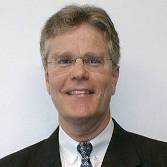
Boston University School of Medicine (BUSM) Professor and Vice-Chair of Psychiatry Terence M. Keane, PhD, was honored with the 2012 Harold Hildreth Award for Distinguished Public Service by the American Psychological Association (APA). The award was presented at the annual APA meetings in Orlando, Fla.
Named after Harold M. Hildreth, a pioneer in psychology and a role model for dedication and achievement in serving the public, the award is the highest honor for public service given by the APA division of public sector psychologists. A former division president and council member, the award was established in Hildreth’s memory after his death in 1965.
The award recognizes Keane’s contributions toward improving the diagnosis and treatment of Posttraumatic Stress Disorder (PTSD) and his success in spreading this knowledge, which has impacted public sector mental health care delivery.
Keane, director of the Behavioral Science Division of the National Center for PTSD and associate chief of staff for Research and Development at VA Boston Healthcare System, is an international leader in the field of traumatic stress. He has developed assessment measures, which are widely used today, and is considered an authority on the cognitive behavioral treatment of PTSD.
Past President of the International Society for Traumatic Stress Studies (ISTSS), Keane has published more than 250 articles on the assessment and treatment of PTSD. For the past 32 years the VA, National Institutes of Health, Department of Defense and Substance Abuse Mental Health Services Administration have supported his research on psychological trauma.
His contributions to the field have been recognized by many honors including the Lifetime Achievement Award (2004) from ISTSS, the Outstanding Researcher in Behavior Therapy Award from the Association for Advancement of Behavior Therapy (2004), the Distinguished Service Award (2002), the APA Outstanding Research Contributions Award (2000) and the Weisband Distinguished Alumnus Award from SUNY- Binghamton University (1998), where he earned his doctorate in Clinical Psychology.
Keane has consulted, lectured and conducted workshops internationally on topics related to psychological trauma. His current work and interests are in the development of a national registry of PTSD patients and the construction of an internet based treatment program for returning war veterans with risky alcohol use and war trauma symptoms.
SURP Interns Present at GMS Symposium
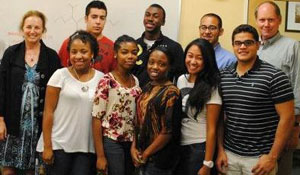
SURP research interns, participants in a summer program sponsored by the Division of Graduate Medical Sciences (GMS) in collaboration with basic science departments, presented the results of their research at a symposium August 2. Undergraduates accepted into the program are academically talented, traditionally underrepresented in the biomedical sciences, and are motivated toward pursuing graduate education and professional roles in science, research and health care. William Cruikshank, PhD is the SURP faculty advisor. Linda Zimmerman administers the program.
GSDM Tradition Continues at Second Annual White Coat Ceremony
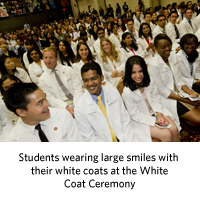 GSDM hosted the second annual Family Weekend, which culminated with the White Coat Ceremony on Saturday, July 7, for the DMD Class of 2014 and the AS Class of 2013. Students and their families enjoyed guided tours of the School during the day on Saturday and then gathered at the George Sherman Union at 775 Commonwealth Avenue for the Ceremony in the late afternoon. Nearly 700 people attended.
The White Coat Ceremony marks the midway point of the students’ education and celebrates their transition from the classroom to the treatment center. Students will now begin managing the comprehensive oral healthcare of their assigned patients and providing them with needed treatment in the fifth and sixth floor Patient Treatment Centers of the School of Dental Medicine.
The Ceremony Processional was led by the following Grand Marshalls: Associate Chair of the Department of General Dentistry, Director of Pre-doctoral Restorative Dentistry and Professor Dr. Celeste Kong; Clinical Assistant Professor Dr. Daniel Moran; Director of Pre-doctoral Removable Prosthodontics and Clinical Professor Dr. Ronni Schnell and President of the GSDM Alumni Association and Chair of the GSDM Alumni Board, Clinical Assistant Professor Dr. Tina Valades.
Assistant Dean of Students and Assistant Professor of General Dentistry Dr. Joseph Calabrese started off the ceremony.
Reflecting back on the day, Dr. Calabrese said, “Our students have reached a significant milestone in their dental education. Receiving their white coats in front of their families and friends in such a special ceremony was inspiring. This is a tradition that I, as well as our students, look forward to every year. I know how proud I was of our students so I can only imagine how their families must have felt.”
Dr. Calabrese then introduced Dean and Spencer N. Frankl Professor in Dental Medicine, Dr. Jeffrey W. Hutter. Dean Hutter welcomed the assembled students and their families.
He said, “It is certainly an honor to welcome the friends and families of the DMD Class of 2014 and the Advanced Standing Class of 2013. As they mark this important rite of passage, I cannot tell you how much it means to them and to me that so many of you are here with us today.” He continued, “Although they have had the opportunity of treating patients since they began their dental education, they are about to begin the very important phase of their education in which they manage their own assigned patients and provide comprehensive oral healthcare to them. In so doing, they hone their clinical skills in their chosen profession of dentistry. Their participation in this important ceremony marks the beginning of their transition into professionals.”
The keynote speaker for the Ceremony was Dr. Andrea Richman. Dr. Richman, a general practitioner, graduated from Tufts in 1978 and completed a General Practice Residency at Boston City Hospital in 1979. Richman has served as the Yankee Dental Congress General Chair and in various other YDC volunteer positions. She served as MDS president in 2007, becoming the first woman to serve in that position. She is also a liaison for the MDS to the Board of Registration in Dentistry and currently serves on the board of Eastern Dental Insurance Company.
During her keynote speech, Dr. Richman remarked, “Each of you has been awarded a coveted slot in this school because you have that capacity to transition from student to Doctor. This is what it is all about. This is what your next one to two years are about—not just changing coats, but changing your mindset; learning to accept responsibility for your decisions and learning to be a professional.”
Following Dr. Richman’s address, Associate Dean for Academic Affairs and Professor of Periodontology & Oral Biology, Dr. Cataldo Leone officially presented the class to Dean Hutter.
Dean Hutter then commenced the White Coat Ceremony during which as Dr. DuLong read their names, the students were presented with their white coats by faculty members Drs. Joseph Calabrese, John Guarente, and Cataldo Leone, and congratulated by Dr. Janet Peters and Dean Hutter before exiting the stage. The Ceremony closed with Dean Hutter leading the students in the reading of the Professional Oath, the same oath they took at the Professional Ceremony during their respective orientations in 2010 and 2011 He also shared some personal closing remarks to the newly White Coated students.
After the Ceremony, the students proceeded to the small ballroom for their respective DMD Class of 2014 and AS Class of 2013 photos with Dean Hutter. A lovely reception, including passed hor d’oeuvres and a pasta station, was held at the Ziskind Lounge for the students and their families. The festivities were funded in part by a generous donation from the Massachusetts Dental Society (MDS). MDS regularly supports Massachusetts dental students by supporting student activities at GSDM.
Photos of the White Coat Ceremony are available on facebook and flickr. Photos of the school tours are also available on facebook and flickr.
BUSM Professor Finds New Coping Method for Veterans with PTSD
 A recent study by researchers at Boston University School of Medicine (BUSM) found that symptoms of Posttraumatic Stress Disorder (PTSD) in military veterans decreased and mindfulness skills increased after brief mindfulness telehealth intervention. Mindfulness is a meditative practice that encourages both awareness of the present moment and nonjudgmental acceptance of the ongoing flow of thoughts, feelings and emotions. Mindfulness has shown promise in treating many psychological and physical disorders.
The study examined two different treatments to help veterans who suffer from symptoms of PTSD. One treatment educated veterans about symptoms of PTSD and the other introduced mindfulness skills for veterans to use to cope with their symptoms. Both treatments were ‘telehealth’ and included eight weekly sessions, comprised of two face-to-face meetings with a therapist followed by six telephone sessions.
Data collected from 24 veterans pre- and post-treatment and at a six-week follow-up assessment included results of the PTSD Checklist (PCL), Mindful Attention Awareness Scale (MAAS), White Bear Suppression Inventory (WBSI) and Five Facets of Mindfulness Questionnaire (FFMQ). The results indicated a decrease in PTSD symptoms and an increase in skills for practicing mindfulness over the course of the study and suggest that a brief telehealth intervention may be effective both in reducing symptoms and increasing levels of mindfulness. The findings appear in the journals Psychological Trauma: Theory, Research, Practice, and Policy and Mindfulness.
“The combination of face-to-face and telephone sessions is a useful way to deliver treatment for PTSD,” said lead author, Barbara Niles, PhD, assistant professor of psychiatry at BUSM. “Veterans reported that they were very satisfied with the convenience of the telephone format and showed a reduction in PTSD symptoms at the end of the telehealth mindfulness treatment.”
Results of this study suggest that mindfulness meditation should be further explored as a treatment for PTSD. This study also highlights that mindfulness can be delivered through a telehealth format, a more flexible alternative to traditional face-to-face treatment, with successful results for veterans with PTSD.
BUSM Urologist Elected President of Massachusetts Association of Practicing Urologists
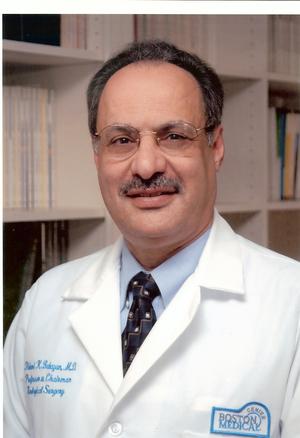
Richard Babayan, MD, professor and chair of urology at Boston University School of Medicine (BUSM) and chief of the department of urology at Boston Medical Center (BMC) was elected president of the Massachusetts Association of Practicing Urologists (MAPU) at the American Urological Association annual meeting in May.
Having served as a director of the MAPU Executive Committee since 1990, Babayan served as president-elect from 2010-2012. He will serve as president for a two-year term and will assume responsibility for the association’s operations and activities, preside over the Board of Director’s meetings and serve as the society's chief spokesperson.
Babayan has been actively involved in minimally invasive therapies within the field of urology. His clinical interests include benign prostatic hyperplasia, prostate cancer, urologic oncology, and endourology. He performed the first robot assisted radical prostatectomy in Boston and is currently one of three urologic surgeons at BMC using the daVinci Robot for minimally invasive procedures.
Actively involved in both local and national urological associations, Babayan was the New England Section representative to the Board of Directors of the American Urological Association (AUA) from 2005-2009 and is a past president of the New England Section of the AUA. He was honored by the AUA in 2011 with a Distinguished Service Award for outstanding service to the AUA Foundation by the AUA Leadership Program and the AUA Board of Directors.
After earning his medical degree from Indiana University School of Medicine, Babayan completed his surgical training at Yale-New Haven Hospital and a urology residency at the former University Hospital, now BMC. Babayan also served as an AUA Research Scholar performing basic science research in the field of hyperthermia at both MIT and BUSM.
New Orthopaedic Surgeon Joins BMC and BUSM Faculty
Robert J. Nicoletta, MD has joined Boston Medical Center (BMC) and Boston University School of Medicine (BUSM) as an orthopaedic surgeon and assistant professor and co-director of sports medicine in the department of orthopaedic surgery. Nicoletta will see patients at both the Shapiro Ambulatory Care Center at BMC and the Ryan Center for Sports Medicine and Rehabilitation at Boston University starting August 1.
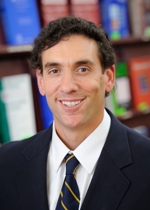
Nicoletta is a board-certified orthopaedic surgeon with specialty training in the field of sports medicine. His clinical interests include arthroscopic procedures of the knee and shoulder including anatomic and double bundle ACL reconstruction, cartilage injuries in the knee and shoulder rotator cuff injuries and instability.
Team physician for numerous local high schools, collegiate and professional athletic teams, Nicoletta most recently served as a team physician at Boston College, the Boston Cannons Men’s Professional Lacrosse team and the Boston Breakers Women’s Professional Soccer team. Before coming to Boston University Medical Campus, Nicoletta served as chief of orthopaedic surgery and sports medicine at St. Elizabeth’s Medical Center.
Recently named to the national List of 65 Outstanding Shoulder Surgeons and Specialists by Becker’s Orthopedic and Spine Review, Nicoletta completed a fellowship in sports medicine and arthroscopic surgery at BMC after earning his medical degree from Syracuse University.