Student Updates
BU Clinical and Translational Science Institute Supports New, Cutting-Edge Technology
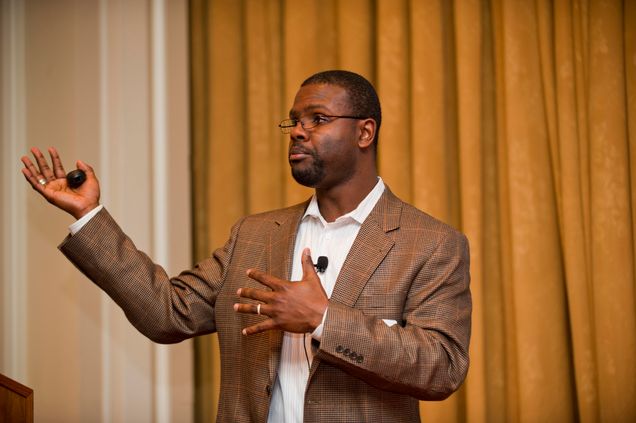
Altering the way drugs are delivered to patients with multidrug resistant cancer is a real game changer. Tyrone Porter, PhD, associate professor in the departments of Mechanical and Biomedical Engineering combines ultrasound technology with chemistry and biomedical engineering to discover new methods for diagnosing and treating diseases. As founder and principal investigator of the Nanomedicine and Medical Acoustics Laboratory (NanoMedAL) and associate director of the Center for Nanoscience and Nanobiotechnology, Porter’s innovative research led to a pilot award co-funded by the BU CTSI and Center for Nanotechnology and Nanobiotechnology in 2011.
The BU Clinical and Translational Science Institute (BU CTSI) supports innovative ideas and new discoveries that can transform health and the process of treating diseases by providing BU investigators with services, resources and funding opportunities across career stages. In catalyzing this innovation, the BU CTSI offers an integrated pilot program that brings together the provost of BU Medical Campus, the Evans Interdisciplinary Research Center, the Claude D. Pepper Older Americans Independence Center, the Center for Nanotechnology and Nanobiotechnology, and the Office of Technology Development.
Porter and his lab collaborated with David Seldin, MD, PhD, professor of medicine and chief of the Hematology-Oncology Section at Boston Medical Center, to explore novel methods for treating multidrug resistant (MDR) breast cancer. MDR cancer cells are unresponsive to chemotherapy due to upregulated defense mechanisms that protect the cells against the cytotoxic agents. Consequently, the treatment options for MDR cancer cells are limited and many patients die; discovering and developing new ways to treat these cells and tumors is critical for patient survival.
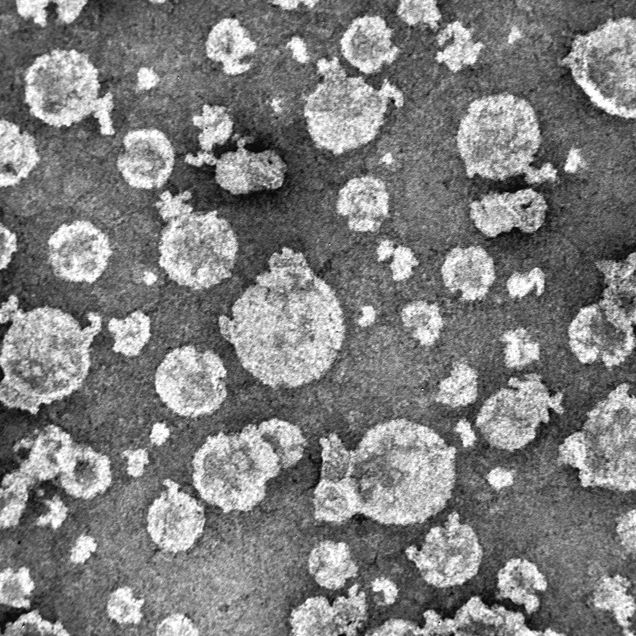
Porter’s innovative research, “Targeted siRNA Delivery for Sensitizing Multidrug Resistant Cancer Cells to Chemotherapy,” aims to address this problem by delivering small interfering RNA specifically to MDR cancer cells that block the defense mechanisms and restore the chemosensitivity of the cancer cells. The siRNA must be packaged within nanoparticles in order to avoid enzymatic degradation in the bloodstream.
However, these nanoparticles have several weaknesses that must be addressed before translation to the clinical setting. “Nanoparticles formed from either lipids or polymers can be used to package drugs and target delivery to diseased cells and tissue specifically,” explains Porter. “Unfortunately, nanoparticles formed from only lipids or polymers suffer from a variety of weaknesses, including poor circulation time, premature leakage of contents, and lack of specificity. We are developing lipid-polymer hybrid nanoparticles to overcome these weaknesses and improve the efficacy and clinical utility of targeted delivery of small molecule drugs and nucleic acid-based therapeutics.”
Porter and his lab were able to successfully make nanoparticles containing siRNA and, in the summer of 2012, conducted testing of transfection efficiency. Porter says he is appreciative of the BU CTSI pilot grant, which has funded some truly pioneering work. "The CTSI pilot grant provided seed funding to explore new and exciting research directions,” says Porter. “As a result of the pilot grant, my group is now exploring novel formulations of stimuli-responsive nanoparticles that can be used for targeted delivery of nucleic acid therapeutics that will allow for the treatment of diseases at the genetic level."
Porter plans to submit future proposals for continued funding including a R01, which is a large research grant from the National Institutes of Health (NIH), as well as from local biotechnology companies that are working in gene and siRNA delivery.
Learn more about the BU CTSI here . For more information about Dr. Porter and his lab, please visit NanoMedAL.
Researchers Find Proportion of Acetaminophen Users Exceed Recommended Maximum Daily Dosage
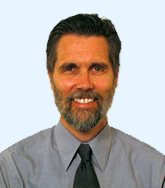
Acetaminophen is one of the most commonly used analgesic compounds worldwide; it is an ingredient in literally hundreds of over-the-counter (OTC) and prescription products. Consumers who take OTC medications for common conditions such as pain, fever, colds/flu, and allergies, represent a substantial proportion of total acetaminophen use, and generally take these products without medical oversight. While acetaminophen is generally safe when taken as directed, excessive doses can lead to potentially life-threatening liver damage, so consumers are advised not to exceed the recommended maximum daily dose of 4 grams.
In order to better understand how many acetaminophen users take more than four grams daily and who these over-users are, researchers from Boston University Slone Epidemiology Center (SEC) and other institutions conducted a survey among members of a national internet panel, who for seven days filled out a daily diary detailing the acetaminophen products they took on an hour by hour basis. The project was sponsored by McNeil Consumer HealthCare, the maker of Tylenol products. The findings recently appeared on-line in Pharmacoepidemiology and Drug Safety.
The researchers found that 4.5 percent of the 3,618 acetaminophen product users took more than four grams on at least one of the seven diary days, but only a few took more than eight grams. Those who exceeded four grams tended to have chronic pain, poor physical status, and heavy use of medical care. Compared with other users, they were less likely to know that the products they took contained acetaminophen, and were also less likely to know the recommended OTC doses. However, the reported frequency of reading the product labels was not related to going above the limit. The attitude that users could choose their own dose regardless of recommendations was more common among those who took more than four grams.
“Our finding that a measurable fraction of users exceed the recommended maximum daily dose of four grams reinforces the need for consumer outreach to reduce over-dosing with these very commonly used products,” explained lead author David Kaufman, ScD, Associate Director of the SEC and a professor of epidemiology at Boston University School of Public Health.
According to Kaufman, the data from this study support certain intervention approaches that target modifiable factors, such as educating consumers about which products contain acetaminophen and what the proper doses are, and influencing their attitudes about how to take OTC products. “The data also suggest that interventions through healthcare providers, especially those who treat chronic pain, may be important,” he added.
GSDM Externship in Chiligatoro, Honduras, “Changes the Way You Think”
Yunji Lee and Nadia Malik, both GSDM DMD 13, recently spent a week together in the village of Chiligatoro, Honduras, sleeping in sparse beds and taking cold showers. Yet, they describe it as one of the best trips they have ever taken.
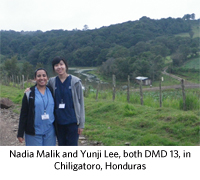 The two fourth-year dental students participated in a life-changing international externship from Sept. 8-15, with the organization Medico, a nonprofit humanitarian service organization that has been providing comprehensive health care in Central America since 1990. Lee and Malik saw about 100 patients each day and worked with a team of 20 people including dentists, translators, and other individuals looking to help in any way they could.
“Being there teaches you the difference between ‘need’ and ‘want,’” Malik says. “It changes the way you think.”
Lee and Malik performed both fillings and extractions for people who walked and waited hours to be treated. As Lee points out, the remote location presented new challenges for them.
“A tooth that is easily fixable here in the US is not as easily fixed there,” Lee says. Both Lee and Malik regretted they were unable to save more teeth from extraction, but they knew that they, along with their group leaders, had made the best decisions for the patients.
Malik added, “In the US, there are huge access to care issues, but often you can still find care. In Honduras, it’s often not even an option because of issues such as distance, finances, and lack of education.”
Lee and Malik are incredibly grateful for their experience, which was funded by donations to the Henry M. Goldman School of Dental Medicine DMD Annual Fund. “So many people and good deeds helped us to go on this externship,” Malik says. “We are just the lucky ones who got to go and help people and got hugs from the children there.” Lee and Malik expressed their thanks personally at the GSDM Alumni Board meeting on Friday, Sept. 21.
Assistant Director of Extramural Programs Kathy Held says of international externships such as this, “It’s really hard work under difficult conditions, but the rewards are better than if you were lying on the beach on vacation.”
Medico ended the trip by treating volunteers to a night at a lakeside hotel where Lee and Malik enjoyed comfortable beds and, yes, warm showers!
Photos are available on Facebook and Flickr .
Submitted by Jackie Rubin, jackier@bu.edu
Rape Aggression Defense (RAD) Program on BUMC, Register Today
The Boston University Police Department offers the “Rape Aggression Defense” program (RAD) specifically for women desiring to physically protect themselves against rape and other forms of violence. The course is taught by RAD-certified BUPD instructors over a 20-hour course. 
The RAD system is a realistic self-defense program of defensive tactics, techniques and education. It is a comprehensive course for women that follows a progression from awareness, prevention, risk reduction and avoidance to basic self-defense participation. The course includes an easy to read and well-illustrated student manual. This manual outlines the entire physical self-defense program and can be referenced for continued personal growth.
RAD is being offered on the Medical Campus. Classes start Monday, Oct. 15, from 5-8 p.m. and will run on Mondays for five weeks. The fee is $10 per person. Classes will be held at 85 East Newton St. (Solomon Carter Fuller building).
Sign up online or for more information visit http://www.bu.edu/police/services/RAD/.
Attend Oct. 5 Evans Center Research Retreat
The Evans Center will hold its research retreat on Oct. 5, featuring ARC highlights, and Rudolph Jaenisch, Professor of Biology, Whitehead Institute, MIT: “Cellular Reprogramming: Are we on the Brink of Treating Parkinson, Diabetes and Other Diseases? Facts, Hypotheses, Unresolved Issues”.
Register here
View the complete Morning Program and the Afternoon DOM Program
Severe Migraine Sufferers Find Hope at GSDM
 For those who suffer debilitating migraines daily or almost daily, approximately 3.5 million in the US, there is an innovative procedure now offered by Dr. Timothy Osborn at Boston University Henry M. Goldman School of Dental Medicine (GSDM) and Boston Medical Center (BMC). He is one of two surgeons in Boston and one of fifteen in the country who perform this type of surgery.
The first step is injecting Botox to defunctionalize some of the muscle enough to cause it to stop compressing the nerves and causing pain. This provides partial relief. The second step, the surgical part and what makes this procedure special, involves releasing the nerve from the muscle and surrounding tissue.
This is done with a method that stems from cosmetic procedures such as an endoscopic brow lift, where surgeons reach the affected area through the upper eyelid. Another way to do the procedure is to enter through five small incisions in the scalp.
“It is invasive, yes, but not major surgery, Dr. Osborn says, and a good option for people whose migraines limit their ability to function.”
“The goal is for the reduction in the frequency, the intensity, and the duration of migraines,” Dr. Osborn explains. The longest results yet available are at only five years, but those patients have seen drastic reduction in migraines. The surgery is an outpatient procedure and is covered by insurance.
Dr. Osborn studied with a surgeon in Dallas who helped pioneer the procedure. Now, in Boston, Dr. Osborn hopes to connect with more people in need of treatment, study the outcomes, and possibly develop new procedures.
“I applaud Dr. Osborn’s efforts to relieve the pain suffered by people with migraines and his commitment to this innovative procedure,” said Dean Jeffrey W. Hutter. “I am happy to welcome him once again to Boston and to the Boston University family.”
Postdoc Appreciation Week Activities Sept. 17-21
The Boston University School of Medicine (BUSM) Division of Graduate Medical Sciences Office of Postdoctoral Affairs is celebrating National Postdoc Appreciation Week (NPAW) Sept. 17-21. This is the second year that events will be held on the medical campus. The activities held during Appreciation Week will help increase awareness of postdocs and recognize the contributions they make to research at BUMC.
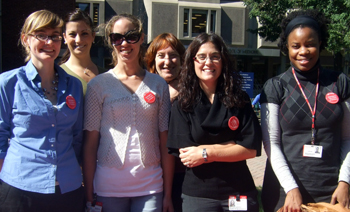
Three special events are being held celebrating the contributions and achievements of BUMC postdocs:
Careers in Communicating Science: Journals, Blogs, Netcasts and Tweets
- Monday, Sept. 17
- 3- 4:30 p.m.
- Room L-201/203
- 72 East Concord St.
- Refreshments
Ice Cream Social
- Tuesday, Sept. 18
- 1-3:20 p.m.
- Talbot Green
- (Rain location: Hiebert Lounge 14th Floor, 72 East Concord St.)
Film Screening: Losing Control
- Thursday, Sept. 20
- 5:30-7:50 p.m.
- Keefer Auditorium
- 72 East Concord St.
The Appreciation Week evolved out of National Postdoc Appreciation Day and has become the nation's largest celebration of postdoctoral scholars. In 2010, NPAW culminated with the passage of H.RES. 1545 by the U.S. House of Representatives on Sept. 24, 2010, which nationally recognizes NPAW.
Since 2009 participation for the event has grown: in 2011, 171 events were hosted at 89 institutions in 30 states and Canada. Past events have included wine and cheese receptions, postdoc picnics, professional development workshops, and networking events.
BUMC NPAW is coordinated by Yolanta Kovalko, Administrative Manager, Office of Postdoctoral Affairs (OPA). Contact Yolanta at Yolanta@bu.edu
For more information about BUMC OPA and to RSVP for the Careers in Communicating Science: Journals, Blogs, Netcasts and Tweets Talk, email: Yolanta@bu.edu
To RSVP for the Ice Cream Social, visit https://www.bumc.bu.edu/gms/gateway/post-doc/professional-development/upcoming-events/rsvp-ice-cream-social/
To RSVP for the Movie, Losing Control and Panel Discussion, visit https://www.bumc.bu.edu/gms/gateway/post-doc/professional-development/upcoming-events/movie-losing-control/
No Magic Bullet for Shifting Risk in Health Care Spending, Analysis Finds
Accountable care organizations, supported by federal health care reform, are enough of an improvement over the failed capitation arrangements of the 1990s to make them a "worthy experiment," but they are not a cure-all for controlling health care costs, according to an analysis co-authored by a researcher from the BU Schools of Medicine and Public Health.
In the September issue of Health Affairs, Austin Frakt, a health economist who is an assistant professor of health policy and management at BUSPH and assistant professor of psychiatry at BUSM, and co-author Rick Mayes, an associate professor of political science at the University of Richmond, examine the lessons learned during the failed cost-capitation effort of the 1990s. The rise and fall of capitation payments -- a fixed lump-sum per patient paid to health care providers to cover all care -- offers a stark example of how difficult it is for providers to assume "meaningful financial responsibility" for patient care, Frakt and Mayes argue.
They say that while capitation offered some advantages for payers and providers, such as more control over the provision of the care, it also had limitations, such as a greater financial risk for providers who could not offer medical care for less than the lump sum, as well as incentives to "stint" on care. After an increase in popularity, the lump-sum payment system was largely abandoned, with most providers returning to the traditional fee-for-service model, meaning they are paid for whatever services they render.
Frakt and Mayes note that policy makers "have again turned their attention toward new methods to control volume, including exhibiting renewed interest in shifting cost risk to providers, as capitation did in the 1990s." Yet, they write, "the capitated arrangements of that era proved unsustainable. Is history doomed to repeat itself?"
Not necessarily, the duo says. They see some promise in the newest attempts to shift financial risk onto providers by creating accountable care organizations (ACOs) -- networks of providers responsible for the care of a defined group of patients and, in part, for the cost and quality of that care. ACOs have the goal of providing financial incentives for coordinated and judicious provision of appropriate, high-quality health care. The organizations can secure bonuses if their spending on patients falls below a designated benchmark and they meet quality targets.
Frakt and Mayes say some of the lessons of capitation appear to have informed the new ACO models, which don't put providers at the same high degree of risk for health care costs that capitation did. If ACOs fail to meet benchmarks, the financial penalties -- if any-- are relatively modest. And because most ACOs have relatively large patient bases, they may be better able to spread risk.
"Accountable care organizations offer an opportunity to increase quality and reduce spending, while potentially avoiding some of the larger dangers that doomed capitation," the analysis says. "Nevertheless, they are not without their own limitations and challenges."
Frakt and Mayes note that some experts are skeptical that the newer models can save significant amounts of money, arguing that only full capitation or similar models will work. Yet, Frakt and Mayes say, policy makers and stakeholders "are justifiably wary of repeating the failed capitation experiment. It is not yet evident how to resolve this Catch-22. Full capitation did not succeed, but models that fall short of it might not, either.
"The United States remains in the same situation it has been in for decades: unsure of how to bend the cost curve while maintaining or improving the quality of care," they conclude. "With accountable care organizations, the search for the' sweet spot' between provider and payer risk continues."
The full article is available here: http://content.healthaffairs.org/content/31/9/1951.full
-By Lisa Chedekel
BMC Chief Elected to National Medical Association Board of Trustees
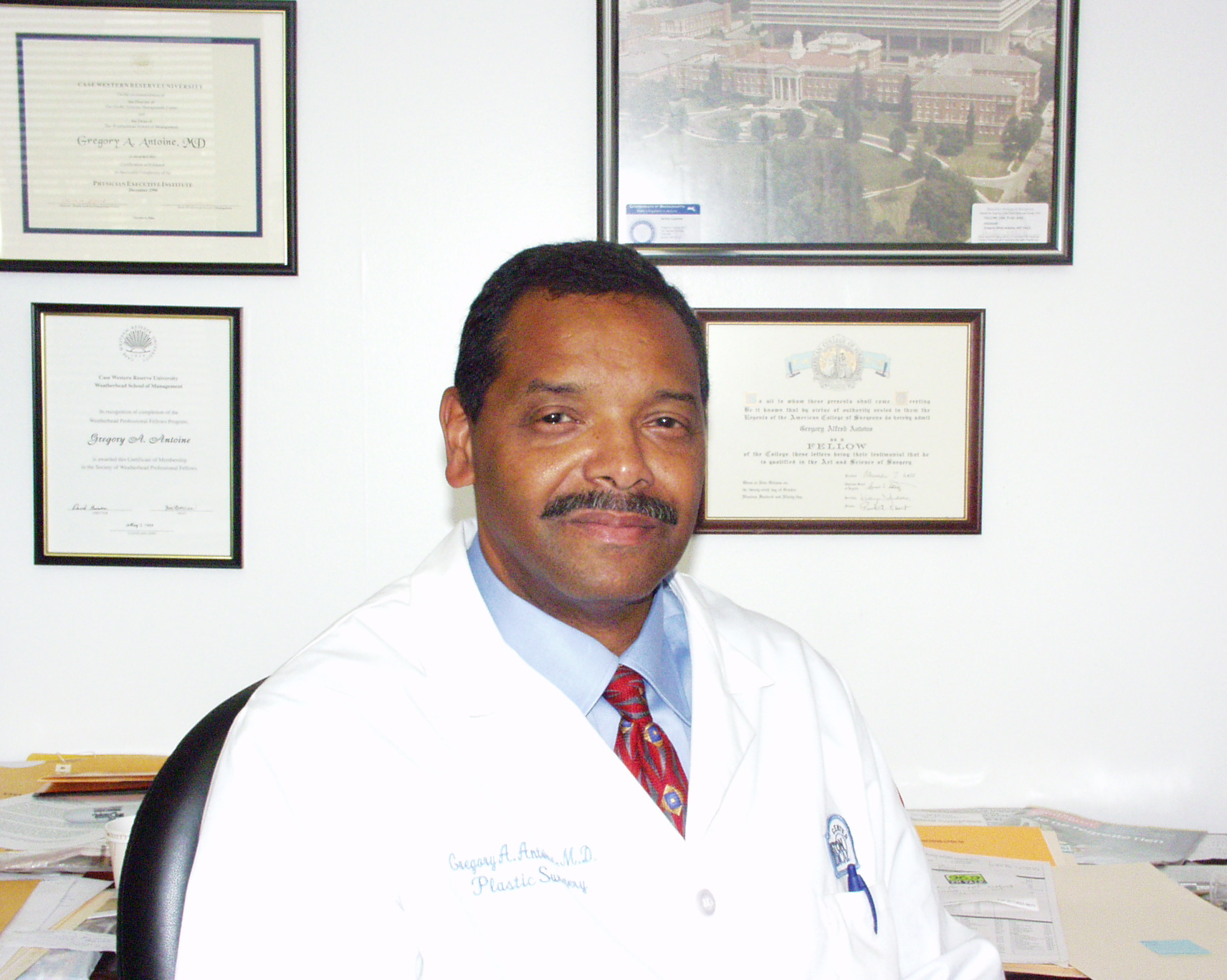
Gregory Antoine, MD, chief of plastic and reconstructive surgery at Boston Medical Center (BMC) and associate professor of surgery and otolaryngology at Boston University School of Medicine (BUSM) was elected to the National Medical Association (NMA) Board of Trustees. Antoine will represent Region 1, which includes Connecticut, Maine, Massachusetts, New Hampshire, New Jersey, New York, Puerto Rico, Rhode Island, Vermont and the U.S. Virgin Islands.
As a board member, Antoine is responsible for implementing policies and procedures voted on and approved by the NMA House of Delegates.
The mission of the NMA is to advance the art and science of medicine for people of African descent through education, advocacy and health policy to promote health and wellness, eliminate health disparities and sustain physician viability. The association represents the interests of more than 50,000 African American physicians and the patients they serve, with nearly 129 affiliated societies throughout the nation and U.S. territories.
“My goal is to maintain the viability and relevance of the largest historically black medical association and its peer reviewed Journal of the National Medical Association and expand our membership base,” said Antoine.
Antoine is the first African American plastic surgeon to head a division of Plastic and Reconstructive Surgery at a non-historically black medical school in the U.S. He is a veteran of both the U.S. Navy and Army, from which he retired as a Colonel with multiple awards and recognitions. His clinical interests include craniomaxillofacial, cosmetic, microvascular and pediatric plastic surgery. He specializes in head and neck reconstruction for congenital or post-traumatic defects.
After earning his medical degree from the State University of New York at Buffalo School of Medicine and Biomedical Sciences, Antoine completed his residency at Walter Reed Army Medical Center and Georgetown University Medical Center in Washington DC. He concluded his medical training with fellowships in craniomaxillofacial surgery at Eastern Virginia Graduate School of Medicine and hand and microvascular surgery at Minnesota Microsurgical Institute.
New Orthopaedic Surgeon Joins BMC and BUSM Faculty
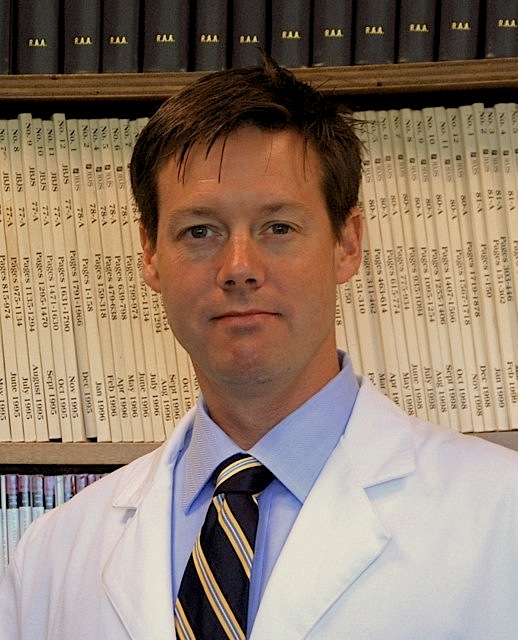
Cory M. Edgar, MD, PhD has recently joined Boston Medical Center (BMC) as an orthopaedic surgeon and Boston University School of Medicine (BUSM) as an assistant professor of orthopaedic surgery. In addition he has been appointed as team physician for Boston University Athletics.
Edgar’s area of expertise is in using stem cells in the care of injured athletes to enhance soft tissue healing and grafts. His clinical interests include shoulder joint injuries, shoulder and knee joint instability and issues regarding treatment for patellar instability. His goal is to continue exploration through research and the development and application of biologics and regenerative medicine techniques in sports medicine procedures.
A graduate of BUSM, Edgar received his medical and doctoral degrees through the combined MD/PhD program. He continued his training at BMC through the orthopedic surgery residency program. Edgar completed a yearlong specialty training as a fellow in sports medicine at the University of Connecticut Health Center, where he served as a team physician.
Edgar sees patients at BMC’s Shapiro Ambulatory Care Center and at Boston University’s newly renovated Ryan Center for Sports Medicine and Rehabilitation.