Student Updates
Battling Ebola: How Ebola Kills
MED’s John Connor is devising diagnostics to spot Ebola and antivirals to treat the disease
On Saturday, Aug. 2, the first of two sickened American health care workers was flown from Africa to a special containment unit at Emory University. Despite the risk of infection, medical personnel continue to travel to West Africa to help bring under control the worst Ebola outbreak on record, which has killed more than 900 people to date. The World Health Organization plans to spend $100 million to fight the outbreak, and the Centers for Disease Control and Prevention will send 50 more aid workers.
In this Special Report, BU Today talks to Boston University researchers in several fields about why medical personnel confront the risks; the ethical and political dilemmas presented by the outbreak; how the virus kills; efforts to design effective therapies; and other aspects of this unprecedented outbreak of Ebola.
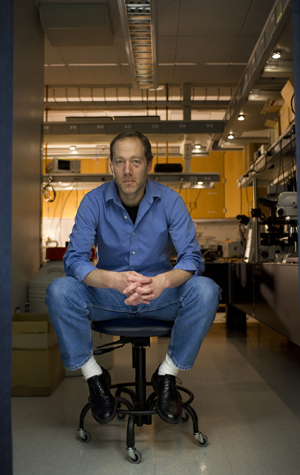
The Ebola outbreak in Guinea, Sierra Leone, and Liberia has now infected more than 1,600 people, according to the World Health Organization. To learn about how the virus kills and efforts being made at BU to devise diagnostics and therapies to treat it, BU Today spoke with John Connor, associate professor of microbiology at the School of Medicine and a researcher at Boston University’s National Emerging Infectious Diseases Laboratories (NEIDL). Connor, whose research is funded by the National Institute of Allergy and Infectious Diseases, studies the tricks that viruses use to dominate their cellular hosts. He has been working collaboratively with researchers at BU and at other research institutions, with a particular focus on the Ebola virus.
BU Today: What aspect of the Ebola virus is the focus of your work?
Connor: My lab is interested in several different approaches to try to understand and stop diseases caused by viruses like Ebola. This includes the development of antivirals, vaccines, and point-of-care diagnostics, in collaboration with the Photonics Center and the lab of Selim Unlu, College of Engineering associate dean for research and graduate programs in the department of computer and electrical engineering.
Another thing we are looking at is what goes wrong with the immune response during viral infection. Our bodies are so good at responding to so many diseases, and in most cases we get sick for a couple of days and then we get better. Our response to Ebola is totally out of whack. The immune system appears to deliver a much more aggressive response than is necessary, one that causes a lot of damage to the body. That overreaction is a significant part of what makes infection with this virus so deadly.
What kind of damage is done by the overreaction?
The response is so strong that it triggers other pathologies. This can include diffuse intravascular coagulopathy, which is why the virus is often called a hemorrhagic fever virus. Normally, coagulation is constantly serving your body, so if you get cut you get a nice blood clot that seals you up. It’s a great way to keep your blood from leaking out. In the case of Ebola, you get clotting in inappropriate places, such as organs like the liver. The problem is, you have a finite number of clotting factors in your body, and they get depleted from the inappropriate clotting. When that happens, you have a hole in your body that needs clotting but won’t stop bleeding. All the small things that happen on a daily basis that are normally taken care of by coagulation are not working.
Do other viruses cause the same coagulation problems?
Ebola is one of the viruses that are most associated with that type of response. The Marburg virus, a cousin of Ebola, can also cause that response, and Lassa fever viruses can as well. Dengue virus can also cause a hemorrhagic disease, in rare cases.
Does every victim of Ebola hemorrhage?
No, but it happens a lot of the time, whereas in other viral infection such as the common flu, it does not happen.
Why is it that some people infected by Ebola get much sicker than others?
That’s one of the things we are trying to learn, but it’s hard. One of the problems of studying a virus like this is that you don’t have large pools of people to work with. Outbreaks of Ebola are sporadic. If you are studying HIV/AIDS, the prevalence of the disease means that you can readily identify 10,000 people. Ebola outbreaks are not predictable and, thankfully, most previous outbreaks were small. This makes other approaches to understanding the course of disease important to try. We are now collaborating with people at other labs who are using animal models of the disease.
What are you learning about how the virus works?
One of the things we’ve been surprised by is how early the immune system response begins and how robust it is. When we compare this response to other viruses, it appears that the response to Ebola is much stronger than to other types of disease. Also, it appears that specific types of responses are associated with survival from the disease. We are investigating whether this early immune response can be used to develop a diagnostic for early disease. Can we look very early, even before symptoms show up, and identify an immune system response to an Ebola infection?
How is the immune response of survivors different from that of people who die?
We have learned that it’s not just the intensity of the response. It also appears to be the type of responses that develop. One of the things we see in animals that succumb to the disease is one type of immune cell—a type of neutrophil—accumulates, whereas in animals that survive, that immune cell is not as abundant.
Are there any therapies that are effective?
There are no Food and Drug Administration–approved therapies. People are beginning to develop some therapies, and information from those studies says that the earlier an individual is treated, the better their survival.
If we can find ways to diagnose infection early, that will directly help effective therapy. And with early diagnosis, if you identify one patient that is symptomatic, suggesting that their course of disease is far along, early tests like the one we are developing will allow rapid testing of contacts of that first patient and early treatment of those infected with the disease.
We are really trying to understand what this very overactive immune response is and how we can start damping it down. Our lab is also developing antivirals that work against Ebola, and we are working on diagnostics that will be at the point of care. We have been focusing on developing a diagnostic for Ebola, Marburg, and Lassa, where point of care is a high priority. We are doing this with the Unlu laboratory at BU, with collaboration from BD Technologies and a spin-out company, NeXGen Arrays, which was started by BU alums and is primarily interested in developing these assays. We are also developing second-generation vaccine viruses in collaboration with Tom Geisbert, former associate director of the NEIDL. The collaboration started when Tom was at BU and has continued since his move to the University of Texas Medical Branch.
This BU Today story was written by Art Jahnke. He can be reached at jahnke@bu.edu.
Battling Ebola: Heading Into the Outbreak
NEIDL’s Nahid Bhadelia to care for patients, share expertise
On Saturday, Aug. 2, the first of two sickened American health care workers was flown from Africa to a special containment unit at Emory University. Despite the risk of infection, medical personnel continue to travel to West Africa to help bring under control the worst Ebola outbreak on record, which has killed more than 900 people to date. The World Health Organization plans to spend $100 million to fight the outbreak, and the Centers for Disease Control and Prevention will send 50 more aid workers.
In a weeklong Special Report, BU Today talks to Boston University researchers in several fields about why medical personnel confront the risks; the ethical and political dilemmas presented by the outbreak; how the virus kills; efforts to design effective therapies; and other aspects of this unprecedented outbreak of Ebola.

If all goes as planned, Dr. Nahid Bhadelia will soon head straight into the heart of the Ebola outbreak that has already killed more than 800 people in western Africa, including at least 50 health care workers. Global and US health authorities announced Thursday that they would ramp up efforts to bring the epidemic under control, but that it would likely take at least three to six months.
Bhadelia is director of infection control at Boston University’s National Emerging Infectious Diseases Laboratory, an assistant professor of infectious disease at BU School of Medicine, and an associate hospital epidemiologist at Boston Medical Center. With funding provided by the World Health Organization (WHO), she’s slated to travel to Sierra Leone in mid-August, to share her expertise on infection control and also care directly for Ebola patients. We spoke about the growing crisis.
WBUR’s CommonHealth: This is the biggest Ebola outbreak ever, as far as we know. Is it notable in other ways?
This is the first time Ebola has been present in these three countries: Sierra Leone, Guinea, and Liberia. Because these countries haven’t seen the infection before, that impacted their ability to recognize and manage the infection early on.
Also, because of the recent travel of the American Patrick Sawyer to Lagos [where he died of Ebola], I think it has raised a lot more concern about transfer of Ebola abroad, which has not been much of an issue in the past.
A lot of the US media coverage has focused on, “Could it come here?” Part of that fear seems to stem from the sense that Ebola, with its hemorrhages and high death rate, is particularly horrible. Is it?
In some ways yes and in others no. Ebola Zaire, the strain we’re seeing right now, is one of the most deadly strains; it’s been shown in the past to have 90 percent mortality when no treatment is given. But in some ways, it’s much harder to transmit at a population level compared to respiratory viruses we’ve been hearing about such as SARS or MERS. It requires close contact with bodily fluids. So, for example, there’s been a lot of concern about travel of folks from the areas impacted to the developed world, and I think the reason it’s less likely to spread is because it’s limited to people who come into contact very closely with the person who’s impacted.
So many health care workers have been getting infected. Do you have a sense of why? Are there practices that might be easily correctable that you could have an impact on?
There are a lot of talented people there in the field already, not just from international organizations but people who’ve been working there a very long time. In Sierra Leone, for example, though they haven’t had Ebola before, they’ve dealt with Lassa fever, another viral disease that causes hemorrhagic fever, at Kenema—one of the places where Dr. Sheik Umar Khan, the leading physician who just died of Ebola, worked. That center has dealt with Lassa fever for over 25 years, and there are nurses there who have long experience. The issue is the amount of patients. You have nurses there who were taking care of maybe a dozen Lassa patients and now they have to see 70 Ebola patients. I think the major issue is the fact that the health care system is so overwhelmed.
One of the major ways to alleviate that would be the presence of more personal protective equipment and more sterile medical equipment in general. I know that the PPE—the personal protective equipment—is a major concern because there’s a dearth of it right now in the field.
Also, we understand that the virus can be transmitted from surfaces—so if someone comes into contact with bodily fluids with the virus in them on a surface, that’s another way to get it. The virus can live outside the host for a couple of days. So this contamination of the environment is another important component—and that’s very difficult if you can imagine 70 patients in a small space. Ebola is not hard to kill, so it’s easy to avoid contamination in general. It’s only because of the number of people and poor health infrastructure that it becomes difficult.

Still, it’s so baffling that these leading, incredibly knowledgeable doctors are getting infected. How can that happen?
The number of patients plays a major role, and the lack of resources is a major concern. Also, here, when we train people to take care of patients with highly communicable infections, specifically Ebola and other hemorrhagic fevers, we always say that you can’t be in that heavy protective equipment for more than a short amount of time, and you can’t be on shift for more than four hours. And that’s with one patient, maybe. Now you have docs who are taking care of 40 patients and they’re doing it in seven-hour shifts or even longer. That could definitely contribute to infection among health care workers.
What’s it like to wear that protective equipment? Can it be compared to space suits?
What’s currently being used in the field is a full-body gown, masks, face shields, head covers, double gloves, and then rubber boots with covering booties over them.
All this material is a barrier to any transmission of any fluids, but a lot of times it also, as you can imagine, blocks air exchange and it can get extremely hot, especially given the heat in the countries that we’re talking about. I’ve read accounts from some of the folks who are down there, and you can get very dehydrated; you can lose a lot of your body fluids from being in that protective equipment for a long time.
Is there any new technology that you could bring that could help?
It’s not so much the need for more advanced equipment as much as just needing the proper amount of the equipment they already have down there.
In the US, we have equipment—the space suit you mentioned—which is basically the powered air-purifying respirators—what we call PAPRs—and that’s the headgear you see with the air filter attached to it. The issue with that is, A, it’s expensive—though it would be ideal to get it down there—and B, it requires electricity, and in the field it can be difficult to have a reliable source of electricity.
Do you feel confident that when you go to Sierra Leone, you’ll be able to avoid getting infected?
I think you’re asking me if I’m afraid at all. Yes, I have fears for my safety, I think it would be cavalier not to have a healthy amount of fear, but it’s that fear that drives us to be careful and to follow the protocols. I have extensive training and I have a background in infectious disease and particularly with these pathogens.
I’m reminded of the Hillel quotation, “If not me, then who, and if not now, then when?” The need is great. The health care workers are overwhelmed, and more help can make it safer for everyone involved. I think we all face risks when we walk out in the morning…

Not from Ebola!
Right, but then there are those of us who regularly face risk at work: Firemen leave the station knowing they could get hurt. Police officers patrol the streets knowing there might be a violent altercation. Even regular doctors go to work knowing they’re at risk for exposure to blood-borne pathogens and multi-drug-resistant organisms. But I think it’s very rare that we’re asked to give something back based exactly on our skills and knowledge, and I think I can contribute, and that’s why I’m going.
I also feel strongly about going in order to bring clinical acumen home with me stateside. Although doctors in the US are taught about Ebola, not many of us have seen patients with viral hemorrhagic fevers. The National Emerging Infectious Diseases Laboratory (NEIDL) plans to conduct research with virulent pathogens, including Ebola, and my job is to run the medical response program in the very, very unlikely event of an exposure. My experience in Sierra Leone will allow me to pass along on-the-ground expertise to health care providers locally at Boston Medical Center.
You have those skills and that knowledge. What can other people do?
We can contribute to education and awareness about this infection and what’s real versus what’s irrational fear—in terms of how this virus is transmitted and why it’s a big issue there and less likely to be an issue here.
Two aid workers, Kent Brantley and Nancy Writebol, were infected down there, and usually health care workers are “extracted” and brought home for care, but their extraction was delayed because countries were not allowing the government to fly them through their air space. That’s irrational fear.
Another way would be personal protective equipment: it’s very much needed and I understand the issue is just getting it into the countries and getting it distributed. Those who have the ability to contribute that, that’s a powerful way to help.
And if you’re a health care worker who has experience in caring for patients such as these, or who has training in biosafety procedures, you can volunteer…
So is this Ebola outbreak the shape of the future, somehow?
What comes to my mind is the T. H. Huxley quote: “The question of questions for mankind, the problem that underlies all others, and is more deeply interesting than any other, is the ascertainment of the place which man occupies in Nature, and of his relation to the universe of things.” Huxley was a biologist—he spoke at the time when Darwin was presenting his theory of evolution—and now there are more than 7 billion of us seeing to find balance with our surroundings.
Since 1970, we’ve seen the discovery of over 40 infectious diseases that impact humans. As we become a larger population, we encroach into ecologies we haven’t previously explored; we come into contact with endemic animals and this allows the pathogens to make a cross-species exchange more easily. So if the past 20 or 30 years are any indication, I think this may become more of an issue in the future.
A version of this BU Today story was originally published on WBUR’s CommonHealth blog on Aug. 1, 2014.
Carey Goldberg is the cohost of WBUR’s CommonHealth. She can be reached at careyg@comcast.net.
Conference: Personalized Medicine & Intellectual Property
Join the BU School of Law on Monday, Aug. 25, for a conference focused on personalized medicine and intellectual property.
Recently, the U.S. Supreme Court ruled in Myriad that a human gene implicated in breast and ovarian cancer was not patentable subject matter. In Prometheus, the Court also recently ruled that a method for optimizing certain drug therapies was not patentable subject matter.
BU School of Law will host a conference to examine the potential impact of these rulings on medical research. The Kauffman Foundation will fund the conference, which will bring together legal, business, medical, and economic experts to discuss the impact of these cases, and generally the impact of patent and trade secret law on the incentives for innovation in the field of personalized medicine.

When: Monday, August 25, 2014; 9:00 a.m. - 5:00 p.m.
Where: Boston University School of Law
Sumner M. Redstone Building
765 Commonwealth Avenue
Boston, MA 02215
R.S.V.P.: Register by email.
For more information and a list of speakers, visit the BU Law website.
SPH Ranked in Top 5 for Social Media Use

Courtesy image mkhmarketing.wordpress.com.
MPH Programs List.com has ranked BUSPH in the top five among public health schools for social media use.
The site evaluated 61 public health schools across the country to identify the 50 most social media-friendly schools. There were 100 points possible, with 24 for Facebook, 20 for Twitter, 18 for LinkedIn, 15 for YouTube, 11 for Flickr, 6 for Pinterest, and 6 for Google Plus.
BUSPH received a total score of 82.0 for fifth place, beating out other public health schools such as Columbia and Emory.
MPH Programs List.com launched in February of 2012 as a free resource for students interested in graduate public health, public administration, public policy, and health administration programs.
Saying Goodbye to BU’s Former “First Lady”
Jasmine Chobanian remembered as a patron of the arts and a humanitarian.

Jasmine Chobanian, who was regarded as the “First Lady” of Boston University during the many years that her husband Aram V. Chobanian, MD, served in University leadership, both as dean of the School of Medicine and the ninth president of Boston University (2003–2005), died last Friday after a brief illness.
“Jasmine was our beloved first lady of the Medical Campus,” says Karen Antman, provost of the Medical Campus and dean of the School of Medicine. “She was a smart, savvy, warm person who started out life in the technical sciences but clearly also was deeply committed to the arts. We on the Medical Campus will miss her.”
Jasmine Chobanian was a much-loved patron of the arts and a humanitarian. She served on the board of trustees of Boston Ballet and was active in efforts to provide aid to the people of Armenia. In November 2005 the University’s Women’s Council announced the establishment of the Jasmine Chobanian Scholarship Fund and sponsored a gala honoring Chobanian for her many contributions to the University. Boston Ballet dancers Melanie Atkins, Pavel Gurevich, Roman Rykine, and Larissa Ponomarkenko performed selections from The Nutcracker, and then-provost David Campbell sang four lieder, accompanied by his wife, pianist Claude Hobson.
“Jasmine was a vivacious and caring emissary for Boston University, as she supported Aram in his roles as longtime dean of the School of Medicine and then president of Boston University,” says President Robert A. Brown. “The University has lost a true friend.”
A graduate of Brown University, Chobanian was a talented painter, and studied with Conger Metcalf at the Boston Museum School, now the School of the Museum of Fine Arts, Boston. She worked for many years as a researcher at Thorndike Memorial Laboratories at Boston City Hospital. Chobanian is being remembered by friends as someone who lived life to the fullest: a world traveler, voracious reader, fascinating raconteur, nature lover, bird watcher, and sports fan.
Caroline Apovian, professor of medicine and pediatrics at the School of Medicine, says Chobanian “was at the center of the movement on the Medical Campus to unite the arts and the sciences. She encouraged many of the faculty and students to pursue their creativity, specifically in music, but also in the other arts as well. She will be deeply missed by many.”
Robert Witzburg, associate dean and director of admissions at the School of Medicine says Jasmine Chobanian was a remarkably warm and caring person. “She had her own presence at BUSM and the University, quite independent of her prominent husband, Aram,” says Witzburg. “Her smile would light up a room, and she had that rarest of attributes: the ability to respect everyone she met and to instantly put them at ease. All of us who were privileged to know Jasmine will miss her dearly.”
Jasmine Chobanian was born in Pawtucket, R.I., the daughter of the late Charles and Zabel (Russian) Goorigian. She is survived by her husband of 59 years, Aram V. Chobanian (Hon’06), president emeritus of BU, and their children, Karin Chobanian Torrice of Natick, Mass., Lisa Chobanian Ramboeck of Bronxville, N.Y., and Aram Chobanian, Jr. of Brookline, Mass. She is also survived by her grandchildren, Marc and Vanessa Torrice; her sisters Nectar Lennox of Cumberland, R.I., and Marie Vartanian of Agawam, Mass.; and her sister-in-law, Ruth Chobanian of Cambridge, Mass., as well as a large number of nieces, nephews, and friends.
Funeral arrangements are being made through the Bedrosian Funeral Home, 558 Mt. Auburn Street, Watertown, Mass. A wake will be held at St. Stephen’s Armenian Church, 38 Elton Avenue, Watertown, Mass., tomorrow, Tuesday, July 29, from 4 p.m. to 8 p.m. Funeral services will take place on Wednesday, July 30, at 11 a.m. at St. Stephen’s Armenian Church. Burial services will be private.
In lieu of flowers, contributions may be made to the Chobanian Scholarship Fund at Boston University School of Medicine, c/o Development Office, 72 East Concord St., L219, Boston, MA 02118; St. Stephen’s Armenian Church; or The Fund for Armenian Relief, 630 Second Ave., New York, NY 10016. A memorial service to celebrate her life will be held in September at a date and place to be announced.
This BU Today story was written by Art Jahnke.
Health Care Funding Changes Impact STI Testing, Study Finds
Universal health coverage and changes in the way Massachusetts funds clinics that test for sexually transmitted infections (STIs) have led to a shift in patients accessing testing that has both positive and negative implications, a study led by BU researchers says.
The study, published in the journal Sexually Transmitted Diseases and led by Mari-Lynn Drainoni, associate professor of health policy and management at BUSPH, found that reductions in state funding and the imposition of fees at STI clinics in 2009 led to a 20 percent decrease in clinic visits. At the same time, STI visits to primary care providers doubled, while there was no increase in visit volume to the emergency room or OB/GYNs.
The authors speculated that, once insured, patients chose to seek STI care in a general, primary care setting, rather than in a designated STI clinic. They noted that most of the increase in STI primary care visits was among women, while STI clinic patients tended to be male.
Drainoni and colleagues said some aspects of the shift were encouraging: “Increased use of health insurance for STI-related care in the ‘medical home’ may help remove some of the stigma associated with use of these services in segregated specialty clinic settings.” But they also found that the drop in patients seen in the STI clinic was not offset by increases in other settings.
“Patients formerly seen in the STI clinic may be delaying or forgoing care, potentially putting themselves and others at risk for disease transmission,” the researchers said, noting that past studies have found that even the imposition of small copayments could discourage patient visits.
The authors also noted that about half of patients who came to the STI clinic paid the fixed fee, rather than bill the visit to insurance.
“Whether anonymity, specialty expertise, or some other factor or combination of factors motivates patients to continue to seek and pay out-of-pocket for STI care in STI specialty settings, it seems that even access to health insurance will not lead all patients to use the medical home (PC) for STI clinical services.”
The authors said their findings indicate that shifting funds from direct service to insurance coverage may have unintended consequences.
“Politicians and policy analysts have argued that such shifts are appropriate because ‘everyone will have insurance’ for necessary services. Our study calls this assumption into question,” they said.
“Rather than conceiving of financing of STI clinical services as all-or-nothing public versus insurance-only options, the focus should be on lowering barriers to quality STI clinical care through various shared-cost mechanisms in multiple settings that allow health care consumers greater choice.”
Besides Drainoni, authors on the study included Drs. Meg Sullivan, Shwetha Sequeira and Katherine Hsu, from the BU School of Medicine, and Janine Bacic, a PhD student at BU.
Submitted by Lisa Chedekel.
HIV Non-disclosure, Stigma, Incarceration Are Possible Predictors of Poor Follow Up in Research Trials
A collaborative effort between American, Russian and Ukrainian researchers offers new insight into a well-known barrier to high quality, longitudinal HIV research: loss of participant follow up. This study, led by researchers at the BU Schools of Medicine and Public Health, explored the factors that contributed to attrition in large HIV trial in Russia, a country in which increasing amounts of HIV-related research is being conducted. Their results were published in the June 2014 issue of HIV Clinical Trials.
Any research study that experiences significant loss of participants is at risk for bias: the possibility the missing individuals were not lost randomly. For example, a medication trial of a 100 people, in which 30 people cannot follow up because they are hospitalized due to severe side effects, will look artificially positive if outcomes data are based on the remaining 70 individuals. Accordingly, the quality of a study will suffer and its findings may be called into question.
This is a particular problem in Russia, as injection drug use (IDU) represents a relatively higher cause of HIV transmission, which has in some studies been associated with factors that negatively impact follow-up: younger age, depression, mental illness, and concomitant alcohol use. However, this has not been a consistent finding, and other relevant factors like HIV non-disclosure status, perceived HIV stigma, and incarceration history have not been thoroughly explored until now.
The researchers analyzed the data from the HIV’s Evolution in Russia – Mitigating Infection Transmission and Alcoholism in a Growing Epidemic (HERMITAGE) study, in which patients were asked to return for six and 12 month assessments. Of the 660 participants in the study surviving until follow-up, 168 (25.5 percent) did not return for their 12 month follow up visit, and 101 (15.3 percent) never attended any follow-up visit at all, despite extensive retention strategies. Their analysis revealed that participants with current IDU and HIV status non-disclosure missed their first study at approximately 40 percent higher rates than those who did not. They also observed binge drinking was more likely to affect loss to follow up in men than in women, that that a history of incarceration was a stronger predictor of the same in women than in men.
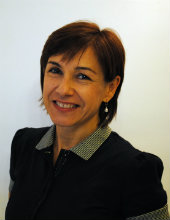
BUSM Postdoctoral Fellow Tetiana Kiriazova, a Ukranian National Institute on Drug Abuse (NIDA) Invest research fellow at the BMC Clinical Addiction Research and Education (CARE) Unit in the department of medicine, and lead author on this study, concluded that “understanding and addressing potential predictor of attrition may improve participant retention in longitudinal clinical research studies of HIV-infected persons, particularly in important but resource-limited research settings.”
Submitted by Ravi Pandit, MD, MPH
Transparency Lacking in Clinical Trials, BU Study Finds
A significant percentage of completed drug clinical trials, especially those funded by industry, are not disclosed to the public, years after being completed—a trend that “threatens the validity of the clinical research literature in the U.S.,” according to a study led by a Boston University School of Public Health (BUSPH) researcher.
The study, published in the journal PLOS ONE, found that close to 30 percent of 400 randomly selected clinical trials completed in 2008 had not resulted, four years later, in either publication in a journal or the posting of results to the ClinicalTrials.gov (CTG) web site.
Studies that were funded solely by industry, or that involved smaller sample sizes, were less likely to be published, the research shows.
The study’s lead author, Dr. Christopher Gill, director of BUSPH’s Pharmaceuticals Program and an associate professor of global health, said the review raises ethical, as well as scientific, problems.
“Individuals who volunteer for clinical trials often do so out of a sense of altruism,” said Gill, a researcher with BU’s Center for Global Health and Development. ”I can imagine that many would be dismayed to learn that the results of a study that they participated in, that they took physical risks for, might never generate results known beyond the company that sponsored the trial.
“Science learns from mistakes, as well as successes,” he said. “If we only learn about the scientific success stories, we are really only seeing part of the picture."
Gill and a former student, Hiroki Saito, found that 118 of the 400 clinical trials did not result in publication within four years of completion. The median length of time from completion to public disclosure was 602 days.
Among industry-funded studies, rates of posting to the CTG site were high for phase 3 or 4 studies, but extremely low for phase 2 studies.
“As an overall synthesis, these findings provide strong evidence of reporting bias,” Gill and Saito wrote. They said the associations between publication or posting rates and funding sources “merit further consideration, and may reflect differing motivations” among researchers.
Among academics working under a “publish or perish” model, and who represent the majority of non-industry funded studies, the study phase “may be less critical than the need to publish research findings in journals,” Gill and Saito said. By contrast, the pharmaceutical industry may publish more results for products that have advanced to phase 3 or beyond and are perceived to be commercially viable.
Gill and Saito suggested that regulatory requirements could be driving the differences in rates of posting results to the CTG. Among industry-funded, phase 3 or 4 studies, the majority of researchers posted their results at about one year from completion – coinciding closely with a one-year deadline established in 2007 by the Food and Drug Administration Amendments Act (FDAAA).
Regardless of the reasons, Gill and Saito said, transparency in clinical trials is “an essential public health good. The public must be informed if the premise of a clinical trial was confirmed or invalidated, and expects that, once a study involving human subjects is completed, its results will be published in the medical literature or posted to some other open-access platform.”
They said that in order to maintain the public’s faith in clinical research, and to protect the fidelity of the scientific literature, “it is essential that the research community unite around the common goal of maximizing transparency. “
In 2012, Gill reported that among US-based, industry-funded phase 2 or higher clinical studies, less than 25 percent had posted their results to CTG within a year of completion. Another study found that, among National Institutes of Health-funded trials, 32 percent remained unpublished after the median follow-up of 51 months from completion.
Emergency Responders More Comfortable in Active Shooting Scenarios After Training

Emergency Medical Service (EMS) responders felt better prepared to respond to an active shooter incident after receiving focused tactical training according to a new study in the journal Prehospital and Disaster Medicine. This is the first study to specifically examine the EMS provider comfort level with respect to entering a scene where a shooter has not yet been neutralized or working with law enforcement personnel during that response.
Incidents such as the Columbine High School shooting, the Virginia Tech campus shooting, the 2009 Fort Hood shooting, the movie theater shooting in Aurora, Colorado, and more recently, the Sandy Hook elementary school shooting remind us of the relative frequency of these events compared to most other mass casualty incidents for which EMS trains and prepares.
For this study, EMS providers responded to an anonymous survey both before and after a four-hour training session on joint EMS/police active shooter rescue team response. Survey questions focused on individual provider comfort level when responding to active shooter incidents compared to conventional HAZMAT incidents; comfort with providing medical care in an active shooter environment; perception of EMS provider role in an active shooter incident; and the appropriate timing of EMS response at the scene.
The survey results showed that more participants felt adequately trained to respond to an active shooter incident after focused training (87 percent) compared to before the training (36 percent) regardless of a providers prior tactical experience. Additionally, more EMS providers felt more comfortable working jointly on rescue operations with law enforcement personnel in response to an active shooter incident after training participation (93 percent) compared to before the training (61 percent).
According to the researchers, despite rapid deployment of law enforcement to neutralize an active shooter, it is not uncommon for a significant amount of time to pass before law enforcement has rendered the scene “safe.” “Unfortunately this unintentionally prolongs the time before victims can receive life-saving care on the scene, as well as at a definitive care facility,” explained lead author Jerrilyn Jones, MD, a clinical instructor of emergency medicine at Boston University School of Medicine and EMS Fellow at Boston EMS. “Our study showed that after receiving appropriate training, EMS providers felt better equipped to work on joint rescue operations even if an active shooter was still present,” added Jones, who also is an emergency room physician at Boston Medical Center.
The researchers recommend further studies be undertaken to determine the significance of such training as well as the mortality impact on patient outcomes.
To read the full study: Emergency Medical Services Response to Active Shooter Incidents: Provider Comfort Level and Attitudes Before and After Participation in a Focused Response Training Program
BUSM MD/PhD Candidate Tracks Osteoarthritis With Nanoparticles

A chronic disease afflicting more than 27 million Americans and 630 million worldwide, osteoarthritis occurs as the protective cartilage coating on joints in the knees, hips and other parts of the body degrades. No cure for osteoarthritis exists, but treatments can slow its progression, reduce pain and restore joint functioning. Now a team of researchers led by Professor Mark Grinstaff (BME, Chemistry, MSE) has developed a sensitive imaging method that promises to enhance diagnosis of osteoarthritis and enable improved care through earlier detection and more targeted treatments.
The method combines nanotechnology, engineering and medicine, and exploits new, biocompatible nanoparticles as contrast agents to image surface and interior regions of articular cartilage (the smooth, water-rich tissue that lines the ends of bones in load-bearing joints) — regions that traditional X-ray illumination cannot detect. The research, which was funded by the National Institutes of Health, is described in the June 30 issue of Angewandte Chemie.
“In the short term, these contrast agents could be used to image cartilage over time to monitor the efficacy of proposed osteoarthritis drugs,” said Grinstaff. “With continued development, they may enable clinicians to diagnose and stage the disease so that the most appropriate course of treatment could be followed.”
Two members of Grinstaff’s lab, MD/PhD student Jonathan Freedman (Pharmacology) and Postdoctoral Fellow Hrvoje Lusic (BME and Chemistry), synthesized a new nanoparticle contrast agent made of tantalum oxide that diffuses into the cartilage, thus enabling clinicians to use CT-scans to assess cartilage thickness and pinpoint lesions and injuries in osteoarthritic tissue. Guided by their clinical collaborator, Beth Israel Deaconess Medical Center/Harvard Medical School physician Brian Snyder, Freedman and Lusic used the nanoparticles to successfully image rat articular cartilage in in vivo and ex vivo experiments, as well as in a cadaverous finger joint.
They chose tantalum as a contrast agent material because it absorbs a greater fraction of X-rays produced at clinical scanning voltages than traditional materials. In addition, the tantalum nanoparticles’ positive charge automatically directs the particles to the cartilage, which carries a negative charge. Building on their initial success, the researchers plan to conduct additional in vivo experiments in animal models.
The impetus for exploring new and better contrast agents came from Snyder, who sought better ways to diagnose and assess treatment of osteoarthritis. Grinstaff sees the new method as especially promising for early detection of the disease.
“Today we have very poor capability to detect early stage osteoarthritis,” said Grinstaff. “Most patients come into the clinic at stage three when the pain becomes significant, but if diagnostics based on our method is done proactively, many patients could get the treatment they need much earlier and avoid a lot of discomfort.”
Submitted by Mark Dwortzan