Student Updates
BUMC Diversity Advisory Group Established
A Diversity Advisory Group has been established on the Medical Campus. The group, conceived by Rafael Ortega, MD, BUSM Associate Dean for Diversity and Multicultural Affairs, includes members from the Schools of Medicine, Dental Medicine and Public Health as well as Boston Medical Center.

The Group will serve as a bi-directional communication channel between the Offices of Diversity in the three schools and the hospital, and the respective diversity-related domains. It will be a sounding board to discuss diversity-related matters on Campus, and to provide balanced guidance.
The creation of the Group is in concert with BUSM’s strategic planning goals. Several student organizations are represented, including the Latino Medical Student Association (LMSA), the National Medical Student Association (NMSA), and the Muslim Student Organization respectively representing Hispanic, Black and Muslim students. Advisory group membership includes: Chioma Anyikwa (BUSM ll/NMSA); Barbara Catchings (BMC/Human Resources); Sheila Chapman (BUSM/Medicine); Yvette Cozier (BUSPH/Diversity and Inclusion and Assistant Professor, Epidemiology) ; Larry Dunham (GSDM/Diversity & Multicultural Affairs and Clinical Assistant Professor, General Dentistry); Jason Hall (BUSM/Surgery); Faryal Hussain (GSDM lll/Muslim Student Organization); David Keough (BUMC/BUSM Communications); Justin McCummings (BMC/Minority Recruitment); Michael Paasche-Orlow (BUSM/Medicine); Lucero Paredes (BUSM ll/LMSA); Jason Sherer (Medicine Resident/EMSSP); Ann Zumwalt (BUSM/Anatomy & Neurobiology).
If you would like more information about the Group, please contact Rafael Ortega.
SPH Welcomes New Global Health Chair
Patricia Hibberd wants to leverage technology to save young lives
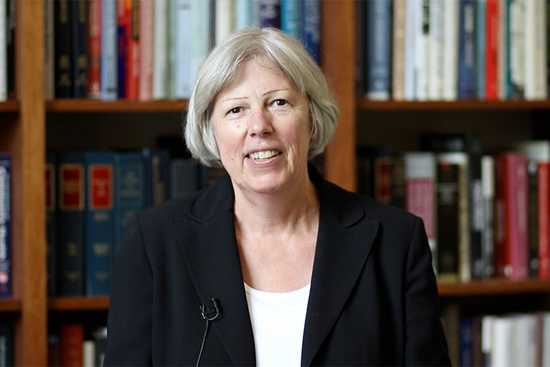
When Patricia Hibberd looks at her smartphone, she sees a chance to save young lives.
Hibberd, the new chair of the School of Public Health’s Department of Global Health, has been working in Malawi, India, and Pakistan to develop a low-cost thermal imaging system for smartphones that would help to detect bacterial pneumonia in children in countries where standard chest X-rays are not available. The prospect of giving resource-strapped clinicians a way to diagnose the world’s leading cause of death of children under age 5 marks a new chapter in her 25-year quest to stem childhood pneumonia, sepsis, diarrhea, and other illnesses.
“X-ray machines are not going to magically appear in the health clinics of poor countries. We can’t wait for that,” Hibberd says. “Smartphones are everywhere. This is about giving clinicians the tools they need to save lives, now.”
A physician and epidemiologist, Hibberd came to SPH this summer from Harvard University, where she has been a professor of global health at the Harvard T.H. Chan School of Public Health and professor of pediatrics at Harvard Medical School. She also has headed the Division of Global Health in the Department of Pediatrics at Massachusetts General Hospital (MGH).
A native of Liverpool, England, who earned her PhD from the University of Leicester and her MD from Harvard in 1986—six years after coming to the US—Hibberd has spent much of her research career tackling the alarming rates of morbidity and mortality among women and children in the developing world. Over the last 15 years, she has collaborated with researcher Archana Patel in India on ways to reduce the rates of neonatal sepsis and pneumonia, as a leader of the National Institutes of Health’s Global Network for Women’s and Children’s Health Research at MGH. The group’s most important contributions have included the early recognition of severe hypoxemia and treatment with oxygen for children with pneumonia in resource-constrained settings, and the development of point-of-care diagnostics for neonatal sepsis.
Hibberd also is a Paul G. Rogers Society Ambassador for Global Health Research and chair of the Data and Safety Monitoring Board for the Centers for Disease Control and Prevention’s STRIVE Trial, which is testing a vaccine to prevent Ebola in Sierra Leone.
The author of more than 250 scientific articles, many on pediatric health, Hibberd says she plans to continue her own research work at BU, while supporting the many projects underway in the global health department. She cites as one of her reasons for coming to BU SPH Dean Sandro Galea’s commitment to “leverage new technologies, such as bioinformatics, to drive a new agenda for public health.”
She recently spoke with BU Today about her research interests and what excites her about the new position.
BU Today: You’ve had a long career focused on preventing and treating childhood diseases. How did you become interested in that area of research?
Hibberd: As an infectious diseases physician and epidemiologist, my main interest has always been to make a real difference in childhood mortality. To do that, I have to follow the reasons why children unacceptably keep dying. Today, in 2016, babies die in the first month of life, mostly because of infections, or sepsis, and between two and 59 months, because of pneumonia. This was true in the 1990s—and unfortunately, it’s still true now. To me, that is just not OK.
There are vaccines that prevent pneumonia in children, as long as they survive to age two months. These vaccines are available for all babies in the US, Europe, and Australia, but they’re not widely available in resource-limited settings.
I keep asking the doctors in these places, “Don’t people donate vaccines for the babies here?” Sometimes, the answer is yes. They’ll say, “I got a gift of 100 vaccines—so what I am supposed to do? Save the lives of 33 babies, as each baby needs three doses of the conjugate pneumococcal vaccine and three doses of the Haemophilus influenzae [type] b vaccine? Or should I try and save 50 babies who get two doses of each vaccine, even though that is not recommended?” That’s a terrible decision for a clinician to have to make. In the developed world, these are not decisions that any doctor faces.
You’ve focused on the diagnosis side, more than the vaccine side. Why?
While we figure out how to make sure vaccines are available for all babies, we still need to find and treat babies who are sick and can be treated for the infections that vaccines should prevent.
What everyone forgets is that pneumonia and sepsis in babies are among the most difficult diagnoses to make—even here in Boston, never mind in remote rural villages in sub-Saharan Africa and Asia. The way I think about this is that we need to improve diagnosis of serious infection in babies everywhere, in Boston and beyond. And, at the same time, we need to get lifesaving vaccines to that beyond.
I’m delighted that I will be moving our NIH-funded Global Network grant to BU and continuing the work on early detection and treatment of pneumonia and sepsis. We’re going to continue looking for the best ways to recognize infants at risk as early as possible—in the home—so that they are brought for treatment as quickly as possible.
How promising is the thermal imaging technology you’ve been piloting?
We have some very impressive results here at home, and some exciting preliminary data from India and Malawi. Basically, the technology allows us to diagnose children who have pneumonia caused by bacteria by identifying asymmetric hot spots of high temperatures in the lungs, caused by localized inflammation.
We are studying how to use this technology in urgent-care outpatient clinics and emergency departments in our own backyard, while also conducting rigorous studies to determine whether thermal imaging can be used by first-level health care workers in developing countries to diagnose and start treatment with antibiotics as early, and as appropriately, as possible. This is work we will continue with collaborators across BU, including Muhammad Zaman, a College of Engineering professor of biomedical engineering on the Charles River Campus.
What excites you most about being at SPH?
There is a palpable excitement about public health, in Boston and in the broader community, since Dean Galea arrived. This is a time when the public health agenda is coming to a kind of crossroads: concern over communicable diseases is being overshadowed by attention to noncommunicable, chronic diseases. But we are not done with communicable diseases, by any means. Zika and Ebola remind us of that. So we have to do more, and get more right fast.
Dean Galea and the SPH faculty are focused on pushing the public health community to pursue this dual agenda in innovative ways. I so want to be part of that.
This BU Today story was written by Lisa Chedekel.
New Pathway for Training Physicians May Lead to Greater Numbers in Academic Medicine

In an effort to address the shortage of available clinician–educators to train future physicians, academic leaders from Boston University School of Medicine (BUSM) and Boston Medical Center (BMC), are implementing a unique dermatology residency program that emphasizes support in the transition from trainee to junior faculty member through an extended commitment to the institution in which their training was received.
The Dermatology Residency Training Program at BUSM has been restructured to encompass a traditional residency training program (three years) followed by a career-focused faculty program (three years). This new paradigm aims to develop well-rounded dermatologists with careers focused on teaching, patient care and research, who will become leaders in academia, and make significant contributions to the specialty. Junior faculty participating in this program will be provided with personalized career development courses and structured mentorship directed toward their academic interests. This program is described in a Letter to the Editor in the journal Academic Medicine.
Medicine in general has experienced a reduction in the number of physicians in academic practice due to economic factors and recruitment /retention issues. In dermatology, for example, only 6 percent of physicians practice in an academic environment. “These problems create unwelcomed fluctuations in faculty numbers and availability and willingness to teach the next generation of leaders in our specialty,” explained lead author Rhoda Alani, MD, the Herbert Mescon Endowed Professor and Chair of Dermatology at BUSM and BMC.
“In order to address this problem we plan to provide our trainees with the tools they need to succeed as strong academic leaders and educators and, in so doing, fill a much needed gap in the physician workforce,” she added.
Alani believes that such a program, if successful, could significantly impact the way physicians are trained in the U.S. and may similarly serve the institutional or regional needs of other specialties. She feels this template for physician training is mirrored from training programs supported by the U.S. military in which physicians are obligated to serve in a military setting following completion of training through a military residency program.
Also contributing to this letter was Allison Larson, MD, assistant dean of academic affairs and assistant professor in dermatology, BUSM and Vincent Falanga, MD, FACP, professor of dermatology and residency program director, Department of Dermatology, BUSM.
Ikezu Honored by Alzhemier’s Association for “Most Impactful Study in the Last Two Years”

Tsuneya Ikezu, MD, PhD, professor of pharmacology & experimental therapeutics and neurology at Boston University School of Medicine (BUSM), recently received the Alzheimer’s Association’s Inge Grundke-Iqbal Award for Alzheimer’s Research. The award was presented at the Alzheimer's Association International Conference® 2016 in Toronto.
Ikezu received the award for research that found brain immune cells called microglia may play an adverse role in transporting toxic tau protein during the early stages of Alzheimer’s disease. In the study, Ikezu and colleagues found that removing microglia from the brains of mice suppressed the spread of tau from one brain region to another. They also found that small vesicles called exosomes are implicated in the spared of tau. Researchers suggest this may be a viable therapeutic pathway to slow the progression of Alzheimer’s.
The significant findings were detailed in a paper, “Depletion of microglia and inhibition of exosome synthesis halt tau propagation,” published in the journal Nature Neuroscience in November 2015.
“The research in Dr. Ikezu’s paper breaks new ground and suggests an important, new direction for future research,” said Maria C. Carrillo, PhD, chief science officer at the Alzheimer’s Association. “Every contribution that offers new insight into the role of tau in Alzheimer’s disease is important to advancing our efforts to slow and eventually prevent it – especially now that the first drugs targeting tau in Alzheimer’s are reaching late-stage clinical trials. We commend Dr. Ikezu and his fellow researchers for expanding knowledge in this important area.”
Ikezu’s research focuses on the role of neuroinflammation in the pathophysiology of dementia and as a potential therapeutic target in Alzheimer’s disease, Frontotemporal Dementia and chronic traumatic encephalopathy. Dr. Ikezu has been a member of BU’s Alzheimer’s Disease Center since 2011.
The Inge Grundke-Iqbal Award for Alzheimer’s Research is granted to the senior author of the most impactful study published in Alzheimer’s research during the two calendar years preceding AAIC. The award was created to honor Inge Grundke-Iqbal, Ph.D., who served as Professor and Head of Neuroimmunology at the New York State Institute for Basic Research in Development Disabilities from 1977 until her passing in September 2012. A world renowned scientist and Alzheimer’s disease researcher, Dr. Grundke-Iqbal made several seminal findings in the biology of Alzheimer’s disease and related conditions, including a landmark discovery of tau in neurofibrillary tangles that opened a new area of research in neurodegeneration.
Researchers Identify Protein Role in Pathway Required for Ebola Replication
A newly identified requirement of a modified human protein in ebolavirus (EBOV) replication, may unlock the door for new approaches to treating Ebola.
EBOV is one of the most lethal human pathogens known and causes severe hemorrhagic fever in humans. When EBOV makes copies of itself inside cells, it does so by taking over and hijacking parts of that host cell’s basic machinery to make its own proteins. The most recent outbreak in 2014 has illustrated the lack of understanding of viral pathogenesis and highlighted the need for increased study of how the Ebola virus replicates.
In the study, fragments of the virus that were not infectious were used to study viral gene expression. Small molecule drugs were used to inhibit the function of a cellular pathway associated with protein synthesis. These drugs and other pathways decreased viral gene expression which suggested that the pathway the drugs blocked is important for the replication of EBOV. To confirm this, the team worked with collaborators at the University of Texas Medical Branch who tested what happened to the ability of EBOV to make copies of itself in the presence of one of the small molecules that they had studied. They found the EBOV made fewer copies of itself when the drug was added. The findings appear in the journal mBio.
To explore why this occurred, the study looked at what happened to specific viral proteins when the pathway was on and off. They found that one of the EBOV proteins, VP30, accumulates in cells when the pathway is on, and it does not accumulate when pathway is turned off. These results suggest that VP30 is the only virus protein for which this happens.
“One protein made by the virus requires an unusual component of the host protein synthesis machinery. We found that if you block the function of this component the virus has problems making copies of itself. Thus, by decreasing how well the virus can make one protein we have an effect on the entire replication cycle,” explained corresponding author John Connor, PhD, associate professor of microbiology at Boston University School of Medicine.
According to the researchers these findings identify a uniquely modified human protein that is required for Ebola virus to grow in cells. “Targeting this human protein could represent a new target for Ebola therapeutics. These studies can help us to understand and combat active and dormant Ebola virus infections,” he added.
Funding for this work was provided by Health & Human Services, the National Institutes of Health, and National Institute of Allergy and Infectious Diseases.
A Conversation: Race and Violence
If you were unable to attend the Conversation: Race and Violence, watch the video.
July 13 A Conversation: Race and Violence
The BUSM Office of Diversity and Multicultural Affairs invites all members of the BUMC/BMC community to participate in an open and candid dialog about race and violence. The targeted police shootings in Dallas at a peaceful protest in response to videos showing two African-American men shot by police in Louisiana and Minnesota has sparked ongoing contention across the country.
This event will be co-moderated by Associate Dean of Multicultural Affairs and Professor of Anesthesiology Rafael Ortega, MD, and Chief & Chair of Psychiatry and Assistant Dean of Multicultural Affairs David Henderson, MD.
Please join us for the conversation.
Wednesday, July 13
5-6 p.m.
BUMC Instructional Building, L112
Slone Epidemiology Center Leadership Changes
After 18 years as Director of the Slone Epidemiology Center, Allen A. Mitchell, MD, professor of Epidemiology and Pediatrics, has decided to step down, effective Sept. 1. Mitchell was a founding member of the Drug Epidemiology Unit (now known as the Slone Epidemiology Center) led by Drs. Dennis Slone and Samuel Shapiro that came to BU in 1975. He became the director in 1998, when Slone was elevated to a Medical Campus Center. An internationally recognized leader in the epidemiologic study of drug safety in pediatric and pregnant populations, Mitchell founded and led the Birth Defects Study for 39 years. . He also developed risk management assessments for Accutane/isotretinoin and thalidomide in pregnancy and a large-simple trial of ibuprofen safety involving 84,000 children recruited through a pediatric office practice-based research network. In addition to bringing major studies to Slone, Mitchell promoted rigorous science to serve the public health and provided a supportive environment with the sense of comity, friendship, and family that characterize Slone. He will continue his research activities at Slone as Director Emeritus.
David W. Kaufman, ScD, professor of Epidemiology, has been appointed the next Slone Director. Kaufman came to BU in 1975 as a research associate at Slone and was ultimately promoted to professor of Epidemiology at SPH and Associate Director of Slone in 1998. His early career focused on studies of drugs in cancer and heart disease and other conditions. In the 1980s Kaufman was co-investigator of the International Agranulocytosis and Aplastic Anemia Study, which enrolled several hundred cases in seven countries with these rare but often drug-induced blood dyscrasias.
Subsequently he directed the largest epidemiological investigation to date of aplastic anemia (with more than 500 cases enrolled in Thailand), as well as studies of Stevens-Johnson syndrome and toxic epidermal necrolysis in four European countries, and of anaphylaxis in Spain, Hungary, India and Sweden. He has also published studies of analgesics and upper gastrointestinal bleeding and of end-stage renal disease in three regions of the U.S.
More recently, Kaufman and Mitchell led the Slone Survey, a US population-based survey of medication use. Kaufman also studied Oxalobacter formigenes (an oxalate-metabolizing bacterium found in about 40 percent of the normal population) and calcium oxalate kidney stones, and developed a nationwide registry that followed patients with myeloma and myelodysplastic syndromes through the course of their illness. Currently, he is co-PI for a large-scale, behavioral surveillance program of acetaminophen users, focusing on patterns and correlates of overdose.
Kaufman earned his MS and ScD in epidemiology from Harvard TC Chan School of Public Health. He has served on the Medical Campus IRB since 2000, and as Chair of the Orange Panel since 2011.
Vote for BUSM’s Jane Mendez!

BUSM's Dr. Jane Mendez, surgery, is in the running as one of People’s (en Espanol) 25 Most Influential Latina Women! Nominated by her sister Laura Posada, wife of former major league baseball player Jorge Posada, Mendez is highlighted for her years of service as a breast cancer surgeon at BMC and associate professor of surgery at BUSM. "It's a privilege to heal others,” says Mendez. “I love helping other women.”
Your vote decides who deserves to be a part of this list! Click and VOTE for DR. MENDEZ today!
Slone Awarded Grant to Better Understand Breast Cancer Among African-American Women
Why do African-American women die at a higher rate and experience more aggressive breast tumors than white women? Researchers from Boston University’s Slone Epidemiology Center (SEC) have received funding from the National Cancer Institute (NCI) to explore this question. The new grant is based on the premise that having a better understanding of the biology of breast cancer in African-American women will lead to better prevention and treatment.

“Identifying genetic variants related to breast cancer in African-American women will further our knowledge of the disease and may ultimately lead us to better treatments and opportunities for prevention,” said Julie R. Palmer, ScD, senior epidemiologist at BU’s SEC and professor of epidemiology at BUSPH, who is leading the study at BU.
Breast cancer is not a single disease, but a combination of distinct disease subtypes, with varying risk factors and clinical outcomes. However, the reasons for differences in breast cancer biology and disparities in incidence and mortality rates between white and African-American women are not well understood, and existing studies have not been large enough to provide sufficient statistical power to elucidate genetic factors associated with how breast cancers develop. The size and power of this new study could help address the current lack of scientific understanding.
“Health disparities are a problem of great concern for the NCI and one that we are zeroing in on as evidenced by this grant,” said acting director of the NCI, Douglas Lowy, M.D.
This study will seek to identify novel genes and gene pathways that influence breast cancer in African-American women.
This multicenter study will pool data, bio-specimens, and expertise from 18 previous studies of breast cancer among women of African ancestry. The investigators will determine whether genetic variants may be associated with increased risk. Specifically, they will examine:
- The association between genetic variants and the risk of estrogen receptor-negative breast cancer and estrogen receptor-positive breast cancers
- How genetic variants affect major breast cancer biological pathways and whether the effects may differ between African-American women and white women
In addition to Palmer, the research team is being led by Wei Zheng, MD, PhD, from Vanderbilt University, Nashville and Christopher Haiman, ScD, from the University of Southern California, Los Angeles. Experts from five other institutions will join them in gathering information and biospecimens from 20,000 breast cancer cases
Palmer’s major research interest is the etiology of breast cancer, with a particular focus on African American women. She was instrumental in designing and implementing the Black Women’s Health Study, a cohort study of 59,000 women, and has served as co-investigator of the study since its inception in 1995. She is the director of genetics research in the Black Women’s Health Study and has spearheaded efforts to use DNA from study participants in studies of the genetics of breast cancer, other cancers, lupus, uterine fibroids, type 2 diabetes, and sarcoidosis.
She is one of the three multiple principal investigators who organized a collaborative NCI Program Project AMBER (African American Breast Cancer Epidemiology and Risk) Consortium, which combines data, germline DNA and tumor tissue samples from four epidemiologic studies of breast cancer in African American women for identification of factors related to specific breast cancer subtypes.
Reference: Breast Cancer Genetic Study in African-Ancestry Populations. Grant Number 1R01CA202981-01