Student Updates
3/6 COVID-19 BUSM Update
To: BUSM MD, Master’s and PhD Students
From: Karen Antman, MD, BUMC Provost and BUSM Dean
Date: March 6, 2020
Re: COVID-19 Update
We will be sending student bulletins as needed to provide updates on COVID-19. Given the fluid situation, guidelines will change as facts change. Please continue to check your email and the BUMC COVID-19 website for information.
We have plans for continuity of virtual classes if an emergency in Boston is declared. Please:
- update your contact information in the student database;
- continue to read school emails and respond promptly;
- review and share with other students who may not have checked their email; and
- let your Student Affairs office (MDs: Katie Toro-Ferrari; GMS: Theresa Davies) know of any planned travel so that we can arrange for self-isolation on your return, if necessary.
Please seriously reconsider any travel and remain aware of the travel restrictions of the hospitals and clinics at which you are currently seeing any patients and those where you will be rotating in the next few months. Current BU and BMC travel restrictions are posted online.
Students should continue to report for their classes, hospital/clinic rotations or office-based assignments. At this time, students should not provide direct care to patients with presumptive or confirmed COVID-19 at any clinical site (to conserve Personal Protective Equipment for appropriately trained personnel required to care for these patients and to minimize unnecessary exposure). Such patients are identified by the hospital/clinic in which you are rotating, and will be appropriately isolated.
2/29 COVID-19 Campus Update

To: BUMC Faculty, Staff and Students
From: Karen Antman, MD, BUMC Provost and BUSM Dean
Date: Feb. 29, 2020
Re: COVID-19
As you are aware from both mainstream media and professional sources, the novel coronavirus, COVID-19, that originated in Wuhan, China, has resulted in cases in more than 60 countries around the world, including the United States. On Jan. 31, the U.S. Secretary of Health & Human Services declared a public health emergency for the virus and on Feb. 25 the Centers for Disease Control said that we can expect new community based cases in the U.S. (i.e. with no clear link to cases from overseas).
While the risk of COVID-19 is currently low in Massachusetts, our State and local public health offices and the University are monitoring the evolving situation. Over the past two weeks, we have reviewed our infectious diseases emergency management plans for continuity of operations for our classes, research programs and administrative functions. We are creating a COVID-19 website specific to the Medical Campus to provide information on the virus, links to authoritative sources and campus operations plans, which will be updated as additional information becomes available. We will advise you when this website is live.
Nahid Bhadelia, MD, MA, Associate Professor, Medicine/Infectious Diseases, and Ronald Corley, PhD, Professor of Microbiology and Director, National Emerging Infectious Diseases Laboratories, have produced a COVID-19 primer for the BU Community.
If necessary, we plan to move to videotaped or Zoom lectures and discussion classes. Please see the checklist below for steps that your unit should be taking in preparation for the possibility of working and learning from home. We will be updating the checklist on the website.
-
-
- Review/update continuity of operations (coop) plans.
- Update unit’s contact lists to include pertinent phone numbers, email addresses
- Teaching Faculty –
- Get lists of your class--on blackboard?
- Get access to last year's lectures
- Department/Unit approvers -- get Adobe software that allows for E-signature.
-
Please note President Brown’s letter to the community on coronavirus, the University’s message regarding travel to China, and the CDC’s guidelines to decrease the risk of spreading infections. Thank you.
BUMC Celebrates International Women’s Day
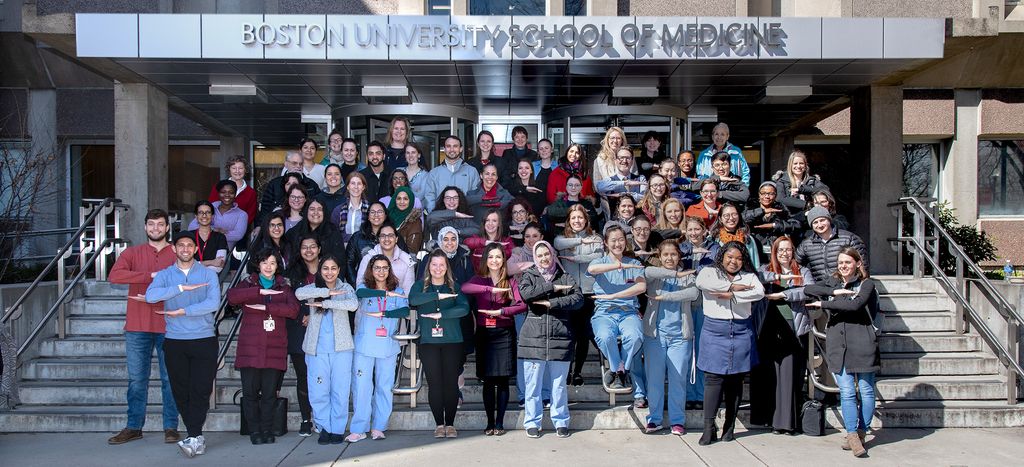 Sunday, March 8, is International Women’s Day. A global celebration, it calls on individuals to challenge stereotypes, stand up against biases, and celebrate and support women in their accomplishments—not just for one day, but all year long. The BU Medical Campus gathered to strike the #EachforEqual pose in honor of this year’s theme.
A COVID-19 Primer for the Boston University Community
Based on resources from US Centers for Disease Control and Prevention, World Health Organization, Massachusetts Department of Public Health and others. Compiled by Nahid Bhadelia, MD, MA, Associate Professor, Medicine/Infectious Diseases, and Ronald Corley, PhD, Professor of Microbiology and Director, National Emerging Infectious Diseases Laboratories.
What is COVID-19?
COVID-19 is a flu like illness that’s caused by SARS-CoV-2. Large case series (majority of them from China) show that around 80-85% of people who are infected have just mild illness with cough and fever, while a smaller percentage (generally those who are older or may have other comorbidities) around 14% can have a more severe disease with presentation of pneumonia and requiring hospitalization. A smaller percentage still (around 5%) may become critically ill. Of people who are symptomatic, the case fatality rate is around 2.3%.
Here are some informative factsheets:
CDC: https://www.cdc.gov/coronavirus/2019-ncov/downloads/2019-ncov-factsheet.pdf
WHO: https://www.who.int/health-topics/coronavirus
NIAID: https://www.niaid.nih.gov/diseases-conditions/coronaviruses
Here is a link to one of the largest case series published to date: https://jamanetwork.com/journals/jama/fullarticle/2762130
There may be other patients who are infected with this virus who do not have any symptoms. We currently do not know how many people fall into this group.
Where did SARS-CoV2 come from?
Per CDC, “The SARS-CoV-2 virus is a betacoronavirus, like MERS-CoV and SARS-CoV. All three of these viruses have their origins in bats. The sequences from U.S. patients are similar to the one that China initially posted, suggesting a likely single, recent emergence of this virus from an animal reservoir.”
Most experts agree the current SARS-CoV-2 also most likely originated from bats and at some point “spilled over” into the human population, perhaps via an intermediate mammalian host.
How is it transmitted?
The virus can spread mainly from person-to-person through close contact (within about 6 feet) and through respiratory droplets produced when an infected person coughs or sneezes.
These droplets can land in the mouths or noses of people who are nearby or possibly be inhaled into the lungs. It can also be transmitted to a lesser extent if a person touches a surface or object that has the virus on it and then touches their own mouth, nose, or possibly their eyes. Although people are most likely to transmit the virus to others when they are sick, there have been reports that this virus could be transmitted before a person manifests symptoms. The frequency of how often the latter happens is not known. There is also evidence that people may still shed some virus after they recover from the disease (as is noted in influenza and other respiratory virus).
How does this virus compare to the seasonal flu?
Although both cause similar symptoms, SARS-CoV-2 is thought to be more contagious than seasonal influenza and have a higher mortality rate.
The other aspects of SARS-CoV-2 that are difficult is that we current do not have a vaccine like we do for seasonal influenza and we are still learning about the disease.
How long does it take to get sick if you are exposed (what is the incubation period)?
Symptoms usually appear within 3-7 days, but current estimates by CDC is that the latency period is as few as 2 to as many as 14 days on average. There are a few reports of longer incubation periods.
What are the symptoms?
In a report by WHO about the cases in china- the following symptoms were reported with decreasing frequency were as follows: fever (87.9%), dry cough (67.7%), fatigue (38.1%), sputum production (33.4%), shortness of breath (18.6%), sore throat (13.9%), headache (13.6%), muscle or bone pains (14.8%), chills (11.4%), nausea or vomiting (5.0%), nasal congestion (4.8%), diarrhea (3.7%). In most cases, patients will present with a fever and cough.
How widespread is COVID19?
As of Feb 29, 2020, more than 86,000 patients have been diagnosed with COVID-19 worldwide, of which around 3,000 have died.
Per CDC, On Jan. 30, 2020, the International Health Regulations Emergency Committee of the World Health Organization declared the outbreak a “public health emergency of international concern ” (PHEIC). On Jan. 31, 2020, Health and Human Services Secretary Alex M. Azar II declared a public health emergency (PHE) for the United States to aid the nation’s healthcare community in responding to COVID-19.
While majority of the cases to date have been in China, COVID-19 has been reported in 64 countries and territories as of Feb 29. Because of the spread of COVID-19 into an increasing number of countries, on Feb 28, 2020, the WHO increased the risk assessment to a “very high at a global level”.
This frequently updated website offered by Johns Hopkins University offers more details regarding the breakdown of cases; https://gisanddata.maps.arcgis.com/apps/opsdashboard/index.html#/bda7594740fd40299423467b48e9ecf6
Other resources include the WHO (https://experience.arcgis.com/experience/685d0ace521648f8a5beeeee1b9125cd)
As well as live updates on “worldometer” (https://www.worldometers.info/coronavirus/)
In United States, as of Feb. 29, there are currently 68 confirmed cases of COVID-19, which are a mix of people who are returning travelers, citizens repatriated from the Diamond Princess cruise ship in Japan and those who were infected on U.S. soil.
How are people who may potentially have COVID-19 identified?
Currently, when patients present with symptoms which appear to be similar to COVID-19 and have a travel history to one of the areas where a large number of cases have been identified or have had exposure to someone with confirmed COVID-19, or if they present with severe illness with no other explanations, they are identified by medical providers as fitting the “case definition” for COVID-19 as set by the CDC. The current case definitions from the CDC can be found: https://www.cdc.gov/coronavirus/2019-ncov/hcp/clinical-criteria.html
At that point, samples are collected from the patients and sent to one of the laboratories with the capacity to test for SARS-CoV-2. The current diagnostic procedure involves a polymerase chain reaction (PCR) detection of the SARS-CoV-2 virus in nasopharyngeal and oropharyngeal swabs.
Are there vaccines or treatments for it?
There are currently no vaccines or targeted treatments for COVID-19, however both are currently in the process of being developed. Clinical trials will begin on at least one therapeutic (Remdisivir, from Gilead Sciences) and the NIH is beginning a clinical trial of a vaccine candidate from Moderna, Inc., a biotechnology company based in Cambridge, Mass.
There are currently no post exposure prophylaxis treatments available to give to those exposed to the disease either.
Will COVID-19 spread further in the United States?
There is a growing number of cases identified as those from community transmission- this means that these patients didn’t have any known exposures to someone with COVID-19 or travel history that would put them at risk. Public health officials have reported that it is likely that we will see more cases of COVID-19 and potentially a bigger epidemic in the United States.
What will happen if there is more spread of COVID-19 in United States?
Given what we know about COVID-19, most people who get the disease will have a very mild illness. However, a smaller percentage (currently thought to be around 15%) of people, particularly those over the age of 60 and/or with other medical conditions may get more severe infection that requires hospitalization.
Current recommendations from the CDC are that people who are sick do not go into work (voluntary isolation).
If there is sustained transmission of COVID-19 in certain areas of the United States, public health officials may call for cancellation of large events (such as large conferences, concerts, sporting events etc) to keep people from transmitting to each other. Additionally, as seen in other countries, public health officials may suggest that schools be closed for a limited period of time and people work from home. However, the exact measures will depend on how big an epidemic we see in the United States.
How are healthcare facilities preparing for potential spread of COVID-19 in United States?
Healthcare facilities are working to strengthen existing systems and put new systems into place to quickly identify patients with symptoms and travel history, encouraging those who are not very sick to stay home and call their providers for advice, retraining healthcare workers, ensuring there are enough supplies of personal protective equipment.
How should I protect myself from becoming infected?
First and foremost, because of the way this virus is transmitted, CDC recommends:
- Voluntary Home Isolation: Stay home when you are sick with respiratory disease symptoms. At the present time, these symptoms are more likely due to influenza or other respiratory viruses than to COVID-19-related virus.
- Respiratory Etiquette: Cover coughs and sneezes with a tissue, then throw it in the trash can.
- Hand Hygiene: Wash hands often with soap and water for at least 20 seconds; especially after going to the bathroom; before eating; and after blowing your nose, coughing, or sneezing.
- If soap and water are not readily available, use an alcohol-based hand sanitizer with 60%-95% alcohol.
- Environmental Health Action: Routinely clean frequently touched surfaces and objects
The reasons masks don’t generally protect health people against respiratory viruses are because they are generally not used accurately by those without training (people can still become infected if their hands are contaminated and their touch their nose, mouth and eyes); lead to false sense of security which makes people not pursue appropriate social distancing that would be more effective; and masks become quickly wet and then ineffective as a barrier. On the other hand, given the shortages in masks and other protective equipment, such widespread use by public is reducing availability of masks for healthcare workers and those who actually have the symptoms who can use the mask to reduce transmission to those around them.
The most effective strategy is hence – if you are well – keep a distance from those who have respiratory symptoms; make sure you frequently wash your hands or sanitize them; and reduce the frequency with which you touch your face with your hands.
How should I prepare myself and my family for COVID-19?
Currently, you can prepare by reading these excellent guides from CDC and WHO:
https://www.cdc.gov/coronavirus/2019-ncov/preparing-individuals-communities.html
https://www.cdc.gov/coronavirus/2019-ncov/specific-groups/guidance-for-schools.html
https://www.cdc.gov/coronavirus/2019-ncov/downloads/2019-ncov-factsheet.pdf
WHO: https://www.who.int/docs/default-source/coronaviruse/getting-workplace-ready-for-covid-19.pdf
Make sure you have tools to sanitize and wash your hands and decontaminate your environment. You could also consider buying a small supply of cold and fever medications if you don’t already have them in your house, so if you get sick you do not have to go to the pharmacy. If you are on prescription medications, make sure you refill your medications, so you have them at hand. If your insurance allows it, consider seeing if your mail in pharmacy could send you a multiple month supply of your prescriptions.
It may be good to keep some extra dry foods, ready-to-eat meals and soups around the house so that if you become sick you do not have to venture to the grocery stores.
If you are a caretaker for elderly person or someone with multiple comorbidities, ensure that you help them with some of the preparedness in their homes.
What should I do if I think I have COVID-19?
The guidance from CDC is to stay home except to get medical care, separate yourself from other people and animals as much as possible. If possible, stay in a separate room and use a separate bathroom. Before going to a health care provider, call ahead to reduce the risk of exposing others to the virus. Cover your coughs and sneezes, wash your hands often, and clean surfaces you frequently come into contact with. Monitor you symptoms, and call your healthcare provider is you get worse. Additional information can be found at:
https://www.cdc.gov/coronavirus/2019-ncov/about/steps-when-sick.html
What will happen if someone in the BU community develops COVID-19?
BU will follow guidance from Boston Public Health Commission, the Massachusetts Department of Public Health and the CDC.
In the City of Boston, the Boston Public Health Commission is responsible for responding to public health threats, such as COVID-19. Their most recent advisory can be found at:
What is BU doing to protect its staff, faculty and students?
Depending on your work space, you should have access to occupational health or student health resources. Make sure you have their number ready if you feel sick to receive guidance. Please call rather than go to occupational health offices as you may be advised to go home based on guidance from BPHC.
BUSPH is sponsoring a panel on COVID-19 on March 12: https://www.bu.edu/sph/news-events/signature-programs/deans-seminars/deans-seminar-series-on-contemporary-issues-in-public-health/coronavirus-what-do-we-know-what-do-we-not-know-what-should-we-be-doing/
Additionally, the University will share timely information with its community about school closures if so indicated by public health officials.
What can I do to reduce chances of transmitting this disease?
Aside from ensuring that you perform good hand washing and sanitizing practices as well as covering you nose and mouth with your elbow if you are coughing or sneezing (respiratory etiquette), you should stay home when if you are sick.
The CDC recommends the following:
Personal Protective Measures. During an outbreak in your community, CDC recommends the everyday preventive measures listed above—especially staying home when sick—and taking these additional measures:
- Keeping away from others who are sick.
- Limiting face-to-face contact with others as much as possible
- Consulting with your healthcare provider if you or your household members are at high risk for COVID-19 complications
- Wearing a facemask if advised to do so by your healthcare provider or by a public health official
- Staying home when a household member is sick with respiratory disease symptoms, if instructed to do so by public health officials or a health care provider (Voluntary Home Quarantine)
Community Measures. If COVID-19 disease is occurring in your community, state and local public health authorities may decide to implement:
- Temporary closures or dismissals of childcare facilities and schools
- Other social distancing measures that increase the physical space between people, including:
- Workplace social distancing measures, such as replacing in-person meetings with teleworking
- Modifying, postponing, or cancelling mass gatherings.
Decisions about the implementation of community measures will be made by local and state officials, in consultation with federal officials as appropriate, and based on the scope of the outbreak and the severity of illness. Implementation will require extensive community engagement and ongoing and transparent public health communications.
https://www.cdc.gov/coronavirus/2019-ncov/preparing-individuals-communities.html
March 5 Campus-wide Photo for International Women’s Day
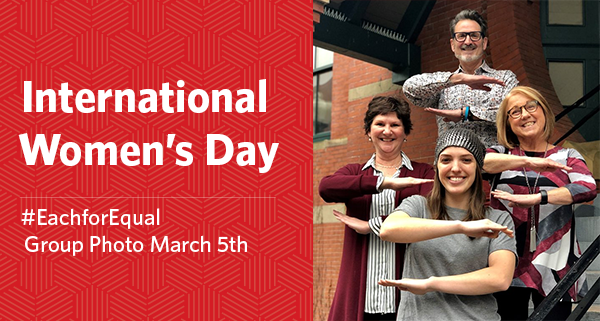
All Medical Campus students, faculty and staff are invited to a campus-wide photo in honor of the day! If you are on campus Thursday, March 5 at 12:15 p.m., please meet us at Talbot Green.
International Women’s Day @ BUMC Group Photo
12:15 p.m. Talbot Green
Thursday | March 5
Rain Date
Friday | March 6
BU PREP Training Program Receives NIH Funding
Andrew J. Henderson, PhD, professor of medicine and microbiology and assistant dean of Graduate Medical Sciences (GMS), along with Fadie T. Coleman, PhD, assistant professor of medical sciences & education, have received a five-year, $1.4 million award from the National Institutes of Health National Institute of General Medical Sciences. This five-year grant will support BUSM’s Post-baccalaureate Research Education Program (BU PREP).
The year-long preparatory program is for recent bachelor’s degree recipients seeking entry into competitive PhD training programs. It is designed to foster mentoring relationships that will enhance personal and scientific development for members of historically underrepresented groups in the biomedical sciences. Participants are paired with BUSM’s faculty, have access to state-of-the-art research facilities and work closely with an advising team to create an individualized career plan directed toward doctoral graduate school entry and success.
The curriculum includes seminars, workshops and courses. The program was initiated two years ago through help of GMS, BUSM and other training programs. During the first year, one participant was accepted into the PhD program at the University of California San Diego while the two other students found jobs in academic laboratories for additional experience. Three current students are interviewing for several PhD programs.

“We in GMS have always felt that this was an important part of the pipeline for STEM training,” explained Dr. Henderson. “I feel this is a part of my mission as an academic scientist is to participate in and create education opportunities in STEM for everybody whether through the lab, the classroom or with training programs.”
Dr. Henderson attended the University of California, Riverside where he earned his BS and MA in biology and his PhD in Biomedical Sciences. He performed his post-doctoral training at Columbia University.

“Mentoring is an important vehicle by which the talents of young scientists are developed and it’s critical to the process of training tomorrow’s workforce,” adds Dr. Coleman. “Programs like PREP offer access for under-represented students to be introduced to research and train with dedicated mentors for the opportunity to develop rewarding research careers.”
Dr. Coleman received her doctorate from the BUSM Department of Microbiology and completed her postdoctoral fellowship at the Boston Children’s Hospital in the Department of Pathology/Transfusion Medicine. She is the Director of the Biomedical Laboratory & Clinical Sciences Program jointly run through BUSM and Metropolitan College.
Mary Blanchard, MLIS, Announces Retirement
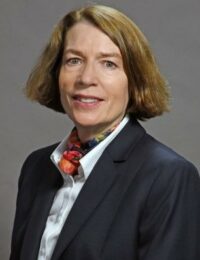 Mary Blanchard, MLIS, Library Director of the Alumni Medical Library, has announced her plans to retire as of Aug. 31.
Mary obtained her Bachelor of Science degree at the University of Massachusetts, Amherst in Food & Resource Economics and worked in healthcare nutrition services prior to embarking on a library career. She received her Master’s degree in Library and Information Science from Simmons College in 1995. Prior to joining our community, Mary worked at the Simmons College School of Social Work Library, Northeastern University’s Snell Library, and Boston University’s Mugar Library.
Since 1996, Mary has held various positions at the Alumni Medical Library including Education & Information Services Librarian, Head of Circulation & Information Services Librarian, and Associate Director for Library Services. She also was grant Project Director for the National Library of Medicine’s Mental Health Information Network of Metro Boston and the National Network of Libraries of Medicine (NN/LM) Mental Health Information Outreach Project.
She was appointed Library Director in 2008 and has overseen preparations for three renovations resulting in a 220-seat dual-purpose Testing Center/student study space on L-11, improved student study space on L-12, and a Quiet Study floor on L-13 complete with increased seating. Facilitating renovations required transitioning library materials from print-based to extensive collections of electronic journals, electronic books, and databases all of which are web-based and accessible 24/7.
During Ms. Blanchard’s tenure, the number of MLS-prepared librarians serving the medical campus increased to support a wider array of Library Education and expanded services including systematic reviews and bibliometrics support, Intellectual Property and academic publishing, and digitization of medical campus publications, theses and dissertations in OpenBU. The Alumni Medical Library also participated in a Research Data Management Librarian Academy (RDMLA) educational collaboration with Simmons University, area health sciences libraries and Elsevier, and in an Institute of Museum and Library Services (IMLS) funded grant offering a Post-master’s Inter-Professional Informationist Certificate Program with Simmons University and a group of East and West coast health sciences libraries.
A search committee will be formed for the Library Director position and Mary has agreed to be flexible on her retirement date to provide transition support for a newly hired director.
Check Out Enhancements to BU Profiles
There are several enhancements to BU Profiles, our research networking initiative launched in 2012. You can scan the Profiles of the 3,800 BU faculty, postdocs, students and others to find specific expertise and identify potential collaborators and mentors. See screenshots and more info at http://profiles.bu.edu/whatsnew/.
New Features
- Each person’s membership in more than 15 Centers & Institutes is now included in Other Positions (1,200+ added).
- Integration with NIH’s iCite bibliometric analysis is available using the Publications tab. iCite includes scientific influence, translation & public domain citation data, an individually sharable link, and the machine learning-based Approximate Potential to Translate score (APT).
- Media Mentions, curated from BU Public Relations, BUSM and BMC Communications, now appear on each person’s Social/Media tab, as a right-hand side passive network, and on the main search page.
- Boston VA Research award titles are now included in Research.
- An updated Dimensions Badge on publications contains citation-related metrics to compliment the Altmetric Badge.
- Preferred Gender Pronouns can optionally be displayed under graduate degrees.
Please use the feedback form to make suggestions or request a BU Profile.
Parking & Transportation Information for Monday, Feb. 17, Presidents’ Day
Shuttles: No shuttles will be operating on President’s Day. This includes the HealthNet shuttle. Boston University’s (The BUS) shuttle will not run its weekday schedule but will run its Late Night service along the Charles River Campus in the evening.
MBTA: Subway, bus and commuter rail trains will run on a Saturday schedule.
Silver Line and Ferry will run on a weekday schedule. For additional information on routes and schedules, please call the MBTA Customer Service Center at 617-222-3200 or visit www.mbta.com
Parking: All parking facilities will be open. Those who do not have garage access may park in the 710 Garage or the DOB Garage for a flat rate fee of $8 on Monday, Feb. 17 only.
If you have any questions regarding this holiday schedule, please call the TranSComm Office at 617-358-3506 or the Parking Office at 617-358-7592.
1/23: Celebrate the Legacy of MLK
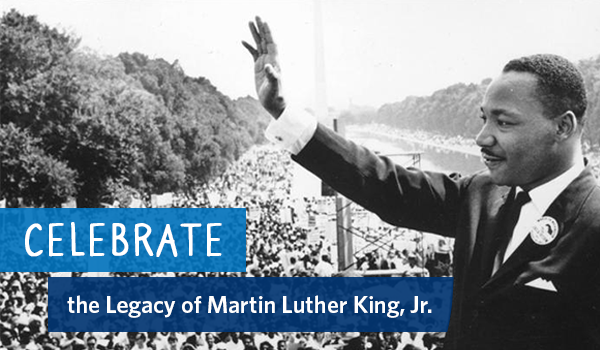
Thursday, Jan. 23 | Noon-1 p.m.
Instructional Building, Hiebert Lounge
All members of the BU Medical Campus are invited to a special presentation commemorating the legacy of Rev. Martin Luther King, Jr.
Guest Speaker: Thea James, MD
Associate Chief Medical Officer, Vice President of Mission, BMC
Associate Professor of Emergency Medicine, BUSM
Host: John Polk, MD
Newly appointed Associate Dean of Diversity & Inclusion, BUSM
Lunch will be provided.